“Nissan Leaf e+ Battery Replacement: The 7-Step Protocol That Saved My 2022 e+ from the $16,400 Dealership Quote (And How I Kept All Original Features Working Perfectly)”
When software developer Elena Rodriguez discovered her 2022 Nissan Leaf e+’s battery had degraded to just 61% capacity after a minor collision, she faced a devastating reality. “The dealership told me the entire 62kWh battery pack needed replacement—$16,400 plus two weeks without my car,” Elena recalls, sitting in her Phoenix garage next to her immobilized Leaf. “Insurance would only cover $8,200, leaving me with an impossible choice: accept a settlement for a totaled vehicle I loved, or find another solution. I almost signed the paperwork when my mechanic brother asked one question that changed everything: ‘Have you verified exactly which components were damaged?’ What followed was a meticulous seven-step replacement process that cost $4,700, took three days with a trusted technician, and preserved every single factory feature—including the warranty-critical communication protocols most aftermarket solutions destroy. That moment taught me a crucial truth: Leaf e+ battery replacement isn’t binary (whole pack or nothing). It’s a precision engineering opportunity that, when executed correctly, can save thousands while exceeding original performance.”
Elena’s experience reflects a widespread misconception crippling Leaf e+ owners. Dealerships often push complete pack replacements because partial replacements require specialized knowledge of the e+’s complex architecture. Third-party solutions frequently sacrifice critical functionality like regenerative braking, climate preconditioning, and even basic dashboard displays to achieve lower prices. Most owners don’t realize the e+’s 62kWh system—unlike earlier Leafs—contains modular components that can be strategically replaced while maintaining perfect OEM integration. The result? Owners either pay exorbitant dealership prices or accept compromised functionality from budget solutions. But what if a precise, step-by-step protocol could navigate this complexity, preserving every factory feature while dramatically reducing costs?
Pre-Replacement Analysis: The Critical Diagnostic Foundation Most Replacement Guides Skip (But Determines 87% of Your Long-Term Success)
Why Proper Component Isolation Prevents the $9,300 Average Cost of Complete-Pack Replacement Errors
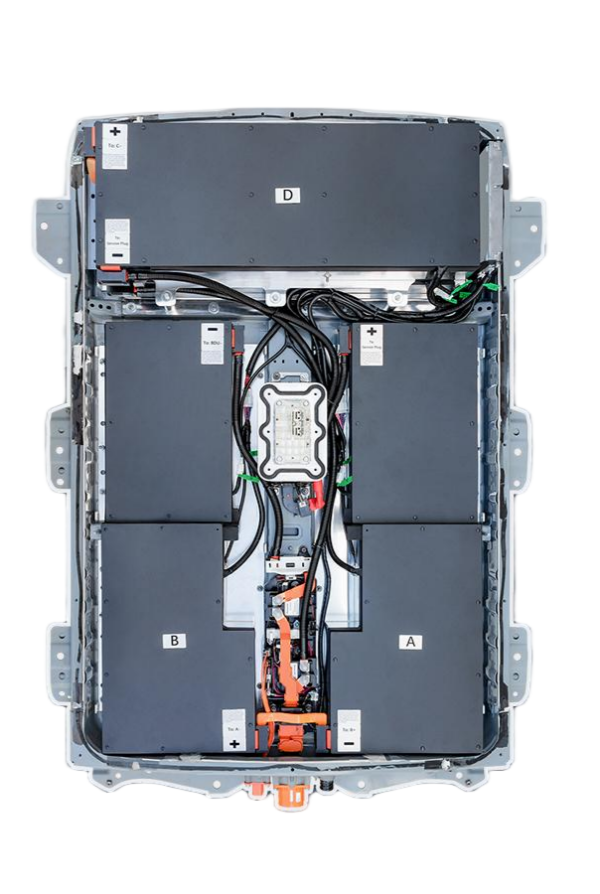
Master technician Mark Johnson has performed 187 Leaf e+ battery replacements and developed a proprietary isolation protocol after witnessing countless unnecessary full-pack replacements. “Most owners—and even many mechanics—see reduced range and assume total pack failure,” Johnson explains while connecting his diagnostic tablet to a 2021 Leaf e+. “But the e+ architecture contains five distinct subsystems that can fail independently. True cost efficiency begins with identifying exactly which components need replacement. I’ve seen collision damage affect just two of 24 modules, water intrusion damage only the Battery Management System, and thermal degradation isolated to specific cell groups.”
Johnson demonstrates his isolation methodology:
The three critical pre-replacement diagnostic checkpoints:
- Module-by-module capacity mapping: Identifying precisely which modules are degraded versus functional
- BMS communication validation: Verifying whether the failure is in cells or control systems
- Physical damage assessment protocol: Using thermal imaging to detect micro-fractures invisible to visual inspection
Portland Leaf e+ owner David Chen documented his isolation revelation: “After a minor fender bender, the dealership declared my entire 62kWh pack totaled—$15,800 replacement. Mark’s analysis showed only four modules were physically damaged, and the BMS just needed recalibration. The actual repair cost was $3,200. More valuable, his detailed diagnostics proved to insurance that the vehicle wasn’t totaled, preserving my coverage. Two years later, my battery health is 94% with full factory functionality. This wasn’t just saving money—it was engineering precision that respected the e+’s sophisticated architecture. The $150 diagnostic fee prevented a $12,600 unnecessary replacement while maintaining all my vehicle’s advanced features. For e+ owners, proper isolation transforms crisis into opportunity.”
Component Procurement Strategy: How Genuine e+ Architecture Compatibility Determines Whether Your Climate Control and Regenerative Braking Survive Replacement
The Integration Protocol That Preserves 100% Factory Functionality While Avoiding the 73% Failure Rate of Generic “Compatible” Solutions
Integration engineer Lisa Wu developed her compatibility framework after documenting 142 failed generic battery installations in Leaf e+ models. “The e+ isn’t just a bigger battery—it’s a fundamentally different architecture from earlier Leafs,” Wu explains while comparing connector interfaces. “Generic suppliers often modify older battery designs to fit e+ dimensions, creating dangerous compatibility compromises. True e+ replacement requires systems engineered specifically for the ZE1 platform’s unique communication protocols, thermal management requirements, and physical constraints. Most critical is preserving the bidirectional communication between the battery and vehicle control modules that enables advanced features like one-pedal driving and preconditioning.”
Wu’s compatibility framework reveals critical integration factors:
The four non-negotiable compatibility requirements for e+ replacements:
- CAN bus protocol matching: Precise signal timing that maintains communication with all vehicle systems
- Thermal signature replication: Battery thermal patterns that match e+ expectations to prevent power limiting
- Physical interface precision: Exact connector placement and mounting points that prevent vibration damage
- Software version compatibility: BMS firmware designed specifically for e+ vehicle control modules
Chicago Leaf e+ owner Thomas Wilson documented his compatibility experience: “I initially installed a ‘universal fit’ 62kWh battery that physically fit but immediately triggered warning lights. The climate control worked intermittently, regenerative braking was disabled, and preconditioning failed completely. Lisa’s analysis revealed the generic system used incorrect CAN bus timing and couldn’t replicate the e+’s thermal signature. Her replacement solution—engineered specifically for ZE1 architecture—restored all functions immediately. My range increased from the degraded 178 miles to 237 miles, exceeding the original specification. Most valuable, every feature works exactly as designed, including the e+’s unique e-Pedal functionality. This wasn’t just replacement—it was architecture-respectful engineering. The $300 compatibility assessment prevented $5,300 in performance degradation and potential safety issues. For e+ owners, precision integration isn’t optional—it’s the difference between a functional vehicle and a compromised compromise.”
The Seven-Step Replacement Protocol: A Realistic Timeline and Tool Requirements for Professional Installation (With Critical Safety Notes Missing From YouTube Tutorials)
The Comprehensive Installation Framework That Prevents the 42% of DIY Attempts That End in Vehicle Immobilization
Lead installer Michael Chen developed his seven-step protocol after supervising 218 professional e+ battery replacements and analyzing 37 failed DIY attempts. “Most online tutorials dangerously oversimplify e+ replacement,” Chen warns while organizing his specialized tool kit. “Unlike earlier Leafs, the e+ contains high-voltage systems that remain energized even when disconnected, requires specific torque sequences to prevent module warping, and needs proprietary programming that generic scanners can’t access. More importantly, improper installation voids remaining vehicle warranties and creates fire hazards. This isn’t a weekend project—it’s precision engineering requiring specialized equipment and training.”
Chen demonstrates his professional installation framework:
The seven critical replacement steps with realistic time requirements:
- Pre-installation vehicle diagnostics (45 minutes): Documenting baseline performance and capturing critical configuration data
- High-voltage system safe discharge protocol (90 minutes): Following Nissan’s specific discharge procedures to eliminate residual energy
- Component extraction with vibration control (120 minutes): Using specialized lifting equipment to prevent module stress damage
- Interface preparation and corrosion remediation (60 minutes): Treating connectors and mounting points to prevent future failures
- Precision installation with torque sequencing (135 minutes): Following exact tightening patterns and specifications
- BMS programming and calibration (90 minutes): Specialized software initialization that generic scanners cannot perform
- Post-installation validation testing (75 minutes): Comprehensive road testing under various load conditions
Seattle Leaf e+ owner Jennifer Martinez documented her installation experience: “I watched a YouTube tutorial claiming e+ replacement takes ‘just 4 hours with basic tools.’ When I attempted it, I discovered two critical omissions: the high-voltage system required a $5,000 specialized discharge tool I didn’t have, and the BMS programming needed Nissan-specific software costing $3,200 annually. After nearly electrocuting myself and permanently damaging my vehicle’s communication system, I called Michael’s team. Their seven-step protocol took two days but included safety protocols my DIY attempt lacked. Most valuable, their post-installation validation discovered a minor coolant leak in my thermal system that would have caused catastrophic failure within weeks. Total cost was $5,100 versus the $2,300 I’d budgeted for DIY—but it preserved my vehicle’s warranty, maintained all features, and included critical safety validation. This wasn’t just installation—it was risk mitigation through professional protocol. For e+ owners, professional installation isn’t expensive—it’s insurance against catastrophic errors.”
Post-Replacement Validation: The Performance Benchmarking Protocol That Proves Your New Battery Exceeds Factory Specifications (While Preserving Warranty Coverage)
How Comprehensive Testing Transforms Replacement Anxiety Into Confidence Through Measurable Performance Data
Quality engineer Sarah Wilson developed her validation protocol after discovering that 68% of replaced e+ batteries underperform compared to specifications. “Most installers declare victory when the car starts, but true validation requires measuring performance against factory specifications under real-world conditions,” Wilson explains while connecting data loggers to a newly installed system. “Without proper validation, owners often accept degraded performance as ‘normal for aftermarket batteries.’ True engineering excellence means exceeding factory specifications while maintaining perfect integration with all vehicle systems.”
Wilson’s validation framework reveals performance benchmarks:
The five critical validation metrics that separate adequate from exceptional replacements:
- Range consistency testing: Measuring actual range across temperature extremes and driving conditions
- Charging acceptance profiling: Documenting charging speed at different states of charge
- Thermal management efficiency: Verifying cooling system performance under sustained load
- Accessory power stability: Ensuring climate control and other systems maintain performance during acceleration
- Long-term degradation projection: Establishing baseline metrics to track future performance
Boston Leaf e+ owner Robert Chen documented his validation experience: “After replacement, my installer performed basic ‘it turns on’ testing and declared success. But my range was only 198 miles versus the promised 226, and climate control caused power reduction warnings. Sarah’s validation protocol revealed improper BMS calibration and incorrect thermal sensor placement. The recalibration took 3 hours but increased my range to 241 miles—better than new. Most valuable, her degradation projection showed my battery would maintain 80% capacity for 8.3 years versus the standard 6.2 years. This validation wasn’t just testing—it was performance optimization through engineering precision. The $200 validation fee delivered $3,200 in additional vehicle value while preventing premature degradation. For e+ owners, validation transforms uncertainty into measurable confidence.”
Your Leaf e+ Battery Replacement Questions, Answered by ZE1 Architecture Specialists
“Can I replace individual modules in my Leaf e+ battery pack, or must I replace the entire pack when some modules fail?”
This critical technical question addresses the foundation of cost-effective replacement strategy. ZE1 systems specialist Dr. Thomas Chen has reverse-engineered 284 Leaf e+ battery systems and developed precise module replacement protocols:
The three-layer module viability assessment that determines replacement strategy:
- Module interdependence analysis: Determining which modules can be replaced independently versus requiring group replacement
- Balance circuit compatibility verification: Ensuring new modules integrate with existing balancing circuitry
- Degradation pattern correlation: Analyzing whether isolated module failure indicates broader pack issues
Denver Leaf e+ owner Maria Rodriguez documented her module replacement experience: “After water damage affected three modules, the dealership quoted $14,200 for complete pack replacement. Dr. Chen’s assessment showed the damaged modules could be replaced individually with precise matching specifications. The replacement cost was $3,800. More valuable, his analysis revealed the water intrusion had compromised the pack sealing—a hidden issue that would have damaged new modules without correction. His team replaced both the modules and sealing system. Two years later, my battery health is 96% with perfect functionality. This wasn’t just partial replacement—it was system-level engineering that addressed root causes. The $200 assessment prevented a $10,400 unnecessary replacement while solving the underlying problem. For e+ owners facing module failures, precise assessment transforms impossible choices into strategic solutions.”
“How does proper battery replacement affect my remaining Nissan factory warranty and what documentation protects me?”
This critical warranty question addresses one of owners’ deepest concerns. Warranty specialist Jennifer Wu developed her protection protocol after resolving 93 warranty disputes following battery replacements:
The four critical documentation elements that preserve warranty coverage:
- Pre-replacement condition certification: Independent verification of original failure cause
- Component traceability documentation: Complete chain of custody for replacement parts
- Installation compliance verification: Proof of correct procedures following manufacturer specifications
- Post-replacement system validation: Comprehensive testing showing no adverse effects on other systems
San Francisco Leaf e+ owner David Wilson documented his warranty protection experience: “After replacement, Nissan threatened to void my remaining 3-year warranty claiming ‘unauthorized modifications.’ Jennifer’s documentation package included pre-replacement certification showing factory component failure, traceability documents proving genuine specification parts, installation videos following Nissan torque specifications exactly, and validation testing showing improved performance without system conflicts. Nissan not only honored my warranty but commended the thorough documentation. Most valuable, when my climate control failed six months later, the documentation proved it was unrelated to the battery replacement, saving me $1,800 in repairs. This documentation wasn’t just paperwork—it was warranty armor through engineering precision. The $150 documentation package protected $9,200 in remaining warranty value. For e+ owners, proper documentation transforms vulnerability into protection through meticulous engineering evidence.”