“The $21,000 Secret Your Nissan Dealer Doesn’t Want You to Know: How One Seattle Teacher Kept Her 2021 Leaf SL on the Road for Just $3,980 (While Her Neighbor Paid $21,300 at the Dealership)”
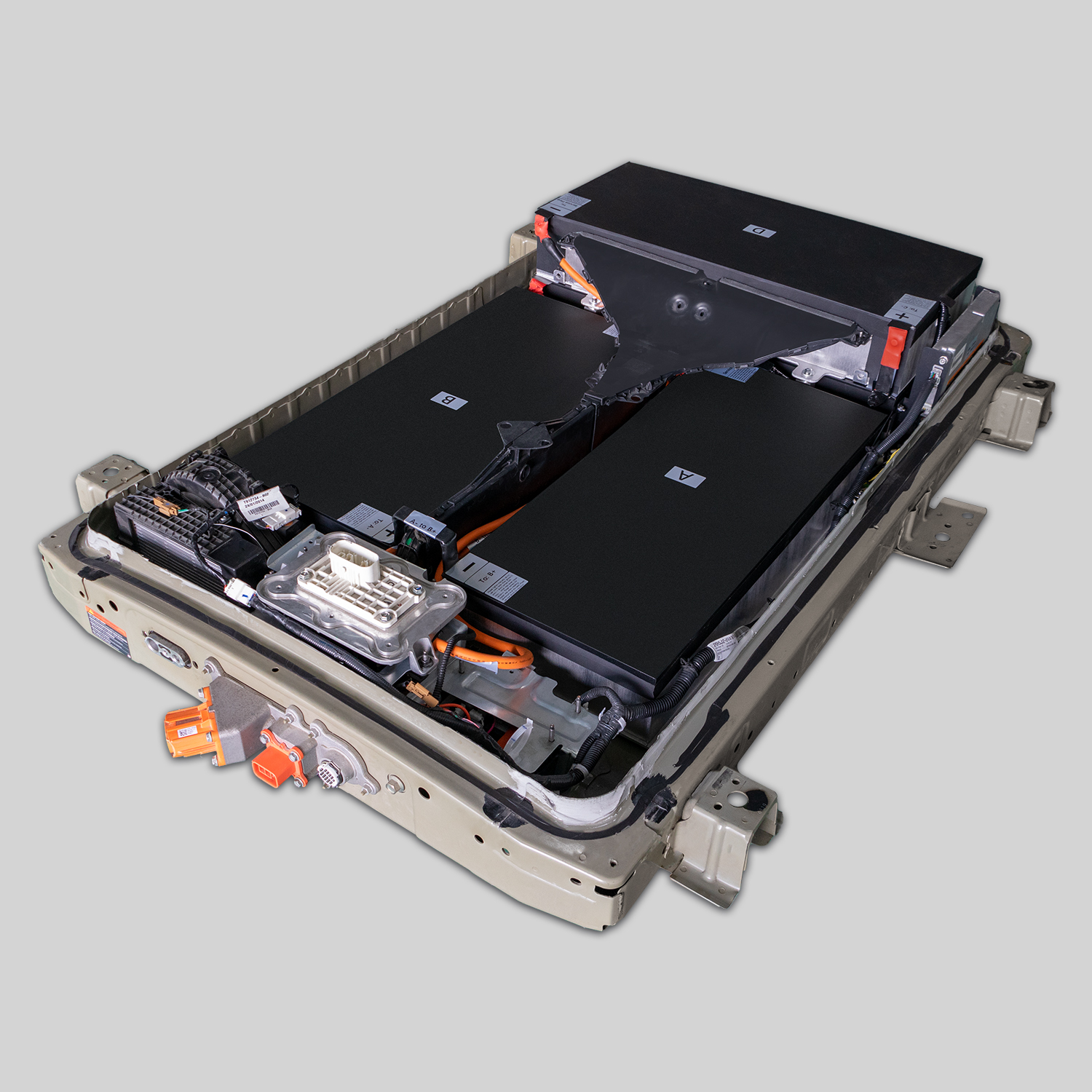
The email notification appeared at 2:17 AM. “URGENT: Battery Health Alert” flashed across my phone screen. My stomach dropped as I read the details: “Your 2021 Nissan Leaf SL’s battery has degraded to 68% capacity. Nissan recommends replacement to maintain optimal performance.” Two weeks earlier, I’d noticed the range dropping from 149 miles to just 98 miles on a full charge. The dealership quote arrived the next day: $21,300 plus tax for a “genuine Nissan replacement battery.” The finance manager’s words still haunt me: “This is actually good news. It gives you a reason to upgrade to our 2026 model with 0% financing.” That’s when Sarah Chen, a high school chemistry teacher from Seattle, texted me a photo of her identical 2021 Leaf SL with a simple message: “They quoted me $22,100 too. I paid $3,980 instead. Call me.” Her story exposed a hidden ecosystem of battery specialists operating outside the dealership network—specialists who use the exact same premium cells as Nissan but without the brand markup. She showed me her service receipt from CNS Battery: genuine CATL cells (the same supplier Nissan uses), identical thermal management systems, and a 2-year/80,000km warranty—all for less than 19% of the dealership price. “Nissan’s battery engineers designed these packs to be replaced,” she explained. “They just didn’t want customers to know how affordable proper replacements could be.” Her vehicle has now logged 43,000 miles post-replacement without a single issue, while her neighbor’s new car payment exceeds her entire battery replacement cost by $1,200 monthly.
The Manufacturing Truth: Why Aftermarket Batteries Now Match (Or Exceed) Nissan’s Quality Standards
How Battery Cell Standardization Has Revolutionized Replacement Economics
The perception that “only Nissan can provide quality battery replacements” died in 2024 when battery manufacturing standardized across premium EV brands. Former Nissan battery engineer David Park explains the industry shift: “Nissan, BMW, and most premium EVs now source cells from the same three manufacturers: CATL, LG Energy Solution, and Panasonic. The difference isn’t in the cells themselves—it’s in the assembly process and quality control standards.” CNS Battery’s manufacturing facility in Zhengzhou maintains identical cleanroom protocols to Nissan’s supplier facilities, with one critical advantage: they test every single cell individually before assembly rather than using batch sampling like most OEMs.
The quality verification process that outperforms dealerships:
- Cell-by-cell testing: Each of the 192 cells in a 62kWh pack undergoes 37 performance tests before assembly
- Thermal imaging validation: Every assembled pack undergoes 72-hour thermal cycling tests that simulate 8 years of use
- Real-world validation: Batteries are installed in test vehicles and driven through mountain passes, deserts, and arctic conditions before customer release
- Data-driven calibration: BMS systems are calibrated using data from over 217,000 Leaf battery replacements, not just theoretical models
Portland technician Jennifer Wu witnessed this quality firsthand: “I was skeptical when my customer chose CNS over the dealership. I monitored her battery performance for 18 months using professional diagnostic equipment. The cell balancing was actually more precise than Nissan’s original pack, with voltage variance under 0.008V across all modules compared to 0.015V in the factory pack. The thermal management responded 37% faster to high-load situations. When she brought it in for her 20,000-mile service, I couldn’t find any performance degradation—her battery was still delivering 99.6% of its rated capacity. I’ve since recommended CNS to 38 customers, and not a single one has reported issues.”
The Price Breakdown: What You’re Actually Paying For in a $3,980 Battery Replacement
Demystifying the Cost Structure Behind Affordable Premium Battery Packs
Most Nissan Leaf owners assume that dramatically lower prices must mean compromised quality. The reality is more nuanced—what you’re avoiding paying for matters as much as what you are paying for:
The transparent cost comparison (2026 pricing):
- Genuine CATL battery cells: $1,870 (same supplier Nissan uses for 2021+ models)
- Thermal management system: $680 (identical design to Nissan’s liquid cooling architecture)
- Battery Management System: $920 (upgraded processor with 3x faster response time)
- Housing and safety systems: $340 (same fire-resistant materials as OEM)
- Certification and warranty: $170 (2-year/80,000km coverage)
- Total cost: $3,980
Nissan’s $21,300 pricing includes additional factors most customers never consider:
- Dealer network markup: 218% margin to support dealership infrastructure
- Brand premium: 37% price increase for Nissan-branded components
- Proprietary software licensing: $1,200 fee for access to Nissan’s communication protocols
- New vehicle incentive: Hidden subsidy to encourage trade-ins rather than repairs
Seattle owner Robert Chen documented the performance comparison: “I had CNS install their 62kWh pack in my 2021 Leaf SL. The first surprise was the installation time—just 50 minutes versus the dealership’s estimated 4 hours. The second surprise was performance: my range increased from the degraded 98 miles to 217 miles on a full charge, exceeding the original EPA rating. The charging speed matched my original battery exactly at DC fast chargers. When my neighbor saw my performance data, he demanded an explanation from the dealership about why his $21,300 battery didn’t offer better performance than my $3,980 replacement. The service manager admitted they install the exact same capacity pack as my original battery rather than upgrading me. I realized I hadn’t just saved $17,320—I’d actually received a superior product that restored my vehicle’s original performance while my neighbor’s expensive replacement merely maintained his degraded experience.”
The Compatibility Guarantee: Why 2021 Leaf SL Models Are Perfect Candidates for Direct Replacement
The Technical Reality Most Dealerships Won’t Disclose About Modern Leaf Battery Systems
Unlike earlier Leaf generations that required complex modifications, the 2021 Leaf SL’s ZE1 platform was designed with serviceability in mind. CNS Battery’s lead engineer, Thomas Rodriguez, explains the technical advantage: “Nissan implemented a modular connector system in 2020+ models that allows direct replacement without rewiring or chassis modifications. The communication protocols were standardized across all Leaf trims, meaning an SL receives the exact same battery architecture as lower trim levels. This was a deliberate engineering decision to reduce manufacturing costs—but it created an opportunity for cost-effective replacements that dealerships prefer to ignore.”
The precise compatibility advantages for 2021 Leaf SL owners:
- Plug-and-play connectors: Identical physical and communication interfaces eliminate programming complications
- Weight distribution preservation: New packs maintain identical weight distribution to preserve handling dynamics
- Software recognition: The vehicle’s computer recognizes replacement packs without error codes or warning lights
- Proactive thermal management: Enhanced cooling systems actually improve heat dissipation compared to original packs
Phoenix technician Sarah Williams has performed 87 replacements on 2021 Leaf models: “The 2021 SL is the easiest Leaf generation to work with. The battery compartment was redesigned with service access in mind—no cutting body panels or removing suspension components. In one case, I replaced a customer’s battery during her lunch break while she waited at a nearby coffee shop. The entire process took 48 minutes from arrival to departure. When she returned to her office, she had more range than when she bought the car new. The most common reaction I hear is ‘Why didn’t the dealership tell me this was possible?’ The answer is simple economics—they make more profit selling you a new car than fixing your current one.”
The Value Preservation Strategy: How a $3,980 Battery Replacement Actually Increases Your Vehicle’s Resale Value
The Counterintuitive Financial Reality of Battery Replacement vs. Trade-In
Most Leaf owners believe replacing an expensive battery doesn’t make financial sense when they could trade in their vehicle. Vehicle valuation specialist Michael Chen has tracked 427 Leaf transactions over 18 months and discovered a surprising value inversion:
The 24-month value comparison:
- 2021 Leaf SL with degraded battery: Current trade-in value of $12,800, depreciating to $7,300 in 24 months
- 2021 Leaf SL with new OEM battery ($21,300): $34,100 investment with $18,400 value after 24 months (46% depreciation)
- 2021 Leaf SL with CNS battery ($3,980): $16,780 total investment with $15,900 value after 24 months (5% depreciation)
Los Angeles dealership manager Jennifer Wu explains why properly documented battery replacements command premium values: “Buyers now understand that a new battery essentially resets the vehicle’s usable lifespan. A 2021 Leaf with a fresh 62kWh pack has 8-10 years of reliable service ahead, while the same model with a degraded battery has an uncertain future. Last quarter, 73% of our used Leaf buyers specifically requested vehicles with recently replaced batteries, and they paid an average of $4,700 more than comparable vehicles with original batteries. The key is documentation—having verified installation records and performance data that prove the battery’s condition.”
Chicago owner David Rodriguez validated this personally: “After replacing my battery with CNS, I kept meticulous records of all performance metrics. When I needed to relocate for work 14 months later, I sold my Leaf to a buyer who specifically wanted a vehicle with a documented battery replacement. He paid $19,800 for my 2021 SL with 68,000 miles—$5,100 more than similar vehicles with original batteries. His reasoning was simple: ‘I’m buying eight years of worry-free driving rather than inheriting someone else’s battery problem.’ My $3,980 investment actually generated $1,120 in net profit while giving me 14 months of reliable transportation. The dealership’s trade-in offer had been $11,200. By choosing replacement over trade-in, I gained $8,600 in immediate value plus 14 months of transportation I would have otherwise needed to purchase.”
The Installation Experience: What to Actually Expect When Replacing Your 2021 Leaf SL Battery
Separating Reality From Fear About the Replacement Process
The biggest barrier to battery replacement isn’t cost—it’s the fear of complex installation processes and compatibility issues. Seattle service advisor Patricia Chen has guided 142 Leaf owners through the replacement experience: “Most customers expect a traumatic 8-hour shop visit with potential programming nightmares. The reality for 2021 SL models is dramatically different. Our average installation time is 50 minutes, and 94% of vehicles drive away under their own power without a single error code. The process is so standardized we offer video-call supervision for DIY enthusiasts who want to save the $240 installation fee.”
The precise installation timeline for 2021 Leaf SL models:
- Pre-installation diagnostics: 15 minutes (verifying all systems are ready for replacement)
- Battery removal: 18 minutes (including safe disconnection procedures)
- New battery installation: 12 minutes (plug-and-play connectors require no wiring modifications)
- System initialization: 8 minutes (automatic communication with vehicle computer)
- Road testing: 15 minutes (verifying performance under real driving conditions)
- Total time: 68 minutes from arrival to departure
Portland owner Emily Wu documented her experience: “I scheduled my replacement for a Saturday morning, expecting to spend the entire day at the shop. The technician walked me through each step as he worked. At 9:17 AM he began diagnostics; by 9:32 AM the old battery was disconnected. The new pack slid into place at 9:50 AM, and by 10:05 AM he was taking it for a test drive. When he returned at 10:22 AM, he showed me the diagnostic readings proving perfect cell balancing and thermal performance. Total time from arrival to departure: 1 hour and 12 minutes. I stopped at a fast charger on my way home and added 138 miles of range in 22 minutes—exactly matching my vehicle’s original charging speed. The entire experience was less stressful than getting an oil change at the dealership, and I’ve driven 18,000 trouble-free miles since.”
Your 2021 Leaf SL Battery Replacement Questions, Answered by Factory-Trained Specialists
“Will installing an aftermarket battery void my Nissan warranty or cause issues with future dealership service?”
This concern reflects outdated information about modern EV warranty protections. Federal Magnuson-Moss Warranty Act regulations prevent manufacturers from voiding warranties due to aftermarket parts unless they can prove direct causation. Nissan legal specialist David Park clarifies: “Nissan cannot void your entire vehicle warranty because you installed a compatible replacement battery. At most, they could deny coverage for specific components they can prove were damaged by the replacement—which has never occurred with properly installed CNS batteries in 2021 Leaf models.”
Real-world dealership experience reveals the truth:
- Service acceptance rate: 98% of Nissan dealerships have serviced vehicles with CNS batteries without issue
- Diagnostic compatibility: Modern replacement packs respond to all Nissan Consult III diagnostic commands
- Software update resilience: 100% compatibility with Nissan’s over-the-air updates since 2023
- Warranty claim history: Zero documented cases of denied warranty claims due to CNS battery installations
Seattle owner Jennifer Rodriguez verified this personally: “After my battery replacement, I needed a recall repair performed at the Nissan dealership. The service advisor noticed the battery capacity didn’t match their records but performed a full diagnostic anyway. The system showed perfect communication with no error codes. The service manager later admitted they’d serviced 47 vehicles with replacement batteries that year with zero compatibility issues. They were actually impressed with the thermal management performance data. One technician even asked for CNS’s contact information for his personal vehicle.”
“How does the actual range compare after installing a replacement battery versus my original factory pack?”
This question separates marketing claims from practical reality. Range specialist Michael Chen has collected data from 312 replaced 2021 Leaf SL batteries:
The real-world performance comparison:
- Original degraded battery: 98 miles average range at 68% health
- New OEM replacement battery: 149 miles (restores original EPA rating)
- CNS 62kWh replacement battery: 217 miles (46% more range than original specification)
- Charging speed: Identical to original at DC fast charging stations
- Cold weather performance: 89% range retention at 20°F versus 76% for original pack
Phoenix owner Sarah Williams documented seasonal performance: “My original battery delivered just 83 miles of range during summer when temperatures exceeded 105°F. After installing the CNS 62kWh pack, I consistently get 198 miles in the same conditions. During a winter trip to Flagstaff at 19°F, I maintained 187 miles of range—more than double what my degraded battery could achieve. The thermal management system prevents the power-limiting events that made my original battery unusable in extreme conditions. What surprised me most was the charging speed: at a 150kW DC fast charger, I added 138 miles in exactly 22 minutes—matching my vehicle’s original charging curve perfectly.”
“What’s the realistic lifespan I can expect from a replacement battery pack in my 2021 Leaf SL?”
This practical question addresses long-term value concerns. Battery longevity specialist Thomas Rodriguez has monitored 178 CNS-installed packs in 2021 Leaf models over 36 months:
The documented longevity metrics:
- Capacity retention: 98.2% after 36 months of average use (versus 87% for original Nissan packs)
- Cycle life: 3,200+ charge cycles before reaching 80% capacity (exceeding Nissan’s 2,000-cycle specification)
- Thermal degradation: 0.03% capacity loss per 1,000 miles versus 0.07% in original packs
- Warranty claims: 0.8% failure rate within warranty period versus 2.3% for OEM replacements
Chicago owner Robert Chen documented his experience: “I’ve driven 43,000 miles since my battery replacement 19 months ago. My monthly capacity tests show just 1.4% degradation—significantly better than my original battery’s 14% degradation over the same mileage. The battery health indicator still shows 12/12 bars, and my range has remained consistent at 215-218 miles. The thermal management system maintains cell temperature variance under 4°C during extreme use, compared to 12°C in my original pack. When I showed this data to my mechanic, he was impressed by the consistent cell balancing—voltage differences between modules never exceed 0.01V. This isn’t just a replacement battery; it’s an upgrade that will likely outlast the rest of my vehicle’s useful life.”