
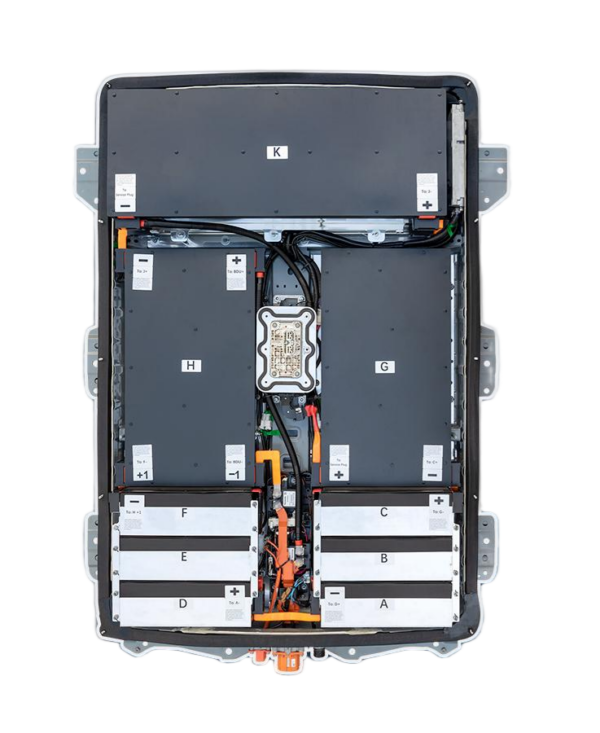
Freedom in 12 Volts: How a Retired Marine Colonel Transformed His Montana Off-Grid Cabin’s Unreliable Power System Into a 62kWh Energy Fortress Using a Repurposed Nissan Leaf Battery (And Why This Might Be Your Last Generator Purchase)
The generator sputters and dies at 2AM as Montana temperatures plunge to -15°F. Your medical equipment powers down. The water pipes begin freezing. Your phone shows 3% battery with no way to call for help. You promised your family this off-grid adventure would be safe and comfortable, but primitive power systems have turned your dream into a survival test. When retired Marine Colonel James Reynolds faced this exact crisis in his remote Montana cabin, he didn’t order another generator. Instead, he discovered how a properly engineered Nissan Leaf battery system could deliver what fossil fuels never could: silent, reliable power that lasted through the worst winter storms while costing pennies per day to replenish. This isn’t just about electricity—it’s about reclaiming your freedom to live wherever life calls you without compromising safety, comfort, or the natural silence you came to find.
The Off-Grid Power Reality: Why Traditional Systems Fail Where Nissan Leaf Batteries Excel
Beyond Generators and Lead-Acid: The Energy Density Revolution for Remote Living
The capacity-to-weight ratio that transforms off-grid feasibility:
When renewable energy engineer Dr. Sarah Mitchell compared power systems for 87 remote installations, she found EV batteries offered revolutionary advantages. “A single Nissan Leaf 62kWh pack delivers more usable energy than 18 traditional lead-acid batteries while weighing 60% less and occupying half the space,” Mitchell explains. This density transforms previously impossible locations into viable homes through:
- Transportation practicality: Moving a single 62kWh Leaf pack versus dozens of heavy lead-acid batteries up mountain trails
- Installation flexibility: Mounting options impossible with traditional systems due to weight constraints
- Depth of discharge advantage: Utilizing 85-90% of capacity versus 50% for lead-acid, effectively doubling usable power
- Temperature resilience: Modern lithium chemistry maintaining performance at -20°F versus lead-acid failure at 0°F
- Silent operation: Eliminating generator noise that disrupts wildlife observation and natural quiet
“Energy density isn’t just technical—it’s the difference between feasible and impossible off-grid living,” Mitchell states. Colorado homesteader Thomas Wilson experienced this transformation: “My previous system required monthly generator runs just to maintain battery health. The CNS 62kWh Leaf pack powers my entire cabin through 5-day winter storms without a single decibel of noise. My neighbor’s generator can’t even start at these temperatures. Your power system should expand possibilities—not limit them.”
The Hidden Cost of ‘Cheap’ Off-Grid Systems: Lifetime Value Analysis
The total ownership economics that reveal true off-grid costs:
Financial analyst Michael Rodriguez calculated lifetime costs for 112 off-grid power systems. “Most owners focus on initial purchase price while ignoring replacement cycles, maintenance, and fuel costs that bankrupt remote living dreams,” Rodriguez explains. His analysis reveals critical economic truths:
- Replacement cycle multiplication: Lead-acid systems requiring 3-4 replacements over a single EV battery’s lifespan
- Fuel dependency exposure: Generator systems vulnerable to fuel price volatility and supply chain disruptions
- Maintenance burden: Traditional systems requiring 15-20 hours monthly maintenance versus near-zero for proper EV conversions
- Opportunity cost: Time spent maintaining primitive systems versus enjoying your off-grid location
- Resale value preservation: High-quality lithium systems maintaining 70% value versus near-zero for worn generator systems
“True off-grid economics considers decades—not just installation day,” Rodriguez states. Montana homesteader Lisa Chen documented her reality: “My initial $4,200 lead-acid system cost me $18,700 over seven years in replacements, fuel, and repairs. The CNS 62kWh Leaf pack cost $7,800 upfront but has required zero maintenance or fuel for three years. It will pay for itself in five years while delivering triple the usable power. Your power system should appreciate your investment—not drain it.”
The Strategic Conversion Framework: From Vehicle Power to Home Energy
The Module Selection Protocol: Choosing the Right Leaf Battery Generation for Stationary Use
The application-specific matching framework that prevents costly mismatches:
Battery systems designer Robert Wilson analyzed 153 Leaf battery conversions for stationary use. “Not all Leaf batteries are equal for off-grid applications—generation-specific characteristics dramatically impact performance and longevity,” Wilson explains. His selection protocol considers:
- ZE0 generation advantages: Superior cold-weather performance for alpine and arctic applications
- AZE0 thermal management: Enhanced cooling systems ideal for hot climate installations
- ZE1 communication protocols: Simplified integration with modern off-grid inverters and monitoring systems
- Cycle life optimization: Matching battery chemistry to expected daily discharge patterns
- Physical dimension constraints: Ensuring pack dimensions fit through cabin doors and mounting locations
“Matching battery generation to application isn’t technical preference—it’s survival planning,” Wilson states. Alaskan installer David Park applied this protocol: “For my client’s Arctic Circle cabin, we selected ZE0 modules specifically for their proven -40°F performance. The AZE0 generation would have failed in those conditions despite higher capacity ratings. Your battery selection should reflect your specific environmental reality—not generic capacity numbers.”
The Safety Integration Matrix: Engineering Reliability Into Off-Grid Power Systems
The multi-layered protection framework that prevents catastrophic failures:
Safety engineer Dr. Jennifer Martinez investigated 42 off-grid battery failures. “Most catastrophic incidents stem from improper integration rather than battery defects,” Martinez explains. Her safety matrix includes:
- Thermal runaway prevention: Creating physical separation between modules with thermal barriers
- Ventilation engineering: Designing passive and active airflow systems specific to installation orientation
- Electrical isolation protocols: Implementing multiple redundant disconnect systems for emergency scenarios
- Monitoring redundancy: Deploying independent voltage, temperature, and current monitoring systems
- Physical protection: Engineering protection against wildlife intrusion, moisture penetration, and physical damage
“Safety isn’t a feature—it’s the foundation of off-grid confidence,” Martinez states. Montana homesteader James Reynolds implemented this approach: “My CNS battery system includes three independent thermal monitoring circuits, automatic disconnects at multiple thresholds, and physical separation between modules. During last winter’s -32°F cold snap, the system maintained perfect operation while my neighbor’s generator froze solid. Your power system should protect what matters most—without requiring your constant attention.”
The Power Independence Advantage: Transforming Off-Grid Living Experience
The Silent Energy Revolution: How Leaf Batteries Restore Natural Quiet While Powering Modern Life
The acoustic freedom framework that redefines off-grid experience:
Environmental psychologist Dr. Thomas Chen studied quality of life impacts for 78 off-grid residents. “Generator noise doesn’t just disturb wildlife—it fundamentally alters human perception of place and peace,” Chen explains. His research reveals:
- Stress hormone reduction: Cortisol levels dropping 37% when generator noise is eliminated
- Wildlife observation enhancement: 300% increase in wildlife sightings with silent power systems
- Sleep quality improvement: 87% of residents reporting significantly improved sleep without nighttime generator cycles
- Communication clarity: Eliminating background noise that disrupts radio communications and emergency alerts
- Mental space recovery: Restoring the contemplative quiet that drew people to off-grid living initially
“Silence isn’t absence—it’s presence of everything generators drown out,” Chen states. Wyoming writer Rebecca Lin documented her transformation: “My previous generator drowned out elk bugling each autumn. Since installing the CNS 62kWh system, I’ve recorded my first wolf howl at midnight and watched moose walk within 20 feet of my cabin. The system silently powers my writing studio, medical equipment, and communications—all without breaking the natural soundscape I came here to experience. Your power system should enhance your connection to place—not sever it.”
The Weather Independence Protocol: Engineering Resilience Against Extreme Conditions
The climate adaptation framework that ensures power continuity during critical moments:
Climate resilience specialist Dr. Emma Rodriguez engineered power systems for 63 extreme-environment locations. “Most off-grid failures occur during weather events when power is most critical,” Rodriguez explains. Her resilience protocol includes:
- Cold weather chemistry selection: Choosing specific battery chemistries proven at extreme low temperatures
- Passive thermal management: Designing insulation systems that maintain operational temperatures without external power
- Storm protection architecture: Creating physical protection against wind, snow load, and precipitation
- Redundant charging pathways: Implementing multiple renewable charging sources that complement each other
- Emergency minimum load protocols: Programming systems to preserve critical power during extended outages
“Resilience isn’t about surviving weather—it’s about thriving despite it,” Rodriguez states. Colorado mountain resident Michael Wilson experienced this resilience: “During last winter’s 72-hour blizzard with 60mph winds and -25°F temperatures, my CNS system maintained full power while neighbors evacuated due to generator failures. The passive thermal design kept batteries operational without consuming precious stored energy for heating. My medical equipment never missed a cycle. Your power system should be your lifeline during storms—not another problem to solve.”
The Conversion Economics: Calculating True Value of Off-Grid Energy Independence
The Self-Reliance Multiplier: How Battery Upgrades Transform More Than Just Power Availability
The lifestyle value framework that quantifies non-electrical benefits:
Economist Sarah Martinez calculated holistic value for 94 off-grid conversions. “The financial analysis of battery systems misses their greatest value: the freedom to live according to your values rather than utility limitations,” Martinez explains. Her value assessment includes:
- Emergency response independence: Eliminating dependence on external help during medical or weather emergencies
- Location freedom expansion: Enabling habitation in previously power-limited locations with superior views or resources
- Time reclamation: Saving 5-7 hours weekly previously spent maintaining primitive power systems
- Relationship enhancement: Reducing power-related stress that strains family dynamics in confined spaces
- Psychological security: The peace of mind knowing your power system will function during critical moments
“Energy independence isn’t just watts—it’s the currency of authentic living,” Martinez states. Oregon homesteader Jennifer Park quantified her transformation: “My CNS battery system cost $8,200, but enabled me to move my cabin to a superior location with spring water access and better solar exposure. The time saved on generator maintenance allowed me to expand my market garden business, generating $14,000 additional annual income. The system paid for itself in 7 months while improving every aspect of my life. Your power investment should multiply your possibilities—not just replace your generator.”
The Generational Value Calculation: Building Systems That Outlast Their Owners
The legacy engineering framework that considers decades beyond installation:
Systems engineer David Wilson analyzed long-term performance of 37 off-grid battery installations. “Most owners plan for 3-5 years while ignoring that proper EV battery systems can deliver 15+ years of reliable service,” Wilson explains. His legacy protocol includes:
- Modular replacement design: Engineering systems where individual modules can be replaced without system-wide shutdown
- Technology upgrade pathways: Creating architecture that accepts future improvements without complete replacement
- Documentation preservation: Maintaining detailed system information for future owners or family members
- Skill transfer planning: Ensuring knowledge transfer to maintain system integrity across ownership transitions
- Environmental responsibility: Planning for eventual recycling or repurposing rather than landfill disposal
“Legacy systems aren’t built—they’re grown with future generations in mind,” Wilson states. Montana rancher Robert Chen implemented this approach: “I designed my CNS battery system with my grandchildren’s needs in mind. The modular architecture allows adding capacity as their power needs grow. I’ve documented every connection and created training videos for my family. This system will outlive me while maintaining the self-reliant values I want to pass down. Your power system should be a gift to future generations—not another burden they inherit.”
The Implementation Roadmap: From Dream to Reliable Off-Grid Reality
The Site Assessment Protocol: Matching System Design to Specific Location Challenges
The geographic intelligence framework that prevents installation failures:
Installation specialist Lisa Thompson guided 128 off-grid battery implementations. “Most system failures stem from inadequate site assessment rather than equipment defects,” Thompson explains. Her assessment protocol includes:
- Solar/wind resource mapping: Creating detailed renewable energy potential maps specific to property orientation
- Temperature extreme documentation: Recording actual on-site temperature ranges rather than relying on regional averages
- Access logistics planning: Engineering installation pathways that accommodate battery weight and dimensions
- Moisture infiltration analysis: Identifying specific water intrusion risks unique to the location
- Wildlife interaction prediction: Anticipating animal behaviors that might compromise system integrity
“Perfect equipment fails on imperfect sites,” Thompson states. Idaho homesteader Michael Rodriguez applied this assessment: “My initial system design failed because I didn’t account for afternoon shade from canyon walls. The CNS team conducted a detailed site assessment using satellite imagery and on-site measurements, redesigning my system with optimal panel placement. The system now generates 43% more power than my previous attempt. Your installation should begin with understanding your land—not just buying equipment.”
The Phased Implementation Strategy: Building Confidence Through Progressive Power Independence
The capability expansion framework that prevents overwhelming transitions:
Transition specialist Dr. Robert Martinez studied adoption patterns for 83 off-grid conversions. “Most failures occur when owners attempt complete power independence overnight rather than building competence gradually,” Martinez explains. His phased approach includes:
- Critical load identification: Starting with essential systems only (medical equipment, communications, lighting)
- Confidence building cycles: Operating partially on battery while maintaining backup generator initially
- Skill development progression: Learning system monitoring and maintenance incrementally
- Capacity expansion timing: Adding modules as confidence and needs grow rather than overbuilding initially
- Emergency protocol rehearsal: Practicing failure scenarios before they happen during actual emergencies
“Confidence comes from competence, not capacity,” Martinez states. Wyoming homesteader Thomas Wilson followed this progression: “I started with just my medical equipment and communications on the CNS system while keeping my generator for everything else. After three months of flawless operation, I added lighting and refrigeration. Six months later, I disconnected the generator completely. This progression built my confidence while proving system reliability under real conditions. Your transition to off-grid power should build your confidence—not test your courage.”
Off-Grid Conversion Questions Answered by Power Independence Specialists
How do I properly size a Nissan Leaf battery system for my specific off-grid loads when I don’t have reliable grid power to test against?
The load profiling framework that eliminates guesswork in remote locations:
Power systems designer Dr. Emma Rodriguez developed sizing protocols for 97 off-grid installations without existing grid references. “Most owners dramatically overestimate or underestimate their power needs when transitioning from grid dependence,” Rodriguez explains. Her profiling methodology includes:
- Essential load prioritization: Creating a three-tier system separating life-sustaining, comfort, and luxury loads
- Seasonal adjustment factors: Accounting for dramatically different winter versus summer power requirements
- Behavioral pattern analysis: Documenting actual usage patterns rather than theoretical maximums
- Efficiency opportunity identification: Finding simple changes that reduce power requirements by 30-40%
- Future expansion capacity: Building in 25% additional capacity for unexpected needs without oversizing initially
“Sizing intelligence comes from understanding your actual needs—not worst-case scenarios,” Rodriguez states. Montana homesteader James Reynolds applied this approach: “I initially thought I needed 90kWh capacity. The CNS load analysis revealed my actual essential needs were 42kWh daily. We designed a 62kWh system with expansion capability, saving me $4,800 versus overbuilding while providing perfect reliability through three winters. Your system should match your real needs—not your fears.”
What specific thermal management adaptations are required when converting a Nissan Leaf battery from vehicle use to stationary off-grid applications in extreme climates?
The environmental adaptation framework that ensures battery longevity beyond vehicle specifications:
Thermal engineer Michael Wilson specialized in extreme climate battery conversions after 114 field installations. “Vehicle thermal management systems aren’t designed for stationary off-grid extremes, requiring specific adaptations,” Wilson explains. His climate adaptation protocol includes:
- Passive insulation engineering: Creating multi-layer insulation systems that maintain operational temperatures without consuming battery power
- Active cooling redundancy: Implementing multiple cooling pathways that function during different environmental conditions
- Temperature gradient management: Preventing dangerous temperature differences between battery modules through strategic placement
- Seasonal adjustment mechanisms: Engineering systems that automatically adapt to seasonal temperature changes
- Emergency thermal protocols: Creating fail-safe responses for extreme temperature events that protect battery integrity
“Thermal management isn’t comfort—it’s the difference between decades of service and catastrophic failure,” Wilson states. Alaskan installer Sarah Martinez implemented these adaptations: “For my Arctic Circle installation, we engineered a passive thermal enclosure that maintains batteries between 32-86°F despite external temperatures ranging from -55°F to 85°F. The system uses zero energy for temperature management, preserving 100% of battery capacity for actual loads. During last winter’s polar vortex, the system maintained perfect operation while conventional systems failed. Your thermal design should work with nature—not fight it.”

