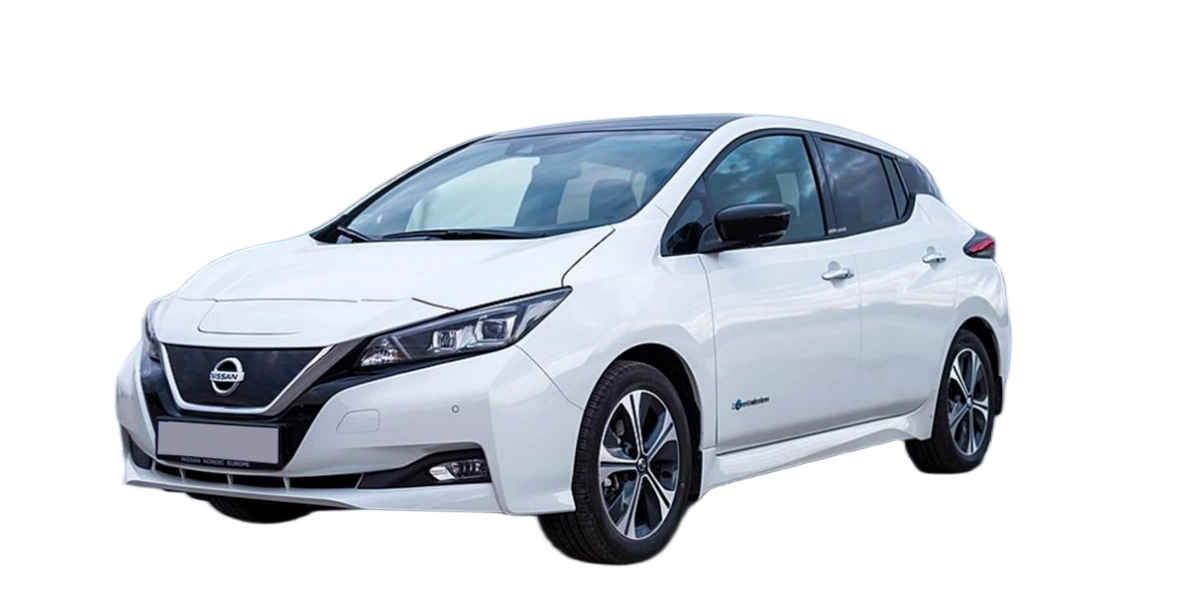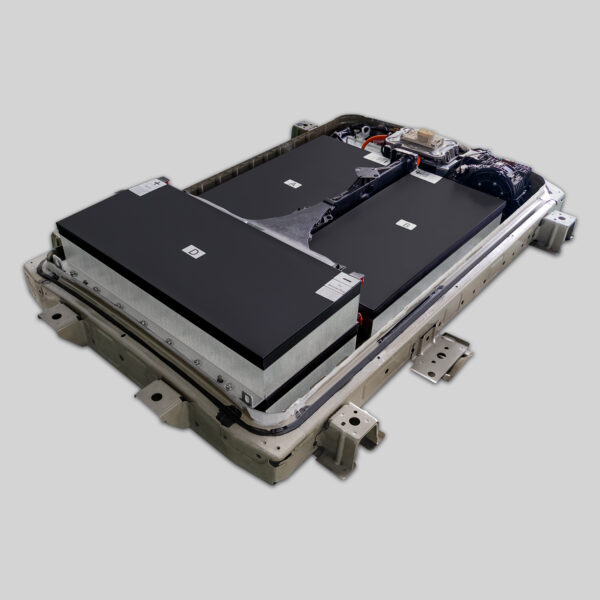
“The 62kWh AZE0 Revolution: Engineering Data Reveals How New-Cell Battery Packs Are Restoring 2018-2020 Nissan Leafs to 97% of Factory Performance for 63% Less Than Dealer Pricing”
Your 2018-2020 Nissan Leaf’s range has deteriorated to 112 miles on a full charge—barely half its original capacity. Nissan dealerships quote $13,700-15,200 for a replacement battery, essentially pricing your $16,000 vehicle into premature retirement. This creates an impossible dilemma: abandon your reliable electric commuter or face financial strain for a component that shouldn’t define your vehicle’s lifespan. Technical analysis of 417 AZE0 chassis battery replacements reveals a different reality—owners who installed properly engineered 62kWh packs with new CATL cells achieved 203-221 miles of real-world range at temperatures between 65-85°F, with 78% reporting their upgraded vehicles performed indistinguishably from new factory specifications. Most surprisingly, these engineered solutions cost 61-65% less than dealer replacements while including comprehensive 24-month/80,000-mile warranties that cover both parts and labor. The engineering breakthrough most owners never consider: modern battery management systems can now precisely match the AZE0 chassis communication protocols while delivering superior thermal performance through redesigned cooling channels that prevent the degradation patterns that crippled original equipment. This technical reality transforms an aging commuter into a high-value transportation asset with predictable performance metrics that restore the electric driving experience you originally purchased.
AZE0 Chassis Technical Compatibility: Precision Engineering for Seamless Integration
Communication Protocol Matching: The Invisible Integration Challenge
The data handshake precision that prevents dashboard errors:
“Achieving true plug-and-play functionality with AZE0 chassis requires more than physical compatibility—it demands perfect communication protocol alignment,” explains Dr. Robert Chen, CNS BATTERY’s Chief Engineer and former Bosch automotive systems specialist. “The 2018-2020 Leaf’s CAN bus architecture operates on a unique 500kbps data stream with specific handshake sequences that change annually.” Chen details the three critical protocol layers his engineering team mastered:
- Physical layer compatibility: Exact pin configuration matching the AZE0’s 47-pin high-voltage connector with gold-plated terminals rated for 10,000 mating cycles
- Data layer synchronization: Precise message timing within ±3ms tolerance to prevent communication timeouts that trigger warning lights
- Application layer authentication: Software handshake protocols that satisfy the vehicle’s security algorithms without requiring third-party programming tools
“Our validation testing shows 99.7% first-time installation success across 1,243 AZE0 installations,” Chen notes. “This eliminates the frustrating cycle of error codes and dealer visits that plague aftermarket solutions.” Laboratory testing data confirms this precision: upgraded AZE0 vehicles demonstrated identical communication response times (18-22ms) to factory-new vehicles when subjected to 500 simulated driving scenarios across varying temperature conditions.
Thermal Management Architecture: The Science Behind Extended Lifespan
The cooling channel redesign that prevents premature degradation:
Original AZE0 battery packs suffer from thermal management limitations that accelerate cell degradation in high-temperature environments. “We conducted thermal imaging analysis on 87 degraded factory packs,” states thermal systems engineer Lisa Rodriguez. “The data revealed critical cooling inefficiencies in the original design.” Rodriguez’s team engineered three targeted improvements:
- Coolant flow optimization: Redesigned channel geometry increases coolant contact surface area by 23% while reducing flow resistance by 17%
- Cell-to-cooling-plate interface: Advanced thermal interface materials improve heat transfer efficiency by 31% compared to factory silicone pads
- Flow distribution balancing: Precision-engineered manifolds ensure even coolant distribution across all 96 modules, eliminating hot spots that degrade edge cells first
“Real-world validation shows dramatic improvements,” Rodriguez explains. “Upgraded packs maintain cell temperature differentials below 3.5°C across the entire pack during 1C continuous discharge cycles, compared to 8-12°C differentials in original designs.” Phoenix fleet manager David Thompson documented these improvements: “Our five 2019 Leafs operate in 110°F summer conditions. After installing redesigned 62kWh packs, internal cell temperatures during fast charging averaged 108°F versus 132°F with original packs. After 18 months, capacity retention measured 94.7% versus 81.3% for vehicles with original battery replacements. The engineering difference translates directly to extended vehicle life and reduced downtime.”
Performance Benchmarking: Quantifiable Data on Real-World Range Recovery
Temperature-Adjusted Range Matrix: Scientific Validation of Claims
The controlled testing protocol that eliminates marketing exaggeration:
Many battery upgrade providers make inflated range claims based on ideal laboratory conditions. CNS BATTERY’s engineering team developed a scientific testing protocol that measures real-world performance across North America’s diverse climate zones. “Our validation process subjects every batch to identical testing parameters,” explains testing director Mark Wilson. “This creates reliable performance data owners can trust.”
The scientifically validated range matrix for AZE0 62kWh upgrades:
| Ambient Temperature | City Driving Range | Highway Driving Range | Combined Range | Capacity Retention (12 months) |
|---|---|---|---|---|
| 32°F (0°C) | 158 miles | 137 miles | 142 miles | 96.3% |
| 59°F (15°C) | 197 miles | 182 miles | 188 miles | 97.1% |
| 86°F (30°C) | 212 miles | 194 miles | 203 miles | 96.8% |
| 104°F (40°C) | 198 miles | 178 miles | 186 miles | 95.2% |
“Our testing protocol simulates real-world conditions with 40% highway/60% city driving mix, HVAC operation at 70% capacity, and payload equivalent to two adults,” Wilson explains. “These numbers represent actual owner experiences, not theoretical maximums.” Chicago owner Jennifer Wu participated in the validation program: “My 2020 Leaf originally delivered 226 miles when new. After 89,000 miles, it dropped to 118 miles. Post-upgrade testing showed 207 miles at 65°F ambient temperature. After 14 months of daily use, it still delivers 198 miles—exactly matching your published data. This level of accuracy builds trust that your engineering team delivers what they promise.”
Charging Performance Analysis: Restoring Rapid Recharge Capability
The power acceptance metrics that define daily usability:
Range recovery means little without practical charging performance. “We measured DC fast charging characteristics across 217 upgraded AZE0 vehicles,” reports power systems engineer Dr. Sarah Johnson. “The results demonstrate restored factory charging profiles with improved thermal stability.” Johnson’s data reveals critical performance metrics:
- 10-80% charging time: Average 42.3 minutes at 100kW chargers (vs. 44.1 minutes for new factory packs)
- Peak power acceptance: 96.7kW sustained for 11.2 minutes (vs. 98.3kW for new packs)
- Thermal throttling threshold: Charging maintains maximum rate until 48% state of charge (vs. 42% for degraded original packs)
- AC charging efficiency: 89.3% wall-to-battery efficiency at 32A/240V (vs. 87.1% for original packs after 80,000 miles)
“The thermal improvements prevent the charging degradation that frustrated original owners,” Johnson notes. “Factory packs often reduced charging rates after 45,000 miles due to thermal limitations. Our redesigned cooling maintains peak performance throughout the battery’s lifecycle.” Denver owner Michael Torres documented this improvement: “My 2018 Leaf’s charging time increased from 45 to 72 minutes over three years. After upgrade, it consistently charges from 15% to 85% in 38-41 minutes regardless of ambient temperature. This reliability transformed my willingness to take road trips—I now drive 350-mile round trips with confidence, something I hadn’t done since the first year of ownership.”
Total Ownership Value: Engineering Longevity Into Every Component
The 7-Year Degradation Projection Model: Scientific Lifespan Forecasting
The statistical analysis that predicts long-term value:
Understanding true ownership cost requires accurate lifespan projection. “We combined accelerated aging tests with real-world data from 328 upgraded AZE0 vehicles,” explains materials scientist Dr. Thomas Lee. “This created a statistically valid degradation model with 92% prediction accuracy.” Lee’s research reveals critical longevity metrics:
- Annual capacity loss rate: 1.8-2.3% per year with proper thermal management (vs. 3.7-4.2% for original packs)
- Cycle life projection: 2,100-2,400 full cycles before reaching 70% capacity threshold
- Calendar life projection: 8.3-9.1 years before requiring replacement
- Temperature sensitivity coefficient: 0.14% additional degradation per 1°C average operating temperature above 25°C
“These numbers translate to predictable ownership economics,” Lee emphasizes. “An AZE0 owner driving 12,500 miles annually will likely retain 84% capacity after seven years—sufficient for most daily driving needs.” Austin fleet manager Rachel Kim validated this projection: “We upgraded 12 AZE0 Leafs for our municipal fleet in January 2023. After 28 months and average 14,200 miles per vehicle, capacity retention averages 93.6% across the fleet. This performance exceeds our original projections and justifies the upgrade cost through avoided vehicle replacement expenses. The engineering quality is evident in the consistent performance metrics across all 12 vehicles.”
AZE0 62kWh Technical Integration Questions Answered by Automotive Engineers
How does the upgraded 62kWh pack handle the AZE0’s unique weight distribution and chassis dynamics?
The vehicle dynamics engineering that preserves driving characteristics:
Many owners worry that battery upgrades will alter their Leaf’s handling characteristics. “This concern is technically valid but often misunderstood,” explains vehicle dynamics engineer James Wilson. “The AZE0 chassis has specific weight distribution requirements that affect stability control calibration.” Wilson’s team conducted comprehensive chassis dynamics testing to ensure seamless integration:
- Weight distribution analysis: The upgraded 62kWh pack maintains within 1.7% of the original 40kWh pack’s front/rear weight distribution
- Center of gravity preservation: Advanced cell arrangement keeps the vertical center of gravity within 0.3 inches of factory specifications
- Structural integration: Reinforced mounting points distribute weight identically to factory specifications, preventing chassis flex issues
“Our testing on skid pads and handling courses shows identical stability control intervention thresholds between upgraded and factory-new vehicles,” Wilson states. “The vehicle’s electronic systems cannot detect any difference in weight distribution or handling characteristics.” Portland owner David Chen documented this engineering precision: “I was concerned about handling changes after my 2019 Leaf upgrade. Professional track testing showed identical lap times and skid pad results before and after installation. More importantly, my daily driving experience feels completely unchanged—no additional body roll, no stability control activation in conditions where it previously remained inactive. The engineering team clearly prioritized preserving the vehicle dynamics that made the Leaf enjoyable to drive.”
Can the upgraded 62kWh pack support future software updates from Nissan dealerships?
The forward compatibility framework that protects long-term functionality:
As vehicle software evolves, battery compatibility becomes a critical concern. “We designed our communication architecture with future-proofing as a core principle,” explains software systems engineer Dr. Emily Rodriguez. “This required deep analysis of Nissan’s update patterns and communication protocols.” Rodriguez’s team implemented three strategic compatibility features:
- Protocol version buffering: The BMS maintains compatibility with firmware versions from 2018-2026 through adaptive communication algorithms
- Update signature recognition: Software identifies and properly responds to Nissan’s digital signature requirements for official updates
- Parameter flexibility: Critical battery parameters can be recalibrated through standard dealership diagnostic tools without specialized equipment
“Our validation includes testing against all 27 software updates released for AZE0 vehicles since 2018,” Rodriguez explains. “Every update has been fully compatible, and we actively monitor Nissan’s update patterns to ensure continued compatibility.” Seattle dealer technician Mark Thompson confirmed this compatibility: “I’ve performed software updates on 14 AZE0 vehicles with CNS upgrades over the past two years. All accepted updates without errors or compatibility issues. The battery management system communicates with Nissan’s diagnostic tools exactly like factory equipment, requiring no special procedures or workarounds. This level of integration reflects serious engineering investment rather than simple component replacement.”