How to Diagnose BMW i3 Low Voltage Battery (Pro) – The $200 Part That Masks a $15,000 Crisis
A 2015 BMW i3 is towed into your shop, completely dead. The dashboard is black, the doors won’t unlock remotely, and the customer is frustrated. “It just died overnight,” they explain. “My neighbor said it’s probably just the small 12V battery under the hood. He said if I replace that for $200, the car will wake up. Can you just swap it and see?”
As a professional EV technician in 2026, you know this is one of the most dangerous oversimplifications in electric vehicle repair. Yes, the 12V auxiliary battery is the “brain” of the i3, and yes, it fails often. But in an aging BMW i3, a dead 12V battery is rarely an isolated event. It is frequently the symptom of a much deeper, more expensive catastrophe: a failing DC-DC converter caused by high-voltage instability, or worse, a High Voltage (HV) battery pack that has shut down and stopped charging the 12V system entirely.
If you simply swap the 12V battery, clear the codes, and send the customer home, you risk a humiliating comeback: the new 12V battery will drain within 48 hours because the root cause—the HV system failure—was never addressed. You waste labor, burn through inventory, and lose the customer’s trust when their car strands them again on the side of the road.
Why does the 12V battery keep dying on older i3s?
How do you distinguish between a simple bad battery and a critical HV system shutdown?
And when your diagnostics reveal the HV pack is the culprit, how do you pivot from a $200 parts swap to a high-margin, life-saving battery upgrade?
At CNS BATTERY, we specialize in looking beyond the obvious. We know that true reliability comes from a healthy high-voltage ecosystem, not just a fresh 12V cell. This guide details the professional diagnostic workflow for low voltage issues, exposes the myth of the “simple 12V fix,” and reveals why replacing the entire HV system is often the only ethical path forward.
The Anatomy of the “Dead i3”: It’s Not Just the 12V
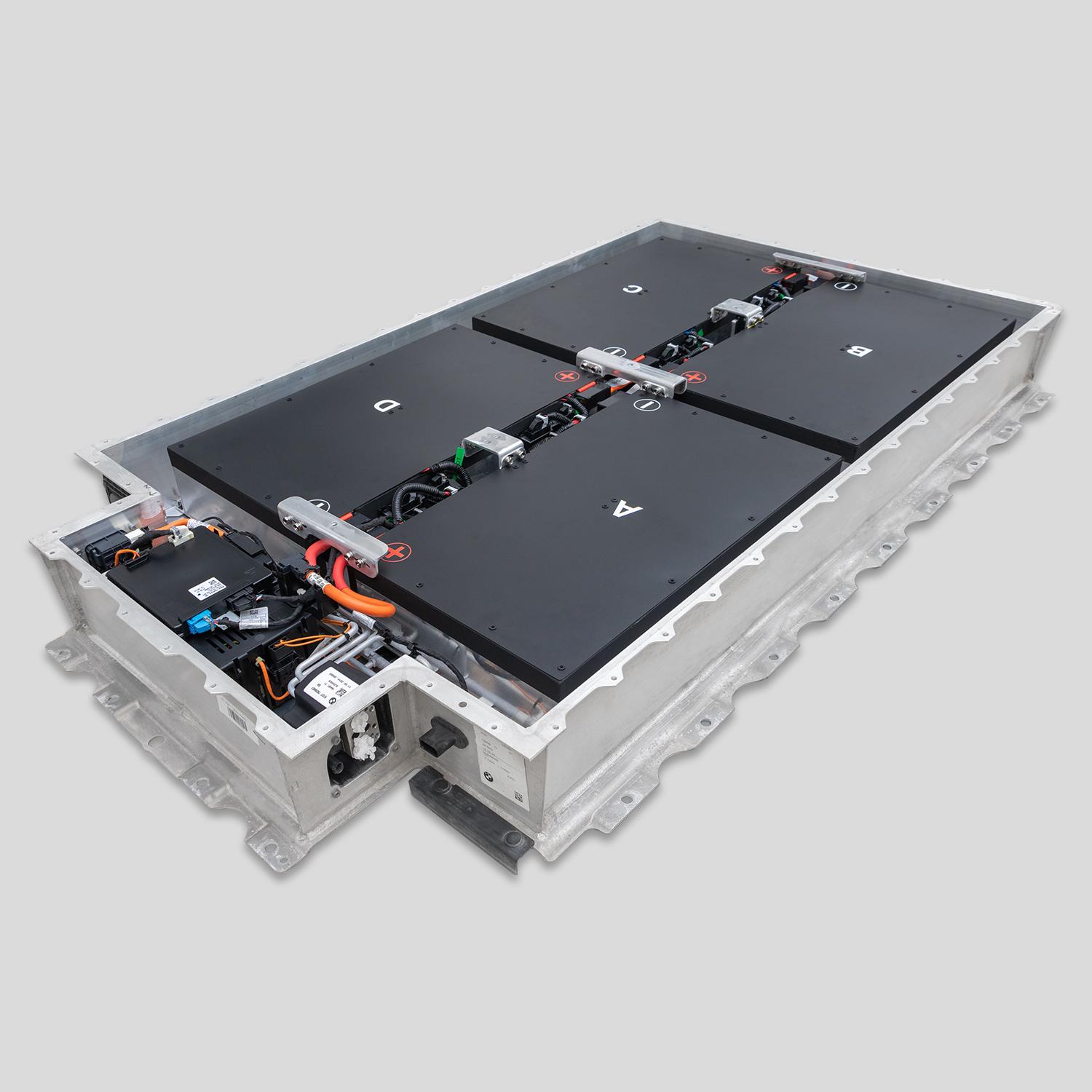
To fix the problem, you must understand the power hierarchy. The BMW i3 cannot drive on the 12V battery; it only powers the computers, contactors, and lights. The High Voltage (HV) battery powers the motor AND charges the 12V battery via the DC-DC converter.
1. The Simple Case: Aged 12V Battery
The standard AGM 12V battery lasts 3-5 years. In a 10-year-old i3, it may be on its third or fourth replacement.
- Symptom: Car won’t start, but jumps fine. Once running, the voltage stays steady at 13.5V-14.5V.
- Verdict: Replace the 12V battery. Problem solved.
2. The Hidden Killer: DC-DC Converter Failure
The DC-DC converter steps down 400V from the HV pack to 14V for the 12V system.
- The Cause: If the HV pack has high internal resistance or unstable voltage, it can stress the DC-DC converter until it fails.
- Symptom: New 12V battery installed, but it drains again in two days. The car runs fine until the 12V dies, then shuts down abruptly while driving.
- Verdict: The DC-DC converter needs replacement ($1,500+), BUT you must ask why it failed. Often, it’s because the HV pack is sending it dirty, unstable power.
3. The Catastrophe: HV Pack Shutdown
This is the most common scenario in 2026. The HV battery detects a critical fault (cell imbalance, insulation leak, thermal issue) and enters a hard lockout.
- The Mechanism: To protect itself, the BMS opens the main contactors. The HV power is cut off. Consequently, the DC-DC converter stops working. The 12V battery is left to power the car alone until it drains completely.
- Symptom: Car is dead. Jump-starting works temporarily, but the dashboard soon flashes “High Voltage System Malfunction.” The 12V voltage drops rapidly even while “running” because the DC-DC isn’t charging it.
- Verdict: The 12V battery is innocent. The HV battery pack is dead.
Professional Diagnostic Protocol: Finding the Root Cause
Do not guess. Follow this rigorous workflow to determine if the issue is the 12V battery or the HV system.
Step 1: The Load Test & Resting Voltage
- Test: Measure the 12V battery voltage after sitting for 2 hours.
- < 12.0V: Battery is deeply discharged or failed.
- > 12.6V: Battery is healthy; look elsewhere.
- Action: If low, charge or replace the 12V battery temporarily to get the car “awake” for further testing. Do not finalize the repair yet.
Step 2: The DC-DC Converter Output Test (Critical)
With the car powered on (Ready mode):
- Measure: Check voltage at the 12V terminals.
- 13.5V – 14.5V: DC-DC converter is working. The 12V battery was likely the sole issue.
- < 13.0V or Fluctuating: The DC-DC converter is not charging.
- The Trap: If the voltage is low, do not just replace the DC-DC converter. Proceed to Step 3.
Step 3: High Voltage System Scan
Connect a bidirectional scan tool (BMW ISTA, Autel, Launch).
- Check HV Status: Is the HV battery available? Are the main contactors closed?
- Read Fault Codes: Look for “Cell Imbalance,” “Insulation Fault,” “Overtemperature,” or “Service Required.”
- Live Data: Monitor HV battery voltage and State of Charge (SOC).
- The Smoking Gun: If the HV SOC is low, or if the BMS reports a critical fault preventing contactor closure, the HV pack is the root cause. It refused to power the DC-DC converter, which starved the 12V battery.
Step 4: The “Comeback” Simulation
- Test: If you suspect HV issues, leave the car running for 30 minutes while monitoring 12V voltage. Does it drop?
- Verdict: If the 12V voltage drops while the car is “on,” the HV system is failing to support the electrical grid. A new 12V battery will die again.
The Hard Truth: Why Swapping the 12V Isn’t Enough
If your diagnostics show DC-DC failure or HV lockout, you must deliver the hard news: Replacing the 12V battery is like putting fresh water in a bucket with a hole in the bottom.
- The Symptom vs. Disease: The dead 12V battery is the victim, not the culprit. The real killer is the aging HV pack.
- The Recurrence: If you sell a $200 12V battery fix, the customer will return in 3 days with a dead car. They will blame your diagnosis, demand a refund, and leave a negative review.
- The Safety Risk: An HV pack that causes DC-DC failure is often unstable. It could be prone to thermal events or sudden loss of power while driving. Ignoring it is negligent.
The Only Solution: If the HV pack is the cause, the entire high-voltage battery must be replaced.
The CNS BATTERY Solution: Restore Power Permanently
When you explain that the “dead 12V” is actually a symptom of a dying HV battery, the customer will fear the dealer’s $20,000+ quote. This is your opportunity to offer the CNS BATTERY High-Capacity Upgrade—the solution that restores the entire electrical ecosystem.
Why Upgrading Is the Ultimate Fix
- Stable HV Power: Our 120 Ah to 180 Ah upgrades provide rock-solid 400V power. The DC-DC converter receives clean, stable energy and charges the 12V system perfectly every time.
- No More Lockouts: New Grade-A cells eliminate the critical faults that cause the BMS to shut down. The car stays “Ready,” and the 12V stays charged.
- System Longevity: A healthy HV pack reduces stress on the DC-DC converter and 12V battery, extending the life of all components.
- Double the Range: While fixing the no-start issue, you upgrade the customer from a failing pack to a system offering 130–200+ miles of range.
- Cost Efficiency:
- Repeated 12V Swaps: $200 x 3 + Towing fees + Angry Customer.
- DC-DC + 12V Swap: $2,000+ (might still fail if HV is unstable).
- Dealership HV Replacement: $20,000+.
- CNS BATTERY Upgrade: $8,000 – $14,000 USD. You get a brand-new HV system, a reliably charging 12V system, and double the range for half the dealer price.
- Warranty Confidence: Backed by our 3–5 Year Warranty, ensuring the car starts every morning for years to come.
Real Story: From “Dead Every Morning” to “Always Ready”
“City EV Diagnostics” had a customer who had replaced his 12V battery three times in six months. Each time, the car died again after two days. The previous shops kept blaming “parasitic draw.”
“Our scan revealed the HV pack was entering a fault state and cutting power to the DC-DC converter,” says the lead tech. “The 12V battery wasn’t bad; it was just starving. We explained that the HV pack was the root cause. We installed a CNS BATTERY 150 Ah upgrade. Since then, the car has started perfectly every single day. The 12V voltage holds steady at 14.2V. The customer got 170 miles of range and finally stopped worrying about jump-starting his car. We didn’t just fix a battery; we fixed his life.”
Stop Treating Symptoms, Start Solving Problems
Diagnosing BMW i3 low voltage battery issues requires looking beyond the 12V unit. Don’t sell your customers temporary fixes that lead to recurring breakdowns.
Be the shop that finds the root cause. Be the shop that offers the permanent solution: a brand-new high-voltage system that keeps the entire car alive and reliable.
Facing a recurring dead 12V battery?
Stop guessing and start solving. Contact CNS BATTERY today for a professional diagnostic consultation. Discover how our BMW i3 Series Battery upgrades can eliminate low voltage issues permanently, providing your customers with a reliable, always-ready, and long-range driving experience.
👉 Get Your Low Voltage Diagnostic & Upgrade Quote
Frequently Asked Questions (FAQ) for Shops
1. Can a bad 12V battery cause the i3 not to start?
Yes. The 12V battery powers the computers that close the high-voltage contactors. If the 12V is dead, the car cannot access its main propulsion battery. However, if the 12V keeps dying, the problem is likely the HV system failing to charge it.
2. Why does my i3’s 12V battery keep dying after replacement?
This indicates a charging system failure. Either the DC-DC converter is broken, or the High Voltage battery has shut down due to a critical fault and is no longer sending power to the DC-DC converter. Simply replacing the 12V battery will not fix this.
3. How do I test if the DC-DC converter is working?
With the car in “Ready” mode, measure the 12V battery terminal voltage. It should read between 13.5V and 14.5V. If it reads below 13V (or matches the resting voltage of the battery), the DC-DC converter is not charging.
4. Can a failing HV battery cause 12V issues?
Absolutely. This is very common in older i3s. If the HV BMS detects a severe error (imbalance, leak, etc.), it disconnects the HV pack. This cuts power to the DC-DC converter, causing the 12V battery to drain rapidly.
5. Will a new HV battery fix the 12V charging issue?
Yes. A CNS BATTERY upgrade provides stable high-voltage power, allowing the DC-DC converter to function correctly and keep the 12V battery fully charged. It eliminates the root cause of the drainage.
6. Is it safe to drive with a failing DC-DC converter?
No. Once the 12V battery drains, the car will lose power steering, braking assistance, and computer control, leading to a sudden and dangerous shutdown while driving.
7. How much does it cost to fix low voltage issues?
Replacing the 12V battery costs $200–$300 but is often a temporary fix. Replacing the DC-DC converter costs $1,500–$2,000. If the HV pack is the cause, a dealership replacement is $20,000+. A CNS BATTERY upgrade costs $8,000–$14,000, solving the HV, DC-DC, and 12V issues permanently while doubling your range.