How to Replace BMW i3 Battery Voltage Regulator (Shop) – The $600 Myth That Hides a $15,000 Crisis
A 2015 BMW i3 is towed into your shop, displaying erratic voltage readings and a critical “High Voltage System Malfunction” warning. The customer, clutching a printout from an online forum, asks hopefully: “The diagnostic code says ‘Voltage Regulator Fault.’ Can’t you just swap that part out? I found one online for $200. Maybe it’s a $600 job total? I don’t want to hear that I need a whole new battery.”
As a professional EV technician in 2026, you recognize this as one of the most dangerous misconceptions in electric vehicle repair. The BMW i3 does not have a standalone, serviceable “voltage regulator” like a gasoline car alternator.
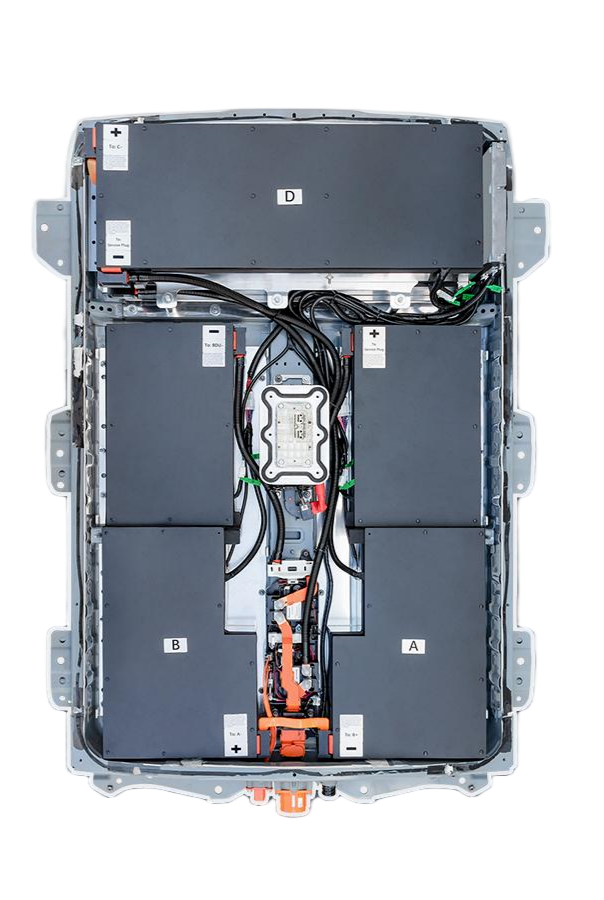
In the high-voltage architecture of the i3, voltage regulation is an intrinsic function of the Battery Management System (BMS) and the internal cell chemistry. When the system reports a “regulator fault,” it almost never means a specific component has failed; it means the battery cells themselves can no longer maintain stable voltage due to severe degradation, internal shorts, or massive imbalance.
Attempting to “replace a regulator” that doesn’t exist as a separate part is a futile goose chase. It wastes billable hours, frustrates the customer, and delays the only real solution: replacing the chemically exhausted battery pack.
Why does the i3 throw a “voltage regulator” error if there is no separate regulator?
What is the actual root cause behind these critical voltage instability codes?
And how do you pivot from a customer’s request for a cheap $600 fix to a profitable, life-saving battery upgrade?
At CNS BATTERY, we specialize in translating complex BMS errors into clear, actionable solutions. We know that true voltage stability comes from healthy, matched cells, not software tricks or phantom part swaps. This guide debunks the “voltage regulator” myth, explains the real physics behind voltage collapse, and reveals why replacing the entire system is the only ethical path forward.
The Myth of the Standalone Regulator
To fix the problem, you must first educate the customer. In a gas car, the alternator generates power, and a small box called a voltage regulator keeps it at 14V. In the BMW i3:
- No Alternator: The high-voltage battery is the source.
- No External Regulator: Voltage is managed internally by the BMS, which balances 96 individual modules and controls the main contactors.
- The Error Code: When the scanner says “Voltage Regulator Fault” or “Voltage Plausibility,” it is a generic translation of a complex BMS failure. It essentially means: “The battery voltage is doing something physically impossible or unsafe, and I cannot control it.”
The Real Culprits Behind the Error
- Severe Cell Imbalance: One or more modules have lost capacity. Under load, their voltage crashes while others stay high. The BMS sees this chaos and flags a “regulation” failure.
- Internal Short Circuits: A failing cell creates a direct path for current, causing voltage to drop instantly. The BMS cannot “regulate” a short circuit.
- BMS Board Failure (Rare): Occasionally, the BMS electronics themselves fail. However, in 95% of 2026 i3 cases, the BMS is reporting the truth: the battery is dead.
Professional Diagnostic Protocol: Finding the Truth
Do not order a non-existent part. Follow this rigorous workflow to prove the battery is the issue.
Step 1: Live Data Analysis (The Smoking Gun)
Connect a bidirectional scan tool (BMW ISTA, Autel, Launch) and view individual module voltages.
- The Test: Look for deviation between the highest and lowest module.
- The Red Flag: If the difference is >0.20V at rest or >0.50V under load, the “regulator fault” is actually a cell imbalance crisis. The BMS is working correctly by flagging the danger.
- The Verdict: No external part can fix internal cell mismatch.
Step 2: Internal Resistance (IR) Mapping
Use an AC impedance meter to measure the resistance of the outlier modules.
- The Threshold: Healthy modules: 1-3 mΩ. Failed modules: >15-20 mΩ.
- The Reality: High IR causes voltage sag that looks like a regulation failure. The cells are physically unable to hold voltage under load.
Step 3: BMS Board Verification (Ruling Out the 5%)
Only if cell voltages are perfectly balanced and IR is low should you suspect the BMS board itself.
- The Test: Check for communication errors specific to the BMS processor or power supply rails within the unit.
- The Catch: Even if the BMS board is bad, it is often integrated into the pack assembly or requires coding/calibration that is impossible without a healthy battery to learn from. In most cases, a “bad BMS” on an old i3 is a symptom of the pack dying, not the cause.
The Hard Truth: Why “Replacing the Regulator” Is Impossible
If your diagnostics show cell imbalance, high IR, or voltage collapse, you must deliver the hard news: There is no part to replace.
- Physics Over Parts: You cannot buy a component to fix degraded lithium chemistry. If the cells can’t hold voltage, the “regulation” fails.
- Integrated Design: The “regulation” logic is embedded in the BMS software and hardware, which is calibrated specifically to the unique aging curve of that specific battery pack. Swapping a BMS board from another car rarely works without complex, often impossible, matching procedures.
- The Comeback Guarantee: If you tell the customer you “fixed the regulator” (by clearing codes or swapping a board) but the cells are still bad, the error will return within miles. The customer will feel cheated, and your reputation will suffer.
The Only Solution: The entire battery pack must be replaced with a system that has stable, healthy cells capable of maintaining voltage.
The CNS BATTERY Solution: Perfect Voltage Stability Guaranteed
When you explain that the “regulator fault” is actually a dying battery, the customer will fear the dealer’s $20,000+ quote. This is your opportunity to offer the CNS BATTERY High-Capacity Upgrade—the solution that restores perfect voltage control.
Why Upgrading Is the Ultimate Fix
- Brand-New Chemistry: Our 120 Ah to 180 Ah upgrades use fresh Grade-A cells with low, consistent internal resistance. They hold voltage rock-solid under any load.
- Integrated BMS Harmony: Our packs come with modern BMS units pre-calibrated for the new cells. The “voltage regulator” logic works flawlessly because the physical cells match the expectations perfectly.
- Zero Imbalance: All cells are matched to within millivolts. No wild swings, no plausibility errors, no fault codes.
- Instant Reliability: Upon installation, the voltage readings are stable and accurate. The “malfunction” light vanishes forever.
- Double the Range: While fixing the voltage error, you upgrade the customer from a failing pack to a system offering 130–200+ miles of range.
- Cost Efficiency:
- Chasing a “Regulator”: $600+ (wasted labor/parts) + Angry Customer.
- Dealership Replacement: $20,000+.
- CNS BATTERY Upgrade: $8,000 – $14,000 USD. You get a brand-new, stable battery with double the range for half the dealer price.
- Warranty Confidence: Backed by our 3–5 Year Warranty, ensuring voltage stability for years to come.
Real Story: From “Part Hunter” to “Range Believer”
“City EV Diagnostics” had a customer insist on finding a “voltage regulator” for his 2015 i3. He had already bought a used BMS board online for $400. The tech explained that the live data showed 0.6V deviation across the pack.
“We told him: ‘The board isn’t broken; your battery is lying to it because the cells are dead.’ We installed a CNS BATTERY 150 Ah upgrade instead. The transformation was instant. The voltage lines on the scanner were flat and stable. The error code cleared and never returned. The customer got 170 miles of range and finally understood that the ‘regulator’ was just the messenger, not the problem. He thanked us for saving him from wasting money on a useless part.”
Stop Chasing Ghosts, Start Solving Problems
Replacing a BMW i3 battery voltage regulator is a myth. There is no such serviceable part. The error is a symptom of fundamental battery failure. Don’t sell your customers false hope with phantom repairs.
Be the shop that diagnoses the root cause. Be the shop that offers the permanent solution: a brand-new battery system that provides stable voltage, accurate data, and reliable power.
Facing a “Voltage Regulator” fault?
Stop guessing and start solving. Contact CNS BATTERY today for a professional diagnostic consultation. Discover how our BMW i3 Series Battery upgrades can eliminate voltage instability permanently, providing your customers with a trustworthy, stable, and long-range driving experience.
👉 Get Your Voltage Diagnostic & Upgrade Quote
Frequently Asked Questions (FAQ) for Shops
1. Does the BMW i3 have a separate voltage regulator?
No. Voltage regulation is handled internally by the Battery Management System (BMS) and the chemical stability of the battery cells. There is no standalone serviceable part called a “voltage regulator.”
2. Why does my scan tool say “Voltage Regulator Fault”?
This is a generic translation of a complex BMS error. It usually means the battery cells are severely imbalanced, have high internal resistance, or are experiencing internal shorts, causing voltage readings that the BMS cannot manage or trust.
3. Can I fix this by replacing the BMS board?
Rarely. While a faulty BMS board is theoretically possible, 95% of these errors on older i3s are caused by degraded battery cells. Replacing the board without fixing the cells will result in the error returning immediately.
4. What causes voltage instability in an i3?
The primary causes are cell degradation (loss of capacity), internal resistance spikes, and module imbalance. As cells age, they can no longer maintain stable voltage under load, triggering the BMS fault.
5. Will a new battery fix the voltage regulator error?
Yes. A CNS BATTERY upgrade includes brand-new, matched cells and a modern BMS. The system will maintain perfect voltage stability, eliminating the fault code permanently.
6. How much does it cost to fix this issue?
Attempting to diagnose/replace non-existent parts costs $400–$800 with no guarantee of success. A dealership battery replacement costs $20,000+. A CNS BATTERY upgrade costs $8,000–$14,000, providing a brand-new, stable battery with double the range, offering the best value.
7. Is it safe to drive with a voltage regulator fault?
No. This fault indicates the battery management system has lost control over voltage levels. This can lead to sudden power loss, inability to charge, or potential thermal events. The vehicle should be towed immediately.