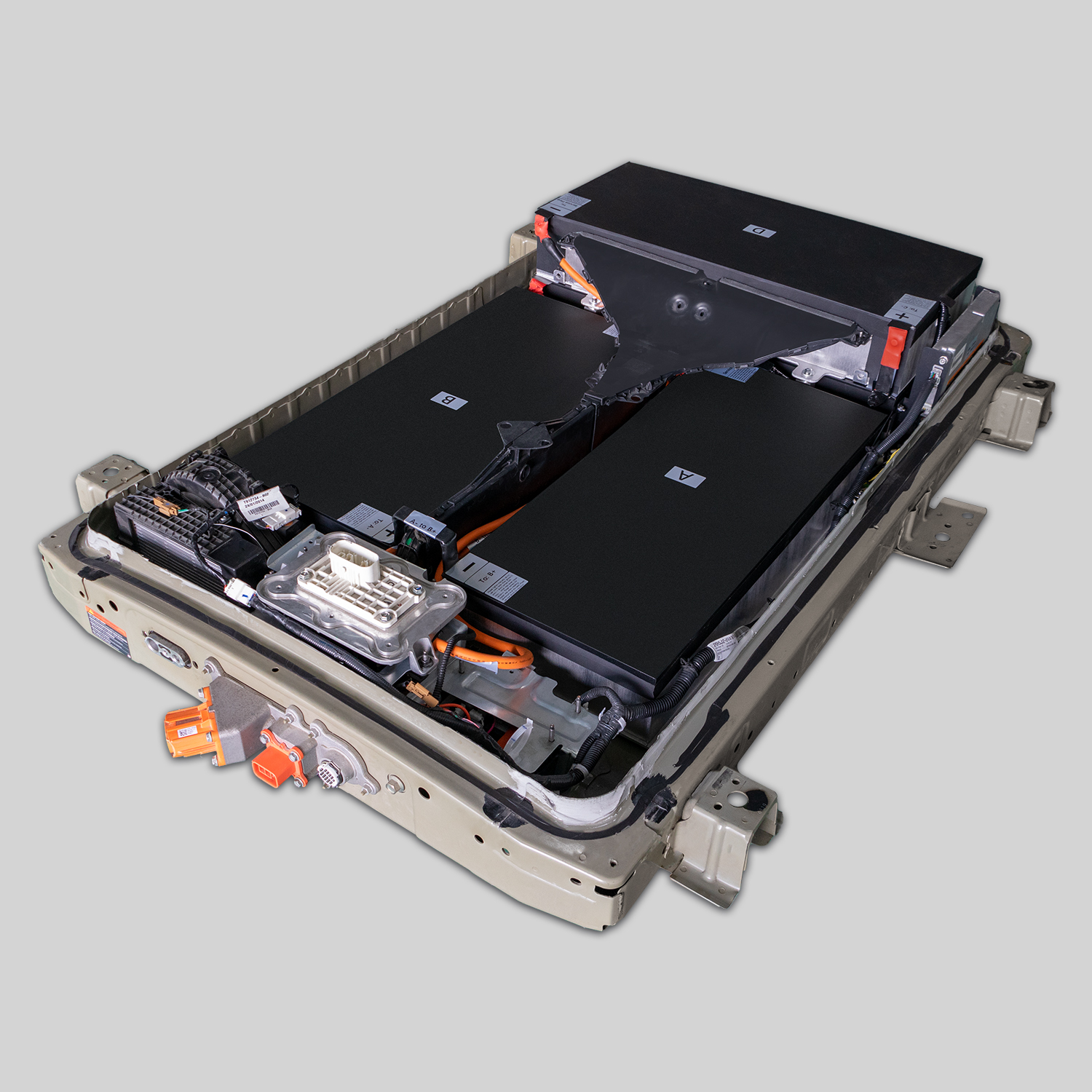
How to Diagnose BMW i3 Battery Module Failure (Pro) – The $200 Test That Saves You From a $15,000 Mistake
A 2015 BMW i3 is towed into your shop. The dashboard flashes the dreaded “High Voltage System Malfunction,” and the customer is desperate. “My friend said just one cell module is bad,” they plead. “Can’t you just find that one bad module, swap it out for a used one from eBay for $300, and save me from buying a whole new battery? I can’t afford $20,000.”
As a professional EV technician in 2026, you know this is the most dangerous trap in the independent EV repair business. Diagnosing a single “bad module” is easy; fixing it by swapping individual cells is a financial and safety nightmare.
The reality of the BMW i3 battery architecture is that modules do not fail in isolation. When one module dies, it is often the symptom of a pack-wide chemical collapse. Attempting to replace a single module in a 10-year-old pack creates a chemical mismatch that guarantees the repair will fail within weeks, leaving you with an angry customer, wasted labor hours, and potential liability for a fire hazard.
How do you definitively prove which module has failed?
Why does replacing a single “bad” module almost always lead to total system failure?
And how do you pivot from a customer’s request for a cheap $300 fix to a profitable, warranty-backed full battery upgrade?
At CNS BATTERY, we specialize in empowering shops with the right diagnostic protocols and business strategies. We know that true expertise isn’t just finding the fault; it’s recommending the only solution that works. This guide details the professional workflow for diagnosing BMW i3 module failure, exposes the myth of the “single module swap,” and reveals why a complete system replacement is the only ethical path forward.
The Anatomy of Failure: Why Modules Don’t Die Alone
Before you pick up your scan tool, you must understand the electrochemistry. The BMW i3 battery consists of 96 individual modules connected in series. They age together, subjected to the same heat cycles, charge rates, and vibration.
1. The Domino Effect
When a module fails (drops in capacity or spikes in resistance), it forces the remaining 95 healthy modules to work harder to compensate. This extra stress accelerates the degradation of the neighbors. By the time Module #42 fails completely, Modules #41 and #43 are likely already critically weakened.
2. The Chemical Mismatch Trap
Even if you find a “good” used module to replace the dead one, it will have a different State of Health (SOH) and Internal Resistance (IR) than the 95 aged modules in the pack.
- The Result: The BMS will immediately detect the imbalance. The new module will charge faster and discharge slower than the old ones, triggering fault codes within days. The pack will never balance correctly again.
3. The Root Cause is Usually Systemic
Rarely does a module fail due to a manufacturing defect in isolation. Most failures are caused by:
- Coolant Intrusion: If one module leaked, the conductive coolant likely contaminated adjacent modules.
- Thermal Runaway History: If the pack overheated, the damage is widespread, not localized.
- Age: After 10 years, the entire chemistry is degraded. Replacing one brick in a crumbling wall doesn’t save the house.
Professional Diagnostic Protocol: Finding the Culprit
To convince a customer that a full replacement is necessary, you need irrefutable data. Follow this rigorous three-step protocol.
Step 1: Live Data Deviation Analysis
Connect a bidirectional scan tool (BMW ISTA, Autel, Launch) and view individual module voltages with the car at rest.
- The Metric: Calculate the difference between the highest and lowest module voltage.
- The Threshold:
- < 0.05V: Normal variance.
- 0.05V – 0.15V: Moderate degradation. The pack is failing.
- > 0.15V: Critical Failure. The outlier module is dead or dying.
- The Trap: Identifying the outlier is easy. Do not stop here and promise a swap.
Step 2: Internal Resistance (IR) Mapping (The Decider)
This is the most critical step that amateur shops skip. Use a professional AC impedance meter or advanced diagnostic tool to measure the IR of every module.
- The Test: Compare the IR of the “bad” module against the “good” ones.
- The Reality Check: In a failed i3 pack, you will rarely find just one high-IR module. You will typically see a “staircase” pattern where 10-20 modules have elevated resistance.
- The Verdict: If more than 10% of the pack shows elevated IR, a single module swap is scientifically doomed to fail. The entire pack is chemically inconsistent.
Step 3: Load Testing the Weak Link
Perform a controlled discharge while monitoring live data.
- Observation: Watch the voltage of the weak module under load. Does it crash instantly (Voltage Cliff)?
- Recovery: When the load is removed, does it bounce back higher than the others?
- Conclusion: This confirms the module has lost capacity. But crucially, check the neighbors. If they also sag significantly, the whole string is compromised.
The Hard Truth: Why “Module Swapping” Is a Business Killer
If your diagnostics show systemic degradation (which they almost always do in 2026), you must deliver the hard news.
- Guaranteed Comeback: A swapped module will create an imbalance. The customer will return in two weeks with the same error code. You will have to refund your labor, destroying your profit margin.
- Safety Liability: Mixing old and new (or different used) cells creates unpredictable thermal behavior. If the pack catches fire due to this mismatch, your shop is liable for negligence.
- No Warranty: You cannot warranty a patched pack. If it fails, the customer has no recourse, and your reputation suffers.
- False Economy: Spending $500 on a diagnostic + $400 on a used module + $600 in labor = $1,500. If it fails in a month, the customer has wasted $1,500 and still needs a $12,000 replacement. You haven’t saved them money; you’ve delayed the inevitable.
The Only Solution: The entire battery pack must be replaced with a matched, balanced system.
The CNS BATTERY Solution: The Profitable Pivot
When you present the data showing that the whole pack is compromised, the customer will panic at the thought of dealer prices. This is your moment to offer the CNS BATTERY High-Capacity Upgrade—the solution that is safer, better, and more affordable than the OEM alternative.
Why Upgrading Beats Module Swapping
- Perfect Chemistry: Our 120 Ah to 180 Ah upgrades use 100% new, matched Grade-A cells. Zero deviation, zero internal resistance mismatch.
- Zero Comeback Risk: Unlike a patched pack, our units are guaranteed to work perfectly from day one. No balance faults, no returns.
- Double the Range: You aren’t just fixing a broken car; you are upgrading it. The customer goes from a failing 60-mile range to 130–200+ miles of real-world driving.
- Real Warranty: We provide a 3–5 Year Warranty. You can sell this with confidence, knowing you are protected.
- Cost Efficiency:
- Failed Module Swap: $1,500 (wasted) + Angry Customer.
- Dealership Replacement: $20,000+.
- CNS BATTERY Upgrade: $8,000 – $14,000 USD. You get a brand-new, high-capacity battery for half the dealer price.
- Higher Shop Margins: Instead of fighting over $600 in labor for a risky swap, you secure a high-ticket sale with robust wholesale margins.
Real Story: From “One Bad Cell” to “Total Renewal”
“City EV Techs” had a customer insist on swapping just Module #12, which showed 0.2V deviation. The tech reluctantly agreed, sourced a used module, and spent 6 hours installing it. The car ran for 4 days before throwing a “Cell Imbalance” code. The IR test revealed that 15 other modules were now drifting due to the stress of the mismatch.
“The customer was furious that they spent $1,400 for nothing,” says the shop owner. “We ate the labor cost and lost their trust. Now, we use the CNS BATTERY protocol. We show them the IR map of the whole pack, explain why a swap won’t work, and offer the upgrade. Last week, we installed a 150 Ah unit. The customer got 170 miles of range, a 4-year warranty, and actually thanked us for saving them from a bad repair. We made a great profit and gained a customer for life.”
Stop Patching, Start Solving
Diagnosing BMW i3 battery module failure is the easy part. The real professional skill lies in convincing the customer that a partial repair is a false economy.
Don’t let your shop get trapped in low-margin, high-risk module swaps. Equip yourself with the data to prove systemic failure, and offer the only solution that guarantees long-term reliability.
Found a failed module?
Don’t risk a comeback. Contact CNS BATTERY today to become a certified partner. Get access to our diagnostic templates, wholesale pricing, and sales training. Turn every module failure diagnosis into a high-margin, warranty-backed upgrade sale.
👉 Get Your Module Failure Solution & Quote
Frequently Asked Questions (FAQ) for Shops
1. Can I really just replace one bad module in a BMW i3?
Technically yes, but professionally NO. While physically possible, it creates a chemical mismatch between the new/used module and the aged pack. This leads to immediate balance faults, reduced performance, and a high probability of total failure within weeks. It is not a viable long-term repair.
2. How do I prove to a customer that the whole pack needs replacing?
Show them the Internal Resistance (IR) map. If multiple modules show elevated resistance (not just the one with low voltage), it proves the degradation is systemic. Explain that replacing one module is like putting a new tire on a car with three bald tires—it doesn’t solve the safety issue.
3. What is the cost difference between a module swap and a full upgrade?
A module swap (parts + labor) might cost the customer $1,200–$1,800, but it offers no warranty and high risk of failure. A CNS BATTERY upgrade costs $8,000–$14,000 but provides a brand-new battery with double the range and a 3–5 Year Warranty, offering vastly superior value.
4. Are used modules from eBay reliable?
Rarely. Used modules have unknown history, unknown cycle counts, and unmatched internal resistance. Installing them is a gamble that usually results in a comeback.
5. Does CNS BATTERY require complex coding after installation?
No. Our upgrades are designed for plug-and-play installation. They communicate correctly with the vehicle’s BMS without needing complex VIN coding or firmware hacking, saving you hours of labor.
6. What if the customer refuses the upgrade and insists on a swap?
Politely decline the work. Explain that your shop cannot ethically perform a repair that you know will fail and poses a safety risk. Offer the CNS BATTERY upgrade as the only warrantied, safe solution.
7. How long does a full battery upgrade take compared to a module swap?
Surprisingly, a full upgrade is often faster. Swapping a single module requires careful disassembly of the pack internals (4-6 hours) plus testing. A CNS BATTERY upgrade involves swapping the entire sealed unit, typically taking 4-6 hours total, with zero risk of internal balancing issues.