BMW i3 High Voltage Port Replacement: Cost for Shops – The $800 Repair That Often Leads to a $12,000 Upgrade
A 2015 BMW i3 is towed into your bay. The customer is frustrated: “I can’t charge the car anywhere. Home charger, public station, even the dealer’s unit—nothing works. The dash says ‘Charging Malfunction.’ My friend said it’s just the charging port. Can you swap it out? How much will that cost?”
As a professional EV shop owner in 2026, you know the hidden complexity behind that simple request. Replacing the High Voltage (HV) charging port on a BMW i3 isn’t just a matter of unbolting a broken part and bolting on a new one. In many cases, a failed charging port is merely the symptom of a deeper issue: internal battery degradation, contactor failure, or BMS rejection.
If you quote a customer $800 for a port replacement based on a guess, and the car still won’t charge afterward because the battery pack itself is refusing energy, you face a nightmare scenario: an angry customer, wasted labor hours, and a return visit that destroys your profit margin.
What is the true cost breakdown of replacing an i3 charging port?
Why do “port replacements” often fail to solve the underlying charging issue?
And how can you pivot from a risky, low-margin parts swap to a high-profit, guaranteed battery upgrade that actually solves the problem?
At CNS BATTERY, we believe in transparency and profitability. We know that accurate diagnosis is the key to avoiding costly comebacks. This guide breaks down the real costs and risks of HV port replacement for repair shops, exposes the diagnostic traps, and reveals why upgrading the entire battery system is often the smarter business move for both you and the customer.
The Hidden Costs: Breaking Down the Price Tag
When a customer asks, “How much to replace the port?”, they expect a simple parts-and-labor quote. But the reality of working on 10-year-old EVs involves significant hidden costs.
1. Parts Availability & Cost
- OEM Scarcity: Genuine BMW HV charging ports (J1772/CCS combo) are increasingly difficult to source as the i3 ages. Dealerships often have long backorders.
- Aftermarket Risks: Third-party ports vary wildly in quality. A cheap port might lack proper sealing (IP67), leading to water intrusion and future insulation faults.
- Cost: A genuine OEM port can cost $400–$600 alone. Aftermarket options range from $200–$400 but carry higher failure risks.
2. Labor Intensity (The Profit Killer)
Replacing the port is not a “front-end” job.
- Access: The port is located behind the front bumper/fender liner. Removal requires partial disassembly of the front fascia, wheel well liners, and sometimes the crash bar.
- HV Safety: You must depower the vehicle, remove the service plug, wait for capacitor discharge, and verify 0V before touching orange cables.
- Cooling Lines: Many i3 charging ports are liquid-cooled. This adds complexity: draining coolant, swapping lines, bleeding air, and refilling with specific EV fluid.
- Total Labor: 3–5 hours. At a shop rate of $150/hour, labor alone is $450–$750.
3. The “Comeback” Risk (The Reputation Tax)
This is the most dangerous cost.
- Scenario: You replace the port for $1,000 total. The customer picks up the car, plugs it in, and… still gets a Charging Malfunction error.
- Root Cause: The original port wasn’t the problem. The battery pack’s internal contactors were welded, or the cells had such high resistance that the BMS rejected the charge before it ever reached the port.
- Result: You must refund the labor, absorb the cost of the returned part, and face an furious customer who thinks your shop is incompetent. Your effective hourly rate drops to negative.
The Professional Verdict: Diagnose Before You Swap
To protect your shop’s bottom line, you must strictly triage before agreeing to replace the port.
Step 1: Live Data Analysis
Connect a bidirectional scan tool. Monitor the charging handshake.
- Does the car “see” the charger? If the BMS detects the pilot signal but refuses to close contactors, the issue is likely internal (battery/contactor), not the port.
- Error Codes: Look for codes related to “Contactor Welding,” “Cell Imbalance,” or “Insulation Fault.” These point to the pack, not the port.
Step 2: Physical Inspection
- Burn Marks? If the port shows signs of melting or arcing, why did it happen? Often, excessive heat from high-resistance connections inside the pack backs up to the port. Simply swapping the port won’t fix the internal resistance causing the heat.
- Water Intrusion? If water damaged the port, check the rest of the HV system for corrosion. Water rarely stops at the port; it travels down the cable to the battery.
Step 3: The DC Fast Charge Test
- Try a DC fast charger. If AC fails but DC works (or vice versa), it helps isolate the issue to specific pins or internal routing. However, if both fail, the likelihood of a pack-level rejection skyrockets.
The Hard Truth: Why Port Replacement Is Often a False Economy
If your diagnostics suggest the battery pack is rejecting the charge (high IR, bad contactors, cell imbalance), explain the harsh reality:
- The Gatekeeper Logic: The BMS controls the charging process. If the battery cells are unsafe, the BMS will never allow the contactors to close, regardless of whether the port is brand new or old.
- Cascading Failures: A burnt port often indicates excessive current draw or heat generated by a struggling battery. Fixing the port without addressing the struggling battery guarantees the new port will burn out too.
- Cost vs. Value: Spending $1,000 on a port swap that doesn’t fix the charging issue is money down the drain. It delays the inevitable battery replacement and frustrates the customer.
The CNS BATTERY Solution: The Profitable Pivot
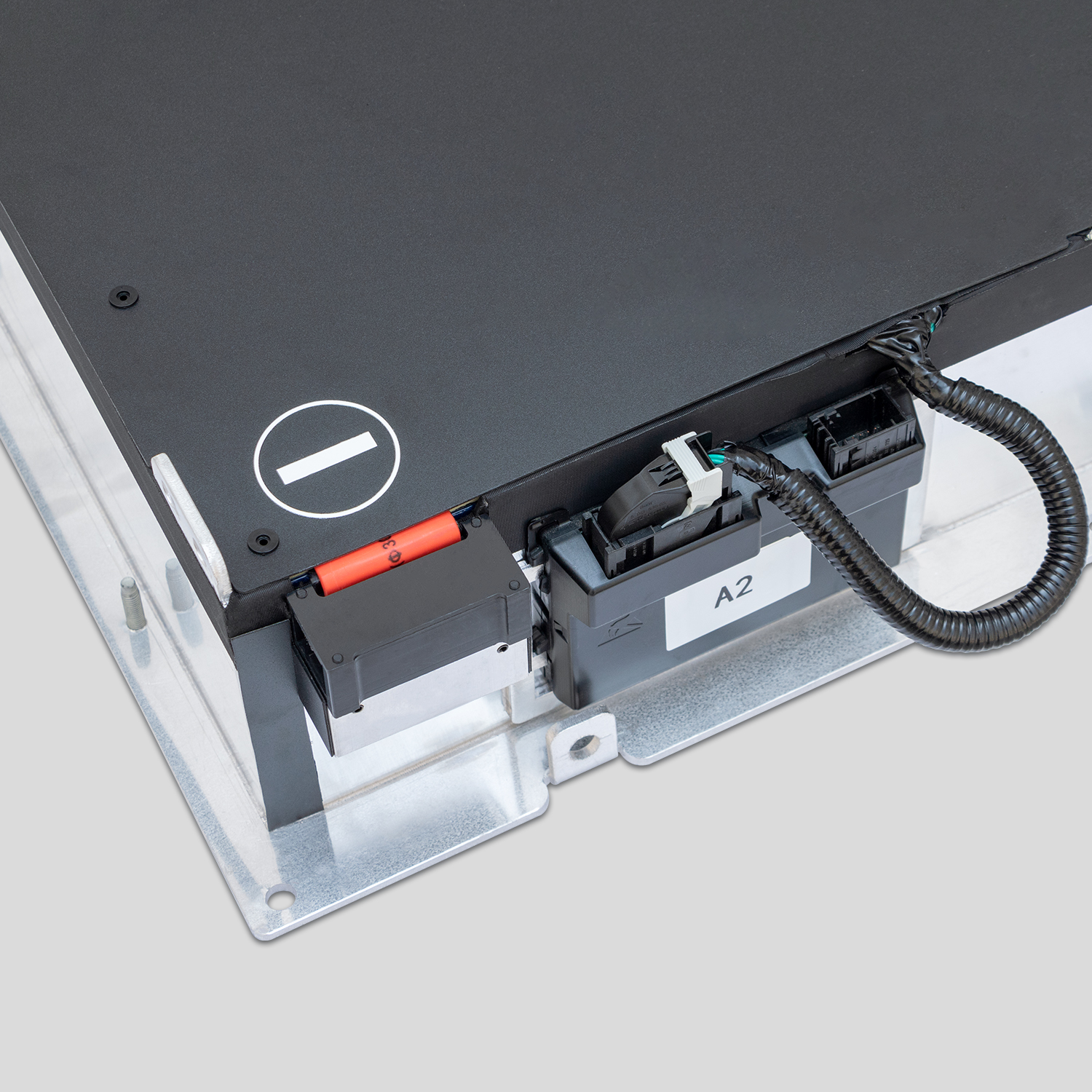
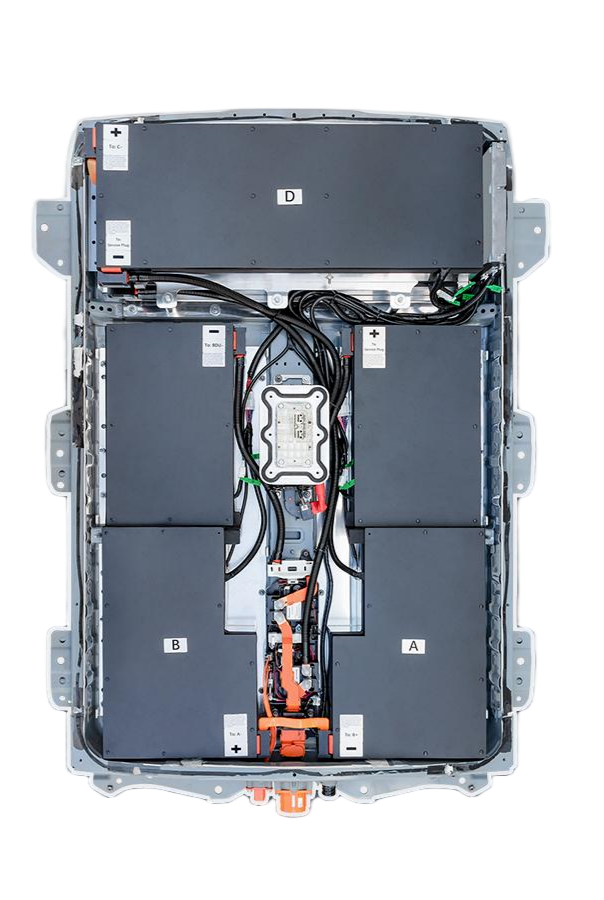
When diagnostics reveal that the charging failure is due to battery degradation (not just a broken port), pivot immediately to the CNS BATTERY High-Capacity Upgrade. This transforms a potential headache into your shop’s most profitable job.
Why Upgrading Beats Port Replacement for Your Bottom Line
- Eliminate the Root Cause: Our upgrades come with brand-new internal contactors, busbars, and management systems. The charging handshake is perfect every time.
- New Port Compatibility: While we focus on the pack, our upgrade ensures the entire charging pathway from cell to port is optimized. (Note: If the physical port is damaged, it can be replaced alongside the upgrade with zero risk of comeback).
- Faster Turnaround: Swap the pack in 4-6 hours. No hunting for rare ports, no complex bleeding of cooling lines for just a port swap (the new pack comes ready).
- Higher Ticket, Higher Margin: Instead of a $1,000 port job with low margin and high risk, you secure an $8,000 – $14,000 USD sale with robust wholesale margins.
- Customer Delight: The customer doesn’t get a “fixed” old car; they get a better-than-new vehicle with 130–200+ miles of range and reliable charging.
- Warranty Protection: We back our upgrades with a 3–5 Year Warranty. You sleep easy; the customer drives with confidence.
The Sales Script for Shops
“Mr. Customer, we inspected your charging system. While the port shows wear, our data indicates the battery pack itself is rejecting the charge due to internal cell degradation. If we only replace the port for $1,000, the car still won’t charge because the battery is the bottleneck. That would be a waste of your money.
Instead, we recommend the CNS BATTERY Upgrade. For $11,500, we replace the entire failing system with a brand-new high-capacity unit. This fixes the charging issue permanently, gives you 170 miles of range, and includes a 4-year warranty. It’s the only solution that guarantees your car will charge reliably again.”
Real Story: From “Port Swap Nightmare” to “Upgrade Goldmine”
“Metro EV Solutions” once replaced a charging port on a 2014 i3 for $950. The customer returned two days later with the same error. Further testing revealed the main contactors inside the pack were welded open. The shop had to refund the labor, eat the cost of the port, and spend another 3 hours diagnosing the real issue. The customer left a 1-star review.
“We changed our strategy,” says the owner. “Now, if live data shows pack rejection, we skip the port pitch and go straight to the CNS BATTERY upgrade proposal. Last month, we converted three ‘charging issue’ inquiries into upgrades. Total revenue: $34,000. Total comebacks: Zero. Total stress: None. It was the best business decision we ever made.”
Stop Gambling on Parts, Start Selling Solutions
BMW i3 High Voltage Port Replacement in 2026 is a niche service for clear-cut physical damage. For complex charging failures, it is a financial trap that wastes bay time and erodes customer trust.
Be the shop that knows the difference. Be the shop that offers the permanent, profitable solution.
Facing a charging malfunction?
Don’t waste hours on a doomed parts swap. Contact CNS BATTERY today to become a certified partner. Get access to our wholesale pricing, sales training, and technical support. Turn every “charging issue” inquiry into a high-margin upgrade sale.
👉 Get Your Upgrade Pricing & Partner Kit
Frequently Asked Questions (FAQ) for Shops
1. How much should I charge for a BMW i3 charging port replacement?
For a straightforward replacement (parts + labor), a fair price is $900–$1,300. However, you must include a comprehensive diagnostic fee ($150-$250) upfront to verify the port is actually the culprit, and make it clear this fee applies toward the repair only if the diagnosis is confirmed.
2. Is buying an aftermarket charging port worth the risk?
Generally, no. Charging ports handle high currents and require perfect sealing. Cheap aftermarket ports often fail prematurely, leading to water leaks or melting. Stick to OEM or certified high-quality equivalents to avoid comebacks.
3. Why do charging port replacements often fail to fix the issue?
Because the port is just the entry point. Most “charging malfunctions” in older i3s are caused by the battery pack refusing energy due to cell imbalance, contactor failure, or thermal issues. A new port cannot force a dead battery to accept a charge.
4. When should I recommend a battery upgrade instead of a port swap?
Recommend an upgrade if:
- Live data shows cell imbalance or high internal resistance.
- Error codes indicate contactor failure or BMS rejection.
- The vehicle has >8 years of age and significant mileage.
- The customer reports rapid range loss alongside charging issues.
5. How long does a port replacement take?
A professional shop can complete a port replacement in 3–5 hours, including coolant bleeding. However, if the diagnosis was wrong and the pack is the issue, you waste those hours entirely. A CNS BATTERY upgrade takes 4–6 hours and solves all charging and range issues permanently.
6. Does CNS BATTERY offer better margins than port replacement?
Absolutely. A port swap nets a few hundred dollars with high risk of comeback. A CNS BATTERY upgrade nets thousands in profit per job with zero risk of comeback and a satisfied customer. The volume and value are incomparable.
7. What if the customer insists on just replacing the port?
Have them sign a detailed waiver acknowledging that if the root cause is the battery pack (which is likely given the age/symptoms), the port replacement will not fix the charging issue, and no refund will be given for the diagnostic/labor already performed. Ethically, however, you should strongly advise against it and push for the upgrade.