BMW i3 Battery Module Balancing: Cost for Repair Shops 2026 – The $800 Trap vs. The $12,000 Solution
A 2016 BMW i3 sits in your bay, displaying the dreaded “Cell Imbalance” warning. The customer, desperate to avoid a massive replacement bill, leans over the counter with a hopeful question: “Can’t you just balance the modules? I read online it’s a software thing. How much would that cost? Maybe $500?”
As a professional EV shop owner in 2026, you know the uncomfortable math hidden behind that optimistic request. Module balancing is not a magic wand; it is a labor-intensive, equipment-heavy procedure with a high failure rate on aged chemistry. While the customer sees a “$500 fix,” you see 12 hours of billable time, expensive active balancing equipment, and a 70% chance the car returns next week with the same warning because the underlying cells have permanently lost capacity.
The reality of BMW i3 battery module balancing in 2026 is stark: It is often a financial trap for shops and a false hope for customers. When the deviation is caused by physical degradation (which it usually is in 10-year-old packs), no amount of balancing can restore the missing energy.
What is the true cost of performing a professional balance in 2026?
Why do most balancing attempts fail to provide a permanent fix?
And how do you pivot this conversation from a low-margin, high-risk service to a profitable, warranty-backed battery upgrade that actually solves the problem?
At CNS BATTERY, we believe in transparency and profitability. We know that while balancing has its place for minor maintenance, it is rarely the solution for critical failures. This guide breaks down the real costs and risks of module balancing for repair shops, exposes the limitations of the procedure, and reveals why replacing the entire system is often the smarter business move.
The Hidden Costs: Breaking Down the Price Tag
When a customer asks, “How much to balance?”, they are thinking of a 30-minute scan tool reset. The reality is vastly different. To perform a professional balance that has any chance of success, your shop incurs significant hard and soft costs.
1. Equipment Investment (The Entry Fee)
You cannot balance severely imbalanced i3 modules with a standard OBDII scanner. The car’s internal passive balancing is too weak (bleeding energy via resistors). You need External Active Balancers capable of moving energy from high cells to low cells.
- Hardware Cost: Professional-grade active balancers (e.g., Revolectrix, Chroma, or specialized EV benchtop units) cost between $3,000 and $8,000.
- Adapters & Cabling: Custom harnesses to access i3 module sense points safely add another $500–$1,000.
- Depreciation: These tools pay for themselves slowly if balancing is your only service.
2. Labor Hours (The Profit Killer)
Balancing is not fast.
- Setup: Depowering, accessing sense wires (often requiring partial disassembly or specialized breakout tools), and connecting the balancer: 1.5 hours.
- The Process: Actively balancing a pack with >0.15V deviation can take 6 to 12 hours of continuous monitoring. You cannot leave the car unattended due to fire risks with degraded cells.
- Verification: Post-balance load testing and reassembly: 1 hour.
- Total Labor: 8.5 – 14.5 hours. At a shop rate of $150/hour, the labor alone is $1,275 – $2,175.
3. The “Comeback” Risk (The Reputation Tax)
This is the hidden cost that destroys margins.
- Scenario: You charge the customer $1,500. They drive home happy. Two days later, the imbalance returns because one module has physically lost capacity (it’s a “small bucket” vs. “big buckets”).
- Result: You must refund the labor, absorb the equipment time, and face an angry customer. Your effective hourly rate drops to zero, and your reputation takes a hit.
The Professional Verdict: When Balancing Works (and When It Doesn’t)
To protect your shop’s bottom line, you must strictly triage before quoting a price.
Scenario A: Minor Drift (<0.05V Deviation)
- Cause: Temporary calibration error or slight self-discharge variance.
- Solution: The car’s internal passive balancing overnight might fix this. If not, a short active balance session (2-3 hours) works.
- Viability: Profitable. Low risk, quick turnaround. Charge $400–$600.
Scenario B: Moderate Imbalance (0.05V – 0.15V Deviation)
- Cause: Early stage capacity loss or moderate IR spike.
- Solution: Requires 6-8 hours of active balancing.
- Viability: Risky. It might hold for a few months, but the root cause (aging) remains. Charge $1,200+ to cover the time, but warn the customer it may not be permanent.
Scenario C: Severe Imbalance (>0.15V Deviation)
- Cause: Permanent capacity mismatch. One or more modules are chemically “dead” or have high internal resistance.
- Solution: Balancing is impossible. You cannot fill a bucket with a hole in it. Even if you force the voltages to match today, they will diverge immediately under load.
- Viability: Do Not Attempt. It is a guaranteed comeback and a waste of resources. Replacement is the only option.
The Hard Truth: Why Balancing Is Often a False Economy
If your diagnostics (Internal Resistance testing and Capacity checks) reveal Scenario C, you must explain the harsh reality:
- Physics Over Electronics: Balancing aligns voltage, not capacity. A 50Ah cell and a 60Ah cell can be balanced at rest, but will instantly separate under load.
- The Heat Factor: Forced balancing of high-resistance cells generates excessive heat, potentially accelerating failure or causing thermal events.
- The Cost Comparison: Spending $1,500 on a temporary balance that fails in a month is worse for the customer than spending $10,000 on a permanent upgrade that lasts 5+ years.
The CNS BATTERY Solution: The Profitable Pivot
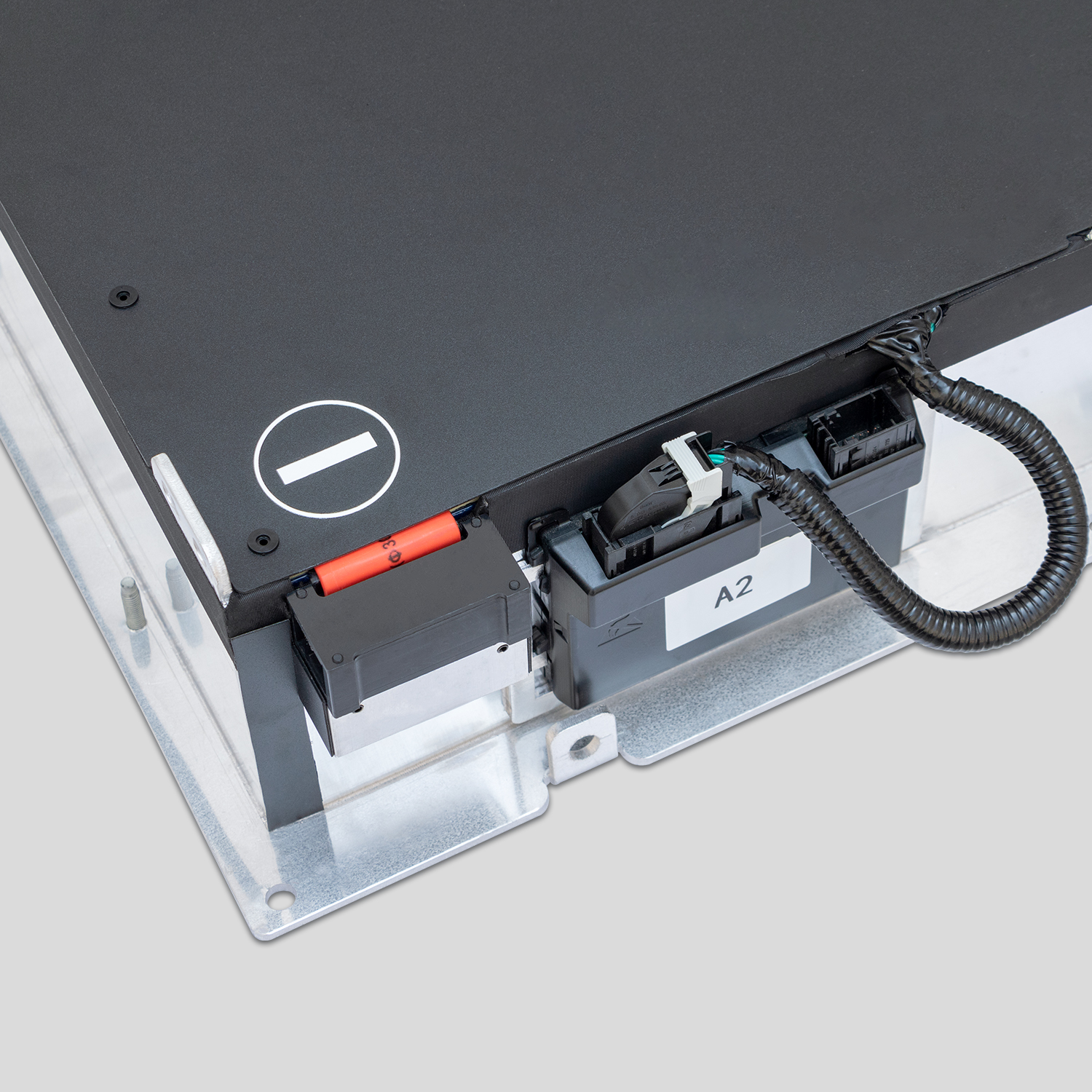
When balancing is deemed impossible or too risky, pivot immediately to the CNS BATTERY High-Capacity Upgrade. This transforms a potential headache into your shop’s most profitable job.
Why Upgrading Beats Balancing for Your Bottom Line
- Zero Comeback Risk: Our 120 Ah to 180 Ah upgrades use brand-new, matched Grade-A cells. Deviation is <0.01V from day one. No balance needed.
- Faster Turnaround: Swap the pack in 4-6 hours. No 12-hour monitoring sessions. Higher bay turnover.
- Higher Ticket, Higher Margin: Instead of a $1,500 balancing job with low margin, you secure an $8,000 – $14,000 USD sale with healthy wholesale margins.
- Customer Satisfaction: The customer doesn’t get a “fixed” old car; they get a better-than-new vehicle with 130–200+ miles of range.
- Warranty Protection: We back our upgrades with a 3–5 Year Warranty. You sleep easy; the customer drives with confidence.
The Sales Script for Shops
“Mr. Customer, we ran the diagnostics. Your battery has a 0.25V deviation caused by permanent capacity loss in three modules. We could attempt a balance for $1,800, but based on the data, there is a 90% chance it will fail within weeks because the chemistry is degraded. That would be money down the drain.
Instead, we recommend the CNS BATTERY Upgrade. For $11,500, we replace the entire failing system with a brand-new, high-capacity unit. You get 170 miles of range, a 4-year warranty, and zero risk of the warning coming back. It’s the only permanent solution.”
Real Story: From “Balancing Money Pit” to “Upgrade Goldmine”
“Metro EV Solutions” used to offer balancing services exclusively. Last year, they spent 40 hours balancing a 2015 i3, charged the customer $1,600, and had the car return 5 days later with worse imbalance. They refunded the customer and ate the labor cost.
“We changed our strategy,” says the owner. “Now, if deviation is >0.10V, we skip the balance pitch and go straight to the CNS BATTERY upgrade proposal. Last month, we converted three ‘balance’ inquiries into upgrades. Total revenue: $34,000. Total comebacks: Zero. Total stress: None. It was the best business decision we ever made.”
Stop Gambling on Balancing, Start Selling Solutions
BMW i3 battery module balancing in 2026 is a niche service for minor maintenance, not a cure for critical failure. For severe imbalance, it is a financial trap that wastes bay time and erodes customer trust.
Be the shop that knows the difference. Be the shop that offers the permanent, profitable solution.
Facing a severe imbalance request?
Don’t waste hours on a doomed balance. Contact CNS BATTERY today to become a certified partner. Get access to our wholesale pricing, sales training, and technical support. Turn every “how much to balance?” inquiry into a high-margin upgrade sale.
👉 Get Your Upgrade Pricing & Partner Kit
Frequently Asked Questions (FAQ) for Shops
1. How much should I charge for a BMW i3 module balance?
For minor drifts (<0.05V), $400–$600 is reasonable. For moderate cases requiring active balancing (6+ hours), you must charge $1,200–$1,800 to cover labor and equipment risk. However, be transparent that success is not guaranteed.
2. Is buying an active balancer worth it for my shop?
Only if you plan to do frequent maintenance on healthy packs. For severe failures common in 2026 i3s, the ROI is poor due to high failure rates. Partnering with CNS BATTERY for upgrades often yields a faster and higher return on investment.
3. Why do balanced batteries often fail again quickly?
Because balancing fixes voltage, not capacity. If a module has physically lost energy storage (due to age/degradation), it will drain faster than the others immediately upon driving, causing the imbalance to return regardless of how well it was balanced at rest.
4. When should I refuse a balancing job?
Refuse if:
- Voltage deviation is >0.15V.
- Internal Resistance (IR) varies significantly between modules.
- The customer reports significant range loss.
In these cases, recommend a full battery upgrade instead.
5. How long does a professional balance take?
Passive balancing (via the car) can take 24-48 hours. Active balancing (with pro equipment) typically takes 6-12 hours for severe deviations, plus setup and testing time.
6. Does CNS BATTERY offer better margins than balancing?
Absolutely. A balancing job nets a few hundred dollars with high risk. A CNS BATTERY upgrade nets thousands in profit per job with zero risk of comeback and a satisfied customer. The volume and value are incomparable.
7. What if the customer insists on balancing despite the risks?
Have them sign a detailed waiver acknowledging that balancing may not fix the issue, that the imbalance may return immediately, and that no warranty is provided on the balancing service if underlying cell degradation is present. However, ethically, you should strongly advise against it and push for the upgrade.