
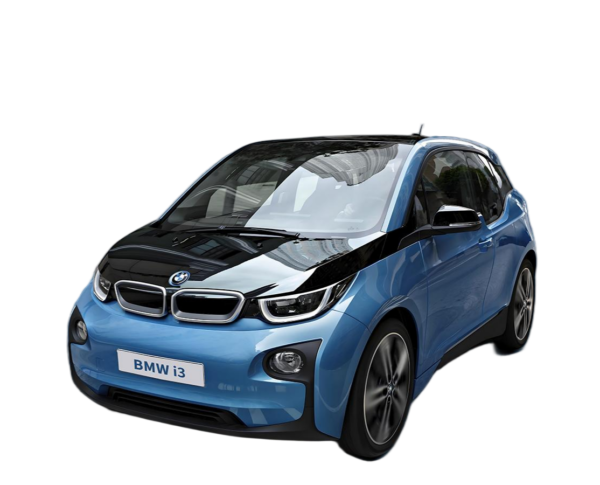
BMW i3 High Voltage Cable Testing: Professional Tools – The Invisible Danger in Orange Wiring
A 2016 BMW i3 is towed into your shop, displaying a persistent “High Voltage System Malfunction” warning. The customer mentions a faint burning smell near the rear wheels but sees no smoke. You lift the vehicle and inspect the bright orange high-voltage (HV) cables. Visually, they look perfect: no cuts, no rodent damage, no melted spots.
The temptation is to assume the fault lies in the battery management system or a sensor glitch. You might be tempted to clear the codes and send the car home. Stop.
In the world of 400-volt electric vehicles, visual inspection is worthless. A high-voltage cable can have internal conductor fractures, microscopic insulation breaches, or dangerous resistance spikes that are completely invisible to the naked eye. Driving with a compromised HV cable is like driving with a live grenade under the floorboard; one vibration, one surge, and it can trigger an arc flash, thermal runaway, or fatal electrocution.
Why do standard multimeters fail to detect deadly HV cable faults?
What specific professional tools reveal the hidden resistance and insulation breaks in orange wiring?
And when your testing confirms the cable harness is compromised, how do you pivot from a simple parts swap to a comprehensive safety upgrade?
At CNS BATTERY, we know that the integrity of the high-voltage pathway is just as critical as the battery cells themselves. We have seen the catastrophic results of missed cable diagnostics. This guide details the essential professional tools for testing BMW i3 HV cables, outlines the rigorous testing protocol, and explains why ensuring cable health is often the first step toward a complete system renewal.
The Myth of “Looks Fine”
In gasoline vehicles, a wire is either connected or broken. In EVs, a cable can be “connected” but still be lethally flawed.
- Internal Fractures: Vibration over 10 years can break strands inside the copper bundle, increasing resistance and generating intense heat under load.
- Insulation Degradation: UV exposure, ozone, and heat can make the orange jacket porous. It might hold 400V today but fail tomorrow during a rainstorm.
- Connector Corrosion: Microscopic corrosion on the HV terminals inside the connector creates high-resistance points that melt plastic housings from the inside out.
You cannot see these issues. You must measure them.
The Professional Toolkit: Essential Gear for HV Testing
To diagnose like a pro in 2026, your shop needs more than a basic voltmeter. You need specialized equipment designed for high-voltage safety and precision.
1. Digital Megohmmeter (Insulation Tester)
- Purpose: Measures the resistance of the cable’s insulation to the chassis ground.
- Specs: Must be capable of outputting 500V or 1000V DC.
- Why It Matters: A standard multimeter uses 9V, which is insufficient to punch through micro-cracks in insulation. A Megger simulates the stress of 400V systems. If resistance is <1 MΩ, the cable is unsafe.
2. Milliohm Meter (Micro-Ohmmeter)
- Purpose: Measures the electrical resistance of the cable conductors and connections with extreme precision.
- Specs: Must resolve down to 0.01 milliohms (mΩ).
- Why It Matters: A healthy HV cable has near-zero resistance. Even a slight increase (e.g., from 0.5 mΩ to 5.0 mΩ) indicates broken strands or loose terminals. Under 300 amps of load, this small resistance generates enough heat to melt connectors.
3. Thermal Imaging Camera
- Purpose: Visualizes heat generation in real-time.
- Specs: High-sensitivity IR camera (e.g., Fluke Ti series).
- Why It Matters: During a load test, a bad cable will glow hot at the fracture point or connector long before it fails visibly. It’s the ultimate non-contact diagnostic tool.
4. HV Leak Detector (Spark Tester)
- Purpose: Detects pinholes in insulation without applying full voltage.
- Why It Matters: Useful for checking external jacket integrity after physical damage or rodent activity.
Step-by-Step: The Professional HV Cable Test Protocol
Follow this rigorous workflow to ensure every inch of the orange wiring is safe.
Step 1: Safety Depower & Isolation
- PPE Up: Class 00 gloves, face shield.
- Disconnect: Remove 12V negative, extract Service Plug (MSD). Wait 15 minutes.
- Verify 0V: Confirm zero voltage at all HV points.
- Isolate: Disconnect the HV cable from both the battery pack and the motor/inverter. You must test the cable independently.
Step 2: Insulation Resistance Test (The Ground Check)
- Setup: Connect the Megohmmeter’s negative lead to a clean chassis ground. Connect the positive lead to each HV pin (Positive and Negative) individually.
- Test: Apply 500V DC for 60 seconds.
- Pass Criteria: Reading must be >10 MΩ (ideally “OL” or infinite).
- Fail Criteria: Anything below 1 MΩ indicates compromised insulation. The cable must be replaced immediately.
Step 3: Conductor Resistance Test (The Continuity Check)
- Setup: Use the Milliohm Meter. Connect leads to the HV pins at opposite ends of the cable (e.g., Battery End Positive to Motor End Positive).
- Test: Measure resistance.
- Pass Criteria: Typically <0.5 mΩ (consult OEM specs, but generally near zero).
- Fail Criteria: Any reading significantly higher than spec, or a difference between the Positive and Negative cable resistance, indicates internal strand breakage. Replace the cable.
Step 4: Connector Inspection & Thermal Verification
- Visual: Inspect HV connector pins for discoloration, pitting, or melted plastic.
- Thermal Load Test (If Cable Passes Steps 2 & 3): Reconnect the cable. Run the vehicle on a lift under load (simulating acceleration). Use the Thermal Camera to scan the cable runs and connectors.
- Red Flag: Any hotspot >10°C above ambient temperature indicates a high-resistance connection that will eventually fail.
The Hard Truth: When Cables Are Condemned
If your tests reveal low insulation or high conductor resistance, there is no repair.
- No Splicing: You cannot splice high-voltage cables in the field. The joint will never match the factory shielding or insulation rating.
- No Taping: Electrical tape cannot restore IP67 ratings or handle 400V arcs.
- The Risk: A repaired HV cable is a liability lawsuit waiting to happen. If it fails and causes a fire, your shop is responsible.
The Verdict: The entire HV cable harness assembly must be replaced with a genuine or certified OEM-equivalent unit.
The CNS BATTERY Connection: Why Cable Health Matters for Upgrades
Often, damaged HV cables are a symptom of a deeper issue: an aging battery pack causing voltage spikes or excessive heat that degrades the wiring over time. Or, conversely, a bad cable is killing a good battery.
When you diagnose a failed cable on an older i3 (2014-2018), it is the perfect moment to assess the battery itself. If the customer is already facing a $1,000–$2,000 bill for new HV cables, they are vulnerable to the next big failure: the battery.
The Strategic Pivot
- The Scenario: “Mr. Customer, your HV cables are fried. We can replace them for $1,500. However, our testing shows your battery is also at 60% health. If we put new cables on a dying battery, you might face a $20,000 replacement next month.”
- The Solution: Offer the CNS BATTERY High-Capacity Upgrade.
- Fresh Interface: Our upgrades come with pristine terminal interfaces, ensuring the new cables you install won’t be corroded by old, failing contacts.
- System Renewal: Replace the cables AND the battery in one go. The customer gets a brand-new powertrain backbone.
- Cost Efficiency:
- Cable Swap Only: $1,500 (plus risk of imminent battery failure).
- Dealer Battery + Cables: $22,000+.
- CNS BATTERY Upgrade + New Cables: $9,000 – $15,000 USD. Total system renewal with 130–200+ miles of range.
Real Story: From “Hidden Resistance” to “Total Renewal”
“Elite EV Techs” diagnosed a 2015 i3 with intermittent shutdowns. Visual inspection showed nothing. Their Milliohm Meter revealed the rear HV cable had 15x normal resistance due to internal strand fatigue. The thermal camera showed the connector glowing red under load.
“We told the customer the cables were toast,” says the lead tech. “But our battery test also showed 55% SOH. We proposed doing both: new cables and a CNS BATTERY upgrade. They agreed. We installed fresh HV harnesses and a 150 Ah battery. The car now runs cooler than day one, with 170 miles of range. We didn’t just fix a wire; we future-proofed the car.”
Stop Guessing, Start Measuring
BMW i3 high voltage cable testing is not optional; it is a critical safety imperative. Never trust a visual inspection. Equip your shop with the right tools—Meggers, Milliohm meters, and Thermal Cameras—to see the invisible dangers.
And when you find those dangers, don’t just patch the system. Offer the comprehensive solution that guarantees safety and performance for the next decade.
Ready to master HV diagnostics?
Don’t risk lives with inadequate tools. Contact CNS BATTERY today to become a certified partner. Get access to our technical guides on HV safety, wholesale pricing for our upgrades, and training on integrating new batteries with fresh cabling.
👉 Get Your HV Diagnostic Toolkit & Partner Access
Frequently Asked Questions (FAQ) for Shops
1. Can I test HV cables with a standard multimeter?
No. Standard multimeters cannot measure the ultra-low resistance (milliohms) needed to detect strand breaks, nor can they output the high voltage (500V+) required to test insulation integrity properly. You need a Milliohm Meter and a Megohmmeter.
2. What is the acceptable insulation resistance for BMW i3 HV cables?
Ideally, insulation resistance should be >10 MΩ. Anything below 1 MΩ is considered a critical failure, indicating the cable is unsafe and must be replaced immediately.
3. How do I detect internal cable fractures?
Use a Milliohm Meter to measure conductor resistance. Compare the reading to OEM specifications (usually <0.5 mΩ). Also, use a Thermal Imaging Camera under load; internal fractures will generate localized heat.
4. Can I repair a damaged HV cable by splicing it?
Absolutely NOT. Splicing high-voltage cables compromises shielding, insulation ratings, and structural integrity. It creates a massive fire and electrocution risk. The entire cable assembly must be replaced.
5. Why do HV connectors melt?
Melting is caused by high resistance at the contact point, often due to corrosion, loose torque, or internal cable strand failure. This resistance generates intense heat under high current flow.
6. Should I replace HV cables when upgrading the battery?
Highly Recommended. If the vehicle is old enough to need a battery upgrade, the HV cables have likely suffered years of thermal cycling and vibration. Installing new cables ensures the new battery operates at peak efficiency and safety.
7. Does CNS BATTERY support cable replacement during upgrades?
Yes. We recommend inspecting and often replacing HV cables during our upgrade installation to ensure a perfect, low-resistance connection between the new battery and the drivetrain. We can provide guidance on compatible parts.


