BMW i3 Battery Isolation Transformer Repair: Guide – The Myth of the “Separate Part”
A 2016 BMW i3 is towed into your shop, dead in the water. The dashboard displays a terrifying warning: “High Voltage System Malfunction” alongside an insulation fault code. The customer, hoping for a quick fix, asks: “Can you just replace the isolation transformer? I read online that it’s a common failure point.”
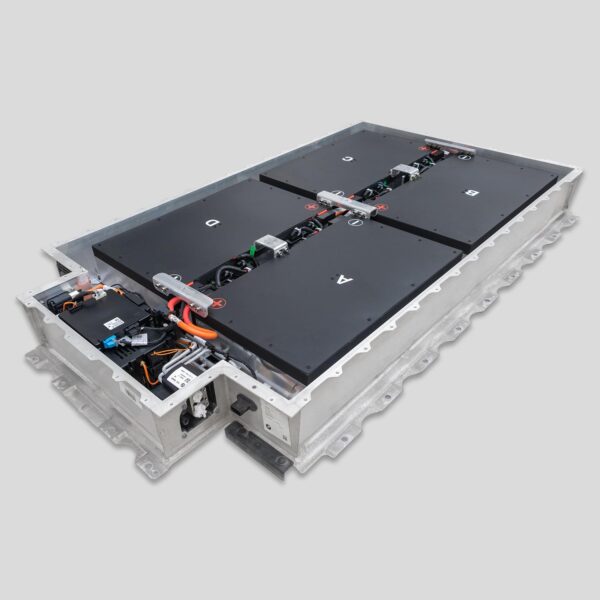
As a professional EV technician in 2026, you face a critical educational moment. The term “isolation transformer” is often misunderstood in the context of the BMW i3. Unlike industrial power supplies or some hybrid vehicles, the i3 does not have a standalone, serviceable isolation transformer component that can be unbolted and swapped. The function of electrical isolation is integrated directly into the high-voltage battery pack architecture, the contactors, and the Battery Management System (BMS) monitoring logic.
When an “isolation fault” occurs, it rarely means a specific transformer has failed. It almost always indicates a physical breach: coolant leaking onto high-voltage busbars, degraded cell insulation, or damaged internal wiring within the sealed battery case.
Why is searching for a separate “isolation transformer” a wild goose chase?
What is the actual root cause when the car reports loss of isolation?
And when diagnostics confirm an internal breach, how do you pivot from a futile parts hunt to a profitable, safe, and permanent battery upgrade?
At CNS BATTERY, we specialize in clarifying these complex EV failures for shops and owners. We know that chasing a non-existent part wastes billable hours and frustrates customers. This guide debunks the isolation transformer myth, explains the real physics behind isolation faults in the i3, and reveals why replacing the entire system is the only ethical and effective solution.
Debunking the Myth: Where Is the “Transformer”?
In the BMW i3 high-voltage system, electrical isolation is maintained by:
- Physical Separation: The high-voltage components (cells, busbars) are physically isolated from the chassis by robust plastic casings and air gaps.
- Monitoring System: The BMS constantly measures the resistance between the HV system and the chassis. If this resistance drops (indicating a leak), it triggers an isolation fault.
- Contactors: High-voltage relays that disconnect the battery from the rest of the car if a fault is detected.
The Reality: There is no discrete “isolation transformer” part number you can order from BMW or aftermarket suppliers for the i3.
- If the customer means the DC-DC Converter (which steps down 400V to 12V and provides isolation between circuits): Yes, this is a replaceable component. But faults here usually present as “12V Battery Discharged” rather than a main HV isolation fault.
- If the customer means the source of the isolation leak: This is almost certainly inside the main high-voltage battery pack.
The Real Culprit: Internal Insulation Breaches
When an i3 throws an isolation fault (e.g., code CD6902), the BMS has detected that electricity is finding a path to the ground (chassis). In 90% of aging i3s, this is caused by:
1. Internal Coolant Leaks (The #1 Cause)
The i3 battery is liquid-cooled. Over time, internal cooling plates corrode or seals fail. Conductive coolant leaks onto the 400V busbars or cell terminals. This creates a direct short to the casing, triggering the isolation fault.
2. Degraded Cell Insulation
Years of heat cycling and vibration can cause the thin insulation layers inside the cell modules to break down. This allows voltage to leak to the module casing, which is grounded to the pack.
3. Physical Damage
A previous undercarriage impact may have cracked the battery casing or compressed internal components, bridging the isolation gap.
The Verdict: These issues are internal to the sealed battery pack. They cannot be fixed by replacing an external component.
Professional Diagnostic Protocol: Finding the Leak
Before condemning the pack, follow this workflow to rule out external causes (like a faulty DC-DC converter or compressor).
Step 1: Isolate the Components
- Depower: Disconnect 12V, remove Service Plug, wait 10 mins, verify 0V.
- Disconnect HV Loads: Unplug the high-voltage cables leading to the electric motor, AC compressor, heater, and DC-DC converter.
- Megger Test the Battery: Use a digital megohmmeter (500V DC) to measure resistance between the battery terminals (HV+ and HV-) and the chassis.
- Result A (>1 MΩ): The battery is isolated. The fault lies in one of the disconnected components (motor, compressor, etc.). Reconnect them one by one and re-test to find the culprit.
- Result B (<100 kΩ): The battery pack itself is leaking. Stop here. The pack is compromised.
Step 2: Visual Inspection
- Check for coolant leaks under the car or sweet smells near the battery vents.
- Inspect the HV connector for signs of arcing or moisture.
Step 3: The Hard Truth
If the Megger test confirms low resistance in the battery pack (Result B), there is no repair.
- You cannot open the pack to “dry it out.” The corrosion is permanent.
- You cannot replace an “isolation transformer” because the leak is in the cells or busbars.
- Attempting to reseal the pack is unsafe and liable to fail.
The Only Solution: The entire battery pack must be replaced.
The CNS BATTERY Solution: Restore Isolation & Range
When you explain to the customer that the “transformer” doesn’t exist and the battery itself is the problem, they will panic at the dealer’s $20,000 quote. This is your opportunity to offer the CNS BATTERY High-Capacity Upgrade.
Why Upgrading Is the Only Smart Move
- Perfect Isolation: Our BMW i3 Series Battery upgrades are brand-new, factory-sealed units. They come with certified insulation resistance values >10 MΩ, eliminating isolation faults forever.
- Leak-Proof Design: Advanced cooling plate technology and superior sealing eliminate the corrosion issues that plague original i3 packs.
- Plug-and-Play Safety: No risky disassembly of the old, leaking pack. Swap the entire unit in 4–6 hours.
- Double the Range: While solving the isolation fault, you upgrade the customer from a failing 60 Ah or 94 Ah pack to a 120 Ah to 180 Ah system, giving them 130–200+ miles of range.
- Cost Efficiency:
- “Transformer” Hunt: $500+ (wasted diagnostic labor) + Angry Customer.
- Dealership Replacement: $20,000+.
- CNS BATTERY Upgrade: $8,000 – $14,000 USD. You get a brand-new, perfectly isolated battery with double the range for half the dealer price.
Real Story: From “Parts Chase” to “Perfect Isolation”
“Metro EV Solutions” in Chicago spent two days trying to source a “isolation transformer” for a 2015 i3 based on a forum post. They called three dealers, none of whom had such a part. Finally, they performed a Megger test and found the battery pack resistance was only 15 kΩ due to an internal coolant leak.
“We explained to the customer that the part they were looking for didn’t exist,” says the lead tech. “We installed a CNS BATTERY 150 Ah upgrade. The new pack tested at >5 MΩ isolation. The customer paid $11,500, got 170 miles of range, and drove away safely. We saved them from weeks of frustration and gave them a better-than-new car.”
Stop Chasing Ghosts, Start Solving Problems
BMW i3 battery isolation transformer repair is a misnomer. There is no such separate part. Isolation faults signal a fundamental breach within the high-voltage battery pack itself.
Don’t waste time searching for unavailable components. Be the shop that diagnoses accurately and offers the definitive solution: a complete, modern replacement that guarantees safety and performance.
Diagnosed an isolation fault?
Stop guessing and start solving. Contact CNS BATTERY today for a professional assessment. Discover how our BMW i3 Series Battery upgrades can eliminate isolation faults permanently, providing your customers with a safe, reliable, and long-range driving experience.
👉 Get Your Isolation Fault Solution & Quote
Frequently Asked Questions (FAQ) for Shops
1. Is there an isolation transformer in the BMW i3?
No. The BMW i3 does not have a standalone, serviceable component called an “isolation transformer.” Electrical isolation is managed by the physical design of the battery pack and monitored by the BMS. Faults usually indicate an internal leak within the battery pack itself.
2. What causes isolation faults in the i3?
The most common cause is internal coolant leakage onto high-voltage components. Other causes include degraded cell insulation, physical damage to the pack, or moisture intrusion. Rarely, a faulty external component (like the AC compressor) can cause it, which is why isolation testing is crucial.
3. Can I repair an isolation fault without replacing the battery?
Only if the fault is in an external component (motor, compressor, heater) which can be identified by disconnecting them one by one. If the fault is traced to the battery pack (via Megger test), the pack cannot be repaired and must be replaced.
4. How much does it cost to fix an isolation fault?
Diagnosing and replacing an external component might cost $500–$1,500. However, if the battery pack is the cause, a dealership replacement costs $20,000+. A CNS BATTERY upgrade costs $8,000–$14,000, providing a brand-new, fault-free system with double the range.
5. Will a CNS BATTERY upgrade fix isolation codes?
Absolutely. Our upgrades are brand-new, perfectly sealed units with verified high insulation resistance. All isolation fault codes are permanently eliminated upon installation.
6. How long does a full battery replacement take?
With our plug-and-play design, a certified technician can complete the swap in 4–6 hours, allowing for same-day service.
7. What tools do I need to diagnose this?
You absolutely need a Digital Megohmmeter (Insulation Tester) capable of 500V/1000V DC to isolate the battery from the rest of the vehicle and measure resistance to the chassis. Standard OBDII scanners cannot perform this test.