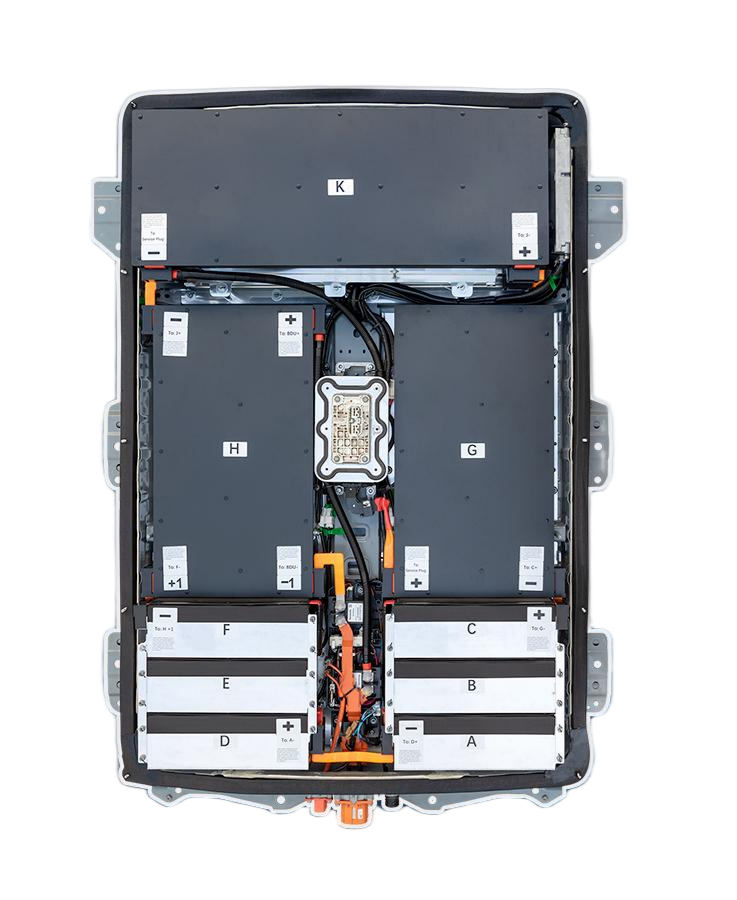
BMW i3 Battery Replacement: 2017 i3 Model – The Sweet Spot for a Massive Upgrade
You own a 2017 BMW i3. In the eyes of many EV enthusiasts, you hold the “Golden Ticket” of the i3 lineup. Why? Because 2017 was the first year BMW offered the 94 Ah battery as a standard option across more trims, pushing the real-world range closer to a usable 100 miles. It represented the moment the i3 graduated from a strict city car to a viable daily driver.
But now, nearly a decade later, that promise is fading. The “100 miles” has quietly shrunk to 60, then 50. The dashboard flashes “Maximum Charge Level Reduced.” Winter drives have become anxiety-inducing calculations where every degree of cold weather feels like a direct threat to your mobility.
You are at a critical crossroads. Your 2017 i3 has the best chassis, the most refined interior, and the perfect size for modern traffic. But its heart is failing.
Do you pay the dealership $20,000 to get back the same limited 94 Ah technology that just failed you?
Or is there a smarter path that transforms your 2017 model into a 2026-range champion with 180+ miles of capability?
At CNS BATTERY, we specialize in the 2017 i3. We know this specific model year inside and out. We understand that while the 94 Ah pack was a leap forward in 2017, it is now susceptible to the same calendar aging as its predecessors. This guide explores the unique situation of 2017 owners, compares the costly OEM replacement route with our next-generation upgrades, and reveals how you can turn your aging city car into a long-distance cruiser that outperforms many modern EVs.
The 2017 Dilemma: Great Car, Aging Chemistry
The 2017 model year was pivotal. It introduced the 94 Ah battery pack (approx. 33 kWh gross) to a wider audience, offering a significant jump from the earlier 60 Ah models. For years, it was the gold standard of compact EVs.
However, Lithium-Ion chemistry obeys the laws of time, regardless of when the car was built.
- Calendar Aging: Even with low mileage, a 2017 battery is now 7-8 years old. The electrolyte degrades, and capacity fades naturally.
- The First Wave of Failures: Many 2017 owners are now hitting the “cliff” where degradation accelerates. A battery that held 90% health last year might drop to 70% this year.
- The Warranty Expiration: Most 2017 models are now approaching or have passed the original 8-year/100,000-mile factory warranty. You are fully exposed to replacement costs.
When your 94 Ah pack starts failing, you face a choice that will define the next decade of your ownership: Restore or Evolve.
Option 1: The Dealership OEM Replacement (The “Restore” Path)
If you take your 2017 i3 to a BMW dealership today, here is what they will offer:
- The Product: A replacement 94 Ah battery. In many cases, this is a remanufactured unit using cell technology from 2017-2019.
- The Range: You get back your original ~90-100 miles (EPA), which in real-world driving (especially with an aged pack) might be only 70-75 miles.
- The Cost: A staggering $19,000 – $23,000 USD.
- The Warranty: Typically a short 2-year / 24,000-mile coverage on the replacement part.
The Verdict: You are paying a premium price to reset your car to where it was in 2017. You aren’t gaining anything; you are just treading water with obsolete technology. For a used car valued around $13,000-$16,000, spending $21,000 on a repair makes little financial sense.
Option 2: The CNS BATTERY Upgrade (The “Evolve” Path)
At CNS BATTERY, we ask: Why stop at 94 Ah? The 2017 i3 chassis, motor, and thermal management system are robust enough to handle significantly more energy. In fact, the 2017 model is the perfect candidate for an upgrade because it already has the improved cooling architecture needed for larger packs.
Our Next-Gen High-Capacity Upgrades are designed to push the 2017 i3 far beyond its original limits.
The Upgrade Advantage
- Massive Capacity Increase: We replace your failing 94 Ah pack with a 150 Ah to 180 Ah+ system.
- Real-World Range: Instead of restoring 75 miles, you gain 180–220 miles of actual driving range. This transforms the car from a “city commuter” into a vehicle capable of cross-state travel with minimal charging stops.
- Modern Cell Chemistry: We use the latest Grade-A Lithium-Ion cells (2026 technology). These cells have:
- Lower Internal Resistance: Faster charging and less heat generation.
- Higher Energy Density: More power in the same physical footprint.
- Slower Degradation: Designed to last 15+ years, far outliving the original packs.
- Seamless Integration: Our packs plug directly into your 2017 i3’s existing harness. The software recognizes the new capacity instantly, displaying accurate range and enabling all factory features (DC fast charging, preconditioning).
- Cost Efficiency: Our complete upgrade solutions typically range from $10,000 to $14,000 USD. You pay half the cost of a dealership replacement while getting double the range and newer technology.
Head-to-Head: OEM vs. CNS BATTERY for 2017 i3
| Feature | Dealership OEM Replacement | CNS BATTERY Next-Gen Upgrade |
|---|---|---|
| Battery Capacity | 94 Ah (Original Spec) | 150 Ah – 180 Ah+ |
| Real-World Range | ~70–75 Miles | ~180–220+ Miles |
| Cell Technology | 2017 Era (Aging) | 2026 Era (Cutting Edge) |
| Total Cost | $19,000 – $23,000 | $10,000 – $14,000 |
| Warranty | Typically 2 Years | 3–5 Years Comprehensive |
| Charging Speed | Standard (Degrading) | Optimized & Efficient |
| Resale Value | Neutral (Restores status quo) | High (Unique high-range model) |
The Math is Undeniable: With CNS BATTERY, you save roughly $10,000 upfront and gain 100+ extra miles of range per charge. It is the smartest investment a 2017 i3 owner can make.
Real Story: From “Range Anxious” to “Road Trip Ready”
Meet Alex, who bought a used 2017 i3 94 Ah in 2022. He loved the drive but hated the range. By 2025, his battery health dropped to 65%, giving him only 55 miles of real-world range. The dealer quoted $20,500 for a replacement 94 Ah pack. “That’s insane,” Alex said. “I’d be paying more than the car is worth to get back a battery that will die again in 5 years.”
Alex discovered CNS BATTERY and opted for our 160 Ah upgrade. “The transformation is incredible,” Alex reports. “I now regularly hit 190 miles on a single charge. I drove from Seattle to Portland with just one quick charging stop, something I never thought possible in my 2017 i3. The car feels faster, charges more efficiently, and I spent $12,000 instead of $20,000. It’s basically a new car with a better battery than the 2024 models.”
Don’t Settle for 2017 Technology in 2026
Your 2017 BMW i3 is too good to be limited by aging battery tech. Don’t throw away $20,000 on a mediocre OEM replacement that offers no improvement.
Embrace the future. Upgrade to a battery system that leverages the latest advancements in energy density and efficiency. Turn your i3 into the highest-range electric vehicle in its class, surpassing even many modern EVs costing twice as much.
Ready to unlock the full potential of your 2017 BMW i3?
Stop accepting limited range. Contact CNS BATTERY today for a custom consultation. Discover how our Next-Gen High-Capacity Upgrades can give you 200+ miles of range, superior performance, and unbeatable value, ensuring your i3 remains your favorite car for another decade.
👉 Get Your 2017 i3 Upgrade Quote & Double Your Range
Frequently Asked Questions (FAQ)
1. Can the 2017 BMW i3 94 Ah handle a battery larger than 94 Ah?
Absolutely. The 2017 i3 was the first to widely introduce the improved liquid cooling system necessary for larger packs. Our 150 Ah to 180 Ah upgrades integrate seamlessly, often improving efficiency due to lower internal resistance and better thermal management.
2. How much range will I get with a CNS BATTERY upgrade on a 2017 i3?
Depending on the specific upgrade package (150 Ah, 160 Ah, or 180 Ah), you can expect 180 to 220+ miles of real-world range. This is a massive increase over the stock 94 Ah pack’s current degraded state (often 50-60 miles) and even exceeds its original new-car range.
3. Is it cheaper to upgrade than to buy a new OEM battery from BMW?
Yes, significantly. A dealership OEM replacement costs $19,000–$23,000 USD. Our high-capacity upgrades typically range from $10,000 to $14,000 USD. You save money while getting superior range and newer technology.
4. Will the upgrade affect my warranty or software?
Our upgrades are designed to be fully compatible with the 2017 i3’s software. The dashboard will accurately display the new range, and all factory features remain intact. Since most 2017 i3s are past or nearing their original 8-year high-voltage warranty, our own 3–5 year comprehensive warranty provides excellent coverage.
5. Does the upgrade support DC Fast Charging?
Yes. Our upgraded batteries fully support CCS DC Fast Charging. In fact, due to the modern cell chemistry, they often maintain higher charging speeds for longer durations compared to aging original 94 Ah packs.
6. How long does the installation take?
The upgrade process typically takes 1-2 days. We remove your old pack, install the new high-capacity unit, perform software calibration, and test the thermal system, getting you back on the road quickly.
7. Will this increase my car’s resale value?
Definitely. A 2017 i3 with 200+ miles of range is a rare and highly desirable asset. It stands out in the used market, often commanding a premium price that can recoup a significant portion of your upgrade investment.