BMW i3 Battery Cell Failure: Early Detection – Stop the Cascade Before It Costs You $20,000
It starts subtly. You notice your BMW i3’s range estimator dropping a few miles faster than usual on your commute. Then, the charging session at the public station stops abruptly at 85%, refusing to go higher despite the charger working fine for other cars. A week later, a faint “Drivetrain Malfunction” warning flashes and disappears.
You tell yourself it’s just cold weather, or a glitchy sensor, or maybe the charger was slow. You ignore it.
This is the danger zone.
These aren’t just minor annoyances; they are the early whispers of BMW i3 battery cell failure. Inside your high-voltage pack, one or more cells are dying. And in a series-connected battery system, a single failing cell acts like a cancer, dragging down the performance of the entire pack and accelerating the degradation of its neighbors.
If you catch it early, you might save your car from a catastrophic shutdown. If you wait until the car refuses to start, you could be facing a $20,000 replacement bill instead of a manageable repair or strategic upgrade.
What are the silent signs of a dying cell?
How can you detect failure before the dashboard lights up?
And once detected, is there a solution that doesn’t just patch the problem but solves it forever?
At CNS BATTERY, we specialize in diagnosing the subtle precursors to total battery failure. We know that time is the most critical factor. This guide reveals the hidden symptoms of cell failure, the tools you need to spot them, and why upgrading to a modern high-capacity battery is often the smartest financial move when early detection confirms the worst.
The Domino Effect: Why One Bad Cell Matters
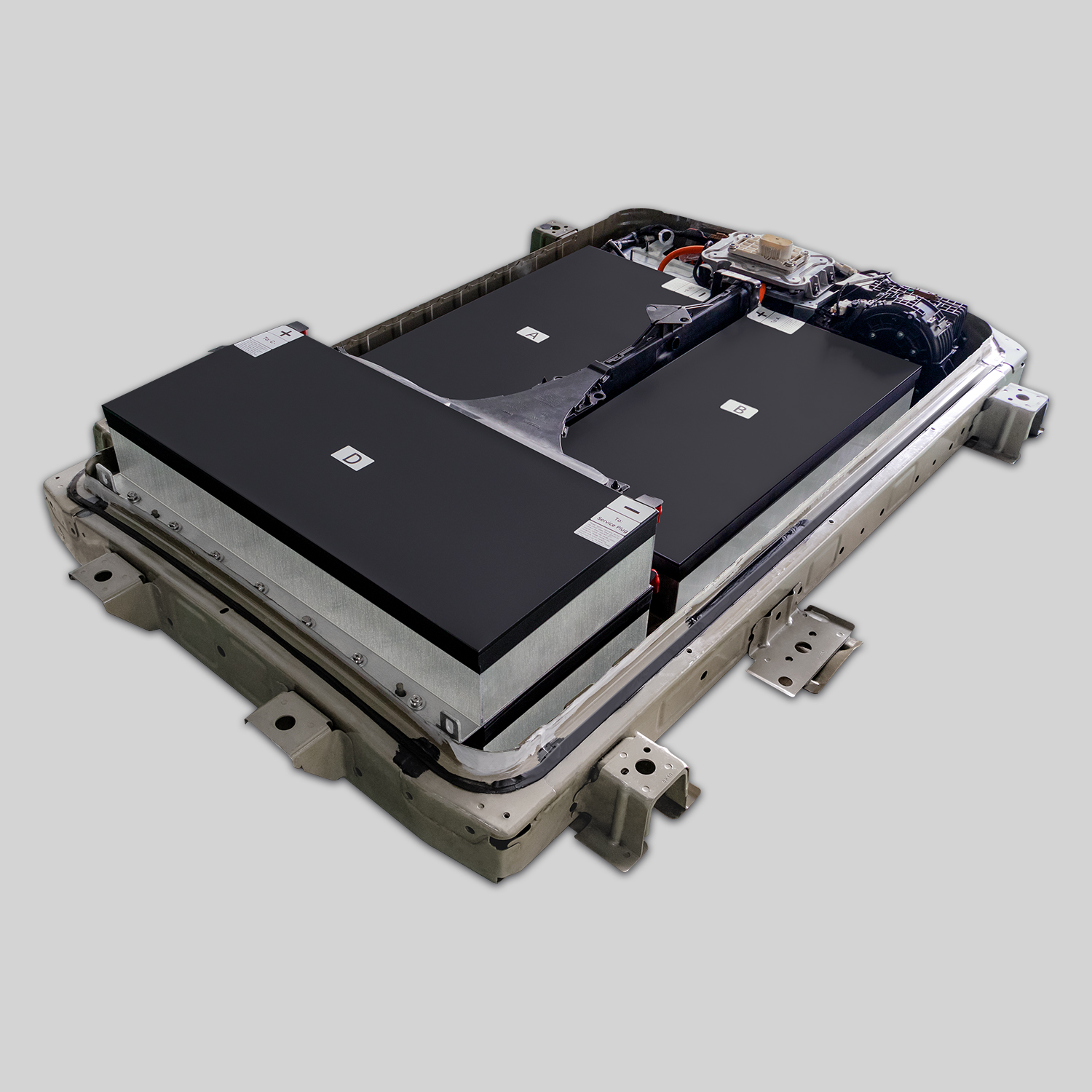
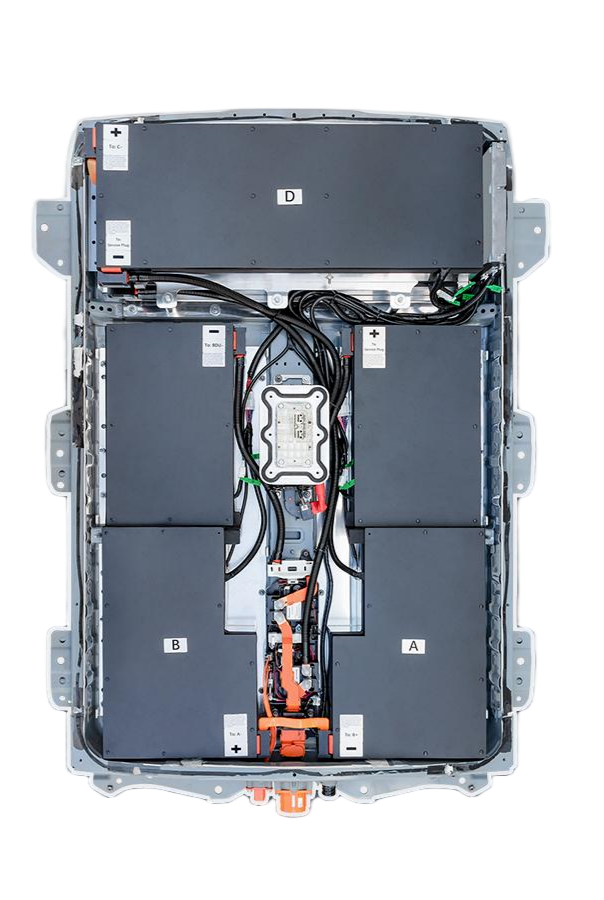
Your BMW i3 battery isn’t just one big block; it’s a series of roughly 96 individual cell modules (depending on the model). They work in unison. The strength of the entire chain is determined by its weakest link.
When a single cell begins to fail:
- Capacity Mismatch: The weak cell holds less energy. During charging, it hits 100% voltage long before the others, forcing the Battery Management System (BMS) to stop charging the entire pack prematurely. This is why you can’t charge past 80%.
- Discharge Cut-off: During driving, the weak cell drains to 0% first. The BMS sees this “empty” cell and shuts down the whole car to prevent damage, even though the other cells still have 30% energy left. This causes sudden range drops.
- Heat Generation: Failing cells develop high internal resistance. When current flows through them, they generate excessive heat, which cooks the adjacent healthy cells, causing them to fail faster.
The Reality: Ignoring one bad cell doesn’t just limit your range today; it guarantees a total pack failure tomorrow.
5 Early Warning Signs You Cannot Ignore
Don’t wait for the “Maximum Charge Level Reduced” warning. By then, the damage is often advanced. Watch for these subtle clues:
1. The “Stuck” Charger
You plug in for a full charge, but the car consistently stops at the same percentage (e.g., 82%, 88%, 94%) and says “Charging Complete” or “Charge Power Reduced.”
- The Cause: A weak cell has reached its voltage ceiling, triggering the BMS to halt the process to prevent overcharging that specific module.
2. The “Cliff” Drop in Range
Your range estimator shows 60 miles. You drive 15 miles, and suddenly it drops to 20 miles.
- The Cause: The weak cell hit its minimum voltage floor under load. The BMS panics and recalculates the available energy based on that dying cell, slashing the displayed range instantly.
3. Inconsistent Regenerative Braking
Your “one-pedal driving” feels weaker than usual, or regen cuts out unexpectedly even when the battery isn’t full.
- The Cause: The BMS limits regen current because the weak cell cannot accept the incoming charge safely without overheating or over-volting.
4. Excessive Heat After Short Drives
You park after a normal 10-mile drive, and the rear cooling fans scream at 100% speed for 20 minutes.
- The Cause: A high-resistance failing cell is generating disproportionate heat, forcing the cooling system into overdrive to prevent thermal runaway.
5. High Cell Deviation (The Smoking Gun)
This requires an OBDII scanner (like BimmerLink or CarScanner). Check the Cell Voltage Deviation.
- Healthy: Difference between highest and lowest cell is < 0.02V (20mV).
- Warning: Difference is 0.03V – 0.05V. Action needed soon.
- Critical: Difference is > 0.05V (50mV). Cell failure is imminent or already happening.
The Diagnostic Test: Confirming the Failure
If you suspect cell failure, don’t guess. Perform a simple diagnostic:
- Scan for Deviation: Use an app to read the min/max cell voltages. Record the difference.
- Monitor Under Load: Drive the car gently while watching the cell voltages. If one cell’s voltage drops significantly faster than the rest when you accelerate, that is your culprit.
- Check Charging Curves: Monitor the voltage rise during charging. If one cell spikes up rapidly while others climb slowly, it has lost capacity.
The Verdict: If your deviation is consistently above 0.05V, your battery pack is compromised. No amount of software resetting will fix physical cell degradation.
The Hard Truth: Repair vs. Replacement
When early detection confirms a failing cell, owners face a tough choice:
- Module Replacement: Some shops offer to open the pack and replace just the bad module(s).
- Risk: You are mixing old, degraded cells with newer ones. The imbalance often returns within months as the remaining old cells continue to age. It’s a temporary, expensive band-aid ($3,000–$5,000) with no guarantee.
- Full Pack Replacement: The dealership will quote $18,000–$22,000 for an OEM replacement.
- Downside: You get back the original, outdated technology with the same susceptibility to future failure.
The CNS BATTERY Solution: Upgrade to Permanence
If your diagnostics show early cell failure, stop throwing money at temporary fixes. This is your signal to upgrade to a system where cell failure is not a worry for another decade.
At CNS BATTERY, we turn a crisis into an opportunity. Our BMW i3 Series Battery upgrades replace your failing, mismatched cells with a brand-new, perfectly balanced high-capacity pack.
Why Upgrading Is the Smartest Response
- Zero Imbalance: Our Grade-A cells are matched to within millivolts before assembly. No weak links, no cascading failures, no premature shutdowns.
- Modern Chemistry: Our cells have lower internal resistance, meaning they generate less heat and degrade slower than the original factory cells that are currently failing you.
- Double the Range: While solving the cell failure, you jump from a dying 60 Ah or 94 Ah pack to a 120 Ah equivalent, giving you 130+ miles of reliable range.
- Cost Efficiency:
- Module Repair: $3,000–$5,000 (temporary fix).
- Dealership Replacement: $20,000+.
- CNS BATTERY Upgrade: $8,000 – $12,000 USD. You get a brand-new, warrantied system with double the performance for half the dealer cost.
- Warranty Peace of Mind: Our upgrades come with a comprehensive 3+ year warranty. If any cell fails (they won’t), we fix it. No out-of-pocket surprises.
Real Story: From “80% Limit” to “100% Freedom”
Meet Elena, a 2016 i3 owner. Her car stopped charging at 87% every night. She ignored it for two months until her range dropped to 35 miles. A scan showed a cell deviation of 0.08V. A local shop quoted $4,200 to swap two modules, warning it might happen again.
Elena contacted CNS BATTERY. We installed a 120 Ah upgrade. “It’s been a year, and I charge to 100% every night without issue,” Elena says. “My cell deviation is near zero. I have 135 miles of range, and I never worry about a bad cell dragging me down again. Catching it early saved me from being stranded, but upgrading saved me from ever dealing with it again.”
Don’t Wait for the Shutdown
BMW i3 battery cell failure is a progressive disease. Early detection is your best weapon, but action is your cure. Don’t let one bad cell destroy your entire pack.
Identify the signs. Confirm the diagnosis. And choose the solution that guarantees reliability, range, and value.
Suspect your i3 has a failing cell?
Stop guessing and risking a total breakdown. Contact CNS BATTERY today for a professional cell deviation diagnostic. We’ll pinpoint the issue and show you how our BMW i3 Series Battery upgrades can eliminate cell failure forever while doubling your range.
👉 Get Your Cell Health Diagnostic & Upgrade Quote
Frequently Asked Questions (FAQ)
1. What are the first signs of BMW i3 battery cell failure?
Common early signs include inability to charge to 100% (stopping at 80-90%), sudden range drops (“cliffs”), reduced regenerative braking, and excessive cooling fan noise after short drives.
2. How do I check for cell failure myself?
Use an OBDII adapter and an app like BimmerLink. Look at the Cell Voltage Deviation (difference between max and min cell voltage). A deviation greater than 0.05V (50mV) indicates significant cell imbalance or failure.
3. Can I just replace the bad cell module?
Technically yes, but it is not recommended. Mixing old degraded cells with a new module creates new imbalances. The problem often returns within months. It is usually a costly, temporary fix ($3,000+) with no long-term reliability.
4. Will resetting the BMS fix cell failure?
No. Cell failure is a physical chemical degradation. Resetting the software might clear the warning light temporarily, but the underlying voltage mismatch will return immediately upon driving or charging.
5. How much does it cost to fix cell failure?
- Module Swap: $3,000–$5,000 (risky, temporary).
- Dealership Full Replacement: $18,000–$22,000.
- CNS BATTERY Upgrade: $8,000–$12,000 USD. This provides a brand-new, perfectly balanced battery with double the range and a warranty.
6. Does CNS BATTERY test for cell deviation before upgrading?
Yes. We perform a comprehensive diagnostic to confirm the extent of the failure. This ensures that our upgrade is the right solution and allows us to properly calibrate the new system to your vehicle.
7. If I catch it early, can I save the battery?
Once a cell has physically degraded (high resistance, low capacity), it cannot be restored. Early detection allows you to plan your replacement before you get stranded, avoiding emergency towing and potential safety hazards, but the failing cells themselves must be replaced.