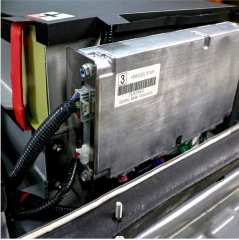
BMW i3 Battery Cooling System Pump: Faults, Fixes, and the Hidden Danger to Your Pack
You are driving your BMW i3 on a warm afternoon, or perhaps you’ve just plugged in for a DC fast charge. Suddenly, the cabin fills with the deafening roar of fans running at maximum speed. Moments later, a warning flashes on your dashboard: “Drivetrain Malfunction” or “Charge Power Reduced.” Your car enters limp mode, stripping away power and leaving you crawling down the highway.
Your first thought might be, “It’s just hot outside.” But the real culprit is often invisible: a failing BMW i3 battery cooling system pump.
This small electric component is the heart of your battery’s thermal management. When it fails, your high-voltage pack begins to cook itself. Ignoring the signs doesn’t just mean a noisy ride; it risks permanent cell degradation, thermal runaway, or a total battery bricking event that costs thousands to replace.
At CNS BATTERY, we have diagnosed countless i3s where a $400 pump failure led to a $15,000 battery replacement because the owner waited too long. This guide reveals the early warning signs of pump failure, explains why DIY fixes can be dangerous, and shows how addressing this issue now can save your battery—or signal the perfect time for a transformative upgrade.
The Silent Guardian: Why the Cooling Pump Matters
Unlike gasoline cars that use engine heat to warm coolant, the BMW i3 (94 Ah and 120 Ah models) relies entirely on an electric water pump to circulate glycol-based coolant through the battery modules.
Its job is critical:
- Heat Removal: During fast charging or aggressive driving, cells generate significant heat. The pump moves this heat to the rear radiators to be dissipated.
- Temperature Uniformity: It ensures all cells stay at the same temperature. If one side gets hot while the other stays cool, the cells degrade at different rates, causing imbalance.
- Cold Weather Prep: In winter, the pump circulates warmed coolant to bring the battery up to optimal operating temperature for charging.
The Reality: If the pump stops, coolant stagnates. Heat builds up instantly in the localized area of the battery. The Battery Management System (BMS) detects this spike and throttles power to prevent a fire. If the heat continues, the cells themselves begin to chemically break down.
Top 5 Signs Your Cooling Pump Is Failing
Don’t wait for a breakdown. Watch for these specific symptoms:
1. The “Jet Engine” Fan Noise
This is the most common early warning. If your cooling fans under the rear wheels are screaming at 100% speed even when the car is idle or the weather is mild, the BMS is desperate. It knows the coolant isn’t moving, so it tries to force air through the radiators to compensate.
2. Charge Power Reduction
You plug in to charge, but the rate is painfully slow (e.g., 1 kW instead of 7 kW). Or, DC fast charging stops after a few minutes. The BMS limits charging speed because it cannot remove the heat generated by the current flow.
3. “Drivetrain Malfunction” Warning
If the battery temperature exceeds safe limits, the car will display this generic error and severely limit speed (often to 20-30 mph) to protect the hardware.
4. No Heat from Cabin (in Winter)
Since the i3 uses the battery thermal loop for cabin heating in some modes, a failed pump can result in blowing cold air even when the heater is on max.
5. Visible Leaks or Sweet Smell
A failing pump seal can leak coolant. Look for green/blue puddles under the center-rear of the car or smell a sweet, syrupy odor. Low coolant levels will cause the pump to cavitate (run dry), destroying it quickly.
The Fix: Replacement vs. The Hidden Risk
If you suspect a pump failure, stop driving immediately and have the car towed to a specialist. Continuing to drive can cook your battery cells in minutes.
The Professional Repair Process
Replacing the pump is a precise job:
- Safety Isolation: The high-voltage system must be fully disconnected.
- Drain & Replace: The old coolant is drained (and properly disposed of), the faulty pump is unbolted, and a new OEM-spec pump is installed.
- Bleeding the System: This is critical. Air pockets in the cooling loop can block flow just as effectively as a broken pump. Professionals use diagnostic tools to run the pump in specific cycles to purge all air.
- Testing: The system is pressure-tested and monitored to ensure flow rates meet factory specs.
Estimated Cost: A professional pump replacement typically costs $600 – $900 USD (parts + labor).
The Hidden Danger: Did the Pump Kill Your Cells?
Here is the hard truth many shops won’t tell you: Replacing the pump fixes the flow, but it doesn’t fix the damage already done.
If your pump failed silently weeks ago, your battery cells may have suffered thermal degradation.
- Permanent Capacity Loss: Excessive heat permanently reduces the ability of lithium-ion cells to hold energy.
- Cell Imbalance: Heat accelerates degradation unevenly. You might fix the pump, only to find your range is still terrible because the cells are now mismatched.
- Internal Resistance Spike: Heat-damaged cells generate more heat, creating a vicious cycle that overwhelms even a new pump.
The Diagnostic Step: Before just swapping the pump, a full battery health diagnostic is essential. If the cells are already compromised, a new pump is just a band-aid on a dying patient.
The CNS BATTERY Solution: Upgrade Instead of Patch
If your diagnostic reveals that your battery has suffered heat damage from a failed pump, or if your pack is simply old and prone to overheating, CNS BATTERY offers the ultimate solution: a high-capacity battery upgrade.
Why Upgrade After a Pump Failure?
- Eliminate the Weak Link: Our BMW i3 Series Battery replacements come with brand-new, perfectly balanced cells that have zero thermal history. You aren’t trying to save damaged goods; you are starting fresh.
- Superior Thermal Stability: Our modern Grade-A cells generate significantly less heat during operation and charging than your original 10-year-old cells. They put less stress on the cooling system, reducing the risk of future pump-related failures.
- Double the Range: While solving your cooling crisis, you simultaneously upgrade from a failing 60 Ah or 94 Ah pack to a 120 Ah equivalent, giving you 130+ miles of range.
- Cost Efficiency: If your cells are damaged, you’ll pay $800 for a pump + $15,000+ later for a battery. Our complete upgrade solutions typically range from $8,000 to $12,000 USD, solving both the immediate cooling issue and the long-term capacity problem in one step.
- Warranty Peace of Mind: We warranty our packs against defects and performance. If heat was an issue before, our new pack ensures it won’t be an issue again.
Real Story: From “Overheated Mess” to “Cool Cruiser”
Meet Sarah, a 2016 i3 owner. Her fans started roaring, and her charge speed dropped. A local shop replaced her water pump for $750. Two months later, the symptoms returned. Why? Because the initial pump failure had already degraded three of her battery modules, causing them to overheat constantly. The new pump couldn’t keep up with the damaged cells.
Sarah contacted CNS BATTERY. We diagnosed the cell damage and recommended a 120 Ah upgrade. “Replacing the pump was a waste of money,” Sarah admits. “The upgrade fixed everything. My battery runs cooler than it ever did when new, I have 135 miles of range, and I never worry about overheating again. It was the only real fix.”
Don’t Let a Small Pump Destroy Your Battery
The BMW i3 battery cooling system pump is a small part with massive consequences. If you hear the fans roaring or see charge warnings, act immediately.
But remember: fixing the pump is only half the battle. Ensure your battery cells haven’t been compromised by the heat. If they have, don’t throw good money after bad. Upgrade to a solution that guarantees safety, efficiency, and incredible range.
Is your BMW i3 showing signs of cooling system failure?
Stop risking permanent battery damage. Contact CNS BATTERY today for a comprehensive thermal system and battery health diagnostic. We’ll tell you if a simple pump swap will work or if it’s time for a game-changing battery upgrade that solves the problem forever.
👉 Get Your Cooling System & Battery Assessment
Frequently Asked Questions (FAQ)
1. What are the first signs of a failing BMW i3 cooling pump?
The most common sign is loud fan noise (running at 100% constantly) even when the car is not hot. Other signs include reduced charging speeds, “Drivetrain Malfunction” warnings, and lack of cabin heat in winter.
2. Can I drive my i3 if the cooling pump fails?
No. Driving with a failed pump can cause your battery cells to overheat and degrade permanently within minutes. It also poses a fire risk. Have the vehicle towed to a specialist immediately.
3. How much does it cost to replace the cooling pump?
Professional replacement typically costs between $600 and $900 USD, including parts, labor, coolant, and the critical bleeding process. However, if the battery cells were damaged by heat prior to repair, additional costs for battery service or replacement may apply.
4. Will replacing the pump fix my reduced range?
Only if the range loss was solely due to the BMS throttling power to protect the hot battery. If the overheating caused permanent cell degradation, replacing the pump will restore normal operation temperatures but will not restore the lost capacity. In this case, a battery upgrade is needed.
5. How often should the cooling pump be replaced?
There is no scheduled maintenance interval, but these electric pumps typically last 8–10 years. If your i3 is approaching this age, proactive inspection is recommended.
6. Can I bleed the cooling system myself?
We strongly advise against DIY bleeding. The i3 requires specific diagnostic software to run the pump in precise cycles to remove air pockets. Trapped air can cause localized overheating and destroy your battery or the new pump.
7. If my battery was damaged by heat, is an upgrade better than a replacement?
Yes. If your cells are degraded, a standard OEM replacement only restores original capacity. A CNS BATTERY upgrade provides brand-new, heat-resistant cells with double the range (120 Ah) for roughly half the cost of a dealership OEM swap, making it the smarter financial and performance choice.