BMW i3 Battery Voltage: Normal Range & Warning Signs You Can’t Ignore
You plug in your BMW i3, expecting the familiar green pulse of a healthy charge. Instead, the charging session aborts after ten minutes. Or perhaps you are driving normally when the dashboard suddenly flashes “Drivetrain Malfunction” and the car enters limp mode.
Your first instinct is to check the range indicator, but that number can be misleading. The real story of your battery’s health isn’t told by miles; it’s told by volts.
Understanding the BMW i3 battery voltage normal range is the key to diagnosing whether you have a simple sensor glitch, a balancing issue, or a catastrophic cell failure. If your pack’s voltage deviates from factory specifications, your car will protect itself by shutting down—leaving you stranded.
At CNS BATTERY, we decode these electrical signals every day. We know exactly what voltage readings indicate a healthy pack versus one that is on the brink of death. This guide breaks down the specific voltage metrics for every i3 model (60 Ah, 94 Ah, 120 Ah), explains how to read them, and reveals why ignoring low voltage warnings could cost you your entire vehicle.
The Anatomy of Power: How i3 Voltage Works
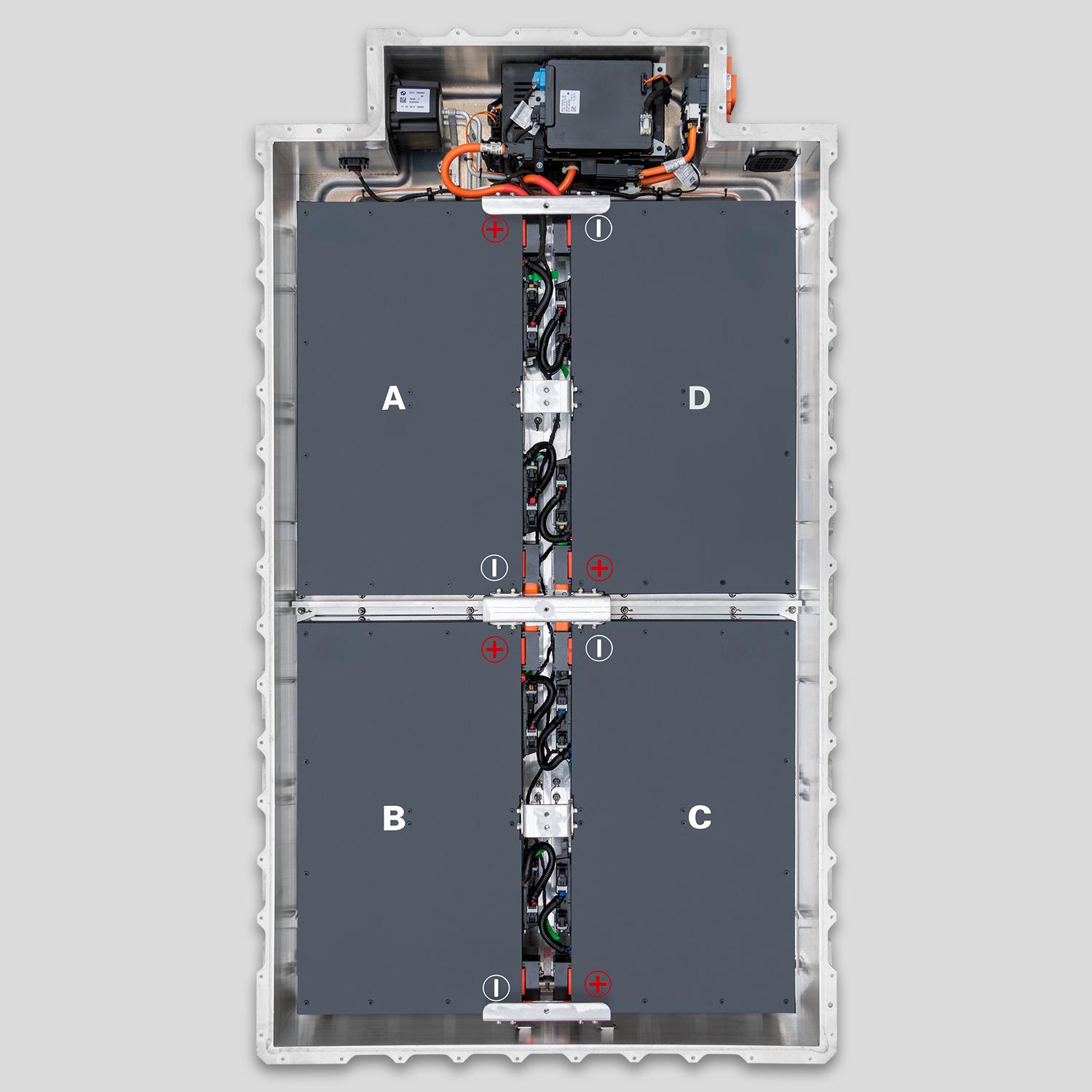
To understand the normal range, you must understand the architecture. The BMW i3 battery pack is not a single block; it is a series of modules containing hundreds of individual Lithium-Ion cells.
- Nominal Pack Voltage: The i3 operates on a high-voltage system with a nominal voltage of approximately 353V to 360V DC.
- Module Structure:
- 60 Ah Models: Typically consist of 8 modules.
- 94 Ah & 120 Ah Models: Typically consist of 4 larger modules (or 8 half-modules depending on the specific generation).
- Cell Chemistry: Each cell has a specific voltage curve, typically ranging from 2.5V (empty/danger) to 4.2V (full).
The Battery Management System (BMS) constantly monitors the voltage of every single cell group. If the total pack voltage or the individual cell voltages fall outside the normal range, the car triggers fault codes.
What Is the Normal Voltage Range?
While the exact numbers fluctuate based on State of Charge (SOC) and temperature, here are the critical benchmarks for a healthy BMW i3.
1. Total Pack Voltage (High-Voltage Bus)
This is the sum of all cell voltages in the series.
- Fully Charged (100% SOC): Approximately 400V – 405V.
- Normal Driving (50% SOC): Approximately 360V – 370V.
- Low Charge (10% SOC): Approximately 330V – 340V.
- Critical Low (<5% SOC): Below 320V. At this point, the car will aggressively limit power and soon shut down completely to prevent cell damage.
2. Individual Cell Voltage (The Most Critical Metric)
This is where real problems hide. In a healthy pack, every cell group should have nearly identical voltage.
- Normal Deviation: The difference between the highest and lowest cell should be less than 0.03V (30mV) at rest.
- Warning Zone: A deviation of 0.05V – 0.08V indicates significant imbalance. You may experience reduced range or charging interruptions.
- Failure Zone: A deviation greater than 0.10V (100mV) usually triggers immediate fault codes (“Maximum Charge Level Reduced” or “Drivetrain Malfunction”). The BMS sees the weakest cell as the limit for the whole pack.
3. Voltage Under Load vs. Rest
- Resting Voltage: Measured when the car has been sitting for hours. This gives the most accurate SOC reading.
- Loaded Voltage: Measured while accelerating. It is normal for voltage to drop slightly (e.g., 10-15V) under heavy load.
- The Danger Sign: If voltage drops more than 30-40V instantly upon acceleration, your cells have high internal resistance. This is a hallmark of severe degradation.
How to Check Your BMW i3 Battery Voltage
You cannot see these numbers on the standard dashboard. You need diagnostic tools.
Option A: BimmerLink (DIY Friendly)
The most accessible method for owners.
- Purchase an OBDII adapter (ENET or Bluetooth).
- Download the BimmerLink app.
- Connect to the car and navigate to the High-Voltage Battery section.
- Look for “Cell Voltage Min” and “Cell Voltage Max.” Subtract the Min from the Max to find your deviation.
Option B: Professional Diagnostic Scan
For the most accurate data, a professional scan using BMW ISTA or specialized EV tools provides:
- Real-time voltage graphs for every module.
- Internal resistance measurements.
- Historical voltage logs to spot trends.
Warning Signs Your Voltage Is Out of Range
If your battery voltage is abnormal, your car will tell you in subtle (and not so subtle) ways:
- Charging Aborts: The car stops charging at 80% or 90% because one cell group hit the max voltage (4.2V) while others are still lower.
- Range Plummets: The GOM drops disproportionately fast because the lowest voltage cell hits the minimum threshold (2.5V) early, cutting off access to the energy in the rest of the pack.
- Limp Mode: The car restricts speed and power to prevent the voltage from sagging too low under load.
- “High Voltage System Deactivated”: The ultimate shutdown. This often happens if the total pack voltage drops below the safe operating threshold due to a failed module.
The Hard Truth: When Voltage Issues Mean Replacement
If your diagnostic shows high cell deviation (>0.08V) or significant voltage sag under load, balancing might not be enough.
These symptoms indicate that specific cells have physically degraded. Their chemical ability to hold voltage is gone. No software reset can fix a cell that has lost its structural integrity. Continuing to drive with unbalanced, low-voltage cells accelerates the failure of the remaining good cells, potentially leading to a total pack bricking.
The CNS BATTERY Solution: Restore Perfect Voltage
When your voltage readings confirm degradation, don’t settle for temporary fixes or expensive OEM replacements that only restore original specs. At CNS BATTERY, we provide a permanent solution that resets your voltage health to perfection.
Why Choose CNS BATTERY for Voltage Issues?
- Zero Deviation Guarantee: Our replacement packs come with cells perfectly matched for voltage and capacity. Your “Min” and “Max” cell voltages will be identical, eliminating imbalance errors forever.
- Stable Voltage Under Load: Our modern Grade-A cells have low internal resistance. You won’t see massive voltage drops when accelerating, ensuring consistent power delivery.
- Full Capacity Restoration: Unlike a degraded pack that cuts off early due to low voltage cells, our 120 Ah upgrades utilize the full energy curve, giving you 130+ miles of range.
- Advanced BMS Integration: Our packs communicate precise voltage data to your i3’s computer, ensuring accurate range estimates and smooth charging.
- Cost Efficiency: While dealerships charge $18,000–$22,000 USD for an OEM pack that will eventually degrade again, our upgrade solutions typically range from $8,000 to $12,000 USD, offering superior voltage stability and double the range.
Real Story: From “Voltage Chaos” to “Rock Solid”
Meet Elena, a 2015 i3 owner. Her car kept stopping charges at 85%. A BimmerLink scan showed her max cell voltage was 4.2V while her min was only 3.9V—a massive 0.3V deviation! The dealer quoted her $19,000 for a new 60 Ah pack.
Elena chose CNS BATTERY. We installed a 120 Ah upgrade. “The difference in voltage stability is incredible,” Elena says. “My cells are now within 0.01V of each other. The car charges to 100% every time, and I have 135 miles of range. The voltage chaos is gone.”
Don’t Ignore the Volts
Your BMW i3 battery voltage is the heartbeat of your car. If the rhythm is off, the system fails. Monitor your cell deviation, watch for voltage sag, and act before a total shutdown leaves you stranded.
If your diagnostics confirm abnormal voltage, it’s time for a solution that guarantees stability, safety, and range.
Is your BMW i3 showing voltage errors or charging faults?
Stop guessing. Contact CNS BATTERY today for a professional voltage diagnostic. We’ll analyze your cell health and show you how our BMW i3 Series Battery upgrades can restore perfect voltage balance, eliminate errors, and double your range.
👉 Get Your Voltage Diagnostic & Upgrade Quote
Frequently Asked Questions (FAQ)
1. What is the normal voltage for a fully charged BMW i3?
A fully charged (100% SOC) BMW i3 battery pack should read approximately 400V to 405V DC. If it reads significantly lower (e.g., <390V) at 100% indicated SOC, you likely have cell imbalance or degradation.
2. What is a safe cell voltage deviation?
In a healthy pack, the difference between the highest and lowest cell voltage should be less than 0.03V (30mV). Deviations above 0.05V indicate imbalance, and anything over 0.10V usually triggers fault codes and requires intervention.
3. Why does my voltage drop so much when I accelerate?
A slight drop is normal. However, a large drop (e.g., >30V) indicates high internal resistance, a sign of aged or degraded cells. This means the battery struggles to deliver current, leading to reduced power and range.
4. Can I fix low voltage issues myself?
Minor imbalances can sometimes be fixed by leaving the car plugged in at 100% for 24-48 hours to allow passive balancing. However, if the voltage deviation is caused by physical cell degradation, balancing will not work, and a battery replacement is necessary.
5. What happens if the battery voltage gets too low?
If the total pack voltage drops below ~320V, or if individual cells drop below 2.5V, the BMS will disable the high-voltage system to prevent permanent damage. The car will become undrivable until the battery is charged or replaced.
6. Will a CNS BATTERY upgrade fix my voltage deviation?
Yes. Our replacements consist of freshly matched cells with near-zero deviation. You will immediately see stable voltage readings, successful 100% charges, and no more imbalance errors.
7. How much does it cost to replace a battery with voltage issues?
Dealerships charge $18,000+ for an OEM replacement. CNS BATTERY offers high-capacity upgrades (e.g., 120 Ah) typically between $8,000 and $12,000 USD, providing perfect voltage stability and double the range for half the price.