BMW i3 Battery Cell Replacement: DIY vs Pro – The Life-or-Death Decision
Your BMW i3’s range has dropped to a pathetic 40 miles. A diagnostic scan reveals the culprit: high cell voltage deviation. One or two modules are dragging down the entire pack.
Your mind immediately goes to the forums. You see threads titled “How I replaced my bad i3 battery cells for $500!” You watch YouTube videos of confident mechanics swapping out individual modules in a home garage. The math seems simple: Why pay $10,000 for a full replacement when you can buy a few used cells online for a fraction of the cost and do it yourself?
It sounds like the ultimate money-saver. But before you order those parts and grab your wrench, you need to ask the hard question: Is this a repair, or is it a gamble with your life?
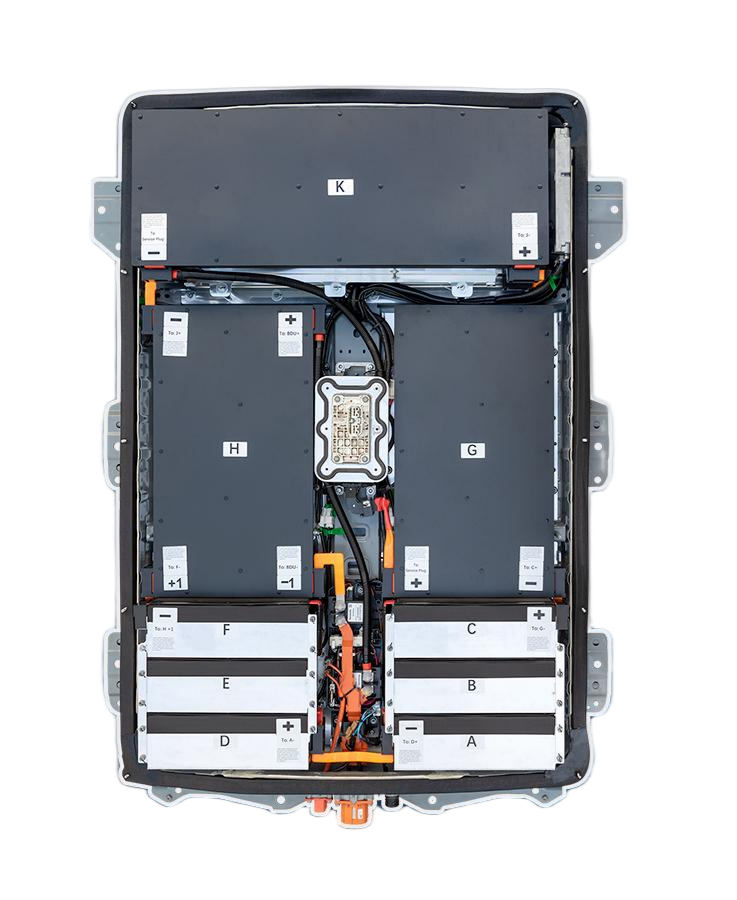
Replacing individual cells in a high-voltage EV battery is not like changing spark plugs or brake pads. It involves lethal voltages, complex chemistry, and precision engineering that most home garages cannot replicate. One mistake can lead to fatal electrocution, a catastrophic fire, or a “fixed” battery that fails again in weeks.
At CNS BATTERY, we have seen the aftermath of failed DIY cell replacements. We know exactly where the line is between a clever hack and a dangerous delusion. This guide breaks down the brutal reality of BMW i3 battery cell replacement, compares the true costs and risks of DIY versus professional service, and explains why a full professional upgrade is often the only safe, long-term solution.
The DIY Temptation: Why It Looks So Easy
The allure of DIY cell replacement is undeniable.
- Low Upfront Cost: A single used 94 Ah module might cost $200–$400 online. Replacing two bad modules seems like an $800 fix compared to thousands for a new pack.
- Online Tutorials: Videos make it look straightforward: unbolt the cover, swap the blue brick, bolt it back on.
- The “Weak Link” Theory: The logic holds up on paper: if one cell is bad, replace it, and the pack should work like new.
But these videos rarely show what happens after the repair. They don’t show the hidden dangers of high-voltage arcs, the complexity of cell matching, or the inevitable failure when old cells meet new ones.
The Hidden Dangers of DIY Cell Replacement
Attempting to replace individual cells in your BMW i3 battery at home exposes you to risks that are invisible until it’s too late.
1. The Lethal Voltage Risk
The i3 battery operates at 360–400 Volts DC.
- The Reality: Unlike AC power, DC arcs do not self-extinguish. If you accidentally bridge two terminals with a tool while the contactors are engaged (or if residual charge remains in capacitors), you create an arc flash—an explosion hotter than the sun that can cause severe burns, blindness, or instant death.
- The DIY Gap: Professional shops use Class 00 insulated gloves, arc-flash face shields, and specialized insulated tools. Most homeowners do not.
2. The Cell Matching Nightmare
You cannot simply swap a “good” used cell into an old pack.
- Internal Resistance: Every cell has a unique internal resistance. If your new module has slightly different resistance than the old ones, it will charge and discharge at a different rate.
- The Result: Within weeks, the pack becomes unbalanced again. The BMS detects the deviation and limits your range or shuts down the car. You’ve wasted time and money only to end up back at square one.
- Professional Standard: Pros use expensive equipment to match cells within milliohms of resistance and millivolts of capacity. DIYers usually guess based on voltage alone, which is insufficient.
3. Seal Integrity and Moisture
The battery pack is sealed to IP67 standards (waterproof and dust-tight).
- The Risk: Opening the casing breaks this seal. Re-sealing it perfectly requires specific OEM-grade adhesives, gaskets, and torque sequences.
- The Consequence: A poor seal lets moisture in. Water + High Voltage = Isolation Faults and potential short circuits. A leaking battery can corrode internally, leading to total pack failure or fire months later.
4. The “Zombie Pack” Problem
Even if you successfully swap the cells, the rest of your battery is still old and degraded.
- Calendar Aging: Your remaining original cells have aged chemically. Putting fresh cells into an old pack creates a mismatch in aging rates. The new cells will degrade rapidly to match the old ones, rendering your repair temporary at best.
The Professional Advantage: Precision and Safety
When you choose a professional service like CNS BATTERY, you aren’t just paying for labor; you are paying for certainty, safety, and longevity.
How We Do It Differently
- Rigorous Testing: We don’t just swap cells. We test every single module in the pack for capacity, voltage, and internal resistance. If more than 10-20% of the pack is degraded, we advise against cell replacement entirely because it’s not cost-effective.
- Perfect Matching: We source cells that are perfectly matched to your existing pack’s characteristics (or better yet, replace the whole pack with matched sets).
- Factory-Sealed Integrity: We use OEM-spec sealants and pressure-test the pack after reassembly to ensure it is 100% waterproof.
- Safety Protocols: Our technicians are certified in high-voltage safety, using proper PPE and procedures to eliminate the risk of arc flash or electrocution.
- Warranty: If our repair fails, we fix it for free. A DIY repair comes with zero guarantee.
The Verdict: When to Repair vs. When to Upgrade
So, is DIY cell replacement ever worth it?
- DIY: Only if you are a highly trained high-voltage technician with the proper equipment, AND your battery is relatively new with only one isolated bad module. For 99% of owners, the risk outweighs the reward.
- Professional Cell Repair: Viable if the pack is mostly healthy (SOH > 85%) and only 1-2 modules are bad. Cost: $1,500–$2,500.
- Full Pack Upgrade (The Smart Choice): If your battery is older (SOH < 80%), has multiple weak modules, or has suffered heat damage, cell replacement is throwing good money after bad. The rest of the pack will fail soon anyway.
Why CNS BATTERY Upgrades Are the Better Path
Instead of patching a dying battery, why not transform your car?
- Double the Range: Swap your aging pack for a modern 120 Ah equivalent, giving you 130+ miles of range.
- Zero Deviation: Our new packs come perfectly balanced from the factory. No mismatches, no future balancing issues.
- Modern Safety: New casings, new seals, and advanced cell chemistry that resists heat and degradation better than original units.
- Cost Efficiency: A professional cell repair might cost $2,000 and last 2 years. Our full upgrade solutions typically range from $8,000 to $12,000 USD and last another decade with double the performance. Compared to the dealership’s $20,000 OEM quote, it’s a bargain.
Real Story: From “DIY Disaster” to “Range Confidence”
Meet Mark, a tech-savvy i3 owner. He tried replacing two bad modules himself to save money. He lacked the proper sealing tools and couldn’t match the internal resistance perfectly. Two months later, his car threw isolation faults due to a slow leak, and the range dropped again due to imbalance. He spent another $1,000 trying to fix his fix, only to give up.
Mark finally contacted CNS BATTERY. We diagnosed that his entire pack was nearing end-of-life. We installed a 120 Ah upgrade. “I wasted $3,000 and three months trying to be a hero,” Mark admits. “CNS BATTERY fixed it in one day. Now I have 135 miles of range, no leaks, and a warranty. I should have just called the pros from the start.”
Don’t Gamble with High Voltage
BMW i3 battery cell replacement is not a weekend project. The risks of electrocution, fire, and recurring failure are too high for the average owner.
While DIY might seem cheap upfront, the hidden costs of mistakes, repeated repairs, and safety hazards make it the most expensive option in the long run. Trust the experts who live and breathe high-voltage safety every day.
Thinking about repairing your i3 battery cells?
Stop risking your safety and your wallet. Contact CNS BATTERY today for a professional assessment. We’ll tell you honestly if a cell repair is viable or if a full battery upgrade is the smarter, safer, and more cost-effective solution to get you back on the road with double the range.
👉 Get Your Expert Assessment & Quote
Frequently Asked Questions (FAQ)
1. Is it safe to replace BMW i3 battery cells myself?
Generally, no. Working with 400V DC systems carries a high risk of fatal electrocution and arc flash explosions. Without specialized insulated tools, PPE, and training, DIY cell replacement is extremely dangerous.
2. Can I just swap in a used cell from a junkyard?
No. Used cells have different internal resistance and capacity levels than your existing pack. Mismatched cells cause immediate imbalance, leading to reduced range, charging errors, and potential safety hazards within weeks. Cells must be precisely matched by professionals.
3. How much does professional cell replacement cost?
Professional module replacement typically costs $1,500–$2,500 USD, depending on the number of modules and labor. However, this is only recommended if the rest of the pack is in excellent health.
4. When should I replace individual cells vs. the whole battery?
If your battery’s State of Health (SOH) is above 85% and only 1-2 modules are faulty, cell replacement might work. If SOH is below 80%, or if multiple modules are weak, full battery replacement is the only cost-effective and reliable solution.
5. Will replacing cells fix my range permanently?
Only if the rest of the pack is healthy. In older i3s, the remaining cells are often degraded. Replacing a few cells in an old pack is a temporary fix; the other cells will continue to fail, requiring more repairs soon. A full upgrade from CNS BATTERY provides a permanent solution with new, matched cells.
6. Does CNS BATTERY offer cell-level repairs?
We primarily focus on full pack upgrades because they offer the best value, reliability, and range increase (up to 120 Ah). However, we can assess your pack to determine if a partial repair is viable. In most cases, we recommend upgrading to avoid recurring issues.
7. What is the cost of a full battery upgrade vs. cell repair?
While cell repair costs $1,500–$2,500 (and may need repeating), a full 120 Ah upgrade from CNS BATTERY typically ranges from $8,000 to $12,000 USD. This provides double the range, a 10-year lifespan, and a warranty, making it far more cost-effective per mile than repeated patches.