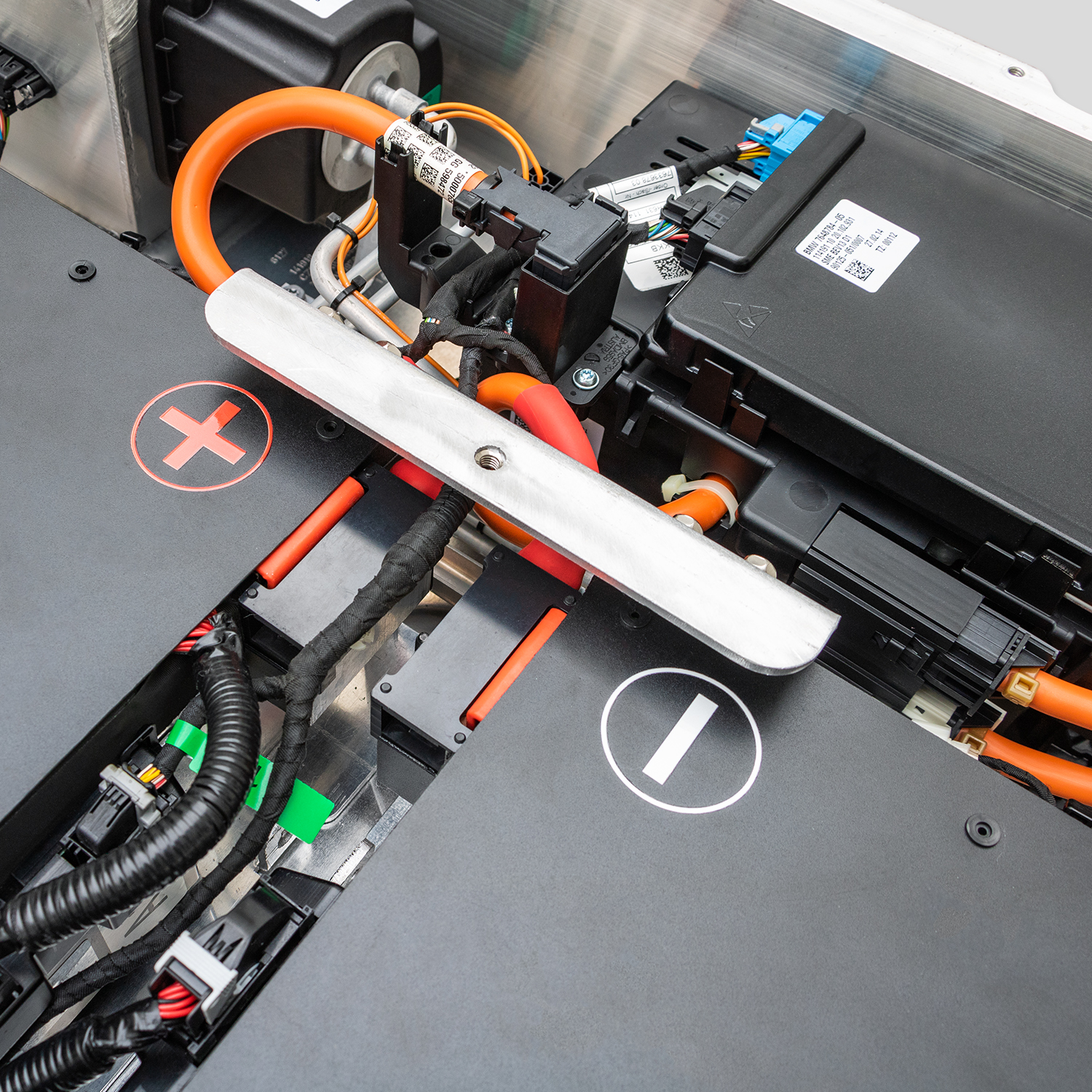
BMW i3 Battery Leak Detection: Professional Service to Save Your EV
You pull into your driveway and notice a small, slippery puddle beneath your BMW i3. It’s not water, and it has a faint, sweet chemical odor. Your heart sinks. You’ve heard the horror stories: battery leaks leading to total pack failure, isolation faults, and repair bills exceeding $20,000.
Is it just condensation? A coolant hose? Or is your high-voltage battery casing compromised, letting moisture eat away at your cells?
Ignoring a leak is not an option. In an electric vehicle, fluid ingress is a silent killer that can lead to thermal runaway or permanent capacity loss within days. But finding the source isn’t as simple as looking under the car. The leak could be microscopic, originating from a failed seal deep within the pack, or a cracked cooling line hidden behind shields.
At CNS BATTERY, we don’t guess; we detect. Our professional BMW i3 battery leak detection service uses advanced diagnostic tools to pinpoint the exact source of the breach before it destroys your vehicle. This guide explains why DIY checks fail, how our professional detection works, and why early intervention can save you thousands—or signal the perfect time for a transformative upgrade.
The Invisible Threat: Why Leaks Are So Dangerous
The BMW i3 battery pack is designed to be IP67 rated—dust-tight and protected against temporary immersion. However, age, road debris, corrosion, and manufacturing defects can compromise this seal.
What Happens When Water Gets In?
- Isolation Faults: Moisture creates a conductive path between high-voltage components and the chassis. The car immediately shuts down to prevent electrocution, leaving you stranded.
- Cell Corrosion: Even small amounts of water cause rapid corrosion on busbars and cell terminals, increasing resistance and generating deadly heat.
- Short Circuits: Direct contact between water and live cells can cause internal shorts, leading to module failure or fire.
- Coolant Contamination: If the leak is internal (coolant mixing with cells), the chemical reaction can destroy the entire pack instantly.
The Risk: By the time you see a puddle or get an error code, significant damage may have already occurred. Speed is critical.
Why DIY Detection Fails
Many owners try to find the leak themselves by hosing down the car or visually inspecting the underbody. This is dangerous and ineffective.
- High Voltage Risk: Spraying water near compromised high-voltage components risks electrocution.
- Hidden Sources: Leaks often originate from internal seals, pressure relief valves, or micro-cracks in the casing that are invisible to the naked eye.
- False Negatives: A leak might only occur under specific conditions (e.g., when the battery expands during charging or when driving over bumps). Static visual checks miss these dynamic failures.
- Misdiagnosis: Confusing AC condensation or windshield washer fluid with battery coolant or electrolyte can lead to ignoring a real crisis.
The CNS BATTERY Professional Detection Process
Our BMW i3 battery leak detection service is a comprehensive, multi-step diagnostic procedure performed by certified high-voltage technicians. We don’t just look; we test, measure, and verify.
Step 1: Visual & Thermal Inspection
We start with a safe, detailed visual exam of the underbody, looking for corrosion, impact damage, or residue trails. We then use thermal imaging cameras while the battery is under load to identify hot spots caused by internal resistance from moisture intrusion.
Step 2: Pressure Decay Testing (The Gold Standard)
This is the most accurate method for finding sealed pack leaks.
- The Process: We connect a specialized pressure testing unit to the battery pack’s ventilation port.
- The Test: The system pressurizes the pack with air and monitors the pressure drop over time.
- The Result: If pressure drops faster than the standard allows, we know there is a breach. We can then use tracer gas or soap solutions in specific areas to pinpoint the exact location of the leak (e.g., corner seal, service plug, cooling line).
Step 3: Coolant Analysis & Isolation Testing
- Fluid Check: We analyze the coolant level and quality. Low levels indicate a leak; oily or discolored coolant suggests internal mixing.
- Megohm Meter: We measure the isolation resistance between the high-voltage system and the chassis. A low reading confirms moisture presence inside the pack.
Step 4: Detailed Report & Action Plan
You receive a full report detailing:
- The exact location of the leak.
- The severity of the intrusion.
- Whether the battery cells have already suffered damage.
- Your options: Seal repair (if viable) or battery replacement.
When Detection Leads to Replacement: The Smart Upgrade
Here is the hard truth: Not all leaks can be repaired.
If the leak has been present for more than a few days, or if the casing itself is cracked/corroded, sealing it is a temporary band-aid. The internal cells are likely already compromised by corrosion. Trying to patch a leaking, aged battery is often throwing good money after bad.
This is where CNS BATTERY turns a crisis into an opportunity. If our detection reveals that your battery is damaged beyond simple repair, we offer the ultimate solution: a brand-new, upgraded battery replacement.
Why Upgrade Instead of Repair?
- Permanent Fix: Our BMW i3 Series Battery replacements come with factory-perfect seals and new casings. The leak problem is eliminated forever.
- Double the Range: Swap your leaking, degraded 60 Ah or 94 Ah pack for a modern 120 Ah equivalent, giving you 130+ miles of range.
- Superior Sealing Technology: Our packs utilize updated gasket materials and designs that are more resistant to road salt and debris than original OEM units.
- Cost Efficiency: A dealership might charge $500–$1,000 just for diagnostics and a temporary seal repair, followed by a $20,000 replacement later when the cells fail. Our complete upgrade solutions typically range from $8,000 to $12,000 USD, solving the leak and the degradation in one step.
- Warranty Peace of Mind: We warranty our replacements against leaks and defects. A patch job comes with no such guarantee.
Real Story: From “Mystery Puddle” to “Range King”
Meet Elena, a 2016 i3 owner. She noticed a small puddle and worried it was just AC water. Two weeks later, her car threw an “Isolation Fault” and wouldn’t charge. A local shop guessed it was a hose and replaced it for $400, but the fault returned three days later.
Elena came to CNS BATTERY for our professional leak detection. Our pressure test revealed a micro-crack in the main casing seam that only opened under thermal expansion. The coolant had been slowly eating away at two modules. “A seal repair wouldn’t have fixed the internal damage,” we explained. Elena opted for our 120 Ah upgrade. “The detection saved me from wasting money on a useless repair,” Elena says. “Now I have a leak-proof battery with 135 miles of range. It was the best investment I ever made.”
Don’t Gamble with a Leaking Battery
A BMW i3 battery leak is a ticking time bomb. DIY guesses are dangerous, and delayed action leads to catastrophic failure.
Get the facts fast. Our professional detection service gives you the clarity you need to make the right decision—whether it’s a simple fix or a game-changing upgrade.
Suspect a leak in your BMW i3?
Stop guessing and risking your safety. Contact CNS BATTERY today to schedule a professional leak detection service. We’ll pinpoint the issue, assess the damage, and show you how our BMW i3 Series Battery upgrades can solve your leak problems permanently while doubling your range.
👉 Book Your Leak Detection & Assessment
Frequently Asked Questions (FAQ)
1. How do I know if my BMW i3 has a battery leak?
Signs include slippery puddles under the car (often green/blue or clear with a sweet smell), “Isolation Fault” warnings, reduced charging speeds, or unexplained coolant loss. However, some leaks are internal and show no external signs until damage occurs. Professional detection is the only way to be sure.
2. Can I drive my i3 if I suspect a leak?
No. Driving with a suspected leak risks severe electrical shorts, fire, and total battery destruction. If you see fluid or get isolation warnings, park the car safely and have it towed to a specialist immediately.
3. How much does professional leak detection cost?
Our comprehensive detection service, including pressure testing and isolation measurement, is affordable and often credited toward the cost of any subsequent repair or upgrade with us. It is far cheaper than the cost of replacing a destroyed battery due to neglect.
4. Can a leaking battery be sealed and reused?
In rare cases where the leak is caught immediately and is external (e.g., a loose vent cap), sealing might work. However, if moisture has entered the pack or the casing is cracked, the internal cells are likely corroded. In these cases, replacement is the only safe and reliable option.
5. Will a new battery from CNS BATTERY leak?
No. Our BMW i3 Series Battery replacements are built with brand-new casings, advanced sealing gaskets, and rigorous factory pressure testing. They are designed to be impervious to the leaks that plague aging OEM packs.
6. How long does the detection process take?
A full professional leak detection typically takes 1–2 hours. We can often provide you with a diagnosis and recommendation on the same day.
7. If my battery is damaged by a leak, what are my costs?
If the leak has caused internal damage, a dealership OEM replacement costs $18,000–$22,000 USD. CNS BATTERY offers upgraded, leak-proof replacements typically between $8,000 and $12,000 USD, providing double the range and better sealing technology for half the price.