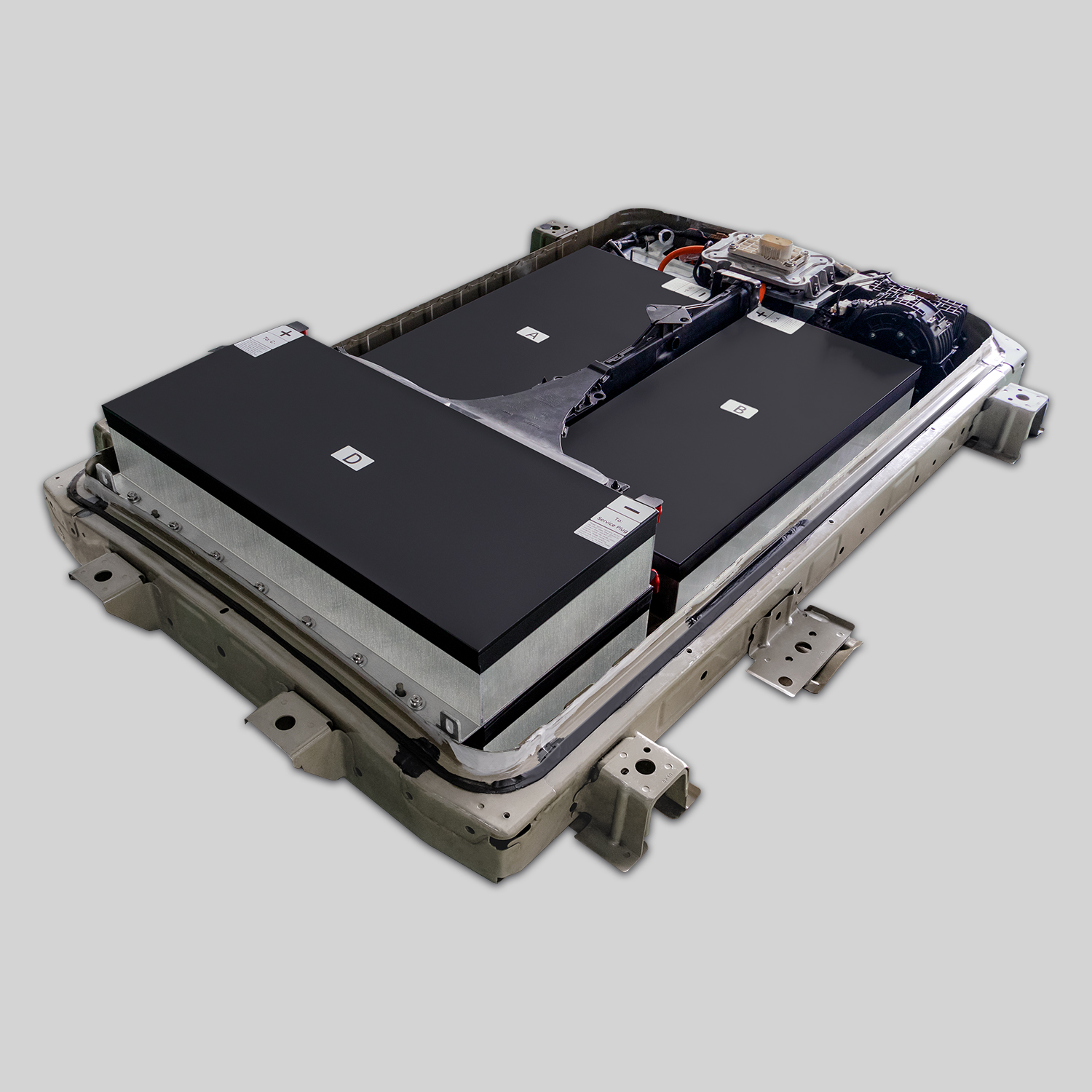
BMW i3 Battery Cell Imbalance: Causes, Fixes, and When to Upgrade
Your BMW i3’s range indicator is acting erratic again. Yesterday, it promised 75 miles; today, after a short drive, it plummets to 45. You notice the car refuses to charge to 100%, stopping stubbornly at 88% or 92%. A quick scan with your OBDII tool reveals the culprit: high cell voltage deviation.
You’ve heard terms like “cell balancing” thrown around as a magic fix. But is your battery just out of sync, or is it physically failing? Can a simple software reset restore your lost miles, or are you facing a permanent capacity loss that demands a more robust solution?
At CNS BATTERY, we diagnose hundreds of i3 packs annually. We know that BMW i3 battery cell imbalance is often the first warning sign of deeper degradation. This guide separates fact from fiction, explains the root causes of imbalance, details professional fixes, and reveals why, for many aging i3s, a full battery upgrade is the only path to true range recovery.
What Is Cell Imbalance and Why Does It Cripple Your Range?
Your BMW i3 battery pack isn’t a single block of energy; it’s a series of hundreds of individual lithium-ion cells grouped into modules. For the pack to deliver its maximum capacity, every single cell must hold the same voltage.
The Weak Link Theory: The Battery Management System (BMS) can only use the energy available in the weakest cell.
- During Discharge: If one cell hits 0% while others are at 20%, the car shuts down to protect that weak cell. The remaining 20% in the healthy cells is locked away, invisible to you.
- During Charge: If one cell hits 100% while others are at 80%, the BMS stops charging to prevent overcharging the full cell. You never reach a full charge, and your range suffers.
This discrepancy is called voltage deviation. A healthy pack has a deviation of less than 0.01V (10mV). Once deviation exceeds 0.03V–0.05V, you start seeing real-world range loss. Beyond 0.08V, the car may enter limp mode or refuse to fast charge.
The Root Causes: Why Your Cells Are Drifting Apart
Cell imbalance doesn’t happen without a reason. Understanding the cause determines whether a simple fix will work or if replacement is inevitable.
1. Natural Aging and Calendar Degradation
Over time, slight manufacturing differences cause some cells to age faster than others. As internal resistance increases unevenly, cells charge and discharge at different rates, leading to gradual drift. This is common in i3s over 6 years old.
2. Thermal Stress (The Silent Killer)
If your cooling system has ever struggled (clogged radiator, failing pump), certain modules may have run hotter than others. Heat accelerates degradation. A “hot spot” in the pack creates a group of weak cells that drag down the entire system.
3. Deep Discharge Cycles
Regularly draining your battery to 0% (or letting it sit at 0% for weeks) damages cells permanently. Often, one module recovers slower than others after a deep discharge, creating immediate imbalance.
4. Parasitic Drain or 12V Issues
A failing 12V auxiliary battery or parasitic drain can cause the high-voltage contactors to click on and off unexpectedly, interrupting balancing cycles and confusing the BMS.
The Fixes: Balancing vs. Replacement
So, how do you fix it? The solution depends entirely on the severity of the deviation and the underlying health of the cells.
Option A: Professional Active Balancing (For Moderate Imbalance)
If your State of Health (SOH) is still above 80% and the deviation is moderate (0.03V – 0.06V), a professional balancing service can help.
- The Process: Unlike the car’s passive balancing (which bleeds off excess energy as heat), professional active balancing moves energy from high-voltage cells directly to low-voltage ones.
- The Result: This can recover 5–10 miles of range and smooth out the GOM.
- Limitation: It is a maintenance procedure, not a cure for dead cells. If the cells are physically degraded, the imbalance will return within weeks.
Option B: Module Replacement (Risky & Often Temporary)
Some shops suggest swapping out the specific “bad” module.
- The Risk: Mixing a new/refurbished module with aged cells often creates new imbalances because the internal resistance doesn’t match. It’s a temporary patch that frequently fails again.
Option C: Full Battery Replacement (The Permanent Solution)
If your SOH is below 75%, deviation is high (>0.08V), or internal resistance is elevated, balancing is futile. The cells are chemically exhausted.
- The Reality: You cannot balance your way out of physical degradation. The only fix is replacing the entire pack.
The CNS BATTERY Advantage: Upgrade Instead of Repair
If your diagnostics point to irreversible imbalance, don’t settle for a costly OEM replacement that merely resets you to factory specs. At CNS BATTERY, we turn your imbalance crisis into a performance upgrade.
Why Choose CNS BATTERY for Imbalance Issues?
- Zero Deviation Guarantee: Our BMW i3 Series Battery replacements come perfectly balanced from the factory. Every cell is matched for voltage and internal resistance, eliminating the “weak link” problem entirely.
- Modern Cell Chemistry: We use Grade-A cells with lower internal resistance and superior thermal stability. They age more uniformly than your original 2014-2018 cells, preventing future imbalance.
- Capacity Upgrades: Don’t just fix the imbalance; double your range. Swap your struggling 60 Ah or 94 Ah pack for a 120 Ah equivalent, giving you 130+ miles of consistent, reliable range.
- Cost Efficiency: While dealerships charge $18,000+ for an OEM swap, our complete upgrade solutions typically range from $8,000 to $12,000 USD.
- Long-Term Warranty: We back our packs with a comprehensive warranty. If a cell drifts or fails, we replace it. Balancing services offer no such long-term guarantee.
Real Story: From “Balancing Loop” to Range Freedom
Meet David, a 2015 i3 owner. He spent six months trying various balancing tricks—overnight charging, third-party apps, even paying a local shop $400 for a balance. His range would bump up to 65 miles for a week, then drop back to 45. The deviation kept returning.
He came to CNS BATTERY for a final diagnosis. Our scan showed his SOH was 62% with permanent cell damage in three modules. We explained that further balancing was futile. David opted for our 120 Ah upgrade. Two days later, he was driving 135 miles on a single charge with zero deviation. “I wasted $1,000 trying to fix a broken battery,” David admits. “CNS BATTERY didn’t try to sell me a service I didn’t need; they sold me a solution that actually worked.”
Stop Gambling with Temporary Fixes
Is your BMW i3 suffering from range inconsistency due to cell imbalance? A professional balancing service might be the quick fix you need if caught early. But if your battery is chemically aged, don’t let anyone sell you false hope.
At CNS BATTERY, we prioritize honesty over upsells. We will diagnose your pack accurately and recommend the right solution—whether that’s a precision balance or a game-changing upgrade.
Unsure if your BMW i3 needs balancing or replacement?
Stop guessing. Contact CNS BATTERY today for a professional diagnostic assessment. We’ll analyze your cell voltages, determine if balancing can help, and show you how our BMW i3 Series Battery upgrades can double your range if it’s time for a change.
👉 Get Your Expert Diagnostic & Quote
Frequently Asked Questions (FAQ)
1. What is the difference between passive and active cell balancing?
Passive balancing (what your car does automatically) bleeds off excess energy from high cells as heat, which is slow and inefficient. Active balancing (our professional service) moves energy from high cells directly to low cells, which is faster, more efficient, and recovers more usable capacity.
2. How much does a professional BMW i3 cell balancing service cost?
Typically between $300 and $500 USD, depending on the severity of the deviation and the time required. This includes a full diagnostic scan and health report.
3. Will balancing restore my original EPA range?
Only if the loss was due to imbalance, not degradation. If your cells are chemically aged (low SOH), balancing will not restore lost capacity. In those cases, a battery replacement is required to regain original (or greater) range.
4. How do I know if my battery needs balancing or replacing?
A professional diagnostic scan is the only way to know. If State of Health (SOH) is below 70% or cell deviation is extreme (>0.1V), replacement is usually the better option. CNS BATTERY provides this analysis honestly.
5. Can I balance my battery myself?
You can attempt passive balancing by leaving the car plugged in at 100% for several days, but it is inefficient. Active balancing requires specialized equipment. DIY attempts with improper tools can damage the BMS.
6. If balancing doesn’t work, what is the cost of a replacement?
If your battery is beyond repair, CNS BATTERY offers upgrade replacements typically ranging from $8,000 to $12,000 USD. This is significantly less than the $18,000+ dealership cost and often includes a capacity upgrade (e.g., to 120 Ah).
7. How long does a professional balancing service take?
Depending on the deviation, it can take 12 to 24 hours. We often keep the vehicle overnight to perform the balance and verify the results with a test cycle the next morning.