BMW i3 Battery Cell Balancing: Professional Service vs. The DIY Myth
Your BMW i3’s range indicator is acting strange again. One day it promises 80 miles; the next, after a short drive, it drops to 50. You’ve heard the term “cell balancing” thrown around in online forums as a magic fix. Some suggest leaving the car plugged in for 48 hours; others recommend expensive software resets.
But is your battery just out of sync, or is it physically failing? And more importantly, can a simple balance restore your lost capacity, or is it time for a more robust solution?
At CNS BATTERY, we perform hundreds of diagnostic scans on i3 packs every year. We know that while professional BMW i3 battery cell balancing is a vital maintenance procedure, it is often misunderstood as a cure-all for severe degradation. This guide separates fact from fiction, explains when a professional balance is worth the investment, and reveals why, for many aging i3s, a full battery upgrade is the only path to true range recovery.
What Is Cell Balancing and Why Does Your i3 Need It?
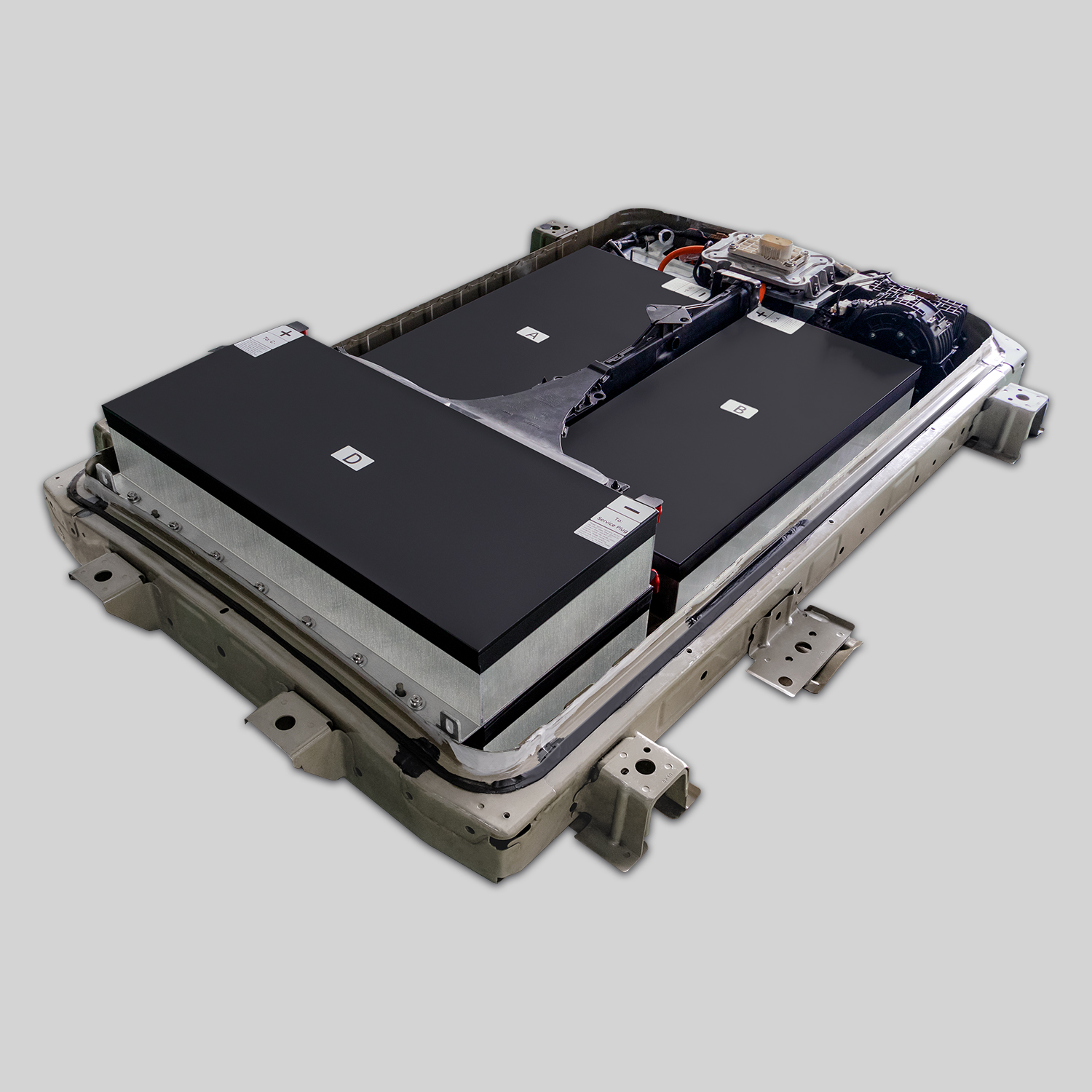
Your BMW i3 battery pack consists of hundreds of individual lithium-ion cells connected in series. For the pack to deliver its maximum capacity, every single cell must hold the same voltage.
Over time, due to minor manufacturing differences, temperature variations, and usage patterns, some cells charge or discharge faster than others. This creates voltage deviation.
- The Weak Link: The Battery Management System (BMS) can only use the energy available in the weakest cell. If one cell hits 0% while others are at 20%, the car shuts down, hiding that remaining 20% from you.
- The Goal of Balancing: A cell balancing service forces energy from higher-voltage cells into lower-voltage ones (passive balancing) or bypasses full cells to let weaker ones catch up (active balancing), bringing the entire pack back into harmony.
The DIY Trap: Why “Just Plugging It In” Often Fails
Many owners try to balance their batteries by leaving the car on a Level 2 charger for days. While the i3 does perform some passive balancing when fully charged, this method has severe limitations:
- It’s Slow: Passive balancing moves tiny amounts of current. Correcting a significant deviation (e.g., >0.05V) could take weeks of continuous charging.
- It’s Limited: The car only balances when the battery is nearly 100%. If your BMS thinks the pack is full because of a skewed sensor reading, it won’t initiate balancing even if cells are mismatched.
- It Can’t Fix Hardware: If a cell is physically damaged or has high internal resistance, no amount of balancing will make it hold charge like a healthy cell.
Attempting complex DIY balancing with aftermarket tools can also be risky. Incorrect parameters can stress the BMS or lead to overcharging vulnerable cells.
The CNS BATTERY Professional Service: Precision & Diagnostics
A professional BMW i3 battery cell balancing service at CNS BATTERY is far more than just plugging in a charger. It is a comprehensive health intervention.
Our 4-Step Professional Process
- Deep Diagnostic Scan: We use dealer-level ISTA software to read the voltage of every single module and cell group. We identify the exact deviation (e.g., “Module 4 is 0.08V lower than the rest”).
- Active Balancing: Using specialized industrial equipment, we actively force charge into the weak modules while bypassing the strong ones. This process is significantly faster and more precise than the car’s internal system.
- Capacity Test: We perform a controlled discharge/charge cycle to measure the actual usable capacity (Ah) versus the rated capacity.
- Health Report & Recommendation: We provide a transparent report. If balancing restores your range, great! But if we find that the deviation is caused by permanent cell damage, we tell you honestly.
When Is Professional Balancing Enough?
Professional balancing is highly effective if:
- Your State of Health (SOH) is still above 80%.
- The voltage deviation is moderate (0.03V – 0.06V).
- The range loss is sudden and inconsistent (suggesting a calibration issue rather than total decay).
In these cases, a $300–$500 USD balancing service can recover 5–10 miles of range and smooth out the GOM (Guess-O-Meter).
The Hard Truth: When Balancing Won’t Save You
Here is the reality check many shops won’t give you: Balancing cannot create energy that doesn’t exist.
If your diagnostic scan shows:
- SOH below 70-75%: The cells have chemically aged. They physically cannot hold the original charge.
- High Deviation (>0.1V) across multiple modules: This indicates permanent cell failure or internal shorts.
- High Internal Resistance: The cells generate too much heat to accept a proper balance.
In these scenarios, balancing is a temporary band-aid. It might squeeze out an extra 2 miles for a few weeks, but the deviation will return quickly. You are throwing money at a dying battery.
The CNS BATTERY Upgrade: The Permanent Solution
If our professional assessment reveals that your battery is beyond balancing, we don’t just send you away. We offer the ultimate solution: a BMW i3 Series Battery replacement and upgrade.
Instead of spending money to marginally improve a failing pack, invest in a transformation.
Why Upgrade Instead of Just Balance?
- Real Range Recovery: Swap your degraded 60 Ah or 94 Ah pack for a modern 120 Ah equivalent. Gain 130+ miles of real-world range instantly.
- Zero Deviation: Our new packs come perfectly balanced from the factory. No more worrying about weak cells dragging you down.
- Modern Chemistry: Newer cells have lower resistance, charge faster, and degrade slower than your original 2014-2018 units.
- Cost-Effective: While a dealership OEM replacement costs $18,000+, our upgrade solutions typically range from $8,000 to $12,000 USD. Compared to repeated balancing attempts on a dead pack, this is the smarter long-term investment.
- Warranty Peace of Mind: Our replacements come with a comprehensive warranty. If a cell fails, we replace it. Balancing services offer no such guarantee.
Real Story: From “Balancing Loop” to Range Freedom
Meet David, a 2015 i3 owner. He spent six months trying various balancing tricks—overnight charging, third-party apps, even paying a local shop $400 for a balance. His range would bump up to 65 miles for a week, then drop back to 45.
He came to CNS BATTERY for a final diagnosis. Our scan showed his SOH was 62% with permanent cell damage in three modules. We explained that further balancing was futile. David opted for our 120 Ah upgrade. Two days later, he was driving 135 miles on a single charge. “I wasted $1,000 trying to fix a broken battery,” David admits. “CNS BATTERY didn’t try to sell me a service I didn’t need; they sold me a solution that actually worked.”
Don’t Gamble on Temporary Fixes
Is your BMW i3 suffering from range inconsistency? A professional cell balancing service might be the quick fix you need. But if your battery is chemically aged, don’t let anyone sell you a false hope.
At CNS BATTERY, we prioritize honesty over upsells. We will diagnose your pack accurately and recommend the right solution—whether that’s a precision balance or a game-changing upgrade.
Unsure if your BMW i3 needs balancing or replacement?
Stop guessing. Contact CNS BATTERY today for a professional diagnostic assessment. We’ll analyze your cell voltages, determine if balancing can help, and show you how our BMW i3 Series Battery upgrades can double your range if it’s time for a change.
👉 Get Your Expert Diagnostic & Quote
Frequently Asked Questions (FAQ)
1. What is the difference between passive and active cell balancing?
Passive balancing (what your car does) bleeds off excess energy from high cells as heat, which is slow. Active balancing (our professional service) moves energy from high cells directly to low cells, which is faster, more efficient, and recovers more usable capacity.
2. How much does a professional BMW i3 cell balancing service cost?
Typically between $300 and $500 USD, depending on the severity of the deviation and the time required. This includes a full diagnostic scan and health report.
3. Will balancing restore my original EPA range?
Only if the loss was due to imbalance, not degradation. If your cells are chemically aged (low SOH), balancing will not restore lost capacity. In those cases, a battery replacement is required to regain original (or greater) range.
4. How do I know if my battery needs balancing or replacing?
A professional diagnostic scan is the only way to know. If State of Health (SOH) is below 70% or cell deviation is extreme (>0.1V), replacement is usually the better option. CNS BATTERY provides this analysis honestly.
5. Can I balance my battery myself?
You can attempt passive balancing by leaving the car plugged in at 100% for several days, but it is inefficient. Active balancing requires specialized equipment. DIY attempts with improper tools can damage the BMS.
6. If balancing doesn’t work, what is the cost of a replacement?
If your battery is beyond repair, CNS BATTERY offers upgrade replacements typically ranging from $8,000 to $12,000 USD. This is significantly less than the $18,000+ dealership cost and often includes a capacity upgrade (e.g., to 120 Ah).
7. How long does a professional balancing service take?
Depending on the deviation, it can take 12 to 24 hours. We often keep the vehicle overnight to perform the balance and verify the results with a test cycle the next morning.