
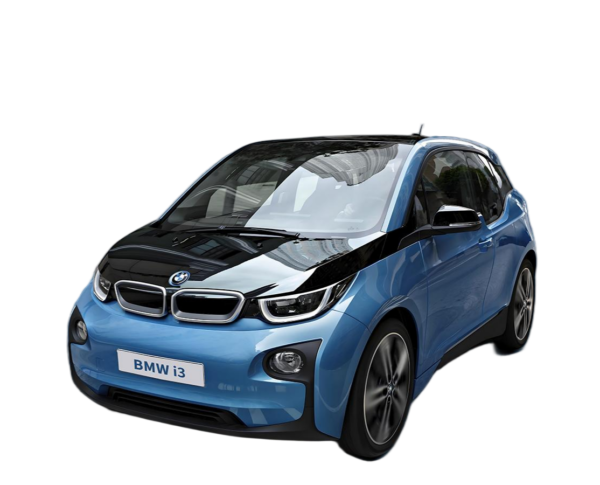
BMW i3 Battery Warranty Claim: The Essential Documents You Need (And What If You’re Denied?)
Your BMW i3’s range has plummeted. The dashboard warns of “Maximum Discharge Power Reduced,” and a diagnostic scan confirms your State of Health (SOH) is below 70%. You breathe a sigh of relief, remembering the 8-year/100,000-mile battery warranty. Surely, BMW will cover this?
But then comes the paperwork. The dealership asks for a mountain of documents, service records, and specific diagnostic logs. One missing page could mean a denied claim and a sudden $18,000 USD bill.
Are you prepared? Do you have the right BMW i3 battery warranty claim required documents to prove your case?
At CNS BATTERY, we’ve helped countless owners navigate the complex warranty landscape. While we always hope your claim is approved, the reality is that many are denied due to technicalities or expired terms. This guide details exactly what you need to file a successful claim—and more importantly, what your smartest options are if the answer is “no.”
The Critical Checklist: Documents for a Successful Claim
To maximize your chances of approval, you must present a complete, undeniable case. Missing documentation is the #1 reason for delays or denials. Gather these essential items before visiting the dealership:
1. Proof of Ownership and Vehicle Identity
- Vehicle Title or Registration: Must clearly show your name and the Vehicle Identification Number (VIN).
- Current Driver’s License: To verify identity matches the registration.
2. Maintenance and Service History
BMW requires proof that the battery failure wasn’t caused by neglect or improper maintenance.
- Complete Service Records: A log of all scheduled maintenance, especially those related to the high-voltage cooling system (coolant changes, pump checks).
- Charging History (If Available): While hard to produce formally, having logs from your home charger or app showing you primarily used Level 2 charging (rather than excessive DC fast charging) can support your case.
3. Professional Diagnostic Report
You cannot just say “the range is low.” You need hard data.
- ISTA/D Diagnostic Log: The dealership will generate this, but having an independent specialist run a scan beforehand (using tools like BimmerLink or ISTA) to confirm SOH < 70% gives you leverage.
- Error Code Printout: Specific codes related to cell voltage deviation or capacity loss.
4. Warranty Verification Letter
- Contact BMW Customer Relations beforehand to get a written confirmation that your specific VIN is still within the 8-year/100,000-mile window and has no prior exclusions.
The Hidden Traps: Why Claims Get Denied
Even with perfect paperwork, claims can be rejected. Be aware of these common pitfalls:
- The “Wear and Tear” Argument: If your mileage is 100,001 or you are 8 years and 1 month old, the claim is automatically void. There is no grace period.
- Improper Charging Habits: If data shows frequent 100% DC fast charging in extreme heat, BMW may argue user abuse caused the degradation.
- Missed Cooling System Maintenance: The i3 battery relies on liquid cooling. If you missed a scheduled coolant flush, BMW can deny the claim, arguing that overheating (caused by your neglect) killed the cells.
- Aftermarket Modifications: Any non-OEM software tunes or unauthorized electrical modifications can void the entire high-voltage warranty.
Plan B: When the Warranty Door Closes
So, you’ve gathered your BMW i3 battery warranty claim required documents, submitted them, and received the dreaded call: “Claim Denied.” Maybe you were 500 miles over the limit, or maybe a missing service record sealed your fate.
Now you face the dealership’s alternative: a brand-new OEM replacement costing $16,000 to $20,000 USD. For a car worth less than that, it feels like a death sentence for your EV.
But it doesn’t have to be.
This is where CNS BATTERY steps in as your savior. We specialize in providing high-performance, cost-effective solutions for owners who find themselves outside the warranty net.
Why CNS BATTERY is the Smart Alternative to a Denied Claim
- Massive Cost Savings: Our BMW i3 Series Battery replacements typically cost between $8,000 and $12,000 USD. That’s up to 50% less than the dealership’s out-of-warranty price.
- Capacity Upgrades: The warranty only promises to restore you to 70% of your original capacity. CNS BATTERY can upgrade you! Swap a failing 60 Ah pack for a 94 Ah or 120 Ah unit, giving you double the range of your original car.
- No Bureaucracy: No forms, no waiting for corporate approval, no arguments over service records. We diagnose, quote, and install.
- Modern Technology: Our cells are newer and more thermally stable than the original factory units, meaning they will degrade slower and last longer.
- Our Own Warranty: We provide a comprehensive warranty on our replacements, so you never have to worry about being “denied” again.
Real Story: From Denied to Upgraded
Meet Sarah, a teacher from Oregon. Her 2015 i3 hit 101,000 miles just as her SOH dropped to 65%. She submitted her warranty claim documents, but BMW denied her strictly based on the mileage odometer reading. The dealer quoted her $17,500 for a replacement.
Devastated, she contacted CNS BATTERY. Instead of a like-for-like replacement, we installed a 120 Ah upgraded pack. For $10,500 USD, Sarah not only solved her battery failure but now enjoys 130 miles of range—far more than her car ever had when new. “The denial turned out to be a blessing,” she says. “I ended up with a better car for half the price.”
Don’t Let a Denied Claim Ground You
Preparing your BMW i3 battery warranty claim documents is a necessary step if you are within the limit. But don’t let the fear of a denial paralyze you. Even if the warranty fails, your driving freedom doesn’t have to end.
Whether you are fighting for a claim or looking for a smarter solution after a rejection, CNS BATTERY is here to ensure your i3 stays on the road.
Has your warranty claim been denied, or are you preparing to file?
Don’t face the dealership alone. Contact CNS BATTERY today for a free consultation. We’ll review your situation, explain your options, and show you how our BMW i3 Series Battery upgrades can save you thousands while restoring your range.
👉 Get Your Free Assessment & Quote
Frequently Asked Questions (FAQ)
1. What documents are absolutely required for a BMW i3 battery warranty claim?
You need your vehicle title/registration, proof of identity, complete service history (especially cooling system maintenance), and a professional diagnostic report showing State of Health (SOH) below 70%.
2. How long do I have to file a warranty claim?
You must file while the vehicle is still within the 8-year or 100,000-mile limit (whichever comes first). Once you cross either threshold, the warranty is expired, and claims will be denied.
3. What happens if my warranty claim is denied?
If denied, you are responsible for the full cost of replacement. Dealerships often charge $16,000–$20,000 USD. However, CNS BATTERY offers high-quality replacements and upgrades for $8,000–$12,000 USD, providing a much more affordable path forward.
4. Can I upgrade my battery capacity if my warranty claim is denied?
Yes! In fact, this is the best outcome for many owners. While the warranty only restores original capacity, CNS BATTERY allows you to upgrade from 60 Ah to 94 Ah or 120 Ah, significantly increasing your range beyond factory specifications.
5. Does missing one service appointment void the battery warranty?
It can. If BMW determines that a missed service (like a coolant flush) directly contributed to the battery failure, they may deny the claim. This is why maintaining complete service records is critical.
6. How long does the warranty claim process take?
It can take 2 to 6 weeks. You must submit documents, wait for BMW corporate approval, and then wait for the battery to be shipped. In contrast, a replacement from CNS BATTERY can often be completed in 2-3 days.
7. Is it better to fight a denied claim or switch to an aftermarket solution?
If you are clearly out of warranty (e.g., over the mileage limit), fighting is futile. In these cases, switching to CNS BATTERY is faster, cheaper, and often results in a better-performing vehicle due to capacity upgrade options.

