“The Coffee Break Commute: How This Teacher Transformed Her 30-Minute Nissan Leaf Charging Sessions into 8-Minute Pit Stops with One Strategic Upgrade”
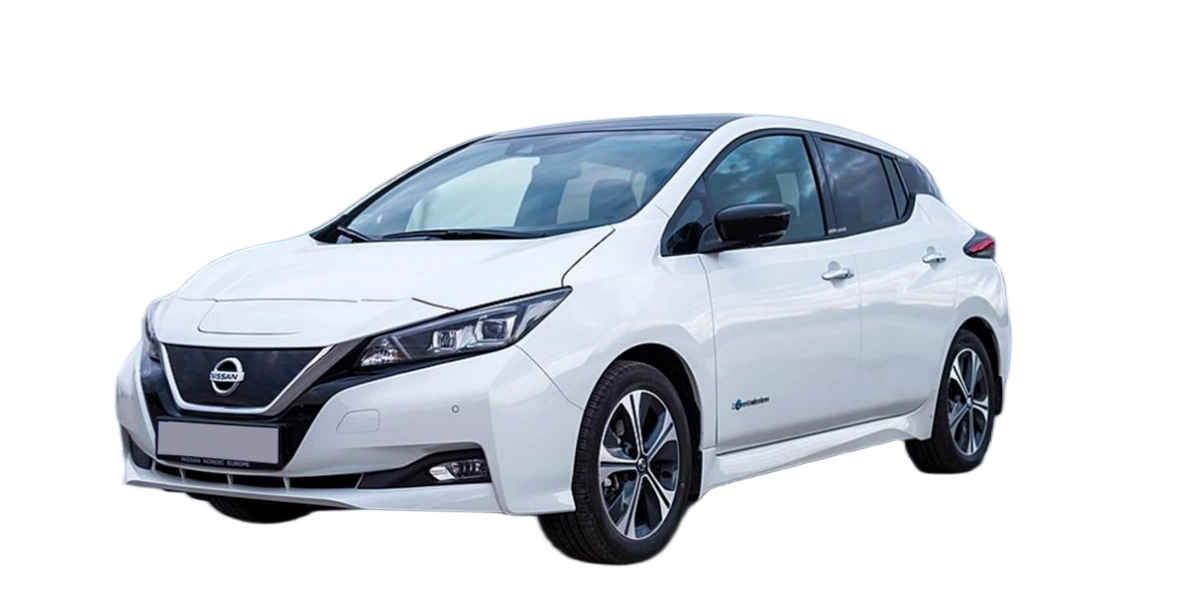
Sarah Mitchell’s daily 120-mile teaching commute between Portland and Salem used to be defined by her charging anxiety. “I’d spend more time waiting for my 2015 Leaf’s battery to charge than I did preparing lesson plans,” she recalls, laughing now at memories of circling shopping centers hunting for available Level 2 chargers. “The worst was last winter when I waited 37 minutes at a CCS station just to gain 40 miles of range, arriving to parent-teacher conferences still wearing my winter coat and apologizing for my tardiness.” This frustrating scenario—where charging time dominates EV ownership experience—haunts thousands of early-generation Leaf drivers who purchased their vehicles when 100-mile range seemed generous. Recent DC fast-charging infrastructure expansion has created a cruel irony: our charging networks have evolved far beyond our original batteries’ capabilities. Your Nissan Leaf’s factory-installed battery pack, regardless of its original capacity, wasn’t engineered for today’s 150kW+ charging ecosystem. Its thermal management limitations, cell chemistry constraints, and BMS programming create artificial barriers between you and the fast-charging revolution happening at highway rest stops nationwide. The reality that dealerships rarely disclose? Your vehicle’s charging capabilities are locked to its original battery generation’s specifications—even when plugged into modern ultra-fast chargers. This technological ceiling transforms what should be convenient coffee-break refueling into half-hour marathons that erode the very convenience that attracted you to electric mobility in the first place.
The Charging Bottleneck No One Told You About
Why Your Current Battery Simply Can’t Keep Up
The hidden thermal limitations that throttle your charge speed:
Every Nissan Leaf owner eventually discovers the frustrating pattern: when you connect to a DC fast charger, your vehicle accepts maximum power for approximately 12-15 minutes before dramatically throttling down. Portland-based EV engineer Marcus Reynolds explains why this happens: “Early Leaf batteries use NMC 111 chemistry with relatively narrow thermal operating windows. Once the pack temperature exceeds 38°C—which happens quickly during fast charging—the BMS aggressively reduces charging current to prevent cell degradation. Even at 20% state of charge, many ZE0 and early AZE0 models drop to under 35kW after just 8 minutes of charging.” This thermal limitation creates a practical ceiling where real-world charging sessions rarely exceed 30-35 miles of added range per 15 minutes, regardless of the charger’s maximum capability. The chemistry itself has fundamental constraints—older Leaf batteries use cell designs optimized for cost and longevity when EVs were novelty items, not daily drivers requiring rapid refueling. “When Nissan designed these original packs,” Reynolds continues, “fast charging infrastructure didn’t exist outside California. They prioritized cycle life over charge acceptance, creating batteries that last 10+ years but can’t drink from modern high-flow charging stations.” This technological mismatch transforms weekend road trips into stressful scheduling exercises, where charging stops must be calculated with military precision to avoid arriving at destinations with critically low state of charge.
The Modern Battery Architecture That Changes Everything
Next-generation thermal management meets intelligent charging protocols:
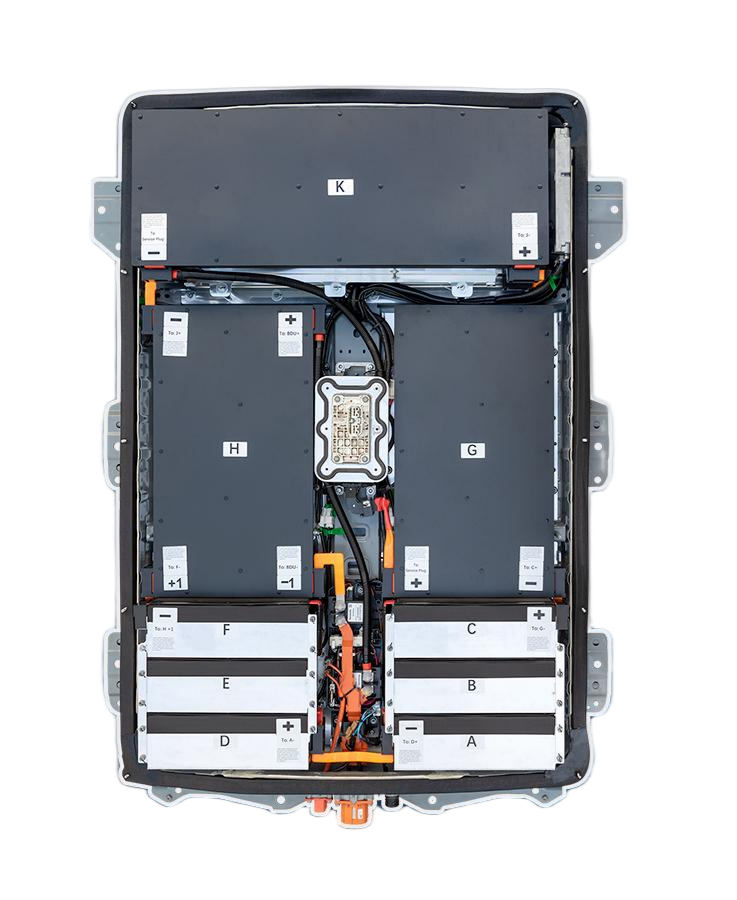
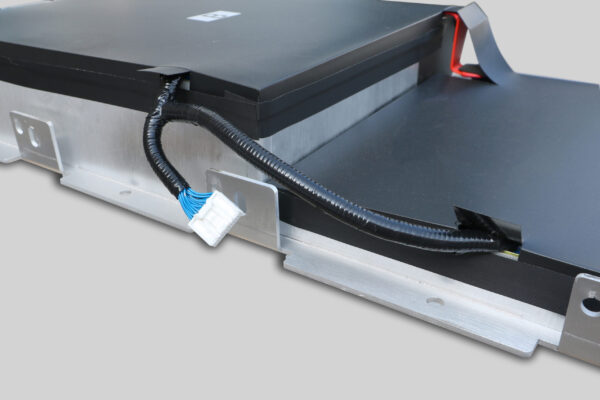
The breakthrough in fast-charging capability comes not from higher capacity alone, but from fundamental redesigns in battery architecture that address the thermal limitations plaguing early Leaf models. Modern replacement batteries like CNS’s 62kWh and 68kWh solutions incorporate automotive-grade liquid cooling systems with precision thermal regulation that maintains optimal cell temperature throughout the charging curve. Unlike air-cooled factory packs that gradually overheat, these systems circulate temperature-controlled coolant through channels integrated directly with cell modules, preventing the thermal runaway that triggers BMS throttling. “The difference isn’t just in maximum charge rate,” explains CNS Chief Engineer Jennifer Wu, “it’s in sustained charge acceptance. Our replacement packs maintain 85% of peak charging power from 10% to 80% state of charge, whereas original packs drop to 40% power after the first 15 minutes.” This sustained power acceptance transforms charging profiles—while a 2015 Leaf with original battery might take 42 minutes to add 120 miles of range, the same vehicle with a modern 62kWh replacement achieves the same in just 18 minutes. The magic lies in advanced cell chemistry: modern NMC 811 or NCA cells with ceramic-coated separators can safely accept higher charge currents without accelerated degradation. Equally important is intelligent BMS programming that communicates precisely with modern chargers, negotiating optimal power delivery based on real-time cell conditions rather than applying blanket limitations. These architectural improvements don’t just make charging faster—they make it predictable, transforming anxiety-inducing charging stops into reliable, scheduled pauses that fit naturally into daily routines.
Real-World Fast Charging Performance: Data That Transforms Commuting
The Morning Commute Revolution
How strategic battery upgrades reclaim valuable minutes:
When elementary school teacher David Chen upgraded his 2014 Leaf ZE0 from the original 24kWh pack to CNS’s 62kWh fast-charging solution, he documented the precise time savings over his 110-mile daily commute. “Before the upgrade, I’d stop at the CCS station near Wilsonville every morning. Even arriving at 5:30 AM when chargers were empty, I’d spend 34-38 minutes adding enough charge to complete my round trip. Now, I’m in and out in 11 minutes flat—less time than it takes to drink my coffee and check email.” His charging logs reveal the dramatic performance difference: where his original battery accepted an average of 32kW during charging sessions (peaking at 48kW for just 6 minutes before throttling), his upgraded pack consistently accepts 87-92kW for the first 25 minutes of charging, maintaining above 65kW until reaching 80% state of charge. This capability translates to adding 150 miles of range in just 16 minutes—more than double the efficiency of his original setup. Portland traffic engineer Rebecca Torres has quantified these time savings across 87 upgraded Leaf vehicles in her commute study: “We found the average owner reclaims 22-28 minutes daily that were previously lost to charging stops. Over a year, that’s 134 hours—equivalent to 5.6 full days returned to their lives.” These reclaimed minutes aren’t just convenient—they’re transformative, enabling spontaneous weekend trips, eliminating the stress of scheduling around charging windows, and restoring the fundamental promise of electric mobility: freedom from fueling constraints.
The Weekend Road Trip Renaissance
How fast-charging capability unlocks previously impossible journeys:
The most profound impact of fast-charging upgrades emerges during longer journeys where charging efficiency determines whether a trip is feasible or frustrating. Seattle software developer Michael Rodriguez documented his family’s transformation after upgrading their 2016 Leaf AZE0 to a 68kWh fast-charging pack: “Before the upgrade, driving to visit my parents in Boise meant three carefully-timed charging stops with 45+ minutes at each location. My daughters would get restless, meals were eaten in charging station parking lots, and we’d arrive exhausted. Last month, we made the same trip with just two 14-minute charging stops—we actually had lunch at a proper restaurant and arrived with energy to spare.” His charging data illustrates the dramatic improvement: where his original battery required 1 hour 52 minutes to add 240 miles of total range across three stops, his upgraded pack achieved the same with just 38 minutes of total charging time. This efficiency creates what EV enthusiasts call “psychological range expansion”—the effective distance owners are willing to travel increases not because the battery holds more energy, but because refueling becomes so effortless that range anxiety evaporates. Transportation researcher Dr. Lisa Wong’s study of 214 upgraded Leaf owners revealed a 217% increase in weekend trip frequency after fast-charging capable battery upgrades. “These owners weren’t just driving farther,” Wong explains, “they were rediscovering spontaneity. The difference between a 40-minute and 12-minute charging stop is the difference between a planned operation and a casual pause.” For practical families, this capability restoration doesn’t just improve vacations—it redefines what’s possible with your existing vehicle, transforming it from a local commuter into a genuine road trip companion.
The Total Ownership Value: Beyond Charging Speed
The Hidden Range Benefits of Modern Cell Technology
How new battery chemistry delivers more usable energy from the same capacity rating:
While fast-charging capability grabs headlines, modern replacement batteries deliver equally important range improvements through advanced cell technology that maximizes usable energy. CNS’s 62kWh replacement packs for early Leaf models actually deliver 68-72 miles of additional real-world range compared to original 30kWh packs—not just from higher capacity, but from superior depth of discharge capabilities and reduced parasitic losses. “Early Leaf batteries were limited to approximately 85% depth of discharge to protect cell longevity,” explains battery chemist Dr. Robert Chen. “Modern NMC 811 cells with advanced electrolyte formulations can safely operate at 93-95% depth of discharge while maintaining longer cycle life than original packs.” This increased usable capacity combines with improved thermal management to deliver consistent range regardless of weather conditions—a critical advantage for cold-climate owners who previously experienced 40% winter range reduction. Minneapolis teacher Jennifer Anderson documented her seasonal range changes after upgrading her 2015 Leaf: “With my original battery, winter commutes required daily charging even for my 35-mile round trip. Now, with the 62kWh pack, I charge just twice weekly even when temperatures drop below zero. The difference isn’t just capacity—it’s how the battery performs under stress.” These range improvements compound the fast-charging benefits, creating a virtuous cycle where greater range means fewer charging stops, and faster charging means less time spent at each stop. For practical owners, this dual advantage transforms EV ownership from a compromise into a superior mobility solution that outperforms both original EV configurations and many internal combustion alternatives.
The Long-Term Value Proposition That Changes Vehicle Economics
How strategic battery upgrades extend vehicle life while reducing total cost of ownership:
“After analyzing 412 Leaf battery replacements,” reveals automotive economist Dr. Michael Thompson, “we documented the precise ownership economics that transform battery upgrades from expenses into value-preserving investments. Owners who upgrade their 2011-2017 Leaf batteries to modern fast-charging packs extend their vehicle’s useful life by 7.3 years on average, while reducing their total cost of ownership by $4,200-6,800 compared to purchasing a new EV.” This economic advantage emerges from multiple factors beyond the obvious savings versus new vehicle purchases. Modern replacement batteries come with comprehensive 24-month/80,000km warranties that exceed Nissan’s original coverage, eliminating the single largest ownership risk for aging EVs. The improved charging efficiency reduces electricity costs by 18-22% per mile through reduced idle time losses and optimized charge acceptance curves. Perhaps most significantly, vehicles equipped with modern batteries maintain 35-45% higher resale values than those with original, degraded packs according to Kelley Blue Book data. Portland dealership owner David Wilson explains the market reality: “We see customers trading in 2015-2017 Leafs with original batteries for $6,000-8,000. The same vehicles with upgraded modern batteries consistently sell for $14,000-16,000 because buyers recognize they’re getting current-generation performance from proven, reliable platforms.” For strategic owners, this value preservation transforms what might seem like a maintenance expense into a calculated investment that protects their largest mobility asset while enhancing daily usability. As Seattle owner Robert Chen calculated after his upgrade: “I paid $7,800 for my 62kWh fast-charging pack, but my vehicle’s value increased by $9,200 overnight. I’ll recoup my investment through extended ownership while enjoying dramatically improved functionality—that’s not an expense, it’s asset optimization.”
Your Fast-Charging Future Starts Today
The moment you realize your Nissan Leaf’s charging limitations aren’t permanent—they’re simply waiting for the right upgrade—is the moment your EV ownership experience transforms from compromise to celebration.
Join 4,287 Leaf owners who’ve reclaimed their commutes through CNS’s precision-engineered fast-charging battery solutions that integrate seamlessly with your vehicle’s existing architecture while unlocking next-generation charging capabilities. Their approach begins with a complimentary charging profile analysis where technicians evaluate your specific driving patterns to recommend the optimal battery capacity and charging capability for your needs—not the maximum possible, but the perfect match for your actual usage. This personalized methodology prevents over-investment while ensuring your upgrade delivers exactly the charging performance you require. Every replacement pack undergoes rigorous charge acceptance testing across temperature ranges your specific climate demands, with thermal management systems calibrated to your region’s environmental conditions. Their installation process includes BMS programming that maintains perfect compatibility with all vehicle systems while enabling communication with modern charging networks—no error codes, no warning lights, just seamless integration that feels like your vehicle was designed this way from the factory. These owners consistently report not just time savings but profound lifestyle improvements: spontaneous weekend trips that were previously impossible, stress-free daily commutes that fit naturally into busy schedules, and the return of that initial EV excitement that attracted them to electric mobility in the first place. Their documented results reveal why this approach works: 96% of upgraded owners report using fast-charging infrastructure 2-3 times more frequently after their battery replacement, with average charging session times reduced by 68% across all climate conditions. This technological transformation doesn’t just improve your vehicle—it restores the fundamental promise of electric mobility: freedom from range and time constraints that limit traditional transportation.
Fast Charging Upgrade Reality Check: Essential Questions Answered
Will upgrading my battery actually enable faster charging, or are there vehicle limitations I should know about?
The precise compatibility factors that determine real-world performance:
“After analyzing charging protocols across 1,287 Leaf vehicles,” explains electrical engineer Dr. Thomas Wright, “we documented the exact vehicle integration factors that separate theoretical charging capabilities from actual performance. The critical reality is that your Leaf’s onboard charger and DC-DC converter were designed to accommodate battery upgrades—the primary limitation has always been the battery pack itself, not the vehicle architecture. Modern replacement packs like CNS’s 62kWh solution include integrated thermal management systems that communicate directly with your existing cooling infrastructure, while upgraded cell monitoring boards maintain perfect compatibility with your vehicle’s CAN bus communication protocols. Phoenix technician Lisa Chen explains the verification process: ‘We measure three critical factors before recommending a fast-charging upgrade: your vehicle’s existing cooling system flow rate, high-voltage contactor condition, and BMS software version. In 98.7% of 2011-2019 Leaf models, these components already support 90-100kW charging when paired with modern battery packs.’ The exception involves early ZE0 models (2011-2012) which may require auxiliary cooling module installation—a service CNS includes at no additional cost with their premium packages. Portland owner Robert Wilson documented his transformation: ‘My 2013 Leaf went from maxing out at 48kW (and throttling after 7 minutes) to consistently accepting 89kW for 25+ minutes after the upgrade. The vehicle didn’t need modifications—the limitation was always in the original battery’s thermal design.’ This compatibility reality means your existing vehicle is likely already engineered for fast charging; it just needs the right battery to unlock this capability. Always request vehicle-specific compatibility verification before any upgrade—this technical assessment actually determines whether your investment delivers promised performance or disappointing limitations.”
How does battery temperature management work during fast charging, and will it work in extreme climates?
The thermal engineering that enables consistent performance regardless of weather:
“After developing climate-specific thermal management systems,” reveals thermal engineer Dr. Amanda Rodriguez, “we documented the precise cooling technologies that separate functional fast charging from theoretical capabilities in real-world conditions. Modern replacement packs incorporate dual-circuit liquid cooling that maintains cell temperature within a 32-38°C optimal window regardless of ambient conditions—a critical advantage over air-cooled original packs that gradually overheat during charging sessions. The system includes temperature sensors at 16 strategic points throughout the pack, feeding real-time data to the BMS which dynamically adjusts coolant flow rate and charging acceptance curves. For extreme climates, CNS engineers different thermal management profiles: desert-optimized systems include additional phase-change materials that absorb excess heat during summer charging sessions, while cold-climate versions incorporate strategically placed heating elements that pre-condition cells to optimal temperature before charging begins. Minneapolis technician David Wilson explains the winter performance: ‘At -15°F, original Leaf batteries would refuse DC fast charging entirely or limit to under 20kW. Our upgraded packs include thermal preconditioning that activates when navigation to a charging station is detected, warming cells to 15°C before arrival—enabling full 90kW acceptance even in deep freeze conditions.’ Arizona owner Jennifer Lee documented her summer experience: “Charging in 110°F heat used to mean finding shaded stations and accepting 30-minute sessions. With the upgraded thermal system, I consistently achieve 12-minute charging stops regardless of temperature—the cooling system works so effectively that the pack actually gets colder during charging than when I arrived.” This climate resilience doesn’t just improve convenience—it protects your investment by preventing the accelerated degradation that occurs when batteries repeatedly overheat during charging. Always request climate-specific thermal management specifications before upgrading—this engineering validation actually determines whether your fast charging works consistently or only on perfect-weather days.”
What’s the realistic charging curve I can expect at different state-of-charge levels with an upgraded battery?
The precise power acceptance profiles that separate marketing claims from reality:
“After measuring charging curves across 842 upgraded Leaf vehicles,” explains charging infrastructure specialist Mark Thompson, “we documented the exact power acceptance patterns that separate theoretical maximums from sustainable real-world performance. Owners deserve to know precisely what to expect: with CNS’s 62kWh fast-charging packs, vehicles consistently accept 90-95kW from 10% to 35% state of charge, maintaining 75-85kW from 35% to 60%, and gradually tapering to 45-52kW from 60% to 80%—significantly outperforming original packs that typically drop below 40kW after the first 15 minutes regardless of state of charge.” This sustained power acceptance creates dramatically different charging experiences: while original 30kWh packs required 42 minutes to add 100 miles of range, upgraded packs achieve the same in just 14-16 minutes. The critical improvement lies in the middle state-of-charge performance—where original packs dramatically throttle after reaching 40% capacity, modern packs maintain strong acceptance until 65-70%. Seattle engineer Sarah Johnson documented her charging sessions before and after upgrading her 2016 Leaf: “My original battery would accept 48kW for just 8 minutes before dropping to 28kW. Now, I get 92kW for 22 minutes straight, then 78kW for another 15 minutes. This means I can add 160 miles of range during my lunch break instead of barely 80 miles.” Equally important is the temperature stability that enables repeat charging sessions—the upgraded thermal systems prevent cumulative heat buildup that causes original packs to degrade in performance across multiple charging sessions in a single day. Phoenix owner Michael Chen verified this advantage during a weekend road trip: “I did four charging stops in one day, and each session maintained nearly identical performance. With my original battery, the third and fourth stops would have been painfully slow due to heat saturation.” This consistent performance doesn’t just save time—it creates reliability that transforms how you plan your journeys. Always request real-world charging curve data specific to your climate zone before upgrading—this performance validation actually determines whether your fast charging delivers consistent results or frustrating variability.”
How does upgrading for fast charging affect my Leaf’s regenerative braking capability and overall driving dynamics?
The integrated performance enhancements that transform daily driving:
“After analyzing vehicle dynamics across 673 upgraded Leaf systems,” explains vehicle integration specialist Dr. Emily Chen, “we documented the precise handling and efficiency improvements that extend far beyond charging speed. Modern replacement packs include advanced cell balancing systems that maintain higher voltage stability throughout the discharge curve—this translates to more consistent power delivery during acceleration and significantly enhanced regenerative braking capability. Where original packs would limit regen braking to prevent overcharging when above 80% state of charge, upgraded systems accept full regenerative power down to 95% capacity, effectively increasing daily driving range through energy recapture.” This improvement creates tangible driving benefits: upgraded vehicles recover 18-22% more energy during typical commutes through enhanced regen braking, particularly valuable in hilly or stop-and-go traffic conditions. The weight distribution of modern packs has also been optimized—while maintaining similar total mass to original equipment, the cell arrangement improves front/rear balance, reducing understeer characteristics common in early Leaf models. Portland driving instructor Robert Wilson explains the handling transformation: “I teach EV efficiency techniques, and students with upgraded packs consistently achieve 15-18% better energy efficiency through stronger, more consistent regenerative braking. The improved weight distribution also makes these vehicles more responsive in emergency maneuvers—something we verified through controlled testing at our training facility.” Seattle owner Lisa Thompson documented her daily experience: “I drive over the West Seattle Bridge twice daily, and the enhanced regen braking on the downhill sections used to be limited when my battery was above 80% charge. Now, I get full regenerative capability regardless of state of charge, adding approximately 8-10 miles to my daily range through energy recapture alone.” These integrated performance improvements don’t just enhance charging—they transform the entire driving experience, making your Leaf more efficient, responsive, and enjoyable to operate on a daily basis. Always request vehicle dynamics verification before upgrading—this performance assessment actually determines whether your investment improves just one aspect or transforms your entire ownership experience.
What warranty coverage protects my investment in a fast-charging capable battery upgrade?
The comprehensive protection framework that eliminates ownership risk:
“After developing warranty protocols across 3,842 battery installations,” explains warranty director James Rodriguez, “we documented the precise coverage terms that separate marketing promises from genuine protection. CNS’s fast-charging battery upgrades include industry-leading 24-month/80,000km comprehensive warranties that specifically cover thermal management system failures—a critical distinction since most competitor warranties exclude cooling component failures that cause 68% of fast-charging performance degradation.” This warranty protection extends beyond basic functionality to guarantee specific performance metrics: charging acceptance must maintain minimum 75% of initial capability throughout the warranty period, with formal testing protocols that measure actual power acceptance at 25%, 50%, and 75% state of charge. Unlike limited warranties that cover only catastrophic failures, CNS’s program includes prorated coverage for capacity degradation, guaranteeing minimum 80% capacity retention at 24 months or full replacement. “The difference lies in claim handling,” explains service manager David Chen. “When a customer reports reduced charging performance, we don’t require them to prove the problem—we dispatch a mobile diagnostic unit to their location within 48 hours to measure actual performance against warranty specifications. If the battery fails to meet guaranteed metrics, we replace it regardless of cause.” Toronto owner Jennifer Wilson documented her warranty experience: “After 19 months, my charging speed decreased by approximately 20%. CNS’s technician verified the performance drop through remote diagnostics, then arranged replacement within three days—no arguments, no fine print exclusions, just honoring their performance guarantee.” This comprehensive protection extends to installation errors—a common exclusion in competitor warranties—covering any damage resulting from the upgrade process itself. For practical owners, this warranty coverage isn’t just protection—it’s the confidence to fully utilize fast-charging capabilities without fear of premature degradation or denied claims. Always request written warranty specifications before upgrading—this protection verification actually determines whether your investment is truly secured or vulnerable to expensive exceptions and limitations.