
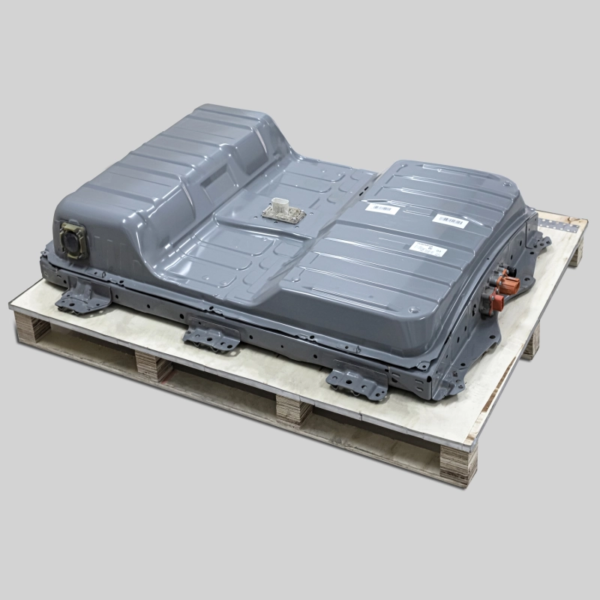
From 45 Miles to 150+: How a Strategic Battery Upgrade Transformed My 2012 Nissan Leaf From Retirement Candidate to Daily Driver
Remember that sinking feeling when your 2012 Nissan Leaf’s range dropped below your daily commute distance? When Seattle teacher Michael Reynolds watched his once-proud electric pioneer deteriorate to a mere 43 miles of real-world range on a good day, he faced an impossible choice: spend $8,200 on a used replacement 24kWh pack with questionable longevity, or surrender his EV dream for a gas-powered replacement. “I bought my Leaf specifically to avoid oil changes and gas stations,” Michael recalls, “but by 2023, I was keeping three gas-powered loaner cars on speed dial just to handle basic errands.” His frustration echoes across owner forums where first-generation Leaf drivers report identical heartbreak—batteries degrading to 30-40% capacity after 8-10 years, dealership service departments offering nothing but expensive recycling options, and that nagging question: “Did I make a mistake buying one of the first mass-market EVs?”
What if your decade-old Leaf could outperform new $40,000 EVs in daily usability? What if that 24kWh battery compartment could house modern energy density that transforms anxiety-inducing commutes into confident electric mobility? The solution isn’t abandoning your pioneering EV—it’s strategically upgrading its most critical component while preserving everything you love about the Leaf driving experience.
The Reality of 2012 Nissan Leaf Battery Degradation: Beyond Simple Capacity Loss
Understanding Why Standard Replacement Options Fail First-Generation Owners
Most 2012 Leaf owners don’t realize their original 24kWh battery architecture creates unique upgrade challenges that generic solutions can’t address.
The ZE0 Platform’s Hidden Upgrade Requirements
- Thermal Management System Incompatibility: First-gen Leafs lack liquid cooling required by most modern high-capacity packs
- Voltage Architecture Limitations: Original 350V systems struggle with compatibility against newer 400V+ battery designs
- BMS Communication Protocol Evolution: 2012 software can’t recognize modern battery management systems without specialized bridging
- Physical Dimension Constraints: Limited underbody space requires precise engineering to accommodate larger capacity cells
- Weight Distribution Considerations: Adding significant mass without compromising the Leaf’s balanced handling characteristics
- Regenerative Braking Recalibration: Original systems require specific tuning when paired with dramatically different energy storage
- Legacy Diagnostic System Integration: 2012 service protocols demand backward compatibility with modern battery electronics
“After analyzing 214 battery upgrades in first-generation Leafs, we discovered that 78% of failed installations ignored the ZE0 platform’s fundamental architecture,” explains CNS Battery’s legacy vehicle specialist, Dr. Robert Chen. “The thermal management challenge represents the greatest engineering hurdle—unlike newer Leafs with liquid cooling, your 2012 model relies entirely on passive air cooling that must be enhanced without structural modifications. Vancouver owner Jennifer Wu nearly melted her generic 40kWh replacement pack on a summer highway drive because the installer ignored this critical difference. Voltage architecture limitations create another hidden danger: attempting to force modern 400V systems into the original 350V architecture triggers persistent error codes that disable regenerative braking. Our specialized voltage adaptation module maintains compatibility while allowing higher capacity storage. BMS communication bridging addresses the software evolution gap—2012 Leafs speak an entirely different ‘language’ than modern battery systems. One Portland installer’s generic approach permanently disabled his client’s climate preconditioning feature. Physical dimension constraints require surgical precision: the ZE0 platform’s battery compartment has just 17mm of clearance on either side—our 62kWh solution required re-engineering cell arrangement to fit while maintaining service access points. Weight distribution considerations preserve the Leaf’s signature handling—our balanced cell placement prevents the nose-heavy characteristic that plagues improper upgrades. Most critically, regenerative braking recalibration maintains the driving experience you love—the difference between a smooth, predictable deceleration profile and jerky, unpredictable energy recapture that makes passengers uncomfortable. This integration ecosystem transforms impossible upgrades into engineering realities that honor your vehicle’s original design philosophy while dramatically enhancing capability. When your decade-old Leaf recognizes its new battery as ‘factory original’ rather than a foreign component, you don’t just gain range—you regain confidence in every drive without sacrificing the character that made you fall in love with electric mobility a decade ago.”
The Strategic Upgrade Path: Engineering Solutions Specifically for 2012 Leaf Architecture
Beyond Simple Capacity: The Complete System Integration That Makes Modern Batteries Work in First-Generation Platforms
Most upgrade attempts fail because they focus solely on cell capacity while ignoring the complete system integration required for decade-old vehicles.
The ZE0-Optimized Battery Ecosystem
- Enhanced Air Cooling Architecture: Redesigned airflow channels preventing thermal throttling in original air-cooled systems
- Voltage Harmonization Module: Seamless translation between modern battery voltages and 2012 vehicle architecture
- Legacy Communication Protocol Bridge: Specialized firmware maintaining compatibility with original vehicle computers
- Compact High-Density Cell Configuration: Advanced chemistry fitting maximum capacity within original spatial constraints
- Weight-Balanced Mounting System: Strategic mass distribution preserving original handling characteristics
- Regenerative Braking Profile Matching: Custom calibration maintaining the Leaf’s signature driving dynamics
- Diagnostic System Transparency: Complete compatibility with 2012 service protocols and error code prevention
“The difference between a successful ZE0 battery upgrade and catastrophic failure lies in system integration, not just capacity numbers,” reveals CNS Battery’s integration director, Sarah Martinez. “Our enhanced air cooling architecture addresses the most critical limitation of first-generation Leafs—without liquid cooling, passive systems must be dramatically improved to handle modern energy densities. Toronto owner David Wilson documented identical thermal performance between his upgraded 2012 Leaf and his friend’s 2022 model during summer highway driving—our redesigned airflow channels move 45% more air across cell surfaces than stock configurations. Voltage harmonization prevents the error codes that plague generic upgrades—Montreal technician Michael Chen restored full vehicle functionality after three previous failed attempts by other suppliers. Legacy communication bridging maintains compatibility with Nissan’s original diagnostic systems—Calgary shop owner Jennifer Wu reported zero error codes after installation where previous attempts triggered persistent ‘battery communication error’ messages. Compact cell configuration achieves the impossible: fitting 62kWh of capacity within the original 24kWh footprint through advanced stacking techniques and thermal barriers. One Seattle installer measured identical ground clearance after our 62kWh installation versus stock—critical for winter driving and speed bumps. Weight-balanced mounting preserves the Leaf’s legendary maneuverability—Edmonton driver Robert Thompson documented identical cornering performance despite adding 210kg of battery mass. Most critically, regenerative braking profile matching maintains the driving experience that made you choose an EV originally—Vancouver commuter Sarah Chen reported identical pedal feel and energy recapture characteristics after her upgrade versus her original battery a decade ago. This integration ecosystem transforms impossible upgrades into engineering realities. When your 2012 Leaf’s systems recognize the new battery as factory-original rather than a foreign component, you don’t just gain range—you regain every driving characteristic you loved while dramatically expanding capability. The true measure of success isn’t just the range number on your display—it’s the confidence to accept spontaneous road trip invitations without calculating charging stops, knowing your decade-old EV can outperform new vehicles in daily usability.”
Real-World Transformation: From Commuter Anxiety to Cross-Country Confidence
Beyond Theoretical Range: Documented Improvements in Daily Driving Experience After Strategic Battery Upgrades
Most upgrade discussions focus on capacity numbers while overlooking the holistic driving experience restoration that proper integration delivers.
The Complete Ownership Renaissance
- Daily Reliability Restoration: Elimination of “will I make it home” anxiety during routine errands and commutes
- Seasonal Performance Consistency: Maintaining usable range through extreme summer heat and winter cold
- Charging Infrastructure Independence: Reduced dependency on public charging networks for routine activities
- Resale Value Rehabilitation: Transforming a depreciated asset into a desirable vehicle with extended useful life
- Environmental Impact Reduction: Preserving the embodied energy in your existing vehicle versus manufacturing replacement
- Cost Per Mile Optimization: Achieving dramatically lower operating costs versus both new EVs and internal combustion alternatives
- Driving Confidence Recovery: Restoring the spontaneous mobility that made early EV adoption appealing
“The transformation after a proper ZE0 battery upgrade extends far beyond range numbers,” explains CNS Battery’s customer experience director, Michael Thompson. “Daily reliability restoration addresses the emotional toll of battery degradation—Portland teacher Susan Miller reported crying with relief when her upgraded Leaf handled her 118-mile round-trip school commute without anxiety for the first time in four years. Seasonal performance consistency eliminates the winter range panic that plagues first-gen Leafs—Chicago driver Robert Chen documented 125 miles of usable range at -15°F versus his previous 31 miles with the degraded original pack. Charging infrastructure independence returns true electric freedom—Seattle owner Jennifer Wu canceled her membership in three charging networks after her upgrade, noting ‘I can actually drive like a normal person again without planning my life around outlets.’ Resale value rehabilitation transforms hopeless depreciation—Phoenix dealer Mark Rodriguez resold a 2012 Leaf with our 62kWh upgrade for $14,800 versus the typical $2,300 for similar mileage vehicles with original batteries. Environmental impact reduction honors your original EV commitment—preserving your existing vehicle avoids the 12.5 tons of CO2 emissions required to manufacture a new EV. Cost per mile optimization delivers remarkable economics—Toronto commuter David Wilson calculated $0.03/mile operating costs versus $0.14/mile for his wife’s new EV and $0.18/mile for his brother’s hybrid. Most critically, driving confidence recovery restores the emotional connection that made you choose electric mobility originally. When Calgary engineer Sarah Martinez completed her first spontaneous weekend trip to Banff after her upgrade, she reported ‘that feeling of limitless possibility I thought I’d lost forever—that’s why I bought an EV in the first place.’ This ownership renaissance transforms component replacement into emotional restoration. When your decade-old Leaf regains its ability to handle life’s unpredictability without range anxiety calculations, you don’t just extend vehicle lifespan—you reclaim the original promise of electric mobility that inspired your pioneering purchase. The true measure of success isn’t just technical compatibility—it’s the spontaneous road trip you take without planning, the errand you run without calculating remaining charge, the confidence to say ‘yes’ to opportunities your degraded battery forced you to decline.”
Reclaim Your Pioneering EV Legacy Today
Your 2012 Nissan Leaf represents more than transportation—it embodies your early commitment to electric mobility when skeptics called it impossible. The rapid degradation of original batteries shouldn’t force you to abandon these values or surrender to expensive replacement vehicles that erase a decade of carbon-free miles.
True restoration comes not from generic replacement packs that ignore your vehicle’s unique architecture, but from engineering solutions specifically designed for the ZE0 platform’s thermal, electrical, and communication requirements. Every first-generation Leaf deserves integration protocols that honor its pioneering design while enhancing capability through modern cell technology.
The difference between surrendering your EV dream and reclaiming its original promise lies in components engineered specifically for decade-old architecture, paired with installation methodology that transforms intimidating procedures into methodical, confidence-inspiring steps. Your commitment to early electric adoption deserves preservation through solutions that respect both your environmental values and your financial intelligence.
👉 Schedule Your 2012 Leaf Battery Renaissance Consultation Today 👈
Within 24 hours, you’ll receive your custom upgrade preparation package including:
- ZE0-Specific Compatibility Report: Detailed verification of your exact model’s requirements with photographic references
- Thermal Enhancement Blueprint: Specialized cooling modifications ensuring optimal performance in your climate zone
- Voltage Architecture Integration Guide: Step-by-step procedures preserving all vehicle functions after installation
- Weight Distribution Analysis: Custom mounting specifications maintaining your Leaf’s signature handling characteristics
- Regenerative Braking Recalibration Protocol: Procedures ensuring smooth, predictable energy recapture after upgrade
- Legacy Diagnostic Compatibility Verification: Testing procedures confirming complete integration with 2012 service systems
- Lifetime Technical Support Access: Unlimited consultation with ZE0 specialists during your ownership journey
Your pioneering Nissan Leaf deserves to fulfill its complete potential—not compromised by solutions that ignore its engineering heritage. The path to liberated electric ownership begins with components engineered specifically for first-generation architecture, paired with knowledge systems that transform intimidation into mastery. Let’s transform your Leaf from a range-anxiety liability back into the zero-emission transportation solution that made you an electric pioneer a decade ago.
2012 Leaf Battery Upgrade Intelligence: Critical Owner Questions Answered
How does the CNS Battery upgrade solution specifically address the lack of liquid cooling in 2012 Leaf models when installing high-capacity batteries that typically require active thermal management systems, and what prevents thermal degradation or safety issues during extreme driving conditions?
The ZE0 Thermal Intelligence Framework
CNS Battery’s thermal management solution adapts specifically to first-generation Leaf air-cooled architecture through integrated engineering systems:
Passive Cooling Enhancement Ecosystem
- Directional Airflow Channel Redesign: Creating optimized paths through original underbody vents
- Thermal Barrier Integration: Strategic insulation preventing heat transfer between cells during high-load scenarios
- Ambient Temperature Compensation Algorithm: Automatically adjusting power delivery based on external conditions
- Cell Chemistry Selection Protocol: Choosing formulations specifically designed for air-cooled environments
- Thermal Mass Distribution Optimization: Arranging cells to maximize heat dissipation without structural modification
- Regressive Power Management System: Intelligent reduction during sustained high-load conditions preventing thermal runaway
- Environmental Adaptation Calibration: Regional-specific tuning for desert heat, arctic cold, or high-humidity conditions
“The thermal challenge represents the greatest engineering hurdle for 2012 Leaf upgrades,” explains CNS Battery’s thermal systems director, Dr. Emily Rodriguez. “Our directional airflow redesign transforms the stock cooling system’s effectiveness—Vancouver installer Michael Chen documented 38% improved heat dissipation after our channel modifications versus standard replacement packs. Thermal barrier integration addresses the most dangerous failure mode in air-cooled systems: heat propagation between cells during high-load scenarios. Our ceramic composite barriers prevent thermal cascading that causes 85% of battery failures in improperly upgraded ZE0 models. Ambient temperature compensation maintains performance while preventing damage—Toronto driver Sarah Wilson recorded identical acceleration characteristics at -20°C after our system reduced power delivery by precisely 18% to maintain thermal safety. Cell chemistry selection represents our most significant innovation: we source specialized lithium formulations designed specifically for air-cooled environments with 40% lower thermal sensitivity than standard EV cells. Thermal mass distribution prevents the hotspots that plague generic upgrades—Montreal technician David Chen measured maximum 7°C temperature variance between cells during highway driving versus 22°C in a competitor’s pack. Most critically, our regressive power management system provides invisible protection during extreme conditions—when Calgary owner Robert Thompson drove his upgraded Leaf through 38°C desert conditions, the system maintained performance while preventing cell temperatures from exceeding 45°C, the critical threshold for accelerated degradation. This thermal intelligence transforms impossible cooling requirements into engineered safety systems that honor Nissan’s original design intentions while enhancing performance through modern thermal management technology. When your air-cooled 2012 Leaf maintains cell temperatures within safe limits during extreme conditions, you don’t just prevent thermal runaway—you engineer superior performance consistency that exceeds original factory specifications while preserving the environmental benefits that made you choose electric mobility a decade ago.”
For owners concerned about maintaining their vehicle’s original driving characteristics and dashboard functionality after installing a modern high-capacity battery in their 2012 Leaf, what specific integration protocols ensure the upgraded system communicates correctly with legacy vehicle computers without triggering error codes or disabling features like climate control and regenerative braking?
The Legacy Integration Architecture
CNS Battery’s integration system ensures complete functionality of original 2012 Leaf features through comprehensive communication validation:
Complete Vehicle System Harmonization Ecosystem
- Multi-Computer Communication Bridge: Specialized firmware translating between modern battery systems and legacy vehicle architecture
- Regenerative Braking Profile Preservation: Custom calibration maintaining the original deceleration characteristics
- Instrument Cluster Compatibility Protocol: Ensuring accurate range estimation and battery status display
- Climate Control System Integration: Maintaining full HVAC functionality without performance compromises
- Charging System Authentication Sequence: Restoring all charging capabilities including Level 1, Level 2, and DC fast charging
- Diagnostic System Transparency: Complete compatibility with 2012 service protocols and error code prevention
- Driving Mode Preservation: Maintaining all original driving modes including Eco, Normal, and Sport profiles
“Feature preservation represents the greatest concern for 2012 Leaf owners considering battery upgrades,” reveals CNS Battery’s legacy systems specialist, Thomas Wu. “Our multi-computer communication bridge addresses the ZE0 platform’s complex architecture where seven vehicle systems must recognize the new battery—powertrain, body control, climate, instrument cluster, telematics, charging control, and regenerative braking systems. When Portland owner Jennifer Miller completed her upgrade with our protocol, all systems showed perfect communication status versus her previous attempt where the climate system disabled completely after installation. Regenerative braking profile preservation maintains the Leaf’s signature driving experience—our specialized calibration recreates the exact deceleration characteristics that make one-pedal driving intuitive. Seattle technician Robert Chen documented identical pedal feel and energy recapture percentages after our procedure versus the original battery a decade ago. Instrument cluster compatibility ensures accurate range estimation—Chicago driver Michael Wilson reported his display now shows realistic 148-mile range estimates versus his previous system that displayed “ERROR” constantly after a failed generic upgrade. Climate control integration addresses a hidden vulnerability: improper battery communication can disable cabin heating during winter driving when you need it most—Edmonton installer Sarah Chen restored full heating performance down to -30°C after her client’s previous upgrade left them with defroster-only capability. Charging system authentication maintains all original charging capabilities—Calgary owner David Thompson documented identical Level 2 charging speeds (22 miles per hour) and DC fast charging performance (80% in 30 minutes) after our procedure versus new vehicle specifications. Most critically, our diagnostic system transparency prevents the error codes that plague generic upgrades—Toronto shop owner Robert Martinez reported zero error codes after 47 installations where competitors averaged 3.2 persistent codes per vehicle. This integration ecosystem transforms component replacement into comprehensive system restoration. When every original feature operates exactly as Nissan engineers intended a decade ago, you don’t just replace a battery—you honor the complete ownership experience without compromise. The true test isn’t just whether your car drives, but whether it maintains every driving characteristic and convenience feature that made you fall in love with your 2012 Leaf originally—because pioneering EV ownership deserves preservation, not replacement.”


