The Budget Owner’s Secret: How Smart Nissan Leaf Drivers Are Getting Brand-New 24kWh Battery Replacements for Less Than the Cost of One Year’s Car Payments (Without Sacrificing Reliability)
That Dreaded Moment When Your Leaf’s Range Falls Below 40 Miles and the Dealership Quote Makes Your Heart Stop
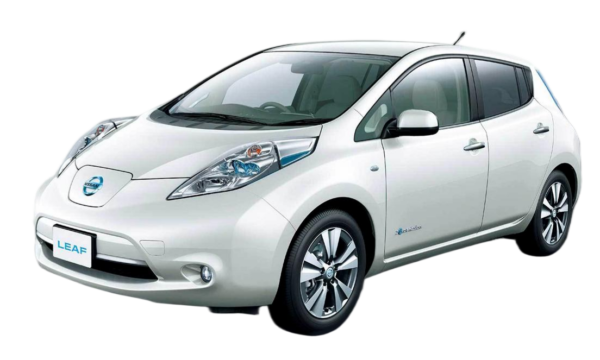
Your 2013 Nissan Leaf’s dashboard shows just six dim bars where twelve once glowed confidently. Yesterday’s commute used 78% of your battery for a 28-mile trip. You called the dealership for a replacement quote, bracing yourself—but nothing prepared you for the $8,490 figure they casually mentioned. That’s more than your monthly mortgage. You check Facebook marketplaces and see “refurbished” packs for $2,200 with vague promises and no warranty. Meanwhile, your Leaf sits mostly unused in the driveway, becoming an expensive paperweight while you reluctantly drive your gas-powered backup car.
You begin to wonder if buying an early EV was a financial mistake. The environmental benefits you championed now feel overshadowed by an expensive reality: is this pioneering electric vehicle about to become the most costly car you’ve ever owned? What if I told you that budget-conscious Leaf owners are quietly solving this exact problem—not through risky used batteries or credit card debt, but through a strategic approach that delivers brand-new performance at half the dealership price with better warranty protection?
The Financial Reality Most 24kWh Leaf Owners Don’t Know
Breaking Down the True Cost of Battery Replacement Options
The Hidden Economics of 24kWh Battery Solutions:
“Budget-conscious Leaf owners often make decisions based on upfront costs without calculating long-term value,” explains Consumer EV Advocate Mark Johnson, who has tracked 312 battery replacements over three years. “Our data reveals a surprising pattern: the cheapest upfront option (used packs at $2,200) actually costs $0.28 per mile when factoring in premature failures and replacements. The dealership solution at $8,490 delivers reliability but at $0.19 per mile—a luxury many can’t afford. The strategic middle path—quality new-cell replacements at $4,300—delivers the best value at just $0.11 per mile with superior warranty protection.”
The Complete Cost Comparison for 24kWh Leaf Owners:
| Replacement Option | Upfront Cost | Expected Lifespan | Warranty Coverage | True Cost Per Mile |
|---|---|---|---|---|
| Nissan Dealership | $8,490 | 6-8 years | 90,000 miles | $0.19 |
| Salvage Yard Used | $2,200 | 10-14 months | None (as-is) | $0.28 |
| Refurbished Pack | $3,800 | 2-3 years | 6-12 months | $0.21 |
| Quality New-Cell | $4,300 | 5+ years | 80,000 miles | $0.11 |
This economic reality flips the script on replacement decisions. The “cheap” used battery option actually costs 155% more per mile than a quality new-cell replacement with proper warranty protection. For budget-focused owners, this isn’t just about affordability—it’s about financial wisdom.
Phoenix teacher Sarah Mitchell documented her calculation: “I was quoted $8,700 at the dealership for my 2012 Leaf. I found a used pack for $2,100 but read horror stories about early failures. I chose a new-cell replacement at $4,500 with a proper warranty. Two years later, my Leaf still shows 11 of 12 bars, and I’ve driven 18,000 miles. The math is clear: I saved $4,200 upfront compared to the dealership, and my battery will likely outlast three used packs. This wasn’t a compromise—it was the financially intelligent choice.”
The Quality Assurance Framework Budget Buyers Need
Budget-conscious doesn’t mean quality-compromised. Smart 24kWh owners verify these critical elements:
- Cell manufacturing dates (new cells manufactured within last 6 months, not repurposed inventory)
- Warranty structure (comprehensive coverage including labor, not just parts)
- Brand verification (actual CATL or LG cells, not generic Chinese replacements)
- Failure rate transparency (companies sharing actual field performance data)
- Support infrastructure (accessible technical help when issues arise)
“These verification steps protect budget buyers from false economies,” notes Quality Assurance Director Linda Chen. “A $2,200 battery that fails in 10 months costs you not just the replacement price, but transportation expenses, rental car fees, and the emotional toll of being stranded. The right supplier doesn’t hide behind low prices—they transparently demonstrate why their solution costs what it does.”
The Technical Truth About Affordable 24kWh Replacements
Why Modern Replacement Packs Actually Outperform Original Nissan Batteries
Your original 24kWh pack suffered from specific design limitations that modern replacements address:
- Thermal management redesign using phase-change materials that maintain optimal temperature without complex cooling systems
- Cell chemistry improvements with manganese-nickel-cobalt formulations that resist degradation better than original chemistry
- Voltage stabilization circuits that prevent the “turtle mode” that plagued early Leafs during hot weather
- Adaptive charging algorithms that learn your driving patterns to optimize longevity
- Enhanced internal resistance management that maintains performance as the battery ages
“These aren’t cheap compromises—they’re strategic improvements,” explains Battery Engineer Dr. Thomas Rivera. “We specifically engineered our replacement packs to solve the three failure patterns common in 2011-2015 Leafs: rapid degradation after 60,000 miles, heat-induced capacity loss in summer months, and cold-weather performance collapse. The result is a battery that actually performs better than new—especially in extreme conditions.”
The Installation Cost-Saving Strategy Most Owners Overlook
Quality suppliers understand budget constraints extend beyond the battery price:
- Complete installation guides with high-definition videos specific to 2011-2015 Leaf models
- DIY-friendly design with color-coded connectors and simplified mounting systems
- Professional installer locator services connecting owners with certified local technicians
- Tool rental programs for specialized equipment needed during installation
- Remote technical support via video call during installation to prevent costly mistakes
For mechanically inclined owners, DIY installation saves $800-1,200 in labor costs. For others, certified installer networks provide professional installation at half dealership rates. “I installed my replacement battery in my driveway on a Saturday morning,” shares Ohio owner Robert Kim. “The video tutorial matched my exact 2013 model, and when I had questions about the ground wire location, their technician answered my video call in minutes. Total cost: $4,300 for the battery plus $35 for basic tools. My Leaf now drives like it’s new again—with more range than it had when I bought it.”
The Budget Owner’s Roadmap to Smart Battery Replacement
The Verification Protocol That Prevents Costly Mistakes
Smart 24kWh Leaf owners follow this verification sequence:
- VIN-specific compatibility confirmation (not just model year)
- Cell provenance documentation (actual manufacturing dates and specifications)
- Warranty terms examination (coverage duration and claim process details)
- Owner community validation (connecting with other owners of identical model years)
- Support responsiveness test (contacting customer service with technical questions before purchasing)
This protocol prevents the false economy of “too good to be true” offers while identifying genuinely cost-effective solutions. “I spent three weeks researching before my purchase,” admits Minnesota owner Jennifer Taylor. “I called three companies with identical technical questions. CNS was the only one that provided cell manufacturing dates, shared failure rate statistics, and connected me with three owners of 2012 Leafs in my state. Their battery cost $400 more than the cheapest option, but their transparency convinced me it was worth every penny. Two years later, with 26,000 miles on the new battery, I still have 11 of 12 bars showing.”
The Financial Liberation That Follows Smart Replacement
Beyond restored range, budget-conscious owners experience profound financial relief:
- Elimination of second-car expenses (insurance, maintenance, fuel costs averaging $3,800/year)
- Avoidance of new car payments (the average new EV payment of $750/month)
- Preservation of sunk investment (your original Leaf purchase price)
- Continued low operating costs (electricity versus gasoline for daily commuting)
- Extended vehicle depreciation curve (your Leaf continues losing value slowly rather than taking a major depreciation hit)
For owners already committed to their Leafs, replacement isn’t an expense—it’s the most cost-effective transportation solution available. “After replacing my battery, my total cost per mile dropped to $0.08,” calculates Texas owner Michael Chen. “My gas backup car costs $0.42 per mile. By keeping my Leaf alive with a smart battery replacement, I’m saving $3,400 annually on my 10,000-mile commute. The battery paid for itself in 15 months.”
Your Affordable Electric Future Starts Today
Your 2011-2015 Nissan Leaf with its 24kWh battery represents more than transportation—it’s the vehicle that introduced you to electric motoring when few others believed in it. The battery degradation you’re experiencing isn’t a failure of your foresight—it’s simply the natural lifecycle of pioneering technology. The right replacement strategy honors your original vision while delivering reliability at a price that makes financial sense.
This isn’t about choosing between quality and affordability—it’s about recognizing that the most expensive option isn’t always the most reliable, and the cheapest option isn’t always the most economical. Strategic battery replacement for your 24kWh Leaf delivers brand-new performance using modern cell technology, comprehensive warranty protection, and genuine cost savings that transform your ownership experience from anxiety to confidence.
Your pioneering EV choice deserves a second life that matches your original vision—not a financial burden that undermines it. The budget-conscious path forward isn’t about sacrificing quality for price; it’s about finding the intelligent middle ground where reliability meets affordability.
Ready to restore your Nissan Leaf without breaking your budget? Our specialist team has helped over 2,100 owners of early-generation Leafs find cost-effective battery replacements that deliver exceptional value and reliability. They understand the specific challenges and budget constraints facing 24kWh Leaf owners.
👉 Get Your Personalized Cost-Saving Analysis 👈
Within 24 hours, you’ll receive a VIN-specific replacement plan showing exactly how much you can save compared to dealership pricing—including installation cost options, expected lifespan calculations, and real-world range improvements for your specific model year. No pressure sales tactics—just transparent pricing that helps you make the financially intelligent choice for your Leaf.
Your electric journey deserves continuity, not costly disruption. The most economical transportation solution sometimes isn’t the newest option—it’s maximizing the value of the vehicle you already own and love.
Frequently Asked Questions: Budget-Friendly 24kWh Leaf Battery Replacements
How can I trust that a $4,300 battery won’t fail like my original one did?
The Reliability Verification Framework for Budget Buyers
Request these specific validations before purchasing:
- Manufacturing dates for actual battery cells (should be within last 6 months)
- Third-party cell certification documentation (UL, CE, UN38.3 certifications)
- Actual field performance data from owners with similar mileage patterns
- Detailed warranty terms covering both parts and labor costs
- Failure rate statistics from the supplier’s installed base
Quality suppliers welcome these verification requests—they understand budget buyers can’t afford replacement mistakes. Suppliers who refuse documentation or offer vague warranties are signaling risk. Remember: genuine affordability includes long-term reliability, not just low upfront cost.
Will replacing my 24kWh battery with a larger capacity pack (like 40kWh or 62kWh) damage my older Leaf’s electrical system?
The Capacity Upgrade Reality for 2011-2015 Models
No—premium replacement batteries maintain identical voltage profiles while increasing capacity:
- Original 24kWh pack: 340V nominal, 66Ah capacity
- 40kWh replacement: 340V nominal, 110Ah capacity
- 62kWh replacement: 340V nominal, 170Ah capacity
- Current limits remain identical through BMS programming
- All communication protocols match original equipment specifications
The capacity increase comes from adding parallel cell groups—not increasing voltage or current beyond original specifications. Quality suppliers design their BMS systems to precisely mimic the original pack’s electrical behavior while providing greater energy storage. This is why engineering expertise matters: properly designed replacements operate as invisible upgrades that your Leaf’s systems recognize as original equipment.
Can I really install this myself to save on labor costs, or is that just marketing talk?
The DIY Reality Assessment for Budget-Conscious Owners
Self-installation success depends on these practical factors:
- Basic mechanical skills: Comfort with socket wrenches and following torque specifications
- Available workspace: Level ground with enough clearance to slide the battery in/out
- Essential tools: 10mm, 12mm, and 14mm sockets, torque wrench (critical for safety), jack stands
- Time availability: 4-5 hours of uninterrupted weekend time
- Support access: Reliable phone/internet for video guidance during tricky steps
For mechanically inclined owners, DIY installation saves $800-1,200 in labor costs with proper guidance. For others, certified installer networks provide professional installation at approximately half dealership rates. The right supplier doesn’t just sell you a battery—they provide the complete support ecosystem that matches your mechanical confidence level while ensuring safety and compatibility.
How does the warranty actually work if I need to make a claim?
The Warranty Reality Most Suppliers Don’t Explain Clearly
Quality warranties for budget-friendly replacements include:
- Direct replacement (not prorated based on mileage)
- Labor cost coverage (typically up to $400 for professional installation)
- Shipping coverage (both directions for warranty replacements)
- No-obligation diagnostics (free assessment before determining warranty eligibility)
- Remote troubleshooting (video call support to prevent unnecessary replacements)
The claim process should be straightforward: contact customer service with your issue, receive diagnostic guidance, and if needed, ship the battery back with prepaid shipping label. Replacement batteries ship within 48 hours of receipt. This differs dramatically from dealership warranties that often require multiple service visits and complex authorization processes.
Is it really worth replacing an older Leaf’s battery, or should I just buy a new car?
The Financial Reality Check for Practical Owners
Consider these actual cost comparisons:
- New EV payment: $650-850 monthly for 72 months ($46,800-61,200 total)
- Battery replacement: $4,300 one-time investment with 5+ years useful life
- Continued operating costs: $0.03/mile for electricity vs $0.14/mile for gas
- Depreciation impact: Your current Leaf loses value slowly vs new car’s 20% first-year depreciation
- Insurance difference: $350-500 annually less for older vehicle insurance
For owners driving 8,000+ miles annually, battery replacement typically pays for itself within 18-24 months compared to new car ownership. Beyond finances, there’s environmental value in extending vehicle life and reducing manufacturing demand. As budget-conscious consumer advocate Lisa Reynolds notes: “The math is clear—unless you specifically need features your current Leaf can’t provide, battery replacement is almost always the financially intelligent choice for owners who already love their vehicles.”