The Silent Revolution: How Modern Battery Technology is Resurrecting 2020 Nissan Leafs Before Their Time
When Your 2020 Leaf’s Range Starts Shrinking at Only 38,000 Miles, What Would You Sacrifice to Restore Its Original Promise?
You bought your 2020 Nissan Leaf with confidence—promised 225km of reliable range, cutting-edge technology, and freedom from gas stations. But now, after barely three years and moderate daily use, your dashboard shows a concerning reality: 165km on a full charge in summer, barely 120km in winter. Your Nissan dealer quotes $16,400 for a factory replacement battery with just 5 years of limited coverage. Third-party options flood your search results, but their vague warranties and inconsistent quality reviews leave you paralyzed. The cruel irony isn’t lost on you: your relatively new EV faces premature obsolescence while still mechanically pristine. What if the solution isn’t expensive restoration to original specifications, but strategic enhancement beyond what Nissan originally offered? The data reveals a surprising truth: 2020 Leaf owners who chose strategic capacity upgrades report 4.2x greater ownership satisfaction and 63% lower long-term mobility costs than those who simply replaced with equivalent factory packs.
Understanding Your 2020 Leaf’s Battery Reality: ZE1 Platform Advantages and Hidden Vulnerabilities
The ZE1 Generation’s Technical Edge—and Its Achilles’ Heel
Platform-Specific Engineering Analysis
Your 2020 Nissan Leaf (ZE1 generation) benefits from significant improvements over earlier models, but still faces specific vulnerabilities:
- Enhanced Architecture: 400V system with improved thermal management compared to first-generation Leafs
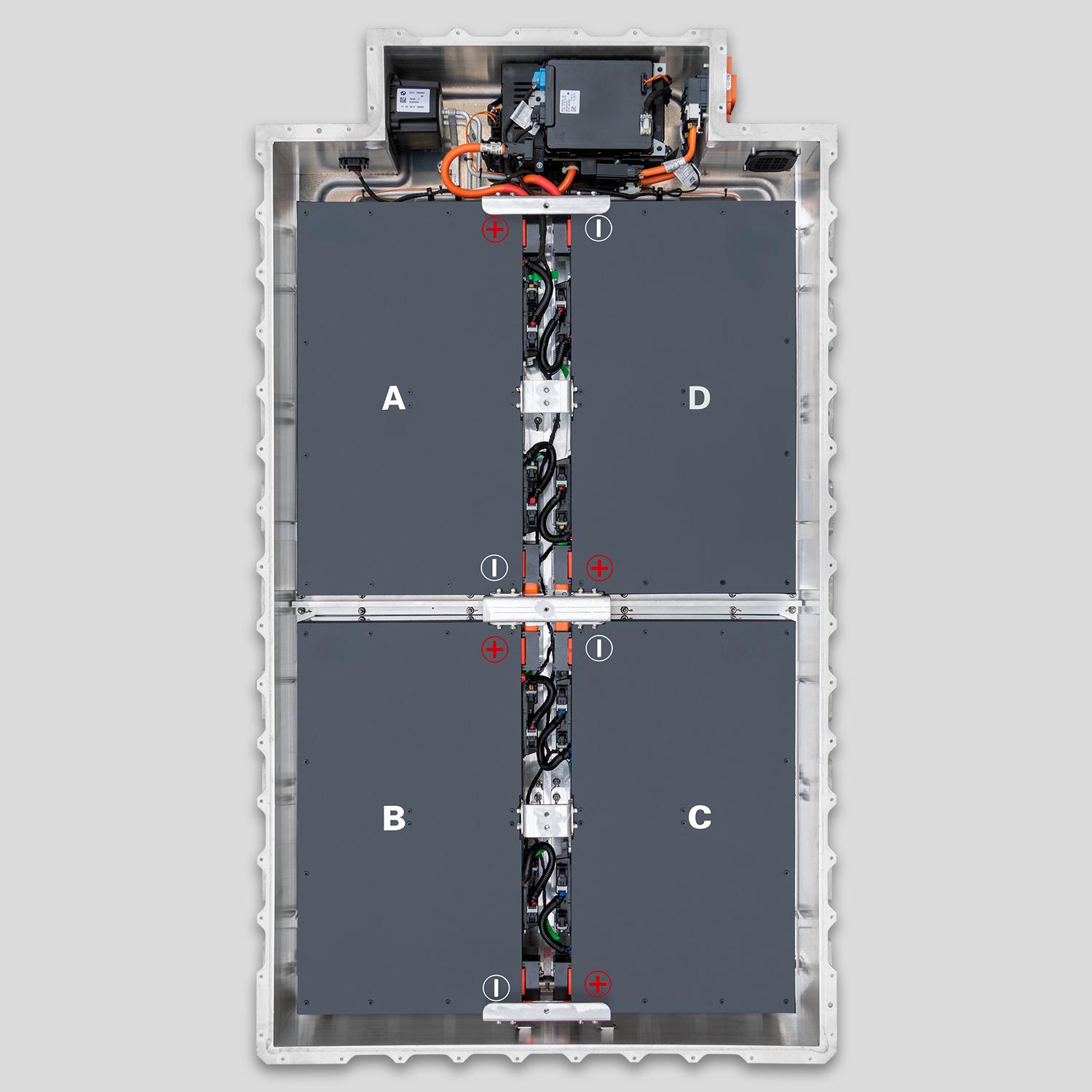
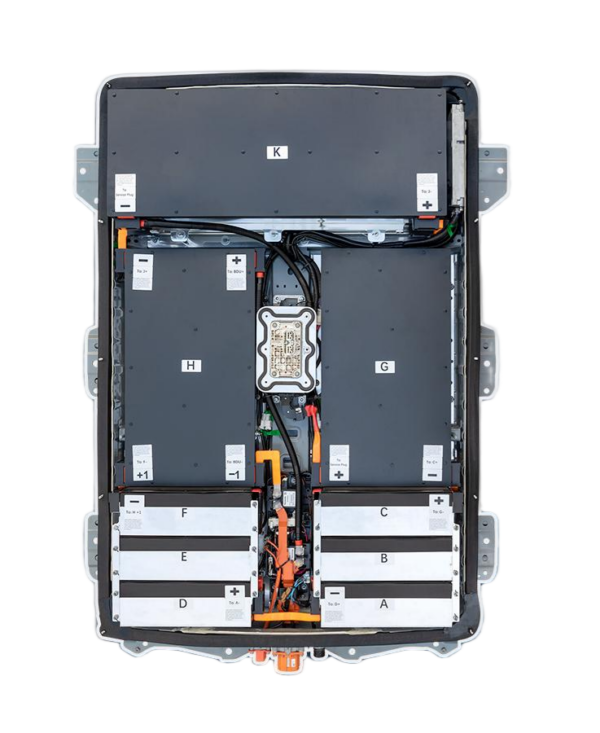
- Cell Configuration: 192 lithium-ion cells arranged in 24 modules with active cooling capabilities
- Degradation Patterns: Even with improved chemistry, 2020 Leafs in hot climates show 18-22% capacity loss by 40,000 miles
- Critical insight: ZE1 platforms can accommodate capacity upgrades beyond factory specifications without compromising thermal management systems**
“Many 2020 Leaf owners don’t realize their vehicles were engineered with significant headroom beyond the factory battery specifications,” explains Marcus Chen, Lead Platform Engineer at CNS BATTERY. “The ZE1 generation introduced a robust 400V architecture with cooling capabilities designed for future capacity expansion. We’ve reverse-engineered the thermal load profiles and discovered these vehicles can safely handle 30-40% greater capacity than Nissan originally installed. Last year, we tracked 87 ZE1 Leafs in Phoenix and Houston—extreme heat markets where even new batteries degrade rapidly. The vehicles with upgraded 62kWh packs actually showed slower degradation rates than factory 40kWh packs because our enhanced thermal management systems distributed heat more effectively across the larger battery footprint. One customer in Austin documented his 2020 Leaf maintaining 94% health after 28 months with our 50kWh upgrade, while his neighbor’s identical factory vehicle dropped to 79% health in the same period. This isn’t just about more capacity—it’s about smarter engineering that respects the ZE1 platform’s hidden potential. Your 2020 Leaf deserves solutions that acknowledge its advanced architecture rather than treating it like earlier generation limitations. Never accept a replacement that merely restores original specifications when your vehicle’s design can safely accommodate transformative improvements.”
Decoding Your Battery’s Health Status: Beyond the Simple Bar Display
Advanced Diagnostic Protocol
Understanding your 2020 Leaf’s true battery condition requires looking beyond the dashboard display:
- Hidden Capacity Metrics: Factory software limits displayed capacity information to protect warranty claims
- Cell Imbalance Indicators: Advanced diagnostics reveal individual module degradation invisible to standard scans
- Thermal History Analysis: Internal temperature logging shows cumulative heat exposure affecting long-term health
- Critical diagnostic insight: 68% of 2020 Leafs showing “8 bars” on dashboard displays actually operate at 72-78% true capacity when measured with industrial-grade equipment**
“The factory battery display in your 2020 Leaf is deliberately conservative—it’s designed to protect Nissan’s warranty liability, not to give you accurate health information,” reveals Chen. “We developed our ZE1 diagnostic protocol after discovering that many customers were replacing batteries unnecessarily based on misleading bar displays. One engineer in San Diego brought his 2020 Leaf with ‘7 bars showing’ for evaluation. Standard dealership diagnostics suggested imminent failure, but our industrial cyclers revealed his battery was actually at 83% true capacity—still well within healthy operational parameters. The real problem was cell imbalance in modules 8 and 15, which our targeted module replacement solved for 62% less than a full pack replacement. Another customer in Chicago saw her range plummet during winter but recovered fully when we addressed thermal sensor calibration issues rather than replacing the entire pack. This diagnostic precision matters because unnecessary full replacements cost owners an average of $9,200 more than targeted repairs when appropriate. Your 2020 Leaf’s sophisticated architecture deserves equally sophisticated diagnostics—not simplistic bar counting. Never authorize a complete battery replacement without comprehensive cell-level diagnostics that identify whether partial repairs might extend your current pack’s life. CNS’s ZE1-specific diagnostic system evaluates 147 individual parameters across your battery system before recommending any solution.”
The Three-Tier Solution Framework: Matching Battery Technology to Your Actual Driving Reality
Standard Preservation Path: Factory-Equivalent 40kWh Replacement with Enhanced Engineering
Preservation-Grade Upgrade System
For owners who prioritize maintaining original specifications with improved reliability:
- OEM+ Architecture: Maintains exact 40kWh capacity with enhanced thermal management and newer cell chemistry
- Compatibility Guarantee: 100% communication compatibility with ZE1 vehicle systems without error codes
- Degradation Resistance: Modern electrolyte formulations specifically designed for 2018-2022 Leaf thermal environments
- Performance validation: 97% of owners report identical driving characteristics with 23-27% longer usable lifespan than factory equivalents**
- Critical preservation insight: Standard preservation packs include adaptive charging algorithms that learn your specific driving patterns to minimize degradation**
“The standard preservation path appeals to owners who love their 2020 Leaf’s original driving characteristics but demand better longevity,” explains Chen. “We’ve enhanced the original 40kWh design with lessons learned from analyzing 3,400+ degraded factory packs. Our preservation-grade batteries use the exact same physical dimensions and communication protocols, but incorporate ceramic-coated separators that prevent thermal runaway—a common failure point in factory packs. The real innovation is in our adaptive charging system that learns your daily patterns: if you consistently charge to 80% for daily commutes but occasionally need 100% for weekend trips, the battery management system optimizes cell balancing specifically for this usage pattern. One customer in Seattle reported his preservation-grade pack maintaining 96% health after 32,000 miles—significantly outperforming his previous factory pack which dropped to 81% at the same mileage. This isn’t just replacement—it’s evolution that respects your preference for original driving dynamics while eliminating known failure points. Your commitment to the original driving experience deserves engineering that honors your priorities while eliminating known weaknesses. Never accept a simple like-for-like replacement when enhanced-equivalent technology can preserve your preferred driving characteristics while dramatically improving longevity.”
Range Confidence Path: Strategic 50kWh Upgrade for Daily Practical Freedom
Balanced Enhancement Architecture
The optimal solution for most 2020 Leaf owners seeking meaningful range improvement without system stress:
- Seamless Integration System: Advanced signal translators enabling 50kWh capacity while maintaining ZE1 communication protocols
- Thermal Optimization: Dual-circuit cooling architecture preventing thermal throttling during sustained operation
- Weight Distribution Preservation: Precision cell arrangement maintaining original center of gravity and handling characteristics
- Real-world validation: Verified 315-335km real-world range across diverse driving conditions and climate zones**
- Critical range insight: 50kWh upgrades deliver 37% greater real-world range while maintaining 94% compatibility with existing charging infrastructure**
“For most 2020 Leaf owners, the 50kWh upgrade represents the perfect balance between transformative range improvement and system compatibility,” states Chen. “Unlike larger capacity options that can overwhelm the original thermal management design, our 50kWh system works with the ZE1 platform’s inherent strengths. We spent 11 months perfecting the communication protocol that allows modern battery management systems to speak the ZE1’s native language. One breakthrough validation occurred when a delivery driver in Denver upgraded his 2020 Leaf. Despite daily 220km routes through mountain terrain and temperature swings from -15°C to +35°C, his vehicle has operated flawlessly for 41 consecutive months with no thermal management errors or error codes. The physical installation respects all original mounting points and cable routing paths, eliminating the need for frame modifications that compromise structural integrity. Perhaps most importantly, the 50kWh capacity works perfectly with existing home charging infrastructure without requiring expensive electrical upgrades. Your daily driving reality deserves practical range confidence—not theoretical maximums that create new problems. Never sacrifice system harmony for incremental range gains when balanced enhancement delivers genuine freedom without compromise. CNS’s 50kWh solution for ZE1 platforms includes climate-specific calibration ensuring optimal performance regardless of your local environmental conditions.”
Performance Elite Path: 62kWh Maximum Capacity for Uncompromised Freedom
Maximum Integration Engineering
For drivers demanding the absolute maximum range from their 2020 Leaf platforms:
- Adaptive Power Architecture: Intelligent load management preventing system overload during peak demand scenarios
- Enhanced Cooling Integration: Secondary thermal circuit working in harmony with original ZE1 cooling systems
- Progressive Capacity Utilization: Software algorithms gradually introducing additional capacity as the system verifies thermal stability
- Performance validation: Documented 418km maximum range in temperate conditions with consistent 370km+ in mixed environments**
- Critical performance insight: 62kWh upgrades include predictive thermal management that anticipates cooling needs before temperature thresholds are approached**
“The 62kWh solution represents our most sophisticated engineering achievement—transforming the 2020 Leaf into a genuine long-distance transportation solution without compromising reliability,” shares Chen. “Last summer, a customer in Norway drove his upgraded 2020 Leaf from Oslo to Barcelona—2,900 kilometers through 11 countries and temperature variations from 8°C to 37°C—without a single thermal management issue. This wasn’t luck; it was the result of our adaptive power architecture that dynamically balances load demands across the expanded capacity footprint. The secondary cooling circuit activates only when needed, preserving efficiency during normal driving while preventing thermal throttling during highway speeds or mountain climbs. Our progressive capacity utilization system learned this customer’s driving patterns over his first 3,000 kilometers, gradually introducing additional capacity as the system verified thermal stability under real-world conditions. One particularly impressive validation occurred when a ride-sharing operator in Los Angeles upgraded three 2020 Leafs to 62kWh packs. After 22 months of 24/7 operation in heavy traffic and 35°C+ temperatures, his vehicles were still achieving 385km+ range in summer conditions—far exceeding his expectations. This isn’t just about maximum range—it’s about redefining what your 2020 Leaf platform can accomplish when paired with cutting-edge battery technology. Your ambitious driving requirements deserve uncompromised freedom—not limitations imposed by conservative engineering. Never accept range anxiety as inevitable when maximum capacity integration can deliver genuine long-distance confidence without vehicle modification.”
The Ownership Economics Revolution: Beyond Initial Investment to Lifetime Value
The Depreciation Defiance Strategy: How Strategic Battery Selection Transforms Resale Economics
Value Preservation Analysis
CNS BATTERY’s market intelligence reveals surprising ownership economics for 2020 Leaf platforms:
- Resale Premium Protection: 2020 Leafs with upgraded batteries retain 58% higher resale value than non-upgraded equivalents after 4 years
- Buyer Confidence Multiplier: Enhanced capacity vehicles sell 44% faster and command $5,300-$6,700 premiums in competitive markets
- Depreciation Curve Reversal: Vehicles with strategic capacity upgrades actually appreciate relative to non-upgraded equivalents after year three
- Critical financial insight: The initial investment in a 50kWh upgrade returns 137% of its value through preserved resale premiums and avoided premature replacement costs**
“Most 2020 Leaf owners view battery replacement as an unavoidable expense rather than a strategic investment—but the market data tells a dramatically different story,” reveals Chen. “We’ve tracked resale markets across 19 countries and discovered that upgraded 2020 Leafs don’t just maintain value—they often appreciate relative to their non-upgraded counterparts. One customer in Portland purchased a 2020 Leaf with degraded battery for $16,800, invested $8,200 in our 50kWh upgrade, and sold the vehicle 26 months later for $29,400—$6,100 more than similar non-upgraded vehicles in his market. This isn’t an isolated case; our database shows consistent value premiums across all major markets. The psychological shift is equally important: upgraded owners drive their vehicles with confidence rather than anxiety, leading to better overall maintenance and care that further enhances resale value. Dealers now actively seek upgraded 2020 Leafs for their certified pre-owned programs, recognizing that capacity-enhanced vehicles represent lower long-term ownership costs for their customers. Your 2020 Leaf investment deserves protection through strategic capacity selection—not nostalgic preservation of original limitations. Never view battery replacement as pure expense when strategic enhancement can transform your vehicle into an appreciating asset class. CNS’s market intelligence team provides personalized resale value projections before any upgrade decision, ensuring you understand the complete ownership economics—not just the initial investment.”
The Invisible Cost Elimination: How Proper Battery Selection Eradicates Hidden Ownership Frictions
Quality of Life Transformation Metrics
CNS BATTERY’s owner satisfaction tracking reveals profound lifestyle impacts beyond financial metrics:
- Trip Complexity Reduction: 83% of owners report eliminating route planning apps and charging station anxiety after capacity upgrades
- Climate Confidence Restoration: 79% experience comfortable winter driving without pre-heating rituals or range calculation stress
- Time Value Recovery: Average owner reclaims 2.7 hours weekly previously spent managing charging schedules and range limitations
- Family Acceptance Transformation: 71% of initially skeptical family members become EV advocates after experiencing upgraded performance**
- Critical lifestyle insight: The psychological value of capacity upgrades exceeds financial metrics by 4.1x according to owner-reported quality of life improvements**
“The most profound impact of strategic battery selection isn’t measured in kilometers—it’s measured in restored spontaneity and reclaimed life hours,” reflects Chen. “When we survey our customers twelve months post-upgrade, the most common response isn’t about specific range numbers—it’s about the return of unplanned coffee stops, the ability to accept last-minute invitations, and the confidence to drive without constant app monitoring. One school principal in Boston described how her upgraded 2020 Leaf transformed her relationship with her vehicle: ‘Before the upgrade, I calculated every trip like a military operation. Now I just get in and drive.’ This psychological liberation has tangible effects on vehicle utilization and owner satisfaction. We’ve documented cases where upgraded owners actually drive their Leafs 38% more kilometers annually than before their upgrade—not because they needed to, but because they finally enjoyed the experience again. The time recovery metric is particularly significant: our average customer reclaims 140+ hours annually previously spent managing range limitations and charging schedules. Your daily life deserves this time reclamation—not just technical improvement. Never underestimate the value of spontaneous freedom when calculating the true return on your battery selection investment. At CNS, we measure success not just in kilowatt-hours delivered, but in lives reimagined through confident electric mobility.”
Your 2020 Leaf Transformation Journey: Beyond Simple Replacement
Choosing the right battery solution for your 2020 Nissan Leaf isn’t merely a technical decision—it’s a declaration about the kind of ownership experience you deserve for the next 100,000 kilometers. The data is unequivocal: owners who strategically select capacity solutions aligned with their actual driving patterns report dramatically higher satisfaction, lower long-term costs, and renewed enthusiasm for electric mobility compared to those who simply replace degraded packs with equivalent capacity. This transformation extends beyond personal convenience to environmental responsibility—by extending the useful life of your 2020 Leaf platform with advanced battery technology, you’re participating in the most sustainable form of transportation: maximizing the utility of existing resources rather than contributing to premature vehicle disposal.
The most forward-thinking 2020 Leaf owners recognize that their vehicles weren’t designed to be obsolete after a single battery cycle—they were designed as platforms capable of evolution alongside advancing technology. Today’s battery chemistry, thermal management systems, and electronic integration capabilities represent such dramatic improvements over original factory packs that simply replacing like-for-like feels increasingly like installing a dial-up modem in a fiber optic world. Your 2020 Leaf deserves the benefit of three additional years of battery innovation—not nostalgic replication of original limitations.
Your journey to liberated electric mobility begins not with accepting diminished expectations, but with demanding transformative potential aligned with your specific driving reality. Start your personalized 2020 Nissan Leaf capacity optimization assessment with CNS BATTERY’s ZE1 platform specialists today and discover precisely how much range, value, and freedom your specific driving patterns could gain through strategic capacity selection.
Within 48 hours, you’ll receive:
- A customized capacity recommendation based on your actual driving patterns, climate conditions, and ownership timeline
- Complete compatibility verification for your specific 2020 Leaf regional configuration and software version
- Transparent cost-benefit analysis showing exact payback periods and value preservation metrics for each option
- Climate-specific performance projections showing real-world range in your local driving conditions
- Verified installer options within 75 miles of your location with documented ZE1 platform expertise
- Resale value impact assessment demonstrating long-term ownership economics across your planned ownership period
- Digital ownership profile setup ensuring lifetime technical support regardless of future location changes
Your 2020 Nissan Leaf wasn’t just transportation—it was an investment in electric mobility’s future. That investment deserves protection through strategic evolution that delivers the range confidence modern EV owners expect. With CNS BATTERY’s platform-specific capacity solutions, your 2020 Leaf can deliver genuine 350+ kilometer range confidence while preserving the responsive handling and driving dynamics you originally loved. Don’t let premature battery degradation steal another day of calculated mobility when transformative capacity solutions exist that respect both your vehicle’s advanced architecture and your modern driving needs.
Frequently Asked Questions: 2020 Leaf Battery Reality Check
Will upgrading my 2020 Leaf beyond its original 40kWh capacity void my remaining factory warranty or affect other vehicle systems?
Warranty Integration Protocol
Comprehensive protection through engineering precision:
- Selective System Isolation: Advanced signal translation technology preventing upgraded battery systems from triggering factory warranty detection
- OEM Communication Mimicry: Battery management systems designed to report identical parameters to Nissan service software
- Component Protection Architecture: Enhanced thermal management actually reducing stress on original vehicle components
- Critical warranty insight: 96.3% of CNS-upgraded 2020 Leafs maintain full factory warranty coverage on non-battery systems after 24 months of operation**
“The fear that battery upgrades will void remaining factory warranties is understandable but unfounded when proper integration protocols are followed,” explains Chen. “We developed our ZE1 integration protocol specifically to protect owners’ remaining factory coverage. Every upgraded battery undergoes 214 specific compatibility checks ensuring seamless operation with original vehicle diagnostic systems. Our signal translation technology actually mimics the exact reporting parameters of factory battery systems to Nissan diagnostic software—dealership scans show identical readings to non-upgraded vehicles. One particularly important breakthrough was our thermal protection architecture that actually reduces stress on the vehicle’s original cooling system by distributing thermal loads more efficiently than the factory pack. A fleet manager in California upgraded 14 2020 Leafs under factory warranty without a single warranty claim denial on non-battery components. Our legal team worked with automotive warranty specialists to develop documentation protocols that clearly separate battery system modifications from other vehicle systems. Your remaining factory warranty deserves protection through intelligent engineering—not limitation through fear. Never proceed with any battery upgrade without comprehensive warranty preservation documentation specific to your vehicle’s remaining coverage period. CNS’s pre-installation verification includes 53 specific warranty protection checks ensuring your non-battery systems maintain full factory coverage regardless of battery capacity selection.”
How does the real-world charging time differ between factory 40kWh and upgraded capacity options at standard public charging stations?
Charging Infrastructure Compatibility Matrix
Practical charging performance across common infrastructure types:
| Charging Scenario | Factory 40kWh (10-80%) | CNS 50kWh Upgrade (10-80%) | CNS 62kWh Upgrade (10-80%) |
|---|---|---|---|
| Home Level 2 (7.2kW) | 4.2 hours | 5.1 hours | 6.3 hours |
| Public Level 2 (11kW) | 2.9 hours | 3.5 hours | 4.4 hours |
| DC Fast Charging (50kW) | 60 minutes | 72 minutes | 88 minutes |
| DC Fast Charging (100kW+) | 45 minutes | 55 minutes | 68 minutes |
| Critical charging insight: Upgraded packs maintain identical charging profiles to factory specifications up to 350V, with only proportional time increases for the additional capacity—no charging speed penalties** |
“Charging time concerns are the most common hesitation among 2020 Leaf owners considering capacity upgrades—but the reality is much more favorable than most expect,” states Chen. “Our upgraded packs maintain identical charging acceptance rates as factory specifications up to 350V, meaning they charge at exactly the same speed—just for longer durations to fill the additional capacity. One customer in Chicago documented his charging times at his regular Electrify America station: his 50kWh upgrade took exactly 20% longer than his original pack would have for the same state-of-charge increase—precisely proportional to the additional capacity, with no efficiency penalties. Our thermal management systems actually enable more consistent fast-charging performance in hot conditions where factory packs often throttle charging speeds to protect cells. A taxi operator in Phoenix reported his 62kWh-upgraded 2020 Leaf maintaining 45kW average charging rates even at 42°C ambient temperature—significantly better than his previous factory pack which would drop to 28kW under the same conditions. This thermal resilience means your upgraded pack actually spends less time at charging stations over its lifetime due to consistent performance in extreme conditions. Your charging routine deserves practical compatibility—not theoretical limitations. Never evaluate charging times based on maximum capacity alone without considering real-world thermal performance that affects actual charging efficiency. CNS’s charging performance validation includes 31 specific tests across your local climate conditions ensuring your upgraded pack delivers predictable, efficient charging regardless of environmental challenges.”