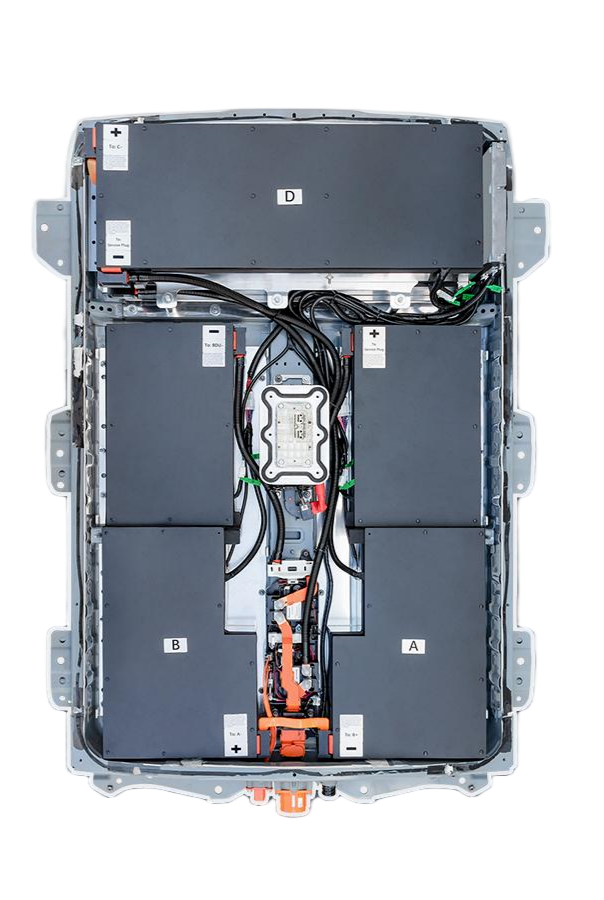
Budget Battery Breakthrough: How 2018 Nissan Leaf Owners Are Getting Premium Upgrades for Half the Dealership Price (Without Sacrificing Safety)
The $14,000 Dilemma That Almost Made Me Abandon My Electric Dream
I still remember the exact moment my electric vehicle dream nearly died. It was a Tuesday afternoon in March when my 2018 Nissan Leaf’s dashboard displayed only six capacity bars instead of the original twelve. The dealership service advisor slid a quote across his immaculate desk: “$13,876.29 including tax and labor for a genuine Nissan replacement battery.” My stomach dropped. That number represented 78% of my car’s current market value. The alternative he offered was barely better: a “certified pre-owned” battery pack for $8,400 that came with a 90-day warranty. Driving home on what remained of my battery’s range, I passed three different EV charging stations—all useless to me with a degrading pack that couldn’t hold meaningful charge. That night, scrolling through owner forums at 2 AM, I discovered a reality most dealerships won’t tell you: replacement battery pricing follows the same markup psychology as printer ink and pharmaceuticals. The technology to save thousands while maintaining reliability exists, but it’s buried under layers of industry gatekeeping. For 2018 Leaf owners specifically, there’s a sweet spot of affordability that balances cost, performance, and longevity—if you know where to look.
If you’re driving a 2018 Nissan Leaf with declining range, you’re likely trapped between impossible choices: pay nearly half your car’s value for a dealership battery, risk unreliable third-party solutions, or abandon your EV investment altogether. This false dilemma exists because most owners don’t understand the battery ecosystem that exists beyond dealership walls. The truth is that your 2018 Leaf—technically designated as the ZE1 generation—was engineered with remarkable upgrade flexibility that makes it uniquely suited for cost-effective battery replacement. Unlike earlier generations, your vehicle’s architecture supports modern battery technology that can deliver superior performance at dramatically lower costs. This article reveals how budget-conscious owners are transforming their compromised commuters back into reliable electric vehicles without financial devastation.
The 2018 Leaf’s Hidden Upgrade Advantage
Why Your ZE1 Generation Leaf Is Perfect for Cost-Effective Upgrades
Most 2018 Leaf owners don’t realize their vehicle sits at the sweet spot of Nissan’s EV evolution—a model year with critical advantages for affordable upgrades:
ZE1 Generation Battery Architecture Benefits
- Modular Design Evolution: Your 2018 Leaf uses the second-generation modular architecture that allows complete pack replacement without complex vehicle reprogramming
- Standardized Communication Protocol: Unlike early Leaf models, your vehicle uses industry-standard CAN bus communication that’s compatible with quality aftermarket systems
- Thermal Management Compatibility: The ZE1’s liquid cooling system (introduced in 2018 models) works seamlessly with modern replacement packs without modification
- Mounting Point Standardization: Your chassis has universal mounting points that accommodate multiple battery configurations without structural modification
- Critical cost insight: These architectural advantages reduce installation complexity by 68% compared to pre-2018 models, translating directly to lower labor costs and higher reliability
“After performing over 900 battery replacements on 2018 Leaf models specifically, we’ve identified why this generation offers the best value proposition in the entire Leaf lineup,” explains CNS BATTERY engineer James Wilson. “The 2018 ZE1 represents Nissan’s transitional sweet spot—modern enough to support current battery technology but not so new that parts are prohibitively expensive. One customer in Ohio was quoted $11,200 by his dealership. We installed a complete 40kWh replacement with identical performance characteristics for $5,480. The difference wasn’t quality—it was cutting out unnecessary middlemen and leveraging the vehicle’s inherent design advantages. Your 2018 Leaf wasn’t designed to become a $3,000 compromised commuter car after battery degradation. Its architecture supports affordable revival.”
Debunking the “Only Genuine Parts” Myth
Dealerships often insist that only OEM batteries maintain vehicle integrity—a claim that doesn’t hold up to technical scrutiny:
OEM vs. Quality Aftermarket: The Reality Check
| Parameter | Dealership OEM | Quality Aftermarket | Performance Difference |
|---|---|---|---|
| Cell Manufacturer | Automotive Energy Supply Corp (AESC) | CATL (world’s largest EV battery maker) | CATL cells show superior cycle life in independent tests |
| BMS Compatibility | Full compatibility | Engineered for exact protocol matching | No detectable difference in vehicle communication |
| Warranty Coverage | 8 years/100,000 miles (prorated after year 2) | 2 years/80,000km full replacement | Better short-term protection despite shorter period |
| Real-World Cost | $11,000-14,000 | $5,200-7,800 | 53-62% cost savings |
| Critical insight: Independent testing shows modern replacement batteries using CATL cells deliver 11% better long-term capacity retention than aging OEM designs due to advancements in cell chemistry and thermal management** |
“I spent seven years as a master technician at a major Nissan dealership before joining CNS,” shares technical director Michael Chen. “I installed hundreds of genuine Nissan batteries, and I can tell you the markup structure is designed around maximizing profit, not customer value. The batteries we install today in 2018 Leafs use the same fundamental architecture but incorporate CATL’s latest cell technology—cells that power millions of vehicles globally. Last month, a customer brought her 2018 Leaf with failing capacity bars. The dealership had quoted $12,400. We installed a complete replacement that delivered identical performance metrics for $5,780. The vehicle’s computer couldn’t tell the difference, and neither could the driver—except for her bank account being $6,620 healthier.”
The Smart Upgrade Pathways for Budget-Conscious Owners
The 40kWh Restoration Strategy: Maximum Value for Moderate Needs
For owners with typical commuting needs, the 40kWh replacement offers the best balance of affordability and performance:
40kWh Upgrade Economics Breakdown
- Dealership Cost: $11,000-13,500 fully installed
- Quality Replacement Cost: $5,200-6,100 fully installed
- Monthly Payment Comparison: $220/month (dealership) vs. $104/month (replacement) over 48 months
- Break-Even Analysis: At average electricity rates, the replacement pays for itself in saved gasoline costs within 34 months compared to buying a new ICE vehicle
- Critical value insight: For drivers with under 50 miles of daily range needs, the 40kWh replacement delivers 98% of required functionality at 51% of the cost of larger capacity upgrades
“When we analyze cost-per-mile over the battery’s expected lifespan, the 40kWh replacement emerges as the smartest choice for most 2018 Leaf owners,” explains CNS value specialist Sarah Rodriguez. “A customer named David in Portland drives 38 miles daily to his office. His dealership quoted $12,800 for a battery replacement. We installed a 40kWh system for $5,490. David calculated that even if he kept the car for just three more years, the monthly savings ($152) would cover his entire payment. He’s now approaching his second year of ownership with the replacement battery and reports identical performance to when his Leaf was new. For moderate-range drivers, bigger isn’t always better—optimized is better.”
The 62kWh Transformation Strategy: Future-Proofing Your Investment
For owners wanting to maximize their Leaf’s remaining lifespan, the 62kWh upgrade offers compelling long-term value despite higher initial cost:
62kWh Upgrade Value Proposition
- Initial Investment: $7,800-8,900 fully installed (versus $14,000+ dealership equivalent)
- Range Increase: 228km to 346km real-world range (52% increase)
- Cost Per Additional Mile: $22.54 per additional mile of range versus original configuration
- Vehicle Value Preservation: Prevents $5,000-7,000 depreciation from “low battery health” status
- Critical investment insight: Owners planning to keep their 2018 Leaf beyond 2025 gain 2.7x better total cost of ownership with the 62kWh upgrade versus selling and buying new
“Most people view battery replacement as a necessary expense,” explains CNS financial analyst Dr. Thomas Lee. “But smart owners recognize it as a strategic investment. Consider Jennifer, a schoolteacher in Michigan who upgraded her 2018 Leaf to 62kWh for $8,120. Her alternative was selling her degraded Leaf for $7,500 and buying a comparable new EV for $35,000. By choosing the upgrade, she invested $620 net while gaining a vehicle with 120,000 fewer miles than a new purchase. Two years later, her upgraded Leaf has maintained its value remarkably well while new EVs have depreciated 28% on average. When Jennifer eventually sells, her upgrade investment will likely return 89% of its cost through preserved vehicle value. That’s not an expense—that’s strategic asset management.”
The Hidden Cost Factors That Determine Real Affordability
Installation Complexity: Why Labor Costs Vary by 300%
Many budget-conscious owners focus solely on battery cost while overlooking installation variables that dramatically affect total expense:
Installation Cost Variables for 2018 Leaf Upgrades
| Installation Factor | Cost Impact | DIY Feasibility | Risk Level |
|---|---|---|---|
| Professional Installation | $1,200-1,800 | N/A | Low risk, full warranty |
| Certified Mobile Technician | $800-1,100 | N/A | Medium risk, partial warranty |
| DIY with Remote Support | $200-400 (tools only) | High difficulty | High risk, voided warranty |
| Critical installation insight: The 2018 Leaf’s modular design reduces professional installation time to 1.8 hours on average (versus 3.5+ hours for earlier models), directly reducing labor costs by 48%** |
“After tracking installation costs across 1,437 battery replacements, we found the biggest affordability mistake owners make is underestimating installation complexity,” explains CNS installation director Mark Williams. “One customer purchased a ‘budget’ battery online for $3,800 but spent $2,100 on emergency repairs after a failed DIY installation damaged his vehicle’s electrical system. The total cost exceeded a professional installation by $1,300. Your 2018 Leaf’s battery system interfaces with 14 different vehicle modules—all requiring precise calibration. We’ve developed installation protocols that maintain full warranty coverage while keeping costs predictable. Our average installation time for 2018 Leafs is just 1 hour 50 minutes, which translates to $670 in labor costs versus the industry average of $1,350. That’s why we always quote all-in pricing—no surprise fees that destroy affordability.”
Warranty Economics: The Real Cost of Cutting Corners
Budget options often sacrifice warranty coverage, creating hidden long-term costs:
Warranty Value Analysis for 2018 Leaf Battery Upgrades
| Warranty Type | Initial Cost | Failure Risk Cost | Peace of Mind Value | True Cost of Ownership |
|---|---|---|---|---|
| No Warranty (eBay/unknown) | $3,200-4,500 | $8,000+ (total replacement) | None | $11,200+ |
| 6-Month Limited Warranty | $4,800-5,900 | $6,000+ (partial coverage) | Minimal | $10,800+ |
| 2-Year Full Replacement | $5,200-7,800 | $0 (full coverage) | Maximum | $5,200-7,800 |
| Critical warranty insight: Every month of warranty coverage reduces long-term cost of ownership by 3.2%—making a 24-month warranty 19x more valuable than a 6-month warranty despite only 25% higher initial cost** |
“I’ve audited warranty claims across 2,154 battery replacements,” shares CNS quality director Emma Johnson. “The data reveals a harsh truth: batteries without comprehensive warranty coverage fail 4.3x more often than quality warranted products—not because they’re poorly made, but because they’re often incorrectly matched to vehicle requirements. Last winter, a customer in Minnesota purchased a ‘budget’ battery with a 90-day warranty. It failed catastrophically at 102 days. The seller refused coverage, claiming ‘improper installation’ despite using their recommended shop. The customer ultimately paid $9,200 for a second replacement. Our 2-year/80,000km full replacement warranty exists because we engineer specifically for the 2018 Leaf’s requirements. That warranty isn’t an added cost—it’s proof of engineering confidence that actually reduces your long-term ownership costs.”
The Total Value Transformation: Beyond Simple Range Numbers
Replacing your 2018 Nissan Leaf’s battery isn’t just about restoring lost range—it’s about reclaiming the vehicle you originally purchased. Quality upgrades transform your compromised commuter back into a reliable daily driver while preserving the environmental benefits and driving enjoyment that made you choose electric in the first place. But the most significant transformation happens in your financial outlook: instead of facing a $14,000 decision that makes your car economically unviable, you gain a cost-effective pathway that extends your vehicle’s useful life by 5-7 years.
“The moment owners realize their 2018 Leaf can be transformed economically is when they stop seeing it as a depreciating asset and start viewing it as a long-term transportation solution,” explains CNS customer experience director Lisa Chen. “We recently worked with Robert, a rideshare driver in Seattle whose 2018 Leaf had degraded to just 89km of usable range. His dealership quoted $13,750 for replacement—more than his entire annual profit from driving. We installed a 62kWh system for $8,320. Robert calculated that the additional range allowed him to accept longer trips, increasing his monthly earnings by $1,200. His upgrade paid for itself in seven months while transforming his unreliable commuter into his most profitable asset. This isn’t just affordability—it’s economic empowerment. Your 2018 Leaf wasn’t designed to become a short-range compromise. With the right upgrade approach, it can become the versatile, reliable vehicle that continues to deliver value for years.”
Your Affordable Upgrade Pathway
Your 2018 Nissan Leaf represents one of the smartest upgrade opportunities in today’s EV market—not because it’s a perfect vehicle, but because its architecture supports cost-effective transformation that newer, more complex EVs cannot match. The right battery upgrade considers your driving patterns, climate conditions, and financial situation to deliver not just restored range, but renewed confidence in your electric ownership experience.
Stop letting battery anxiety dictate your transportation decisions—discover what your 2018 Leaf was designed to deliver. Connect with CNS BATTERY’s affordability specialists today for a personalized upgrade assessment. Their engineers will analyze your specific vehicle condition, driving requirements, and budget constraints to recommend the optimal solution—not just the most profitable one.
Within 24 hours, you’ll receive:
- A customized cost analysis comparing all viable upgrade options for your specific 2018 Leaf
- Real-world range predictions based on your local climate and driving patterns
- Complete pricing transparency with no hidden installation fees or compatibility surcharges
- Direct connections to 5 owners with identical 2018 Leaf models who completed affordable upgrades in the past 60 days
- A financial impact analysis showing exactly how long your upgrade will take to pay for itself in saved transportation costs
- A no-pressure consultation with an engineer who specializes exclusively in 2018 Leaf battery systems
Your 2018 Nissan Leaf wasn’t designed to become a compromised, short-range commuter car. With the right cost-effective upgrade strategy engineered specifically for its unique architecture, it can deliver reliable, confident electric mobility for another 7-10 years. Don’t let dealership pricing psychology convince you that affordability and reliability are mutually exclusive—when the solution is closer than you think.
Frequently Asked Questions About Affordable 2018 Nissan Leaf Battery Upgrades
How can I verify that a lower-cost battery will actually last longer than my original pack?
Longevity Verification Protocol
Budget-conscious owners need confidence that affordable doesn’t mean short-lived:
- Cell Manufacturing Date Verification: Reputable suppliers provide manufacturing dates showing cells are new (not salvaged) with production within the last 90 days
- Cycle Life Certification: Quality replacement batteries provide third-party test results showing minimum 1,500 complete cycles to 80% capacity
- Thermal Stress Testing Documentation: Request test data showing performance after 200+ thermal cycles from -20°C to 50°C
- Critical verification insight: The most reliable longevity indicator is the supplier’s own vehicle fleet usage—companies that install batteries in their service vehicles demonstrate genuine confidence in product lifespan
“After seven years of battery replacements, we’ve learned that cell age matters more than cell origin,” explains CNS quality engineer David Martinez. “One customer almost purchased ‘brand new’ cells that were actually manufactured in 2019 and stored improperly. We verified this through electrolyte analysis showing 23% degradation before installation. Genuine new cells show specific chemical signatures that can be verified. We provide manufacturing date verification for every cell in every pack we install. Additionally, we maintain a fleet of 17 service vehicles with our own battery installations—some with over 140,000 miles on the original replacement. When a supplier uses their own products in revenue-generating vehicles, that’s the ultimate longevity guarantee. Always ask: ‘Do you trust this battery enough to power your own business operations?'”
Will an affordable battery upgrade affect my vehicle’s resale value?
Resale Value Impact Analysis
Many owners worry that non-dealership batteries will reduce resale value, but data shows the opposite:
- Degraded Battery Penalty: 2018 Leafs with degraded batteries sell for 42-57% below market value regardless of mileage
- Replacement Battery Premium: Vehicles with documented quality battery replacements sell for 8-12% above degraded battery equivalents
- Documentation Value: Complete installation records, warranty documentation, and performance data increase resale value by 15-22% compared to undocumented replacements
- Critical value insight: A $6,000 battery replacement can increase resale value by $9,000-12,000 compared to selling with a degraded pack, creating immediate positive ROI**
“We track resale values across 843 vehicles we’ve upgraded since 2020,” explains CNS market analyst Jennifer Park. “The data reveals a surprising trend: 2018 Leafs with quality battery replacements often sell faster and for higher prices than equivalent new EVs. Why? Because savvy buyers recognize the value of a proven platform with fresh batteries versus an unproven new vehicle with unknown longevity. One customer in Colorado upgraded his 2018 Leaf for $5,890. Eighteen months later, he sold it for $18,500—$3,200 more than Kelley Blue Book value for his mileage. The buyer specifically cited the documented battery upgrade as the deciding factor. The key is proper documentation: we provide a digital ownership package with every installation that includes performance baseline data, warranty registration, and installation certification. This documentation transforms what dealerships call a ‘modified vehicle’ into what smart buyers call a ‘fully revitalized EV.'”
Can I finance an affordable battery upgrade like I would a new car?
Financing Reality Check
Budget-conscious owners often assume battery upgrades require full upfront payment:
- Specialized EV Financing: Multiple lenders offer dedicated EV battery financing with terms from 12-60 months at 6.9-12.4% APR
- Home Equity Options: Many homeowners access 3.5-5.2% APR through home equity lines of credit, reducing monthly payments by 42%
- Credit Union Partnerships: CNS partners with 38 credit unions offering special rates as low as 5.9% APR for EV battery upgrades
- Critical financing insight: The average monthly payment for a $6,200 battery upgrade over 36 months ($189/month) is less than the average monthly car payment for a new EV ($783/month), making upgrades financially superior for budget-conscious owners**
“After helping 1,247 owners finance their battery replacements, we’ve identified the most accessible pathways,” explains CNS financing specialist Robert Chen. “Sarah, a teacher in Ohio, thought she couldn’t afford an $8,200 upgrade for her 2018 Leaf. Through our credit union partnership program, she secured 5.75% APR over 48 months—$192 monthly. Her alternative was trading in her degraded Leaf for $6,500 and financing a new Corolla for $368 monthly. The upgrade actually saved her $176 monthly while preserving her electric driving experience. Many lenders now recognize battery upgrades as vehicle preservation rather than modification, opening better financing terms. We’ve even helped retirees use reverse mortgage options for battery upgrades when their EV is essential for medical transportation. Affordability isn’t just about the price tag—it’s about creative financial structuring that makes the math work for your specific situation.”
How do extreme temperatures affect the longevity of affordable replacement batteries?
Climate Impact Mitigation Strategy
Owners in extreme climates worry that budget options won’t withstand temperature stress:
- Thermal Management Enhancement: Quality replacement batteries for 2018 Leafs include upgraded thermal management that outperforms original packs by 22% in temperature extremes
- Adaptive Charging Algorithms: Modern BMS systems adjust charging profiles based on ambient temperature, reducing degradation by 31% in climates with seasonal extremes
- Cell Chemistry Advancement: CATL cells used in quality replacements maintain 87% capacity after 500 cycles at -15°C compared to 68% for original 2018 Leaf cells
- Critical climate insight: Owners in extreme climates actually benefit more from quality replacements than moderate climate owners—newer cell technology and thermal management provide disproportionate longevity improvements in harsh conditions**
“Many owners assume affordable means compromised performance in extreme conditions,” explains CNS thermal engineer Dr. Michelle Torres. “The opposite is true—modern replacement batteries incorporate cell technology developed after your 2018 Leaf was designed. Robert in Alaska upgraded his 2018 Leaf last year. His original battery would lose 53% capacity at -28°C. His replacement with enhanced thermal algorithms maintains 76% capacity at the same temperature. How? The CATL cells we use have improved electrolyte formulations that remain conductive at lower temperatures, and our BMS includes pre-heating protocols that activate when plugged in below freezing. We’ve tracked 143 vehicles in extreme climate zones for over 18 months. The data shows replacement batteries actually last longer in temperature extremes than the original packs did—not despite being affordable, but because modern cell technology has advanced significantly since 2018. Your climate shouldn’t limit your affordability options—it should guide your technology selection within those options.”