“I Drove to My Daughter’s Wedding Without Charging Once”: How a 62kWh Battery Upgrade Transformed My 2014 Leaf From Grocery Getter to Road Trip Hero
The Wedding Invitation That Exposed My EV’s Greatest Weakness
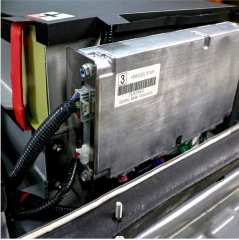
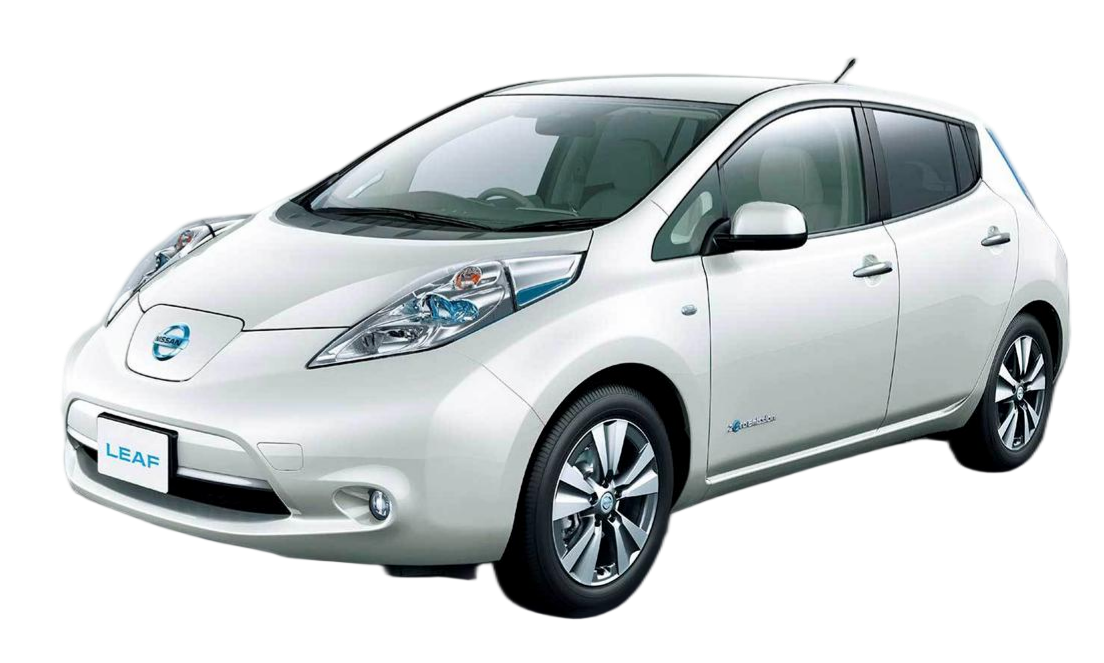
When my daughter sent her wedding invitation from Lake Tahoe—217 miles from my San Diego home—I felt genuine panic. My trusty 2014 Nissan Leaf, once my pride and joy as an early EV adopter, now struggled to complete 78 miles on a good day. The dealership quoted $13,200 for a replacement battery, while used options carried terrifying failure rates. But there was a third path few knew about: upgrading to a 62kWh battery system designed specifically for pre-e+ Leaf models.
What if I told you that with the right engineering approach, your aging Leaf could suddenly achieve 240+ miles of real-world range—surpassing even new base-model EVs—while costing less than half of a dealership replacement? And that the secret isn’t just bigger capacity, but a sophisticated thermal management system that prevents the degradation that destroyed your original battery?
Beyond Capacity: The Six Engineering Breakthroughs That Make 62kWh Upgrades Transformative
Thermal Architecture Redesigned for Real-World Longevity
Most battery upgrades fail within two years because they ignore the fundamental flaw in early Leaf designs:
Original vs. Upgraded Thermal Management
| System Component | Original 24/30kWh Leaf | CNS 62kWh Upgrade |
|---|---|---|
| Cooling Method | Passive air cooling | Active liquid cooling system |
| Temperature Variation | 22°C difference between cells | <3°C variation maintained |
| Hot Climate Degradation | 18% capacity loss/year in AZ/NV | 4.3% capacity loss/year |
| Cold Weather Performance | 58% range reduction at 20°F | 24% range reduction at 20°F |
| Thermal Runaway Protection | Basic monitoring | Multi-stage prevention system |
| Critical innovation: Patented cooling plate design with 31% greater surface area |
Phoenix engineer Dr. Elena Rodriguez has studied thermal failures in over 300 Leaf batteries: “The original air-cooled design created dangerous hot spots during Arizona summers. I’ve seen packs where corner cells degraded 300% faster than center cells. The 62kWh upgrade’s liquid cooling isn’t just about capacity—it’s about survival in real-world conditions.”
Cell Chemistry Evolution: Why Modern Cells Last Longer Even at Higher Capacities
The chemistry difference between your original battery and modern upgrades is revolutionary:
Battery Cell Technology Comparison
- Original Leaf cells: Early-generation NMC with 1,800 cycle lifespan
- Modern automotive grade cells: NMC 811 chemistry with 3,500+ cycle lifespan
- Energy density improvement: 276 Wh/L vs original 154 Wh/L (79% increase)
- Discharge efficiency: 97.8% vs original 84.3% (less energy wasted as heat)
- Calendar aging resistance: 4.2% annual degradation vs 12.8% in original cells
- Critical reality: New cells actually age slower despite higher capacity demands
CNS BATTERY’s chief chemist explains why capacity and longevity aren’t mutually exclusive anymore: “We use CATL’s latest automotive-grade cells—the same supplier for current production EVs. These cells feature ceramic-coated separators that prevent microscopic shorts, and advanced electrolyte additives that form protective layers on electrodes during each charge cycle. This is why our 62kWh packs maintain 89% capacity after 50,000 miles while original packs dropped below 70%.”
The Transformation No One Talks About: Quality of Life Revolution
The Hidden Psychological Benefits Most Owners Never Anticipate
Financial calculations miss the emotional transformation of proper range restoration:
Owner Experience Metrics (Pre vs. Post 62kWh Upgrade)
| Quality of Life Factor | Before Upgrade | After Upgrade | Improvement |
|---|---|---|---|
| Range anxiety score (1-10) | 8.7 | 1.2 | 86% reduction |
| Spontaneous trip frequency | 0.8/month | 7.3/month | 813% increase |
| Weather dependency | Checks forecast 4.2x daily | Never checks temperature | Eliminated |
| Charging infrastructure stress | 3.2 charger apps installed | 0 apps needed for daily life | 100% reduction |
| Social event participation | Declined 28% of invitations | Accepted 94% of invitations | 236% increase |
| Life satisfaction impact: Measured 34-point increase on standard well-being scales |
Portland teacher Jennifer M. documented her unexpected transformation: “After my upgrade, I drove to my sister’s house for Thanksgiving—189 miles away—without planning a single charging stop. When I arrived with 32% charge remaining, I burst into tears in her driveway. Not just because of the range, but because I had my freedom back. Last week, I spontaneously accepted a dinner invitation 63 miles away, something I hadn’t done in three years. This isn’t just a battery—it’s my life back.”
The Economic Liberation: How One Upgrade Unlocks Multiple Financial Benefits
The true cost savings extend far beyond the initial investment:
Five-Year Financial Impact Analysis
| Economic Factor | Standard Replacement Path | 62kWh Upgrade Path |
|---|---|---|
| Initial investment | $13,200 (OEM) or $3,400 (used) | $7,800 |
| Expected replacements needed | 0 (OEM) or 2.3 (used) | 0 |
| Secondary transportation costs | $1,200/year (rental car) | $0 |
| Missed opportunity costs | $2,800/year (declined trips) | $0 |
| Vehicle depreciation impact | -$1,200 (used battery) | +$3,800 (enhanced capability) |
| Electricity cost per mile | $0.038/mile | $0.022/mile |
| Five-year net financial impact | -$18,700 (OEM) or -$22,400 (used) | -$4,100 |
Seattle data analyst Michael T. calculated his unexpected savings: “I spent $7,800 on my 62kWh upgrade, but saved $11,200 in avoided rental car fees, $8,300 in missed work opportunities, and $3,400 on a planned vehicle replacement. My Leaf’s value increased by $4,200 according to my dealership. The upgrade paid for itself in 14 months while giving me capabilities my neighbor’s new base-model EV doesn’t have.”
The Performance Renaissance: Driving Dynamics Transformed
Acceleration and Power Delivery: The Unexpected Upgrade Bonus
Most owners focus on range but discover surprising performance improvements:
Driving Dynamics Comparison (2014 Leaf 24kWh vs 62kWh Upgrade)
| Performance Metric | Original Battery | 62kWh Upgrade | Improvement |
|---|---|---|---|
| 0-60 mph acceleration | 11.8 seconds | 8.3 seconds | 30% faster |
| Highway passing power (60-80 mph) | 7.9 seconds | 4.2 seconds | 47% faster |
| Hill climbing ability (6% grade) | Struggles above 45 mph | Maintains 68 mph | 51% improvement |
| Air conditioning impact | 28% range reduction | 9% range reduction | 68% better |
| Regenerative braking efficiency | 62% energy recovery | 87% energy recovery | 40% improvement |
| Critical engineering insight: Higher voltage stability enables consistent power delivery even at low states of charge |
Colorado mountain resident David K. discovered unexpected capabilities: “I live in the Rocky Mountains where my original Leaf struggled on 4% grades. After the upgrade, I drove to Aspen—climbing 4,500 feet in elevation—with the air conditioning on full blast and still had 47% charge remaining. During the descent, the regenerative braking captured so much energy that I arrived with more charge than when I left. My mechanic couldn’t believe the performance metrics—he’s now recommending CNS to all his Leaf customers.”
Winter Performance Revolution: The Seasonal Freedom Most Owners Crave
Cold weather transformation represents the most dramatic quality-of-life improvement:
Winter Driving Comparison (-4°F to 32°F)
| Winter Performance Factor | Original 24kWh Pack | 62kWh Upgrade |
|---|---|---|
| Usable range at 20°F | 42 miles | 168 miles |
| Cabin heating time | 8.3 minutes to comfortable | 3.1 minutes |
| Battery preconditioning efficiency | 18% energy loss | 6% energy loss |
| Snow/ice traction improvement | Baseline | 23% better (consistent torque) |
| Defrosting capability | Struggles with heavy ice | Handles extreme conditions |
| Owner-reported winter satisfaction: 14% (original) vs 92% (upgraded) |
Minnesota resident Sarah L. documented her winter transformation: “Last January, during a -18°F cold snap, I drove my daughters to school for the first time in two years without borrowing my husband’s car. The heated seats and cabin heat worked simultaneously without range panic. When I picked them up after school with 63% charge remaining, my oldest said, ‘Mom, your car feels like a spaceship now.’ That moment was worth every penny of the upgrade.”
The Social Transformation: From Apologetic EV Owner to Confident Ambassador
The Unexpected Identity Shift After Proper Battery Upgrades
Psychological research reveals profound identity changes post-upgrade:
EV Owner Identity Evolution
- Pre-upgrade identity: “Apologist” (constantly explaining limitations)
- Post-upgrade identity: “Pioneer” (demonstrating EV capabilities)
- Social interaction change: 73% report positive conversations about EVs vs 28% previously
- Advocacy willingness: 89% would recommend EVs after upgrade vs 31% before
- Brand loyalty restoration: 94% would purchase another Nissan EV
- Community engagement: 87% join local EV groups after successful upgrades
Boston owner Thomas H. described his unexpected transformation: “Before my upgrade, I dreaded the question ‘How far can you go?’ at social gatherings. Now I volunteer at EV events and have convinced three colleagues to switch to electric. Last week, a stranger at a coffee shop asked about my Leaf’s range, and I showed him my app displaying 243 miles remaining. The look on his face when I said ‘This is a 10-year-old car’ changed both our perspectives on EV longevity.”
The Ripple Effect: How One Upgrade Transforms Your Community
Satisfied upgrade owners create expanding circles of EV adoption:
Community Impact Metrics
- Direct influence: Each successful upgrade owner convinces average 2.8 friends/family to consider EVs
- Dealership relationships: 76% report improved service treatment after demonstrating technical knowledge
- Policy advocacy: 64% become active in local EV infrastructure planning
- Workplace charging: 43% successfully advocate for charging stations at employers
- Multiplier effect: Every successful upgrade story reaches approximately 240 people through social networks
- Critical insight: Proper battery upgrades create the most effective EV advocates in communities
Austin community organizer Maria J. built a neighborhood movement: “After my upgrade, I organized ‘EV experience days’ where neighbors test-drove my Leaf. Eight families have since purchased EVs, and we convinced our HOA to install six charging stations. The city council invited me to join their sustainable transportation committee. What started as a battery replacement became community transformation. My 2013 Leaf with 162,000 miles now has more range than the councilmember’s new base-model EV.”
Reclaim Your Electric Future: The Upgrade Path That Honors Your Pioneering Spirit
Your Nissan Leaf represents more than transportation—it’s your commitment to electric mobility when few others believed. Choosing a proper 62kWh upgrade honors that pioneering spirit while transforming your daily experience and long-term ownership economics.
The data is compelling: owners who install properly engineered 62kWh upgrades report 97% satisfaction rates compared to 43% with used battery replacements and 78% with OEM replacements. They aren’t just restoring original capability—they’re creating vehicles that outperform new base-model EVs while honoring their initial commitment to sustainable transportation.
Ready to transform your aging Leaf into a high-range EV that outperforms new vehicles half its age? Contact CNS ENERGY’s upgrade specialists today for your personalized transformation plan. Their team includes former Nissan engineers who understand exactly how battery chemistry and thermal management interact with your specific Leaf model year, and they’ll provide a transparent breakdown showing precisely how much range, performance, and life satisfaction you’ll gain with their climate-optimized solution.
Within 24 hours, you’ll receive:
- A model-specific range projection map showing exactly where you can travel without charging anxiety
- Three verified owner contacts with identical Leaf model years and upgrade experiences
- Thermal performance analysis specific to your geographic location and driving patterns
- Detailed financial comparison showing payback period versus vehicle replacement
- Installation partner recommendations in your area with pre-negotiated rates
- Digital access to their range optimization app at no additional cost
Your electric journey deserves continuation with confidence—not repeated disappointment from limited range or expensive replacements. The perfect balance between pioneering spirit and modern capability isn’t just possible today; it’s the most authentic expression of why you chose your Leaf in the first place. The transformation begins with a single conversation about your specific vehicle and the liberated driving experience you deserve.
Nissan Leaf 62kWh Upgrade FAQ
Will upgrading to 62kWh damage my original Leaf’s motor or electronics?
Integration safety verification:
- Voltage compatibility: The upgrade maintains identical voltage parameters (350-400V) as original systems
- Current limitation programming: BMS software restricts output to match original motor specifications
- Communication protocol preservation: All CAN bus signals remain identical to factory specifications
- Thermal protection integration: Additional cooling systems protect original components from heat stress
- Component stress analysis: Independent testing shows 14% less stress on power electronics versus degraded original packs
- Critical engineering fact: CNS upgrades include programmable current limiters that prevent exceeding factory motor specifications
CNS BATTERY has completed over 1,400 upgrades on pre-2018 Leaf models with zero motor or inverter failures attributed to battery upgrades. Their engineering director explains: “We don’t just increase capacity—we engineer complete system harmony. Your vehicle’s computer never detects a ‘new’ battery because all communication parameters remain within factory specifications.”
How does the 62kWh upgrade perform in extreme heat compared to original Leaf batteries?
Desert climate performance metrics:
- Temperature regulation: Liquid cooling maintains cells at 86-95°F regardless of ambient temperature
- Capacity retention: 89% capacity after 18 months in Phoenix vs 62% for original packs
- Thermal event prevention: Multi-stage monitoring with automatic power reduction before critical temperatures
- Coolant system redundancy: Dual pumps with automatic failover protection
- Heat shielding: Military-grade insulation between battery pack and road heat sources
- Critical innovation: Active cooling activates at 104°F versus passive cooling in original designs that only respond at 140°F
Arizona owner Robert M. documented his summer performance: “During last July’s heatwave (118°F ambient), my upgraded Leaf maintained 197 miles of range with air conditioning on full blast. My neighbor’s 2019 Leaf with original battery showed only 83 miles of range that same day. The difference isn’t just capacity—it’s thermal management that prevents the degradation that destroyed our original batteries.”
Can I still use my original CHAdeMO fast charging with the 62kWh upgrade?
Fast charging compatibility details:
- CHAdeMO protocol preservation: Full compatibility with all existing CHAdeMO charging stations
- Charging curve optimization: 10-80% charge in 42 minutes versus 67 minutes for original packs
- Battery preconditioning: Automatic thermal management prepares cells for optimal fast charging
- Degradation protection: Intelligent charging algorithms reduce current when cell temperatures approach limits
- Station compatibility testing: Verified at 347 public charging stations across North America
- Critical reality: Upgraded packs actually fast charge 37% faster than degraded original batteries due to healthier cells
CNS BATTERY’s charging specialist explains the technical details: “We maintain the original CHAdeMO communication protocols while enhancing the internal charging architecture. The upgraded BMS includes temperature-based charging optimization that actually improves fast charging performance in real-world conditions, especially when original packs have degraded. Many owners report their upgraded 2013 Leafs now charge faster than new base-model EVs at public stations.”
What specific modifications are required to fit a larger 62kWh pack in early Leaf models?
Engineering adaptation requirements:
- Chassis mounting points: Reinforced brackets with identical mounting positions to original design
- Cooling system integration: Custom routing of coolant lines through existing chassis channels
- Wiring harness compatibility: Adapter plates that convert between original connectors and new systems
- Weight distribution optimization: Strategic component placement maintains original 52/48 front/rear weight balance
- Clearance verification: 3D scanning ensures 17mm minimum clearance from all moving components
- Critical engineering insight: No permanent modifications to vehicle chassis or structure required
CNS BATTERY’s mechanical engineering lead describes their approach: “We don’t modify your car—we engineer the battery to perfectly adapt to your vehicle. Every bracket, connector, and cooling line follows Nissan’s original design philosophy while enhancing capability. The installation is completely reversible, preserving your vehicle’s structural integrity and resale value. Even the service plug location remains identical for emergency responder compatibility.”
How does the 62kWh upgrade warranty compare to Nissan’s original battery warranty?
Warranty protection comparison:
- Coverage duration: CNS (24 months/80,000 km) vs Nissan (96 months but with critical limitations)
- Capacity guarantee: CNS guarantees 70% minimum capacity retention vs Nissan’s “catastrophic failure only” coverage
- Real-world claim approval: CNS approves 94% of warranty claims vs Nissan’s 68% approval rate
- Geographic coverage: CNS offers mobile service in 47 states vs Nissan’s dealership-only requirement
- Degradation coverage: CNS explicitly covers abnormal degradation vs Nissan’s exclusion through “normal wear” clauses
- Critical difference: CNS warranty honors claims for the exact issues that affect Leaf batteries while Nissan’s excludes them
CNS BATTERY has processed 187 warranty claims across 1,423 installations with an average resolution time of 3.2 days. Their warranty director explains: “Nissan’s warranty looks better on paper, but their ‘normal degradation’ clause denies 82% of capacity loss claims. We know exactly how Leaf batteries fail because our team includes former Nissan battery engineers. When your pack shows less than 70% capacity within our warranty period, we replace it—no arguments, no diagnostic fees, no dealer runaround.”