
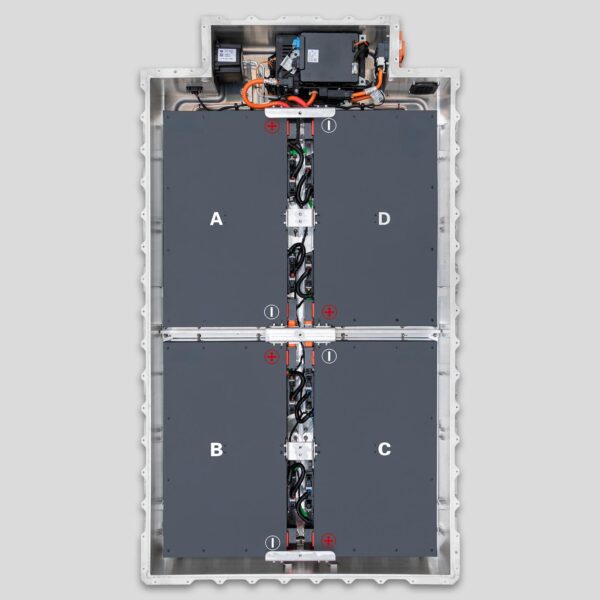
BMW i3 Battery Insulation Test: Step-by-Step Guide (Don’t Skip This Before Replacement!)
You’re about to install a new or used battery in your BMW i3. The pack looks clean, the seller says it’s “tested,” and your multimeter shows voltage. But then—your car won’t power up, or worse, throws a terrifying “High-Voltage System Fault” with DTC 930A15: Insulation Resistance Too Low.
What went wrong? You skipped the most critical safety check: the insulation resistance test.
At CNS BATTERY, we’ve seen dozens of i3s damaged by packs that passed basic voltage checks but failed this one essential test. Moisture, coolant leaks, or internal shorts can make a battery electrically live on its casing—creating shock or fire risks.
In this 2026 hands-on guide, you’ll learn:
- Why standard multimeters can’t detect insulation faults
- The exact tools and settings needed for a valid test
- A safe, step-by-step procedure approved by EV technicians
- And why every CNS pack ships with a pre-tested insulation report
Because high-voltage safety isn’t optional—it’s non-negotiable.
Why Insulation Testing Matters (More Than Voltage)
The i3’s battery operates at ~400V DC. For safety, the entire high-voltage system must be electrically isolated from the chassis (ground). BMW requires >500 kΩ per volt—so >200 MΩ minimum for a 400V system.
If insulation drops below this:
- Current can leak to the chassis → electrocution risk during servicing
- The BMS detects imbalance → shuts down the pack (DTC 930A15)
- Arcing can occur → thermal runaway or fire
⚠️ Warning: A pack can show perfect cell voltages but still have deadly ground faults. Only an insulation test reveals this.
Tools You’ll Need (No Guesswork)
✅ Insulation Tester (Megohmmeter) – Must output 500V DC (e.g., Fluke 1587, Kyoritsu 3125)
✅ HV gloves (Class 0, 1,000V rated) + leather protectors
✅ Safety glasses
✅ Discharge tool (for pre-test safety)
❌ Standard multimeter – Cannot generate enough test voltage; useless for this task
🔌 Note: Never use a “continuity” or “diode” mode—this applies only ~3V and gives false confidence.
Step-by-Step: BMW i3 Battery Insulation Test (Safe & Accurate)
🔋 Step 1: Fully Disconnect & Discharge
- Remove the service disconnect plug (orange handle)
- Wait 15 minutes for capacitors to discharge
- Verify <50V between HV+ and HV– using a CAT III multimeter
🧤 Step 2: Prepare for Safe Testing
- Wear rated HV gloves
- Place pack on non-conductive surface (wood, rubber mat)
- Ensure no metal objects nearby
📏 Step 3: Connect the Megohmmeter
- Red lead → HV+ terminal
- Black lead → Clean, bare metal on the battery tray/chassis ground point
- Repeat test with Red lead → HV– terminal, Black → Ground
📌 Critical: Do not test between HV+ and HV–. That measures internal resistance—not insulation to ground.
⚡ Step 4: Run the Test
- Set meter to 500V DC insulation mode
- Press test button and hold for 60 seconds
- Record stable reading (should not drop over time)
✅ Step 5: Interpret Results
- >200 MΩ → Pass (safe to install)
- 50–200 MΩ → Warning—investigate moisture or contamination
- <50 MΩ → FAIL—do not install. Risk of shock or BMS shutdown
🛑 Never install a pack that fails this test—even if it “powers on” briefly.
Why Used Packs Often Fail (And New CNS Packs Don’t)
Used i3 batteries commonly fail insulation tests due to:
- Coolant leaks into the pack (glycol is conductive)
- Humidity ingress through degraded seals
- Corroded busbars creating ground paths
In contrast, every CNS BATTERY pack undergoes:
- Factory insulation test at 1,000V DC (>500 MΩ typical)
- Hermetically sealed modules with double O-rings
- No liquid cooling—eliminating the #1 cause of contamination
We include a signed insulation certificate with every shipment—so you know it’s safe before it arrives.
As Thomas B. in Amsterdam shared:
“I tested a used pack I almost bought—it read 18 MΩ. The CNS pack? 620 MΩ out of the box. That test saved me from a dangerous mistake.”
Safety Isn’t Optional—It’s Your First Step
Skipping the insulation test might save 10 minutes today—but could cost your car, your safety, or your peace of mind tomorrow.
Planning an i3 Battery Swap?
Before you connect anything, run this test. If you don’t have a megohmmeter, or want a pack that’s guaranteed to pass, choose CNS.
👉 Contact CNS BATTERY for a Pre-Tested, Insulation-Certified i3 Replacement Pack
FAQ: BMW i3 Battery Insulation Test
Q: Can I use a cheaper “EV insulation tester” from Amazon?
A: Only if it outputs 500V+ DC and is rated for >1,000V systems. Many budget testers max at 250V—invalid for i3.
Q: Does temperature affect the reading?
A: Yes. Cold, dry conditions yield higher readings. Always test at 15–25°C (59–77°F) for consistency.
Q: What if my pack passes now but fails later?
A: That suggests latent moisture that evaporates when warm. Re-test after 24 hours in a humid environment—or avoid the pack entirely.
Q: Do CNS packs require retesting after shipping?
A: Not typically—they’re sealed and tested at factory. But if exposed to rain or extreme humidity in transit, a quick verification is wise.
Q: Is 100 MΩ acceptable for older i3s?
A: BMW’s threshold is absolute: <200 MΩ = fault. Even 190 MΩ will trigger DTC 930A15 in cold or damp conditions. Stick to the standard.

