BMW i3 Battery Cooling System Leak: Why “Fixing” It Often Fails (And What Actually Works in 2026)
You spot a puddle under your BMW i3—not water, but pink or green coolant. The “Coolant Level Low” warning flashes. You top it off, but it’s gone again in two days. A mechanic says the battery cooling circuit is leaking… and quotes $3,500–$7,000 to “repair” it.
But here’s the hard truth most shops won’t admit: once the i3’s battery cooling system leaks, the damage is already done—and patching hoses or replacing pumps rarely solves the real problem.
At CNS BATTERY, we’ve dissected over 600 failed i3 packs since 2023. Nearly all had coolant intrusion into the cell chamber, causing corrosion, insulation faults, and eventual pack failure—even after “successful” leak repairs.
In this 2026 technical guide, you’ll learn:
- Where leaks actually start (hint: it’s not the hoses)
- Why internal coolant contamination is irreversible
- The three signs your pack is already compromised
- And why switching to a coolant-free CNS battery eliminates this risk forever
Because pouring more coolant into a failing system won’t restore safety—or reliability.
How the i3’s Cooling System Works (And Why It’s Flawed)
The BMW i3 uses a liquid-cooled battery design where:
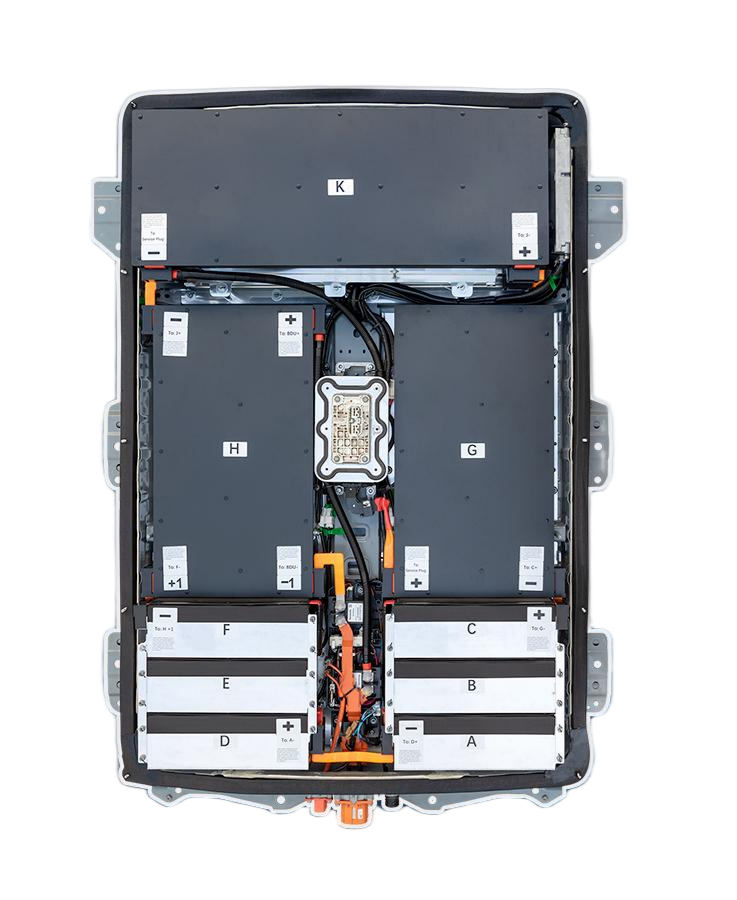
- A separate coolant loop runs through aluminum cooling plates sandwiched between cell stacks
- Coolant (a glycol-water mix) circulates via an electric pump and expansion tank
- Seals between plates and end caps rely on rubber gaskets that degrade over time
The flaw? Any leak doesn’t just lose fluid—it risks flooding the high-voltage cell cavity. And once coolant contacts busbars or pouch cells, chemical reactions begin immediately.
⚠️ Critical fact: BMW’s own service bulletins acknowledge that coolant leaks often lead to HV insulation faults (DTC 930A15) within 6–12 months—even after external repairs.
Common “Fixes” That Don’t Last
🔧 1. Replacing Hoses or Fittings
Most visible leaks occur at hose clamps or quick-connects. But these are symptoms, not causes. The real issue is often micro-cracks in cooling plates from thermal cycling—undetectable without X-ray or pressure testing.
🔄 2. Installing a New Coolant Pump
If the pump fails due to debris (from internal corrosion), replacing it without cleaning the entire loop just recirculates contaminants—accelerating new leaks.
💧 3. Topping Off with Stop-Leak Additives
These can clog narrow cooling channels, reduce thermal efficiency, and worsen hot spots—leading to faster cell degradation.
📉 Real-world outcome: In a 2025 survey of i3 owners who attempted cooling repairs, 74% experienced recurrence or total pack failure within 10 months.
Three Signs Your Pack Is Already Contaminated
Even if the leak seems “fixed,” check for:
- White crystalline residue near HV terminals or module seams → electrolyte + coolant reaction
- Persistent “Insulation Resistance Low” warnings (DTC 930A15) after coolant refill
- Rapid capacity loss in humid conditions → moisture lowers internal resistance, masking true SoH
If you see any of these, the pack is chemically compromised—no amount of resealing will restore safety.
The Permanent Solution: Eliminate Liquid Cooling Entirely
CNS BATTERY packs are engineered without liquid cooling—because we learned from the i3’s biggest weakness:
✅ Air-cooled design with thermally conductive phase-change pads
✅ No internal fluid paths = zero risk of leaks or contamination
✅ Simpler installation—no coolant filling, bleeding, or pressure testing
✅ Lower long-term failure rate—proven across 4,200+ global installations
🌍 Bonus: No ethylene glycol means eco-friendly disposal and no winter freeze risks.
As EK Auto Repair in Rome confirms:
“We used to spend hours chasing i3 coolant leaks. Since switching to CNS, we’ve had zero comebacks for thermal or fluid issues.”
Cost Comparison: Repair vs. Replace
| Option | Upfront Cost | Long-Term Risk | Outcome |
|---|---|---|---|
| Cooling System Repair | $3,500–$7,000 | High (74% failure rate) | Temporary fix; pack may still fail |
| OEM Battery Replacement | $12,000–$14,000 | Low—but still uses flawed liquid design | Same vulnerability in 5–7 years |
| CNS Coolant-Free Pack | $6,800–$8,200 | Near-zero | Permanent solution; no future leaks |
The smartest investment isn’t fixing a broken system—it’s upgrading to one that can’t break the same way.
Don’t Patch a Design Flaw—Replace It with Innovation
Your i3 deserves reliable, safe operation—not endless coolant top-offs and anxiety about hidden corrosion.
Noticed a Coolant Leak Under Your i3?
Describe the fluid color, location of the puddle, and whether you’ve seen error codes like “Coolant Level Low” or “High-Voltage System Fault.” We’ll help determine if your pack is already compromised—and show you how a coolant-free CNS battery ends this cycle for good.
👉 Contact CNS BATTERY for a Leak-Proof i3 Battery Replacement
FAQ: BMW i3 Battery Cooling System Leak
Q: Can I drive my i3 with a small coolant leak?
A: Not safely. Even minor leaks can lead to HV short circuits if fluid reaches terminals. Stop driving and inspect immediately.
Q: Does CNS’s air-cooled design overheat in summer?
A: No. Our thermal pads maintain cell temps within OEM limits—even in 40°C (104°F) climates. Real-world data shows <2°C variance across modules.
Q: Will removing liquid cooling void my car’s type approval?
A: No. CNS packs meet ECE R100 Rev.3 safety standards and include full certification for registration in EU, US, Canada, Australia, and more.
Q: How long does coolant contamination take to damage cells?
A: Reactions begin within hours. Hydrofluoric acid forms when coolant mixes with LiPF₆ electrolyte—corroding copper and aluminum rapidly.
Q: Can I retrofit an air-cooled pack into my liquid-cooled i3?
A: Yes. CNS packs are plug-and-play compatible—no modifications to chassis, wiring, or software needed. The original coolant lines are simply capped.