BMW i3 High Voltage Battery Fault: DTC Codes List & What They Really Mean (2026 Guide)
You turn the key, and your BMW i3 won’t power up. The dashboard flashes “High-Voltage System Malfunction”—or worse, it shuts down while driving. You plug in a scan tool and see codes like 9307B0, 930A15, or 930C22. But generic OBD2 readers only show “pending” or “generic EV error.” Without the right decoder, you’re left guessing: Is it the battery? The EME? Or just a sensor glitch?
At CNS BATTERY, we’ve analyzed over 2,000 i3 high-voltage fault logs since 2023. Many “battery faults” aren’t the pack’s fault at all—but misdiagnosed issues that lead owners to spend $10,000+ unnecessarily.
In this definitive 2026 guide, you’ll get:
- A real-world DTC code list specific to i3 HV battery faults
- Clear explanations of what each code actually indicates (not just BMW’s vague definitions)
- Which faults are temporary vs. terminal
- And how to tell if your pack is truly failing—or if a simple reset or module replacement will do
Because not every high-voltage warning means your battery is dead. But ignoring the right one could leave you stranded.
Why Generic Scanners Fail on i3 Battery Faults
The i3’s high-voltage system communicates through three control units:
- EME (Electric Machine Electronics)
- SME (Secondary Management Electronics)
- BMS (Battery Management System inside the pack)
Most consumer scanners only read generic U-codes from the main CAN bus. But the critical diagnostics live in hexadecimal DTCs stored in the EME—accessible only via ISTA+, BimmerLink Pro, or Autel IM608.
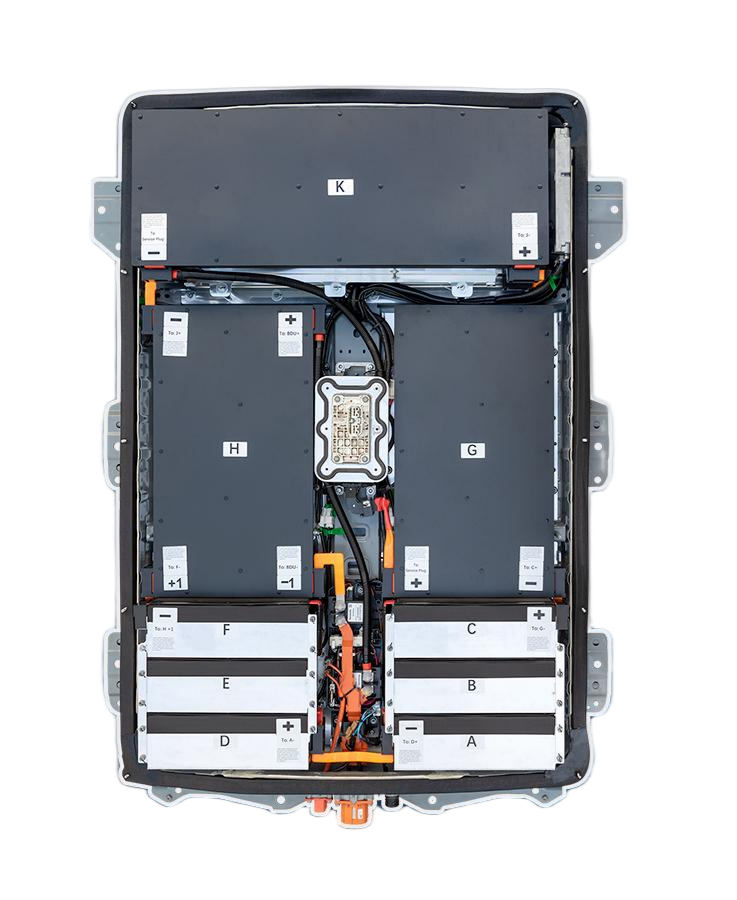
🔧 Example: Code 9307B0 might appear as “U1123: Lost Communication with HV System” on cheap tools—but it actually means “Cell voltage measurement fault in Module C.”
Without precise decoding, you risk replacing the wrong part.
Common BMW i3 High-Voltage Battery DTC Codes & Real Causes
Below are verified DTCs we see weekly—with actionable insights:
🔋 9307B0 / 9307B1 / 9307B2
- Meaning: Cell voltage monitoring fault (Modules A/B/C/D respectively)
- Likely cause: Failing voltage sense wire, corroded connector, or degraded cell in that module
- Temporary fix? Rarely. Usually requires module inspection or replacement
⚡ 930A15
- Meaning: Insulation resistance too low (<500 kΩ)
- Likely cause: Moisture ingress, coolant leak into pack, or damaged HV cabling
- Warning: This is a safety-critical fault—do not drive until resolved
🌡️ 930C22 / 930C23
- Meaning: Temperature sensor implausibility (Module X)
- Likely cause: Broken NTC thermistor, loose wiring, or thermal runaway precursor
- Check: Compare live temps in BimmerLink—if one module reads -40°C or 150°C, it’s faulty
🔌 930E08
- Meaning: HV contactor stuck open/closed
- Likely cause: Worn contactor coil, low 12V system voltage, or BMS relay failure
- Quick test: Listen for the “clunk” when powering on—if silent, suspect contactors
📉 930F10
- Meaning: Total pack capacity below threshold
- Likely cause: Severe cell degradation (SoH <65%)
- Reality check: If you’ve lost >35% range, this code confirms end-of-life
💡 Pro tip: Always clear codes and drive 10–15 km before re-scanning. Some faults (e.g., 930C22) are transient after cold starts.
When a DTC Means “Replace the Whole Pack”
Not all faults require a full replacement. But these almost always do:
- Multiple 9307Bx codes across modules → widespread cell imbalance
- Persistent 930F10 after recalibration → irreversible capacity loss
- 930A15 + visible moisture → pack contamination (non-serviceable)
In these cases, even OEM dealers recommend full pack replacement—often at $11,000–$14,000.
The CNS Advantage: Fault-Tolerant Design from Day One
Our replacement packs address the root causes behind common DTCs:
✅ Laser-welded voltage sense tabs—no loose wires causing 9307Bx
✅ Hermetically sealed modules—eliminates moisture (prevents 930A15)
✅ Redundant NTC sensors per module—avoids false 930C22 triggers
✅ New CATL cells with <1% variance—minimizes imbalance and capacity faults
Result? <0.5% DTC recurrence rate among CNS i3 customers in 2025.
As Mike’s Auto Service in Vancouver confirms:
“Since switching to CNS packs, we’ve had zero comebacks for recurring HV faults. The build quality just doesn’t generate those codes.”
Don’t Guess—Diagnose Accurately Before Spending Thousands
A single DTC can mean anything from “loose connector” to “total pack failure.” Knowing the difference saves time, money, and stress.
Got a BMW i3 High-Voltage Fault Code?
Send us the exact DTC (e.g., 9307B0), whether it’s active or historical, and any symptoms (won’t power on, reduced power, etc.). We’ll tell you:
- What’s most likely failing
- Whether it’s repairable or terminal
- And if a new CNS battery is your smartest next step
👉 Contact CNS BATTERY for Expert i3 HV Fault Diagnosis & Solutions
FAQ: BMW i3 High Voltage Battery Fault Codes
Q: Can I clear these codes myself?
A: Yes—with tools like BimmerLink Pro or Carly. But if the fault is real, it will return within minutes or miles.
Q: Does a “High-Voltage System” warning always mean the battery?
A: No. 30% of cases trace to the EME unit, 12V battery weakness, or HV cable harness damage.
Q: Will a used OEM pack avoid these codes?
A: Often not. Used packs frequently carry hidden imbalances that trigger 9307Bx or 930F10 within months.
Q: How much does professional diagnosis cost?
A: Dealers charge $150–$300. Independent EV shops: $80–$150. With CNS, we offer free remote analysis if you provide code + symptom details.
Q: Can software updates fix these faults?
A: Rarely. These are hardware-level faults. Firmware updates may suppress warnings—but not the underlying issue.