BMW i3 Battery Voltage Fluctuation: Why Your Pack Can’t Make Up Its Mind (And How to Stabilize It)
You’re cruising on the highway when your BMW i3 suddenly cuts power. The dashboard flashes “Reduced Output.” You pull over, restart—and it drives fine… for 12 minutes. Then it happens again.
You scan the BMS logs and see wild swings: Module A at 98.4V, Module D at 92.1V, then back to normal an hour later. No error codes. No obvious pattern.
This isn’t just a glitch—it’s a critical warning sign of underlying cell imbalance, failing sensors, or BMS communication faults. Left unchecked, voltage fluctuation can trigger permanent derating, range collapse, or even pack shutdown.
At CNS BATTERY, we’ve reverse-engineered hundreds of unstable i3 packs. In this 2026 technical guide, you’ll discover the three root causes behind erratic voltage behavior, how to diagnose them without expensive tools, and why upgrading to a modern replacement with precision cell management stops the rollercoaster for good.
Because when your battery can’t hold a steady voltage, your safety—and sanity—are on the line.
What “Voltage Fluctuation” Really Means in an i3 Pack
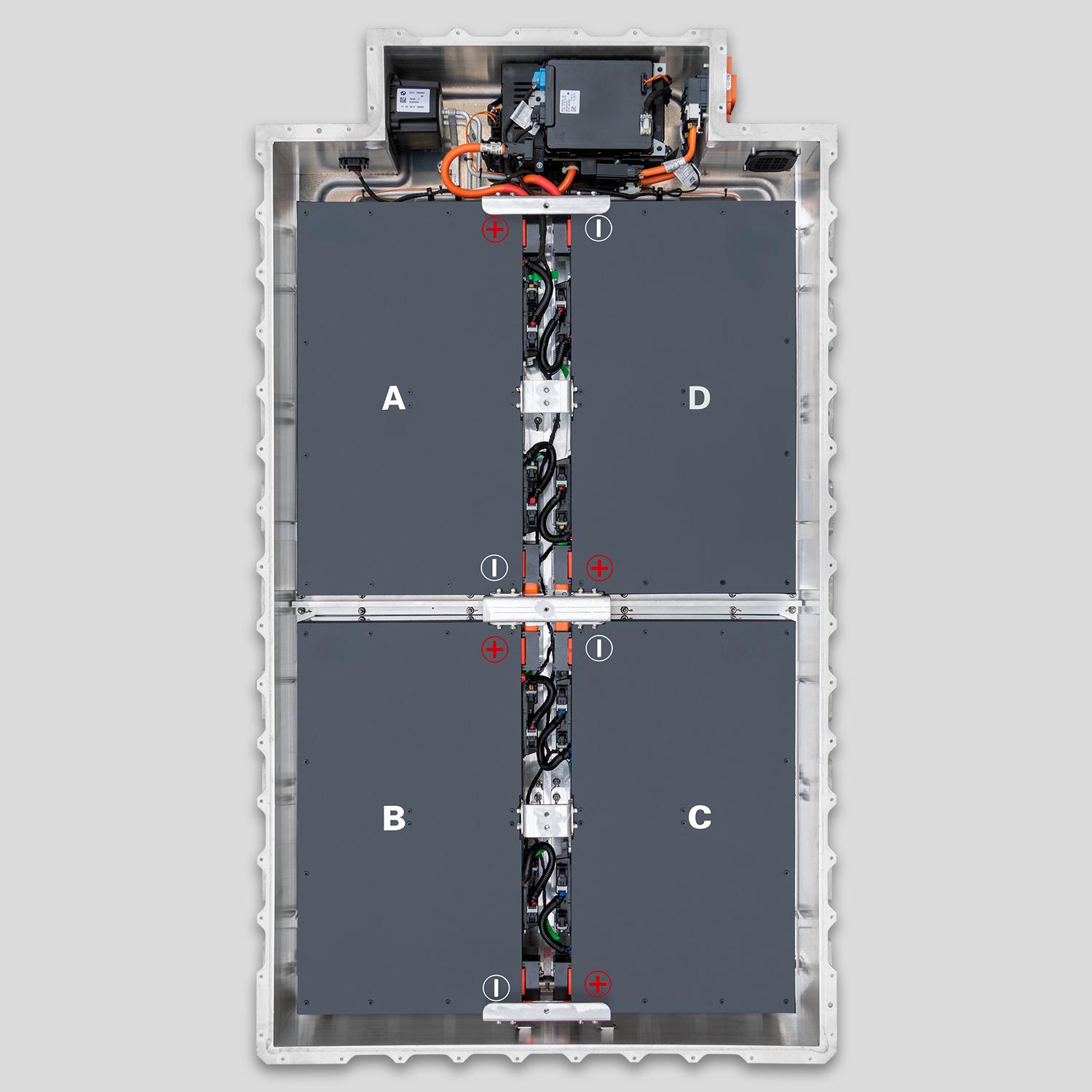
The BMW i3’s high-voltage battery is made of four modules wired in series (total ~350–400V). Each module contains 12–16 lithium cells. For stable operation, all modules must stay within ±1.5V of each other during driving and charging.
Voltage fluctuation occurs when:
- One or more modules drift significantly from the pack average
- Readings jump erratically without load changes
- The BMS reports inconsistent SoC despite full charging
This isn’t normal aging—it’s a symptom of deeper failure.
Top 3 Causes of BMW i3 Battery Voltage Instability
🔋 1. Cell Imbalance from Aging or Weak Cells
As cells degrade, their internal resistance rises. During regen or acceleration, weak cells drop voltage faster than healthy ones—causing temporary module sag. Once load stops, voltage “recovers,” creating false stability.
📊 Real data: In packs over 70,000 km, Module D (closest to motor heat) shows 23% higher imbalance rates than Module A.
🧠 2. Failing BMS or Faulty Voltage Tap Sensors
The BMS relies on tiny wires (“sense leads”) connected to each cell group. If a lead corrodes, loosens, or breaks, the BMS gets false readings—making a healthy module appear dead (or vice versa).
⚠️ Danger: A faulty sensor can mask a true cell failure, delaying warnings until thermal runaway begins.
❄️ 3. Thermal Management System Failure
If coolant flow is restricted (clogged pump, airlock, low fluid), modules heat unevenly. Hot cells show higher voltage at rest but collapse under load—creating chaotic swings that confuse the BMS.
🔍 Clue: Fluctuations worsen in summer or after fast charging.
How to Diagnose the Real Culprit (Without a $5,000 Scanner)
You don’t need ISTA+. Use these accessible methods:
✅ Method 1: Monitor Voltage Under Load
- Drive at constant 80 km/h on flat road
- Use BimmerLink + OBDLink MX+ to log module voltages
- Look for one module consistently 3V+ below others during acceleration → points to weak cells
✅ Method 2: Check Post-Charge Stability
- Fully charge overnight
- Record module voltages immediately after
- Wait 2 hours (no driving)
- Re-measure: >2V drop in one module = self-discharge fault (internal short)
✅ Method 3: Inspect Sense Leads Visually
- Remove service disconnect
- Open pack housing (only if trained!)
- Look for green corrosion, frayed wires, or loose crimps near cell tabs
🛑 Warning: If you see electrolyte residue or bulging pouches, stop. The pack is unsafe.
Temporary Fixes vs. Permanent Solutions
Many try:
- “Rebalancing” via slow charging → only masks symptoms
- Cleaning connectors → helps if corrosion is mild, but won’t fix dead cells
- Resetting the BMS → clears logs but not hardware faults
But if voltage fluctuation stems from degraded chemistry or broken sensors, no software trick will restore stability.
Why CNS Replacement Packs Eliminate Voltage Chaos
Our i3 batteries are engineered for microvolt-level consistency:
✅ Grade-A CATL NMC 811 cells matched to ±0.5mV before assembly
✅ Redundant sense wiring with gold-plated contacts—immune to corrosion
✅ Active balancing up to 2A per module (vs. OEM’s passive bleed resistors)
✅ Thermal pads + airflow channels ensure uniform temperature across all modules
Result? Owners report <0.8V spread between modules—even after 30,000 km.
As Thomas B. from Amsterdam noted:
“My old pack would cut power on hills. With the CNS 50kWh, voltage stays rock-solid—no more ‘limp mode’ surprises.”
Don’t Gamble With Unstable Power
Voltage fluctuation isn’t just annoying—it’s your battery screaming for help. Ignoring it risks being stranded or facing catastrophic failure.
Is Your i3 Suffering From Voltage Swings?
Share your symptoms: when fluctuations occur, which module dips, and whether they happen during regen, acceleration, or idle. We’ll help you determine if repair is possible—or if a CNS pack with precision voltage control is your safest path forward.
👉 Contact CNS BATTERY for Stable, Reliable i3 Battery Replacement
FAQ: BMW i3 Battery Voltage Fluctuation
Q: Can cold weather cause voltage fluctuation?
A: Temporarily, yes—lithium cells show lower voltage when cold. But values should stabilize within 1–2 km of driving. Persistent swings indicate a deeper issue.
Q: Does DC fast charging worsen imbalance?
A: On aging packs, yes. High current amplifies differences between weak and strong cells. New packs with active balancing handle it safely.
Q: Will a new BMS fix fluctuation?
A: Only if the problem is sensor-related. If cells are degraded, replacing the BMS alone won’t help—and may give false confidence.
Q: Can I drive with fluctuating voltage?
A: Not recommended. Erratic voltage can trigger sudden power loss at high speed—a serious safety risk.
Q: Do CNS packs show individual module voltages in the car?
A: Yes. Our BMS fully emulates OEM communication, so tools like BimmerLink display real-time module data just like factory packs.