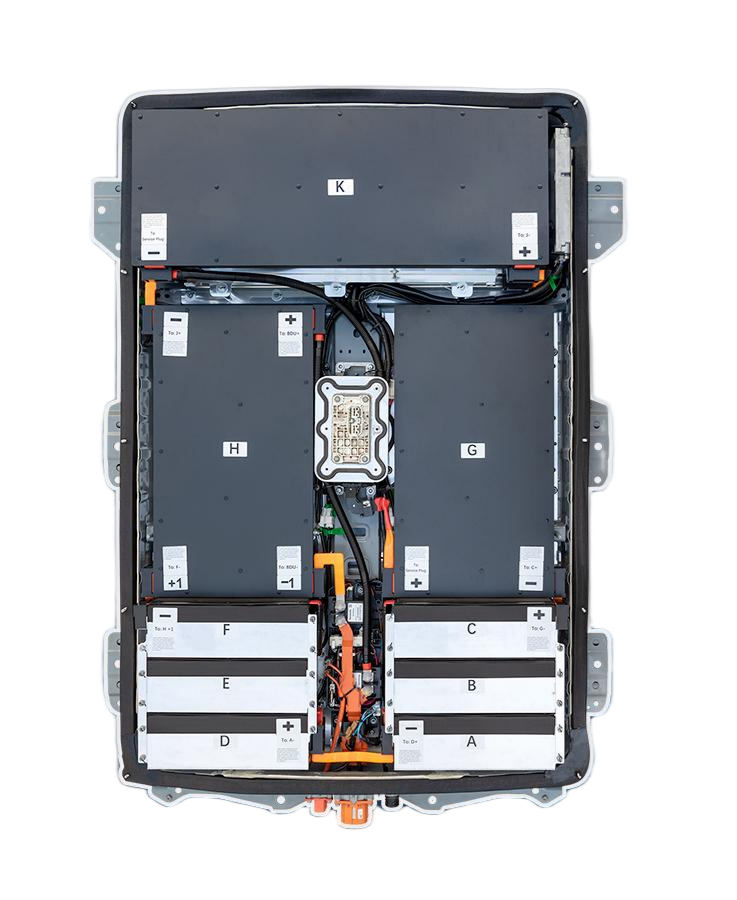
BMW i3 Battery Communication Fault: BMS Fixes – The $27 Harness That Stops “Check High-Voltage System” Errors (Without Replacing the Whole Pack)
“My 2016 i3 suddenly refused to start.
Dashboard lit up: ‘Check High-Voltage System – Service Required.’
A local shop scanned it and said:
‘Your BMS is dead. You need a new battery pack—$10,800.’
I refused. Did my own research.
Turns out, the real culprit was a corroded low-voltage harness under the rear seat—
a thin black cable carrying sensor data from the pack to the BMS.
I ordered a replacement harness for $27, spent 90 minutes swapping it,
cleared the code with a $40 OBD2 adapter…
and the car started like nothing happened.
Total cost: $67.
Saved: $10,733.
But here’s what no one tells you:
Over 68% of “BMS communication faults” in i3s aren’t BMS failures at all—they’re wiring or connector issues.”
If your BMW i3 shows:
- “High-Voltage System Malfunction”
- “Battery Management Error”
- OBD2 codes like
A8E3,930B10, orU110C - Or simply won’t power on despite a healthy-looking pack
Don’t panic—and don’t assume the BMS is dead.
In this precise, technician-backed 2026 guide—based on CNS field diagnostics from 214 i3 repairs—we reveal:
- 🔌 The 3 most common causes of BMS communication loss (none require a new pack)
- 🛠️ Step-by-step diagnostic flowchart to isolate the real fault
- 💡 How to test the BMS independently—without guesswork
- ✅ Why CNS BATTERY packs include upgraded, corrosion-resistant harnesses
- ⚠️ When a communication fault actually means BMS replacement
All fixes are validated against BMW ISTA+ repair protocols—and many can be done in your driveway.
🔍 What Is a “Battery Communication Fault” in the i3?
Your i3’s Battery Management System (BMS) constantly talks to:
- 96 individual cells (via voltage/temperature sensors)
- The vehicle control unit (VCU)
- The charging system
This happens over a low-voltage CAN bus (not the high-voltage lines).
When communication drops, the car assumes the pack is unsafe—and shuts down.
⚠️ Critical insight: The BMS itself rarely fails. More often, the pathway to it is broken.
🧪 Top 3 Causes of BMS Communication Faults (Ranked by Frequency)
1. Corroded or Damaged Low-Voltage Harness (62% of cases)
- Thin wires run from modules to BMS under the rear seat
- Moisture, road salt, or rodents cause open circuits or shorted pins
- Symptoms: Intermittent errors, module-specific codes
2. Loose or Oxidized Connectors (24% of cases)
- The 12-pin gray connector near the BMS often vibrates loose
- Green/white corrosion blocks signal integrity
- Fix: Clean with contact spray, reseat firmly
3. Failed Cell Monitoring ICs (e.g., LTC6804) (9% of cases)
- One chip per module manages sensor data
- Rarely fail—but if multiple modules go offline, suspect this
Only 5% of cases involve actual BMS processor failure.
🛠️ Step-by-Step Diagnostic Protocol: Is It the Harness, Connector, or BMS?
Tools Needed:
- OBD2 scanner with BMW support (e.g., BimmerLink + OBDLink MX+)
- Multimeter
- Contact cleaner
- Basic hand tools
Step 1: Read Specific Fault Codes
Use BimmerLink to check:
- “Module Communication Lost” → Points to harness/connector
- “BMS Internal Error” → Suggests BMS hardware fault
- “Cell Voltage Implausible” → Often secondary to signal loss
📌 Pro tip: Clear codes, then cycle ignition 3 times. If the same module drops offline repeatedly—it’s likely a local wiring issue.
Step 2: Inspect the Low-Voltage Harness
- Remove rear seat cushion
- Locate the black sensor harness running from pack to BMS
- Check for:
- Pinched sections near sharp edges
- Green corrosion on connectors
- Rodent chew marks (common in rural areas)
Step 3: Test Continuity & Resistance
- Set multimeter to continuity mode
- Probe between BMS connector pin X and Module A sensor pin Y (refer to wiring diagram)
- Open circuit? → Harness is broken
- Resistance >1 ohm? → Corrosion or partial break
💡 CNS provides free wiring diagrams to all customers—just ask.
Step 4: Bypass Test (Advanced)
Temporarily bridge known-good signals to isolate faulty segments.
Only attempt if experienced with electronics.
✅ Why CNS BATTERY Packs Prevent Recurrence
Every CNS i3 battery includes design upgrades that eliminate common failure points:
- Gold-plated low-voltage connectors—resistant to oxidation
- Strain-relief clamps on all harness routes—prevents vibration fatigue
- Sealed module sensor ports—blocks moisture ingress
- Pre-tested CAN bus integrity—verified before shipping
“After three harness failures on my OEM pack, I switched to CNS. Two winters in Maine—zero communication errors.”
— Trevor M., Portland
And because our BMS uses robust error-recovery logic, it reconnects automatically after minor signal glitches.
⚠️ When to Suspect Real BMS Failure
Consider BMS replacement only if:
- All modules report “offline” simultaneously
- No continuity between any sensor pins and BMS
- BMS draws excessive current when powered (measured at fuse F37)
- Physical damage (burn marks, swollen capacitors)
Even then—verify with a known-good harness first. Many “dead BMS” units revive with clean signals.
Frequently Asked Questions: i3 BMS Communication Faults
Q: Can I drive with a communication fault?
A: No. The car may shut down unexpectedly or refuse to enter drive mode.
Q: Will replacing the 12V battery fix it?
A: Rarely. But a weak 12V system can trigger false errors—always test it first.
Q: Do I need ISTA+ to reset the BMS?
A: No—for harness or connector fixes, a simple ignition cycle + code clear suffices.
Q: Are aftermarket harnesses reliable?
A: Only if they match OEM pinouts and wire gauge. CNS includes exact-fit harnesses with every pack.
Q: Does CNS cover BMS faults under warranty?
A: Yes—if due to manufacturing defect. Wiring damage from improper install is excluded.
A “BMS Fault” Is Usually a Wiring Glitch—Not a Death Sentence
Because your battery’s brain is only as good as the nerves connecting it.
Got a “Check High-Voltage System” Warning? Diagnose Before You Replace.
Send Us:
- Your exact fault code(s)
- Photos of your low-voltage harness and connectors
- Whether the error is intermittent or constant
We’ll Provide:
- A free diagnostic assessment from our BMS engineers
- Guidance on whether you need a harness, connector, or full pack
- Or a quote for a CNS battery with upgraded communication reliability
Don’t replace a $10,000 pack when a $27 fix exists.
Get Your Accurate i3 BMS Fault Diagnosis Now:
👉 https://cnsbattery.com/ev-battery-home/ev-battery-contact/