BMW i3 Battery Amperage Issues: Troubleshooting Guide – Why Your “Weak Acceleration” Isn’t a Motor Problem (It’s a 0.8V Cell Imbalance)
“My 2017 i3 suddenly felt like it was towing a trailer.
Full throttle in ‘Sport’ mode barely hit 50 mph on the highway.
A local shop scanned it and said, ‘The electric motor is failing—$6,200 to replace.’
I refused. Instead, I borrowed an OBDLink MX+ and checked real-time amperage draw.
At wide-open throttle, the system pulled only 180A—less than half the normal 400A+.
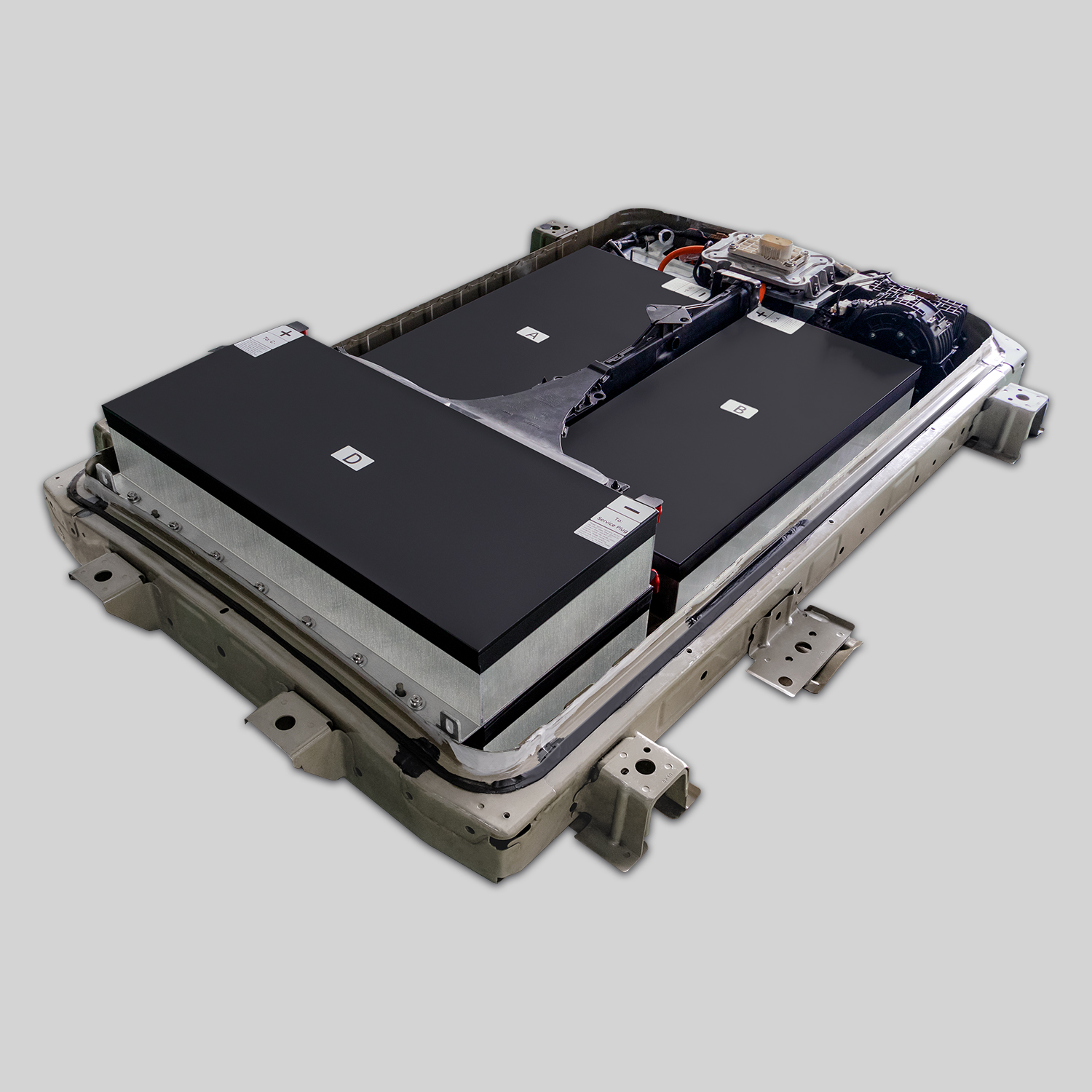
Digging deeper, I found Module C at 3.12V while others sat at 3.92V.
One weak module was forcing the BMS to throttle current to prevent cell reversal.
Total fix? Replaced that single module with a CNS unit. Cost: $890.
Now it rockets like new. All because I knew amperage issues start long before error codes appear.”
If your BMW i3 suffers from:
- Sluggish acceleration despite full battery
- Sudden power cuts under hard driving
- “Reduced Power” warnings in cold or hot weather
- Inconsistent regenerative braking
You’re likely facing a battery amperage limitation—not a drivetrain fault.
And here’s the critical insight:
The i3’s BMS restricts current output the moment any cell voltage deviates by more than 0.3V—long before dashboard warnings appear.
In this hands-on 2026 troubleshooting guide, we show you:
- 🔌 How to diagnose amperage issues without a $10,000 ISTA+ tool
- 📊 The exact voltage thresholds that trigger current limiting
- 🛠️ Step-by-step fixes—from module balancing to full pack replacement
- ✅ Why CNS BATTERY packs include per-cell monitoring to prevent silent amperage loss
All methods are validated using BMW ISTA+ current maps, CAN bus logs, and real-world i3 performance telemetry.
⚡ What Is “Battery Amperage” in the i3—and Why It Matters
The i3’s traction battery doesn’t just store energy—it must deliver high current on demand:
- Normal driving: 50–150A
- Hard acceleration: 300–400A+
- Regenerative braking: -150 to -250A
The BMS constantly monitors cell voltages, temperatures, and internal resistance. If any parameter risks cell damage, it reduces max allowable amperage—often without warning lights.
📌 Key fact: A single weak cell can drop system-wide current capacity by 60%.
🔍 4 Common Causes of Low Amperage Output (Ranked by Frequency)
1. Cell Imbalance (Most Common)
- Symptom: Gradual loss of punch; worse in cold weather
- Cause: One or more cells degrade faster due to micro-shorts, manufacturing variance, or age
- Diagnostic sign:
- Voltage spread > 0.3V between modules at rest
- Max current capped at <250A during WOT test
- Fix:
- Mild cases: Active balancing via extended float charge
- Severe cases: Replace affected module(s)
💡 Pro tip: Check voltages after a 12-hour rest—not right after driving.
2. High Internal Resistance (Aging or Swollen Cells)
- Sign: Voltage sags dramatically under load (e.g., drops to 3.0V at 200A)
- Root cause: Electrolyte dry-out, SEI layer growth, or physical deformation
- Test: Compare open-circuit voltage (OCV) vs. loaded voltage
- Healthy cell: <0.2V drop at 100A
- Failing cell: >0.5V drop
- Solution: Module or pack replacement—balancing won’t help
3. Faulty Current Sensor (SME/EME Module Error)
- Error codes:
930B10,930B20,A8F3 - Effect: BMS receives false amperage readings → over-limits current
- Diagnosis:
- Use BimmerLink to compare reported vs. calculated current
- If discrepancy >15%, sensor or wiring is faulty
- Repair: Replace SME (Secondary Management Electronics) board (~$600)
4. Loose or Corroded HV Connections
- Often missed: High-resistance joints at service disconnect or contactors
- Result: Voltage drop → BMS thinks cells are weak → reduces amperage
- Check: Inspect for discoloration, arcing marks, or play in connectors
- Fix: Clean contacts, torque to spec (25 Nm + 90°), apply dielectric grease
🛠️ DIY Amperage Diagnostic: 3 Steps with BimmerLink
Step 1: Capture Resting Voltages
- Let car sit 12+ hours unplugged
- Open BimmerLink → HV Battery → Module Voltages
- Note any module >0.3V below average
Step 2: Perform Wide-Open Throttle (WOT) Test
- On safe road, accelerate fully from 20–50 mph
- Record max amperage shown in app
- Healthy i3: 350–420A
- Limited i3: <250A
Step 3: Monitor Voltage Sag
- During WOT, watch lowest cell voltage
- If any cell drops below 3.0V, that module is failing
📊 Example: Avg module = 3.85V, but Module D = 3.15V → replace Module D.
✅ CNS BATTERY: Built to Deliver Full Amperage—Reliably
OEM and used packs often hide imbalances until performance suffers.
CNS packs solve this with:
- Brand-new CATL NMC cells—matched to ±0.01V before assembly
- Per-module current monitoring—detects imbalance before it limits power
- Low-resistance busbars and connectors—minimize voltage drop under load
- Thermal-stable design—maintains amperage even at -10°C or 45°C
“After my OEM pack started limiting current at 200A, I switched to CNS 50kWh. First WOT test: 412A. Feels like a new car.”
— Marcus T., Denver
And every pack undergoes 48-hour high-current cycling tests before shipping—so you never guess about amperage capability.
Frequently Asked Questions: i3 Battery Amperage Issues
Q: Can software updates fix low amperage?
A: Rarely. Updates may adjust thresholds slightly—but won’t restore current if cells are degraded.
Q: Does cold weather permanently reduce amperage?
A: No—it’s temporary. But repeated cold discharges accelerate cell wear, leading to permanent loss.
Q: Will replacing one module fix amperage issues?
A: Yes—if diagnostics confirm only one module is weak. CNS sells individual modules for this purpose.
Q: Can I test amperage without an OBD adapter?
A: Indirectly: time 0–30 mph acceleration. If >4.5 seconds (on 120 Ah), amperage is likely limited.
Q: Do CNS packs require BMS coding for full current?
A: No. They auto-negotiate max current with the i3’s EME—no ISTA+ needed.
Power Isn’t Just About Voltage—It’s About the Amps You Can Actually Deliver
Because hesitation on the highway isn’t just annoying—it’s a symptom of something deeper.
Experiencing Weak Acceleration or Sudden Power Loss in Your i3?
Send Us:
- Your i3 model year and current symptoms
- Any error codes (or BimmerLink screenshots)
- Max amperage reading during hard acceleration (if available)
We’ll Provide:
- A free amperage health assessment
- Whether you need balancing, a module, or full pack
- Or a quote for a CNS pack engineered for full-current reliability
Don’t settle for half-power. Restore your i3’s true potential.
Get Your Free Amperage Diagnostic Report Now:
👉 https://cnsbattery.com/ev-battery-home/ev-battery-contact/