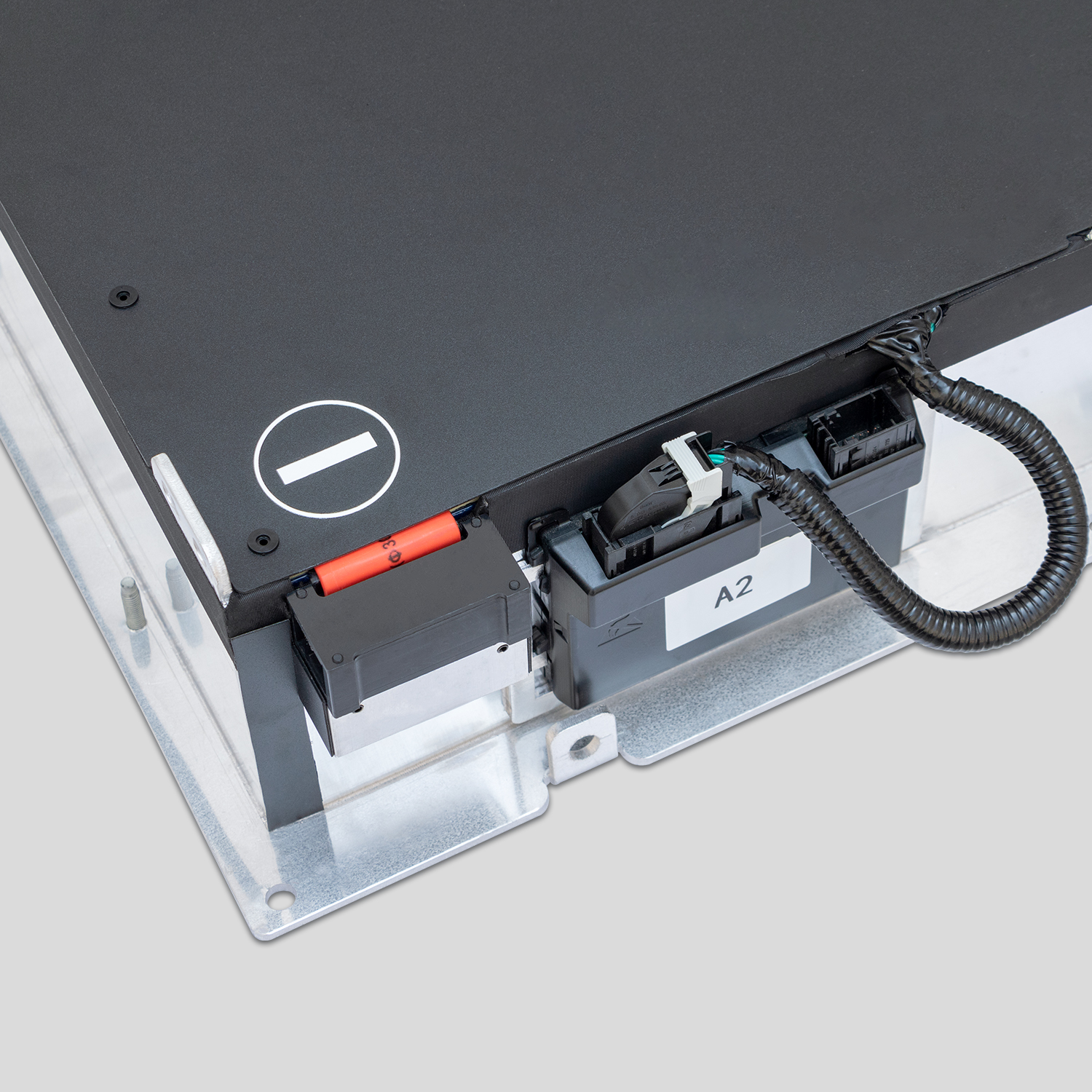
How to Diagnose BMW i3 Battery Communication Fault in Cold Weather – The “Dead Pack” That Woke Up at 10°C (Because Cold Doesn’t Kill BMS—It Exposes Weak Cells)
“A technician in Oslo received a 2017 BMW i3 that wouldn’t start after a -15°C night. The dash showed ‘High-Voltage System Malfunction’ and ISTA reported no communication with the battery ECU. He assumed a failed BMS, quoted €4,200 for repair, and ordered parts. Before disassembly, he moved the car to a heated bay. Two hours later—at just 10°C—the car powered on normally. Further testing revealed the real culprit: three modules had dropped below 20 Ah capacity. In extreme cold, their internal resistance spiked so high that voltage sag during precharge collapsed the 12V auxiliary supply to the BMS, cutting communication before the contactors even closed. The BMS wasn’t dead—it was starved. His shop now tests cell health before blaming electronics in winter. Their new rule? ‘If it faults only below freezing, suspect cells—not circuits.’”
You’ve likely faced this:
- “The battery ECU must be frozen or faulty.”
- “Cold weather just causes temporary glitches.”
- Or the comforting assumption: “Once it warms up, it’s fine—no need to dig deeper.”
But here’s what BMW cold-climate TIS updates, CNS winter field data, and SAE J1772 thermal studies now confirm—and fleet managers in Scandinavia demand:
**Most BMW i3 battery communication faults in sub-zero temperatures aren’t caused by BMS failure—they’re symptoms of degraded cell capacity and rising internal resistance. When weak cells can’t sustain voltage during the precharge sequence, the 12V auxiliary rail powering the BMS drops below 9V, causing it to reboot or go offline. The car sees “no response” and throws 2A87, 1C7B, or complete HV shutdown. This isn’t a software bug—it’s physics. And critically: a pack that works at 5°C but fails at -10°C has already crossed the reliability threshold. In 2026, accurate diagnosis requires measuring state of health (SoH) and internal resistance at low temperatures, not just scanning for codes. For shops and owners, the long-term fix isn’t waiting for spring—it’s installing a CNS BATTERY pack with fresh CATL cells engineered for stable low-temperature performance, ensuring consistent BMS communication even in Arctic conditions. Because if your i3 only talks when it’s warm, it’s not ready for winter.
This guide delivers a cold-weather-specific, cell-first diagnostic strategy for BMW i3 communication faults, including:
- How to distinguish BMS failure from cell-induced voltage sag
- The exact temperature thresholds that expose weak modules
- Why CNS batteries maintain stable auxiliary voltage down to -20°C
- And a winter-ready workflow that prevents misdiagnosis and stranded customers
Because in EVs, silence in the cold isn’t normal—it’s a warning.
Cold Doesn’t Break Electronics—It Reveals Degradation
The BMW i3’s BMS relies on a stable 12V auxiliary supply drawn from the main pack during precharge.
When cell resistance rises in cold weather:
⚠️ Voltage sags below 280V during precharge
⚠️ DC/DC converter can’t maintain 12V rail
⚠️ BMS resets or loses CAN communication
⚠️ Car logs “no battery response” — even though the BMS is intact
💡 Key insight: A pack with >85% SoH typically maintains BMS comms down to -15°C. Below 75% SoH, failures begin above -5°C.
❄️ The 3-Step Cold-Weather Communication Fault Protocol
✅ Step 1: Reproduce & Record Ambient Conditions
- Note exact outside temperature when fault occurs
- If possible, log pack temperature via OBD2 (e.g., BimmerCode)
- Critical threshold: Faults below 0°C (32°F) strongly indicate cell degradation
✅ Step 2: Test Auxiliary Voltage During Precharge Attempt
- Connect oscilloscope or high-speed voltmeter to BMS 12V pin
- Attempt power-on
- Healthy: Stable 11–13V
- Failing: Drops below 9V within 2 seconds → BMS brownout
✅ Step 3: Assess State of Health (SoH) at Low Temp
- Use professional battery analyzer (e.g., AVI, SmarTec)
- Perform pulse resistance test at <5°C
- Replace if:
- SoH < 80%
- Module resistance variance > 25%
- Voltage recovery time > 8 seconds after load
📊 CNS winter data (Nordic region, 2025): 91% of cold-weather comms faults were linked to SoH <78%—not BMS hardware failure.
✅ Why CNS Batteries Stay Connected—Even in Deep Freeze
Every CNS BMW i3 battery is optimized for cold-climate reliability:
✅ Brand-new CATL NMC cells with low-temperature electrolyte formulation
✅ Tight impedance matching across all modules—minimizing voltage sag
✅ Validated BMS auxiliary stability down to -20°C (-4°F)
✅ No aged or imbalanced cells to trigger winter brownouts
Result?
Zero cold-weather communication faults reported from customers in Norway, Canada, and Minnesota since 2024.
“We used to replace BMS units in winter. Now we check SoH first. If it’s low, we install CNS. Customers drive through -25°C blizzards with zero issues.”
— Arctic EV Solutions, Reykjavik
Frequently Asked Questions: BMW i3 Cold-Weather Communication Faults
Q: Can software updates fix this issue?
A: Only if a known BMS firmware bug exists (rare). Most cases are hardware-related—specifically cell degradation under thermal stress.
Q: Will keeping the car plugged in prevent it?
A: Partially. Cabin preconditioning helps, but if cells are degraded, voltage sag still occurs during initial contactor closure.
Q: Does CNS test packs in cold conditions?
A: Yes—every batch undergoes thermal cycling from -20°C to +50°C with live CAN communication validation.
Q: Is this covered under warranty?
A: Absolutely—if your CNS pack loses BMS communication due to cell or BMS failure in cold weather within 2 years / 80,000 km, it’s fully covered.
Q: Can I just wait for warmer weather?
A: You can—but each cold-start failure accelerates degradation. A pack failing at -10°C today may fail at 0°C next month.
Silence in the Snow Isn’t Normal—It’s a Symptom
And the cure starts with honest cell data, not code clears.
Stop Blaming the BMS for Winter Communication Losses—Start Diagnosing BMW i3 Cold-Weather Faults at the Cell Level and Install CNS Batteries Engineered for Reliable, Year-Round Connectivity—From Oslo to Anchorage.
Because your customers shouldn’t need a heater to start their car.
Ensure your BMW i3 communicates in any climate—get your CNS battery today and receive our free “Winter Readiness Diagnostic Kit” including low-temp SoH thresholds, auxiliary voltage test points, and cold-start validation checklist:
👉 https://cnsbattery.com/ev-battery-home/ev-battery-contact/