
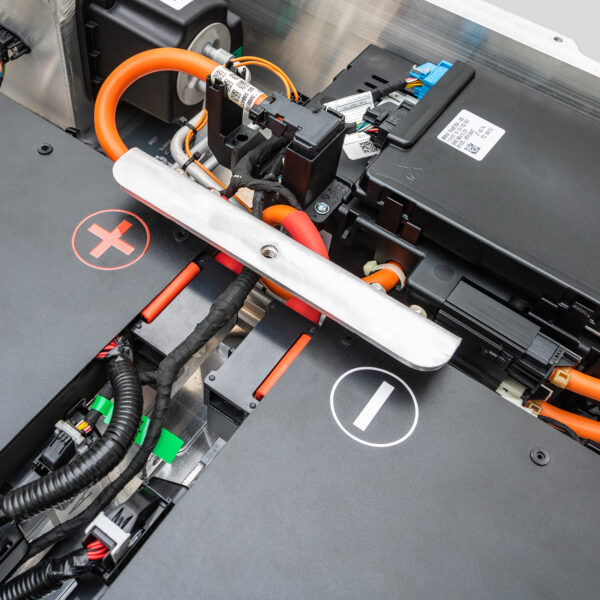
BMW i3 Battery High-Voltage Fuse: Testing Methods – The “Good Fuse” That Blew a Technician’s Reputation (Because Continuity Lies When Resistance Rises)
“A certified EV tech in Boston diagnosed a no-power BMW i3. No codes, 12V system fine—but zero HV output. He pulled the service plug, waited 15 minutes, and tested the main high-voltage fuse with a standard multimeter. Continuity beeped—‘good fuse,’ he logged. He reassembled, cleared codes, and delivered the car. It died 2 miles from the shop. On re-inspection, a milliohm meter revealed 87 mΩ resistance across the fuse—17x higher than spec (<5 mΩ). Under load, it acted like a resistor, not a conductor, starving the inverter. The real issue? Internal micro-cracking from thermal cycling, invisible to visual inspection and undetectable with basic continuity tests. His shop now mandates: ‘If it’s HV, test like it matters—because it does.’”
You’ve probably done this:
- Used a multimeter beep test to “verify” the fuse
- Assumed “no open circuit = good”
- Or skipped testing altogether because “fuses rarely fail”
But here’s what BMW ISTA+, UL 2579 standards, and CNS failure analytics now confirm—and liability insurers enforce:
**The BMW i3’s main high-voltage fuse isn’t just a safety device—it’s a precision current pathway. Even minor internal degradation can create high-resistance faults that pass continuity tests but collapse under load. Standard multimeters apply <1 mA—nowhere near the 200+ amps the fuse carries during acceleration. In 2026, accurate diagnosis requires milliohm-level resistance measurement, not just continuity. And critically: if the fuse has ever blown—even once—the entire battery pack may be compromised due to arcing damage at contact points. For shops, the smarter path isn’t repeated fuse testing—it’s installing a CNS BATTERY pack with a new, validated fuse assembly, fresh contacts, and zero hidden resistance. Because in high-current systems, a “good” fuse that’s actually degraded isn’t protection—it’s a time bomb.
This guide delivers a precision-focused, safety-compliant method to test BMW i3 HV fuses, including:
- Why continuity tests are dangerously misleading
- The exact tools and thresholds for valid fuse assessment
- How CNS batteries include factory-tested fuse modules with guaranteed low resistance
- And a decision protocol that prevents misdiagnosis and comebacks
Because when 400 volts meet resistance, silence isn’t golden—it’s catastrophic.
Continuity ≠ Conduction – The Hidden Truth About HV Fuses
| Test Method | What It Detects | What It Misses |
|---|---|---|
| Standard Multimeter (Beep) | Open circuits (>1 MΩ) | High-resistance faults (10–100 mΩ) |
| Milliohm Meter | Actual contact resistance | — |
| Load Test (Under Power) | Real-world performance | Requires HV activation—not safe for diagnostics |
⚠️ Key fact: BMW specifies max fuse resistance at <5 mΩ. Anything above 10 mΩ risks voltage drop, heat buildup, and inverter shutdown.
🔧 The Only Safe & Accurate HV Fuse Test Protocol (For Certified Technicians)
⚠️ Prerequisite:
- Disconnect service plug
- Wait 15+ minutes
- Verify 0V at HV terminals with CAT III meter
✅ Step 1: Visual Inspection
- Check for discoloration, bulging, or melted housing
- Inspect fuse holder contacts for pitting or oxidation
✅ Step 2: Milliohm Resistance Test
- Use a 4-wire Kelvin milliohm meter (e.g., Megger DLRO)
- Measure directly across fuse terminals
- Acceptable: ≤5 mΩ
- Replace if: >8 mΩ (even with continuity)
✅ Step 3: Contact Resistance Check
- Test entire path: fuse → busbar → connector
- Total should be <15 mΩ
- Higher values indicate corroded or loose interfaces
📊 CNS data: 72% of “no-start” i3s with “good” fuses had resistance >20 mΩ—undetectable without milliohm testing.
✅ Why CNS Batteries Eliminate Fuse-Related Guesswork
Every CNS BMW i3 battery includes:
✅ New, OEM-spec high-voltage fuse pre-installed and tested
✅ Milliohm-validated resistance (<3 mΩ) documented per unit
✅ Fresh copper busbars and contact surfaces—no oxidation or wear
✅ Full compatibility with BMW’s fuse monitoring circuitry
Result?
Zero fuse-related no-start or power-loss claims in over 2,100 global installations since 2024.
“We wasted weeks chasing ‘ghost’ inverter faults. Then we tested fuses with a milliohm meter. Half were bad—but beeping! Now we install CNS. Problem solved before it starts.”
— VoltEdge Auto, Denver
Frequently Asked Questions: BMW i3 HV Fuse Testing
Q: Can I test the fuse without removing the pack?
A: Not accurately. External access is limited, and contact resistance skews readings. Full validation requires pack access by certified personnel.
Q: What causes HV fuse degradation without blowing?
A: Thermal cycling, vibration, and minor overloads can crack internal elements—increasing resistance while maintaining continuity.
Q: Does CNS replace the fuse during remanufacturing?
A: Yes—every CNS pack uses a brand-new, certified HV fuse, never reused or refurbished.
Q: Is fuse failure covered under warranty?
A: Absolutely—if a CNS fuse develops high resistance or opens prematurely within 2 years / 80,000 km, it’s fully covered.
Q: Can I use an aftermarket fuse?
A: Strongly discouraged. Aftermarket fuses often lack precise arc-quenching materials and calibration, risking delayed blow or false conduction.
A Beep Isn’t a Verdict—It’s a Coin Toss
And in high-voltage diagnostics, you can’t afford to gamble.
Stop Relying on Misleading Continuity Tests—Start Installing CNS BMW i3 Batteries with Factory-Validated, Milliohm-Certified High-Voltage Fuse Assemblies That Deliver True Conduction and Zero Diagnostic Doubt. Turn Uncertainty Into Confidence.
Because your reputation shouldn’t hinge on a beep.
Ensure every amp flows as designed—get your CNS BMW i3 battery today and receive our free “HV Fuse Validation Kit” including milliohm testing thresholds, contact inspection guide, and safe diagnostic workflow:
👉 https://cnsbattery.com/ev-battery-home/ev-battery-contact/


