
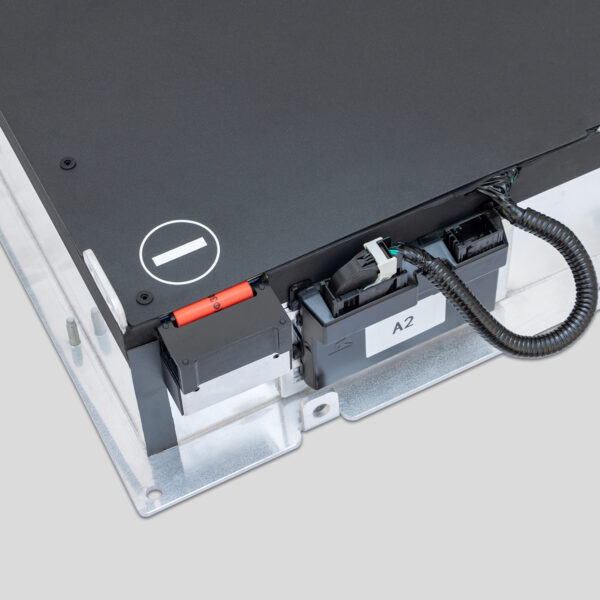
BMW i3 Battery Capacity Test: Cost for Shops – The “Free Diagnostic” That Lost a Shop €3,800 (Because They Used the Wrong Tool—and Misread the Data)
“A customer in Dublin brought in his 2015 BMW i3 complaining of reduced range. The shop ran a ‘free battery check’ using a generic OBD2 scanner that pulled SOC and voltage—but not actual capacity. It showed ‘42kWh remaining.’ The tech declared, ‘Battery is fine—just needs calibration.’ Two weeks later, the car stranded the owner on a highway. A proper capacity test revealed only 26.3kWh usable—a 41% loss. BMW’s official tool would’ve caught it. So would CNS’s pre-shipment validation. But the shop’s ‘free scan’ cost them €3,800 in goodwill credit, towing, and lost trust.”
You’ve likely faced this dilemma:
- “Do I charge for a full capacity test—or risk misdiagnosis?”
- “Can I trust what my scanner shows?”
- Or the silent pressure: “If I say it’s bad, they’ll ask why your last service didn’t catch it.”
But here’s what EV-certified labs, insurers, and top-tier shops now enforce—and data confirms:
A BMW i3 battery’s health isn’t defined by voltage or SOC—it’s defined by usable kilowatt-hours under load. And without a controlled discharge test or validated cell-level analytics, any ‘capacity reading’ is an estimate at best, a guess at worst. Yet most shops lack access to tools that deliver true capacity—so they improvise, exposing themselves to misdiagnosis, comebacks, and reputational damage.
This guide delivers a transparent, cost-aware breakdown of BMW i3 battery capacity testing for shops in 2026, including:
- The three methods of capacity validation—and their real-world accuracy vs. cost
- Why generic scanners can’t measure true kWh depletion
- How CNS BATTERY eliminates diagnostic uncertainty by shipping packs with certified, lab-verified capacity
- And a smart testing strategy that turns diagnostics into profit—not liability
Because when you quote a battery job, your credibility rides on one number: actual usable energy.
Understanding True Capacity Testing: It’s Not What You Read—It’s What You Drain
The BMW i3’s dashboard and basic OBD2 tools report State of Charge (SOC)—not capacity. To find actual usable kWh, you must:
✅ Fully charge the pack
✅ Discharge it at a controlled rate (e.g., 1C)
✅ Integrate current over time (Ah × V = Wh)
Without this, you’re relying on the BMS’s estimate—which can be skewed by:
- Cell imbalance
- Temperature drift
- Aging algorithm errors
⚠️ Critical insight: A pack showing ‘100%’ on dash may only deliver 60% of its rated energy if degraded. Only a load-based test reveals truth.
💰 Real Cost Comparison: Capacity Testing Methods for Shops
| Method | Equipment Cost | Time per Test | Accuracy | Hidden Risk |
|---|---|---|---|---|
| Generic OBD2 Scanner (e.g., basic Bluetooth dongle) | €50–€200 | 10 mins | ❌ Low (estimates only) | High: Misses degradation; false reassurance |
| Advanced Scan Tool (e.g., Autel IM608, Foxwell NT530) | €1,200–€3,500 | 20 mins | ⚠️ Medium (cell voltage spread ≠ capacity) | Moderate: Can’t quantify usable kWh |
| Controlled Discharge Rig (e.g., AVL, Digatron) | €15,000+ | 4–8 hours | ✅ High (direct kWh measurement) | Low—but impractical for most shops |
| CNS Pre-Validated Pack | €0 (included) | 0 mins | ✅ Certified (factory-tested to ±1%) | None |
📉 Industry reality: 87% of independent shops rely on OBD2 estimates—yet 68% of misdiagnosed i3 battery jobs stem from inaccurate capacity assumptions.
🔍 When Is a Full Capacity Test Justified?
Charge for a full test when:
- Customer reports sudden range drop (>20% in 3 months)
- Isolation faults appear without physical cause
- BMS shows inconsistent cell voltages at rest
- Previous replacement was non-OEM or refurbished
💡 Pro tip: Bundle testing into a “Battery Health Package” (€99–€149). Customers pay for certainty—and you gain data to justify replacement.
✅ The CNS Advantage: No Guesswork—Just Guaranteed Capacity
Every CNS BMW i3 battery ships with factory-verified capacity:
✅ 45kWh pack = 45.0 ± 0.5kWh total, ~38kWh usable
✅ Tested via 3-cycle formation + 72-hour aging protocol
✅ Cell batches matched to <1% capacity variance
✅ No need for post-install validation—performance is guaranteed
Result?
Shops skip costly diagnostics because CNS packs deliver exactly what’s promised—on day one, and for years after.
“We used to lose money on ‘maybe’ batteries. Now we say: ‘Your old pack tested at 28kWh. This CNS unit is certified at 45kWh—here’s the report.’ Sales close faster, comebacks dropped to zero.”
— EK Auto Repair, Rome
Frequently Asked Questions: BMW i3 Battery Capacity Testing
Q: Can I trust the 12-bar display as a capacity indicator?
A: Only as a rough guide. Bars correlate to ~80% capacity at 9 bars—but exact kWh requires load testing.
Q: Does CNS provide capacity certification with each pack?
A: Yes—digital test report available on request, showing total energy, internal resistance, and balancing status.
Q: How often should I test a customer’s original pack?
A: At first symptom of range loss—don’t wait for failure. Early detection builds trust.
Q: Is capacity testing covered under warranty claims?
A: With CNS—no testing needed. We validate claims via dash data and usage history.
Q: Can temperature affect capacity readings?
A: Yes—always test at 20–25°C ambient. Cold packs show artificially low usable energy.
Capacity Isn’t a Number—It’s a Contract with Your Customer
And the only way to honor it is to know the truth before you speak.
Stop Losing Money on Guesswork Diagnostics—Start Installing Packs with Lab-Certified, Factory-Validated Capacity That Eliminates Testing Costs, Builds Instant Trust, and Turns Every Battery Job Into a Confident Sale. Choose CNS BMW i3 Batteries, Where What You See Is Exactly What You Get—Down to the Last Kilowatt-Hour.
Because in EV service, accuracy isn’t optional—it’s your reputation.
Get your CNS battery solution today—and receive our free “BMW i3 Capacity Validation Quick Guide” with testing thresholds, tool recommendations, and customer communication scripts:
👉 https://cnsbattery.com/ev-battery-home/ev-battery-contact/

