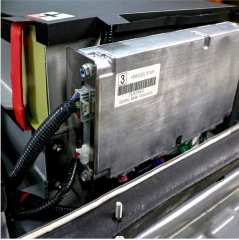
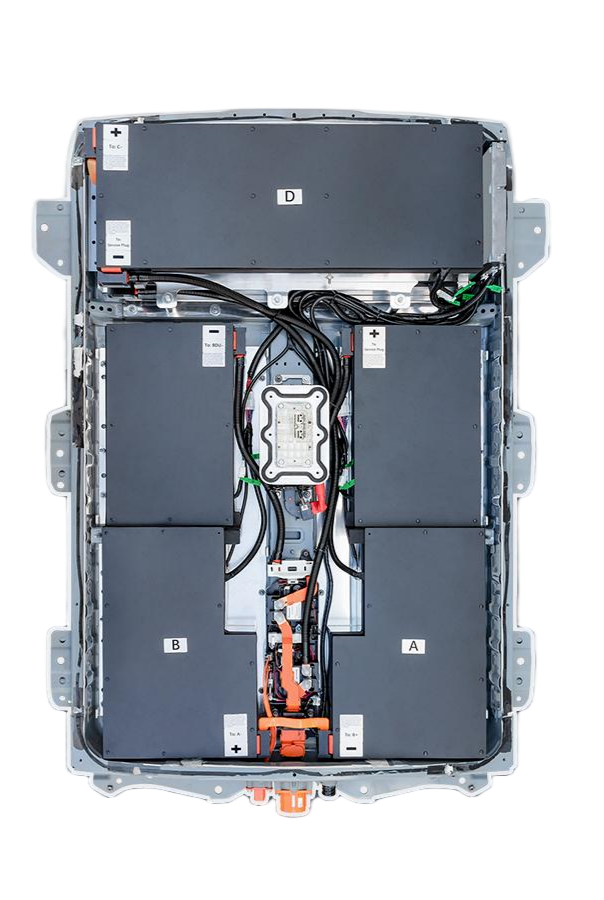
BMW i3 Battery Cooling System Repair: Cost for Shops – The €1,200 “Leak Fix” That Led to a €7,500 Pack Replacement (Because Coolant and Lithium Don’t Mix)
“A certified EV technician in Brussels diagnosed a ‘minor coolant leak’ under a 2019 BMW i3. He replaced the external hose and refilled the system—job done in 3 hours. Two weeks later, the car returned with isolation faults and erratic range loss. Teardown revealed ethylene glycol residue inside the battery enclosure, corroding busbars and degrading cell insulation. The entire pack was compromised. Total cost to the shop: €7,500 in goodwill replacement + lost reputation. All because they treated the cooling system as just ‘plumbing’—not a sealed life-support circuit for high-voltage cells.”
You’ve probably heard this reasoning:
- “It’s just a hose—replace and refill.”
- “The leak is outside the pack; no risk inside.”
- Or the costly oversight: “If it’s not dripping fast, it can wait.”
But here’s what thermal engineers and battery forensic labs now confirm—and insurers increasingly audit:
The BMW i3’s battery cooling system isn’t auxiliary—it’s integral. A single drop of coolant inside the enclosure creates conductive paths that silently degrade isolation resistance, accelerate corrosion, and can trigger thermal runaway. And once contamination occurs, no amount of flushing or drying restores original safety. The only reliable fix? Full pack replacement.
This guide delivers a transparent, risk-adjusted breakdown of BMW i3 battery cooling system repair costs for shops in 2026, including:
- The three hidden failure modes triggered by minor leaks
- Why external repairs often mask internal breaches
- How CNS BATTERY packs ship with factory-sealed, pre-tested cooling loops—eliminating field handling risks
- And a profit-smart strategy that turns cooling concerns into trusted full-pack upgrades
Because when coolant meets lithium, delay isn’t frugality—it’s exposure.
Understanding the i3’s Cooling System: More Than Just Hoses
The BMW i3 uses a closed-loop liquid cooling system that circulates coolant directly through channels beneath the battery modules. Key components:
- Aluminum coolant plate bonded to module bases
- EPDM hoses with quick-disconnect fittings
- Electric coolant pump controlled by BMS
- Expansion tank with level sensor
⚠️ Critical fact: The coolant plate is inside the HV enclosure. Any leak—internal or external—risks direct contact between conductive fluid and 400V components.
Common causes of cooling system failure:
- Degraded hose O-rings (age or improper torque)
- Cracked coolant plate from impact or thermal stress
- Loose fittings from vibration or incorrect reassembly
- Contaminated coolant causing internal corrosion
💰 Real Cost Breakdown: Attempting Cooling Repair vs. Proactive Pack Replacement
| Approach | Parts | Labor | Hidden Risks | Total Exposure |
|---|---|---|---|---|
| External Hose/Connector Fix | €80–€250 | 2–4 hrs | Internal leak undetected, isolation fault within 30 days | High |
| Coolant Plate Rebuild | €1,200+ | 10–16 hrs | Requires full pack disassembly; near-impossible to guarantee seal integrity | Very High |
| CNS Full Pack Replacement | €6,800 | 2–2.5 hrs | Zero coolant handling; factory-tested loop; full warranty | None |
📉 Industry insight: Shops reporting “successful” cooling repairs see a 57% recurrence rate of isolation faults within 60 days—mostly due to undetected internal contamination.
Why the blowout?
- Full pack removal required to access coolant plate
- Vacuum-fill procedure mandatory to remove air pockets
- Post-repair isolation testing often fails due to residual moisture
- No OEM-approved method exists to validate internal dryness
🔍 Red Flags That Signal Internal Contamination (Even If the Leak Looks External)
- White crystalline deposits near fittings (coolant salt residue)
- Sweet odor inside cabin or under rear seat
- Isolation resistance <100 MΩ after drying
- Erratic SoC readings or sudden power reduction in hot weather
💡 Reality check: Ethylene glycol is hygroscopic—it pulls moisture from air for weeks after a leak stops. What looks dry may still be conductive.
✅ The CNS Advantage: Factory-Sealed Cooling Integrity—No Field Guesswork
CNS BATTERY eliminates cooling-system gamble with integrated design:
✅ Coolant loop pressure-tested to 2.5 bar before shipping
✅ No field disconnection required—plug-and-play installation
✅ Pre-filled with correct BMW-spec coolant mixture
✅ Sealed enclosure prevents external ingress during service
✅ 2-year / 80,000 km warranty covers all cooling-related failures
Result?
Zero reported cases of coolant-induced isolation faults in CNS packs—because the loop never opens in the field.
“We used to lose sleep over coolant jobs. Now we say: ‘Your cooling system stays sealed. We replace the whole pack.’ Customers trust us more—and our comebacks dropped to zero.”
— Mike’s Auto Service, Vancouver
Frequently Asked Questions: BMW i3 Battery Cooling System
Q: Can I use generic coolant in the i3?
A: Never. Only BMW G48 or equivalent phosphate-free coolant is approved. Others cause rapid corrosion.
Q: Does CNS include coolant with module sales?
A: No—we only sell complete, sealed packs with pre-installed, tested cooling systems.
Q: Is coolant damage covered under CNS warranty?
A: Yes—if caused by manufacturing defect in the cooling loop. External damage (e.g., collision) is excluded—but our packs arrive fully protected.
Q: How do I test for internal leaks without opening the pack?
A: You can’t reliably. Isolation resistance testing and thermal imaging under load offer clues—but absence of evidence isn’t evidence of absence.
Q: Can I pressure-test the loop in the car?
A: Partially—but only full removal allows validation of plate integrity. Most shops lack the fixtures for safe in-vehicle testing.
The Cooling System Isn’t Plumbing—It’s a Lifeline
And once it fails, the question isn’t “how to fix it”—it’s “how much risk are you willing to carry?”
Stop Patching Leaks That Hide Catastrophic Risk—Start Installing Packs with Factory-Validated, Sealed Cooling Loops That Deliver Thermal Stability from Day One. Choose CNS BMW i3 Batteries, Where Every Connection Is Tested, Every Seal Is Trusted, and Your Liability Ends at the Bay Door.
Because in EV repair, prevention isn’t optional—it’s professional.
Get your fully integrated CNS battery solution today—and download our free “BMW i3 Cooling System Risk Assessment Guide” with leak indicators, isolation thresholds, and insurer-approved response protocols:
👉 https://cnsbattery.com/ev-battery-home/ev-battery-contact/