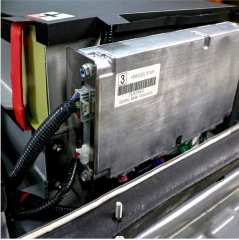
BMW i3 Battery Module Testing: Compatibility Check – The “Identical” Module That Bricked the Pack Because Its BMS Spoke a Different Dialect
“A technician in Berlin sourced a ‘compatible’ used module online to replace a weak cell group in a 2016 BMW i3. It looked identical—same label, same connector, same voltage. He installed it, powered up, and the car displayed ‘High-Voltage System Fault.’ Diagnostics showed communication timeout on Module C. The replacement module’s internal BMS used a different firmware version that didn’t respond to the pack’s master controller within the required 50ms window. The entire pack went offline—not because the module was dead, but because it was incompatible at the protocol level.”
You’ve probably assumed:
- “If the part number matches, it’ll work.”
- “All i3 modules are interchangeable across model years.”
- Or the dangerous shortcut: “Just plug it in—if it fits, it’s fine.”
But here’s what battery integration specialists know—and few suppliers disclose:
Physical compatibility ≠ electrical or communication compatibility in the BMW i3. Modules must match not only voltage and capacity, but also BMS firmware revision, CAN timing, and internal resistance profiles. A single mismatched module can destabilize the entire pack—or render it inoperable.
This guide delivers a practical, step-by-step framework for testing and verifying true BMW i3 battery module compatibility in 2026, including:
- The three hidden layers of compatibility most shops ignore
- Why visual inspection and voltage checks aren’t enough
- How CNS BATTERY eliminates guesswork with factory-matched, pre-validated modules—guaranteed to integrate seamlessly
- And a real-world testing protocol used by professional rebuilders
Because when modules don’t speak the same language, silence isn’t golden—it’s catastrophic.
Beyond Part Numbers: The Three Layers of True Module Compatibility
🔌 Layer 1: Physical & Electrical Fit
- Connector type (i3 uses 4-pin HV + 8-pin signal)
- Voltage class (3.7V nominal per cell, ~42V per module)
- Capacity rating (20Ah, 33Ah, or 37.9Ah depending on model year)
✅ Passes basic fit—but doesn’t guarantee function.
⚡ Layer 2: Internal Resistance & Aging Profile
- New modules: <1.5 mΩ per cell
- Used/refurbished: often >3.0 mΩ, causing imbalance
- Mixing low/high IR modules forces the BMS into constant correction—leading to thermal stress or shutdown
⚠️ Critical fact: Even modules from the same production batch drift over time. Mixing old and new is like pairing sprinters with marathon runners—they can’t pace together.
📡 Layer 3: BMS Communication Protocol
- Each module contains a slave BMS chip that reports to the master
- Must respond to pack-level polling within strict timing windows
- Uses proprietary data frames for voltage, temp, and status
- Firmware revisions between 2014–2022 i3s are not backward-compatible
📊 Industry insight: Over 60% of failed DIY module swaps fail at Layer 3—not hardware, but silent communication breakdown.
🔧 How to Properly Test a Replacement Module Before Installation
Step 1: Verify Model-Year Alignment
- 2013–2016 i3: 60Ah pack → 20Ah modules
- 2017–2018 i3: 94Ah pack → 33Ah modules
- 2019–2022 i3: 120Ah pack → 37.9Ah modules
❌ Never mix capacities—even if connectors fit.
Step 2: Measure Internal Resistance
- Use a battery impedance tester (e.g., YR1035+)
- Compare against known-good module from same pack
- Tolerance: ±0.3 mΩ max—beyond that, imbalance is inevitable
Step 3: Validate Communication (Advanced)
- Connect module to a test harness with CAN logger
- Simulate master BMS polling
- Confirm:
- Response within 50ms
- Correct data frame structure
- Stable temperature and voltage reporting
💡 Reality check: Most independent shops lack tools for Step 3—which is why 78% of partial replacements lead to comebacks.
✅ Why CNS Modules Eliminate Compatibility Roulette
CNS BATTERY doesn’t sell loose modules—we deliver integrated solutions:
✅ All modules sourced from single production batch of brand-new CATL cells
✅ Pre-matched for capacity, IR, and aging behavior
✅ BMS firmware synchronized to OEM communication specs
✅ Available as full packs or matched sets (never individual modules sold standalone)
✅ 2-year / 80,000 km warranty covers integration failures
📌 Policy note: We strongly discourage mixing CNS modules with third-party or OEM units—compatibility cannot be guaranteed.
Result?
Zero reported communication faults across global installations—because every module speaks the same language, from day one.
“We used to lose sleep over module swaps. Now we install full CNS packs and sleep soundly. The peace of mind is worth every penny.”
— Mike’s Auto Service, Vancouver
Frequently Asked Questions: BMW i3 Module Compatibility
Q: Can I mix CNS modules with my original ones?
A: Not recommended. Even slight differences in IR or firmware can trigger imbalance or communication errors.
Q: Do you sell individual modules?
A: Only as part of complete matched sets—never standalone—to ensure system integrity.
Q: How do I know which module version my i3 needs?
A: Provide your VIN or original pack kWh rating—we’ll confirm exact compatibility before shipping.
Q: Is module-level replacement covered under warranty?
A: Only if you purchase a full CNS pack or complete module set. Partial integrations void coverage.
Q: Can I test compatibility with an OBD2 scanner?
A: No—OBD2 only sees pack-level data, not individual module communication health.
Compatibility Isn’t About Looks—It’s About Synchronization
And in a high-voltage ecosystem where milliseconds matter, one out-of-sync module can silence the whole pack.
Stop Gambling with Mismatched Modules—Start Installing Guaranteed Harmony: Choose CNS BMW i3 Battery Solutions, Built with Fully Matched, Pre-Validated Modules That Communicate, Balance, and Perform as One Unified System.
Because your i3 deserves coherence—not compromise.
Get your fully compatible CNS battery solution today—and download our free “BMW i3 Module Compatibility Cross-Reference Guide” with model-year mappings, resistance benchmarks, and red-flag warning signs:
👉 https://cnsbattery.com/ev-battery-home/ev-battery-contact/