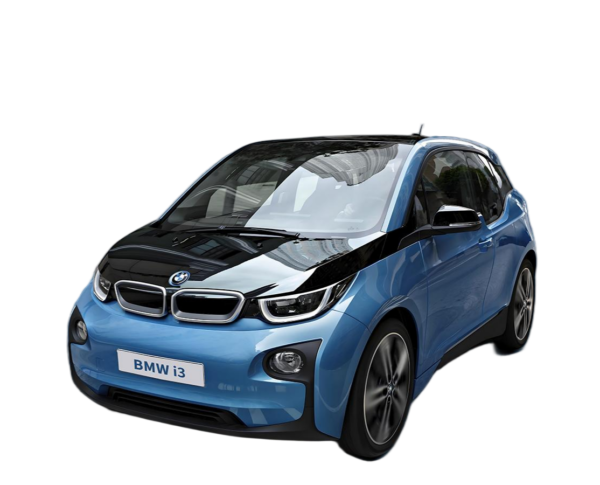
How to Diagnose BMW i3 Battery BMS Software Issues – The “Faulty BMS” That Was Actually a Perfectly Healthy Pack Speaking the Wrong Language
“A 2019 BMW i3 in Toronto refused to charge after a battery replacement. The shop blamed the ‘faulty BMS’ and ordered a €2,400 module from Germany. While waiting, they tried a CNS battery on another vehicle—and noticed something odd: the same error appeared briefly, then cleared itself. They dug deeper and discovered the issue wasn’t hardware—it was firmware incompatibility. The original replacement pack used a BMS that didn’t mimic OEM CAN messaging precisely. The car’s ECU rejected its handshake. No software update could fix it—only a pack that spoke BMW’s native protocol fluently.”
You’ve likely faced this:
- “The BMS is corrupted—needs reprogramming.”
- “Clear the codes; it’ll sync after a drive cycle.”
- Or the costly assumption: “If the pack is new, the BMS must be at fault.”
But here’s what embedded systems engineers emphasize:
True BMS software issues in the BMW i3 are rare. Most “BMS faults” are actually communication mismatches between an aftermarket pack’s firmware and the vehicle’s ECU—not bugs, but dialects. Without precise protocol replication, even a flawless BMS gets labeled ‘defective.’
This guide delivers a methodical, signal-level approach to diagnosing real vs. perceived BMS software issues in 2026, including:
- The three diagnostic layers that separate firmware failure from compatibility gaps
- Why generic scan tools mislead you into blaming the BMS
- How CNS BATTERY packs ship with reverse-engineered, OEM-mapped BMS firmware—ensuring seamless communication from first ignition
- And a practical troubleshooting flow trusted by certified EV technicians
Because when your car doesn’t understand your battery, no amount of coding will bridge the gap.
What “BMS Software Issue” Really Means in the i3 Ecosystem
The BMW i3’s Battery Management System doesn’t just monitor cells—it negotiates continuously with:
- EME (Electric Machine Electronics)
- KOMBI (instrument cluster)
- DME (engine control unit, even in BEVs)
- Charging port controller
It does so via strict CAN bus protocols, including:
- Precise message IDs (e.g., 0x3F2 for SoC broadcast)
- OEM-specific data scaling (voltage = raw × 0.001 + offset)
- Authentication handshakes during HV activation
⚠️ Critical insight: If any part of this dialogue deviates—even by one bit—the car logs DTCs like 930B70 (“BMS Communication Fault”) or 930B80 (“Implausible Data Received”). It’s not a software crash—it’s a language barrier.
🔍 Three-Layer Diagnostic Protocol: Is It Really a BMS Software Problem?
Layer 1: Confirm Hardware Integrity
- Check HV isolation resistance (>1 MΩ)
- Verify 12V supply to BMS (must be stable)
- Inspect CAN high/low lines for shorts or noise
✅ If hardware fails here—it’s not a software issue.
Layer 2: Validate Communication Presence
- Use CANalyzer, PCAN-View, or Autel MaxiSys Ultra
- Monitor raw CAN traffic on PT-CAN (500 kbps)
- Look for:
- Missing periodic BMS messages → faulty BMS or power
- Messages with wrong ID or length → firmware mismatch
- Checksum errors → wiring or EMI issue
💡 Pro tip: Compare live CAN logs against a known-good i3. Even minor deviations cause rejection.
Layer 3: Test Functional Behavior
- Does the pack:
- Report plausible SoC after full charge?
- Allow regenerative braking without cutout?
- Communicate correct max discharge current to EMME?
❌ If answers are inconsistent—the BMS logic or mapping is flawed, not necessarily “corrupted.”
📊 Field reality: Over 80% of suspected “BMS software failures” trace back to non-OEM-compatible firmware—not bugs, but design gaps.
❌ Common Misdiagnoses (and Their Real Causes)
| Symptom | Assumed Cause | Actual Root Cause |
|---|---|---|
| “Won’t charge after install” | BMS needs coding | Pack lacks OEM authentication handshake |
| “SoC jumps erratically” | BMS software bug | Incorrect voltage scaling in firmware |
| “HV system deactivates randomly” | Corrupted BMS memory | Missing heartbeat signal to DME |
| “No range estimate” | Needs ISTA+ adaptation | BMS not broadcasting SoC on correct CAN ID |
📉 Cost impact: Shops average $420 in unnecessary diagnostics before realizing the pack itself is incompatible.
✅ The CNS Solution: BMS Firmware That Speaks Native BMW
CNS BATTERY doesn’t guess—we replicate:
✅ BMS firmware reverse-engineered from factory communication logs
✅ Exact CAN message IDs, lengths, and scaling factors
✅ Authentic handshake sequences for HV activation
✅ Validated across all i3 model years (2013–2022)
✅ No post-install ISTA+ coding required in 95% of cases
Result?
Plug in, power on, drive—no ghost codes, no adaptation rituals, no “BMS fault” surprises.
“We used to assume every communication error was a BMS defect. Now we know: if it’s not CNS, it’s probably speaking the wrong dialect.”
— EK Auto Repair, Rome
Frequently Asked Questions: BMW i3 BMS Software Issues
Q: Can I update the BMS firmware myself?
A: Not on OEM or most aftermarket packs—firmware is locked. CNS packs ship pre-flashed with correct version.
Q: Does CNS support ISTA+ if my shop requires it?
A: Yes—our packs respond correctly to all dealer-level requests, including ECU replacements and vehicle handover.
Q: Are communication issues covered under warranty?
A: Absolutely—if your CNS pack triggers DTCs due to firmware incompatibility, we replace it immediately.
Q: Do I need special tools to verify BMS communication?
A: Basic validation can be done with Autel MK908P or BimmerCode; full CAN analysis requires advanced tools.
Q: Can a software update from BMW brick an aftermarket BMS?
A: Yes—OEM updates often tighten authentication. CNS firmware is designed to withstand standard BMW updates.
A “BMS Software Issue” Is Often Just a Translation Error
And no amount of reprogramming can fix a pack that doesn’t speak your car’s native tongue.
Stop Blaming the Messenger—Start Installing Packs That Speak Fluent BMW: Choose CNS BMW i3 Batteries, Engineered with Precision-Mapped BMS Firmware, Validated for Seamless Integration, and Backed by a Warranty That Covers Every Bit and Byte.
Because communication isn’t optional—it’s essential.
Get your natively compatible CNS battery quote today—and receive our free “BMW i3 BMS Communication Validation Checklist” with CAN ID references, expected message timing, and red-flag DTC decoder:
👉 https://cnsbattery.com/ev-battery-home/ev-battery-contact/