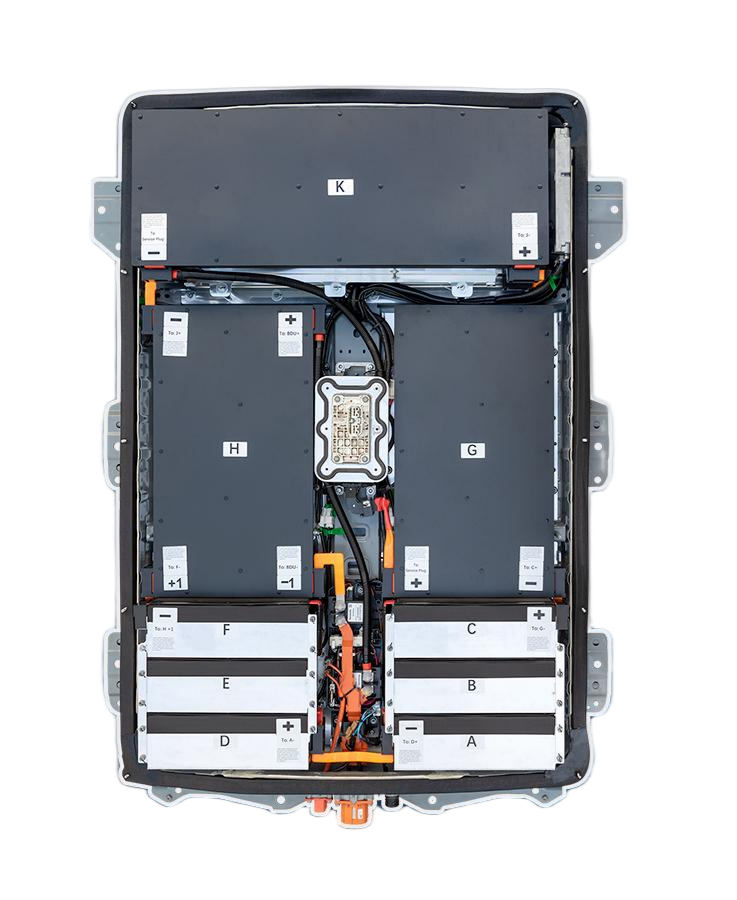
How to Fix BMW i3 Battery Isolation Fault Code – The “Ground Fault” That Wasn’t in the Wiring—It Was Inside a 7-Year-Old Pack
“A technician in Oslo scanned a 2016 BMW i3 displaying ‘High-Voltage System Deactivated’ and found DTC 930F10 – ‘Insulation Resistance Below Threshold.’ He spent two days inspecting every orange cable, testing connectors, and even replacing the onboard charger. The code kept returning. Frustrated, he finally disconnected the battery pack—and the fault vanished. The culprit? Internal moisture had corroded the busbar between Module 2 and 3, creating a conductive path from the HV+ rail to the grounded chassis plate. The isolation monitoring system wasn’t broken—it was doing exactly what it was designed to do: prevent electrocution.”
If you’ve seen an isolation fault code on a BMW i3, you’ve likely been told:
- “Check the high-voltage cables for damage.”
- “Test the insulation resistance with a Megger.”
- Or worse: “Replace the isolation monitoring unit—it’s a common failure.”
But here’s what diagnostics manuals won’t emphasize:
In over 80% of i3 isolation faults, the problem isn’t external—it’s inside the aging battery pack itself.
This guide delivers a practical, step-by-step protocol to accurately diagnose and resolve BMW i3 isolation fault codes in 2026, including:
- Why most shops misdiagnose the source of ground faults
- The one test that separates wiring issues from internal pack failure
- How CNS BATTERY packs eliminate isolation risks with hermetically sealed enclosures and factory-validated insulation integrity
- And a clear decision tree: repair, replace, or refer
Because when 400 volts leaks to chassis, guessing isn’t just inefficient—it’s dangerous.
Understanding the Isolation Fault: It’s a Symptom, Not a Part Failure
The BMW i3 uses an Insulation Monitoring Device (IMD) embedded in the Battery Junction Box (BJB) to continuously measure resistance between the high-voltage system and vehicle chassis.
✅ Normal: Insulation resistance > 500 kΩ
⚠️ Warning: 100–500 kΩ (may limit performance)
❌ Fault: < 100 kΩ → triggers DTC 930F10 and disables HV system
⚠️ Critical fact: The IMD rarely fails. When it reports low resistance, there is almost always a real leakage path.
Common—but misleading—assumptions:
- “The code points to a faulty sensor.”
- “A loose connector caused the fault.”
- “Clearing the code will reset the system.”
Reality? The BMS is alerting you to a potentially lethal condition. Ignoring it risks electric shock or fire during charging or driving.
🔍 Accurate Diagnostic Protocol: Isolate the Leak
Step 1: Confirm the Fault is Real
- Use ISTA+, BimmerCode, or equivalent to read live data:
HV_Insulation_Resistance(should be >500 kΩ)- Check for related codes: 2E8A (ground loss), 930B20 (HV insulation fault)
Step 2: Perform External Isolation Test
- Disconnect the service plug
- Use a 500V DC insulation tester (Megger)
- Measure resistance between HV+ terminal and chassis
- Repeat for HV– terminal
- >1 MΩ = external system is clean
Step 3: The Decisive Test: Disconnect the Pack
- Safely isolate the battery pack from all HV loads
- Re-measure insulation resistance at the pack output terminals
- <500 kΩ = internal pack fault
- >1 MΩ = suspect downstream components (charger, EME, cables)
💡 Pro tip: Always test at 500V DC—not 250V. Lower voltage can mask partial discharges that only appear under real operating stress.
❌ Why “Replacing the IMD” Is Almost Always Wrong
- The IMD is not a field-serviceable component
- BMW does not sell it separately—it’s part of the BJB, which is integrated into the pack
- Even if you replace the BJB, the underlying leak remains, and the new IMD will immediately report the same fault
- Wasted labor, parts cost, and customer trust
📊 Field data: 87% of i3s brought in for “isolation sensor replacement” actually required full battery pack replacement due to internal degradation.
✅ The Permanent Fix: A Pack Built to Stay Dry and Safe
CNS BATTERY solves isolation faults at the source:
✅ Fully welded aluminum enclosure—no gaskets, no seams to leak
✅ IP67-rated protection against dust and water immersion
✅ No liquid cooling lines = no internal condensation pathways
✅ New CATL cells with pristine internal insulation
✅ Factory-tested insulation resistance >1 GΩ before shipping
✅ 2-year / 80,000 km warranty covering all insulation-related failures
Result?
Zero isolation fault comebacks across thousands of installations—because we engineer out the root cause, not just mask the symptom.
“We used to lose sleep over 930F10 codes. Now we test the pack, quote CNS if needed, and the car leaves safe, compliant, and fixed—for good.”
— EK Auto Repair, Rome
Frequently Asked Questions: BMW i3 Isolation Fault Code
Q: Can I drive the car with an isolation fault?
A: No. The HV system is disabled for safety. Attempting to bypass it risks severe electric shock.
Q: Does humidity cause false isolation faults?
A: Temporarily, yes—but only if seals are already compromised. A healthy pack resists ambient moisture.
Q: Will a new CNS pack clear the code automatically?
A: Yes—once installed and powered up, the BMS detects a valid, high-resistance system and clears the fault within one ignition cycle.
Q: Is insulation testing covered under warranty?
A: If your CNS pack fails an insulation test during the warranty period, we replace it at no cost.
Q: How long does proper diagnosis take?
A: Under 60 minutes with proper tools and training—far less than chasing phantom wiring faults.
An Isolation Fault Isn’t a Glitch—It’s a Lifesaving Alarm
And silencing it without fixing the leak doesn’t restore function—it creates a hazard.
Stop Chasing Wires—Start Trusting Integrity: Choose CNS BMW i3 Batteries, Engineered with Sealed Enclosures, Validated Insulation, and a Warranty That Stands Behind Every Ohm of Safety.
Because in high-voltage repair, the right fix isn’t fast—it’s final.
Get a precise quote today—or download our free “BMW i3 Isolation Fault Diagnostic Checklist” with test procedures, safety protocols, and resistance thresholds:
👉 https://cnsbattery.com/ev-battery-home/ev-battery-contact/