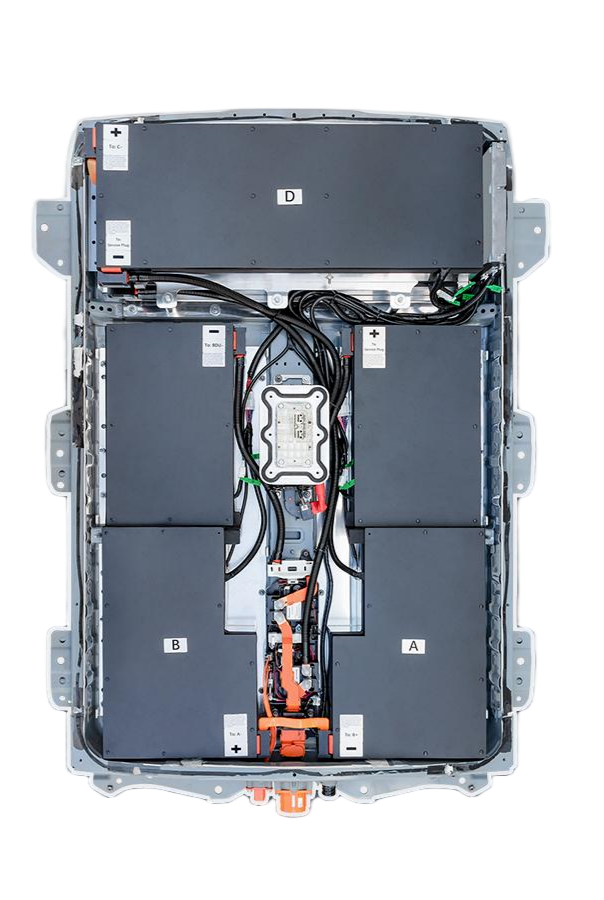
BMW i3 Battery Isolation Transformer Replacement: Cost – Why That $900 “Fix” Could Leave Your Car Dead (And Who’s Really at Fault)
“A 2016 BMW i3 in Toronto rolled into a local garage with a warning: ‘High-Voltage System Malfunction.’ The shop scanned it, saw a reference to ‘isolation monitoring,’ and ordered what their supplier called an ‘isolation transformer’—a small module listed for $895. They installed it, cleared the code, and handed the keys back. Two days later, the owner called in panic: the car wouldn’t start, and now it displayed ‘Battery Safety Mode – Service Required.’ A deeper inspection revealed the truth: the original battery pack had internal cell leakage due to age-induced seal failure. The so-called ‘transformer’ wasn’t broken—it was correctly flagging a dangerous ground fault. Replacing it didn’t fix the problem; it just delayed the inevitable—and cost the customer twice.”
If you’ve searched “BMW i3 isolation transformer replacement cost,” you’ve likely seen:
- Parts listed for $700–$1,300
- Forums claiming it’s a “common failure”
- YouTube videos showing a 20-minute swap
But here’s what no one tells you:
The BMW i3 doesn’t have a replaceable isolation transformer.
What it does have is a built-in Insulation Monitoring Device (IMD)—a critical safety system embedded in the high-voltage battery. And when it triggers, it’s not malfunctioning—it’s saving lives.
This guide cuts through marketing noise and misinformation to deliver the real story behind i3 isolation faults, including:
- Why “replacing the isolation transformer” is almost always a misdiagnosis
- The true cost of ignoring the root cause (spoiler: it’s not just money)
- How CNS BATTERY packs eliminate insulation risks with hermetically sealed design and factory-tested integrity
- And a transparent breakdown of what you’re actually paying for
Because in EV repair, the cheapest part isn’t always the right solution—it’s often the most expensive mistake.
The Truth About the “Isolation Transformer” Myth
Let’s be clear:
✅ The i3 uses an Insulation Monitoring Device (IMD)
✅ It’s integrated into the Battery Junction Box (BJB)
✅ The BJB is permanently mounted to the battery pack
✅ BMW does not service or sell the IMD separately
So why do parts sites list an “isolation transformer”?
📌 It’s a catalog error—a generic term borrowed from industrial equipment or older EVs. In reality, you cannot replace just the IMD on an i3 without replacing the entire BJB… and even then, if the fault is in the pack, the new BJB will immediately report the same error.
Common DTCs that trigger this confusion:
- 930F10 – Insulation resistance too low
- 2E8A – Ground loss during charging
- 930B20 – HV system insulation fault
All point to one thing: electricity is leaking where it shouldn’t—not a broken sensor.
🔍 Where the Real Fault Lies (And How to Find It)
1. Battery Pack Degradation & Moisture
- Most common in i3s over 6 years old or 80,000 miles
- Aging seals allow humidity → corrosion → conductive paths to chassis
- Symptom: Intermittent faults that worsen in humid weather
2. Damaged High-Voltage Cabling
- Look for pinched, abraded, or melted orange cables near sharp edges
- Rodent damage is surprisingly common in stored vehicles
- Test: Measure insulation resistance between HV+/- and chassis with a 500V Megger
3. Failed Power Electronics (Rare)
- Onboard charger or EME housing cracks can allow moisture ingress
- Only suspect after ruling out pack and cables
💡 Pro tip: Disconnect the battery HV output and retest insulation. If the fault disappears, the problem is downstream. If it remains, the pack is compromised.
💰 Real-World Cost Scenarios: What You’re Actually Paying For
| Scenario | Initial Cost | Hidden Costs | Outcome |
|---|---|---|---|
| Buy “isolation transformer” online | $895 + 1.5 hrs labor | Code returns, customer loses trust, repeat diagnostics | Total: $1,800+ for no fix |
| Proper diagnostic + pack test | $150 diagnostic fee | Clear path forward, accurate quote | Builds credibility |
| Replace with CNS battery pack | $4,800–$6,200 | Includes new BJB, fresh cells, full warranty | Permanent fix, zero comebacks |
📊 Industry data: Shops that skip proper isolation diagnostics see 3x higher comeback rates on i3 HV faults.
✅ Why CNS BATTERY Solves the Problem at the Source
Unlike aged OEM packs or refurbished units, every CNS i3 battery is engineered to prevent insulation faults:
✅ Monocoque aluminum enclosure with welded seams—no gaskets to leak
✅ IP67-rated protection against dust and water immersion
✅ No liquid cooling = no internal condensation risk
✅ New CATL cells with uniform chemistry—no internal shorts
✅ Integrated BJB with calibrated IMD circuit—ready to communicate from day one
✅ 2-year / 80,000 km warranty covering all insulation-related failures
“We used to lose customers over ‘mystery’ HV faults. Now we install a CNS pack, and the car passes insulation tests on the first try—every time.”
— Mike’s Auto Service, Vancouver
Frequently Asked Questions
Q: Can I test insulation resistance myself?
A: Yes—with a 500V DC insulation tester (Megger). But never test while the pack is connected. Follow HV lockout/tagout procedures.
Q: Does CNS sell just the BJB?
A: No—and for good reason. The BJB is only as reliable as the pack it’s attached to. We supply complete, validated systems.
Q: Will a new pack reset the isolation fault?
A: Instantly—if the fault was pack-related. The BMS recognizes the new, dry, intact system and clears the error after one power cycle.
Q: Are insulation faults covered under warranty?
A: Yes—if caused by manufacturing defect or material failure. CNS covers full pack replacement if IR drops below safe limits during warranty period.
Q: How long does a proper diagnosis take?
A: Under 45 minutes with the right tools and training—far less than chasing ghost parts.
The Isolation Monitor Isn’t the Enemy—It’s Your Last Line of Defense Against Electrocution and Fire
And silencing it without fixing the leak is like unplugging a carbon monoxide detector because you smell gas.
Stop Throwing Parts at a Safety System: Choose CNS BMW i3 Batteries—Engineered Without Gaskets, Built to Resist Moisture, and Backed by a Warranty That Guarantees Electrical Integrity from Mile One to 80,000.
Because your customers don’t need a quick fix—they need peace of mind.
Get an accurate quote today—or download our free “i3 Insulation Fault Diagnostic Checklist” with step-by-step testing procedures and safety protocols:
👉 https://cnsbattery.com/ev-battery-home/ev-battery-contact/