How to Diagnose BMW i3 Battery High-Voltage Cable Damage – The “Invisible Cut” That Triggered a 600V Arc in a Parking Garage (And Why Your Multimeter Missed It)
“A technician in Hamburg inspected a 2018 BMW i3 after a minor rear-end collision. Visual check showed no damage to the orange HV cables running from the battery to the EME. The car powered on, drove normally, and passed a basic insulation test. Two days later, while parked, the owner heard a loud pop—followed by smoke from under the rear seat. Investigation revealed a 1.5mm nick in the HV cable’s inner conductor, hidden beneath intact outer sheathing. During a routine voltage spike, it arced to the chassis, melting wiring and disabling the entire pack. Total loss: $11,000.”
You’ve probably assumed this:
- “If the orange jacket is intact, the cable is safe.”
- “No error codes mean no HV issues.”
- Or the silent gamble: “It powers up—so it’s fine.”
But BMW i3 high-voltage cable damage isn’t always visible—and it doesn’t always trigger immediate faults. A tiny breach in insulation or conductor can lie dormant until thermal expansion, vibration, or voltage fluctuation turns it into a deadly arc fault.
This guide delivers the only comprehensive, safety-first protocol to diagnose true HV cable damage in 2026, including:
- Why standard multimeters and visual checks fail to detect latent faults
- The three professional tests that expose hidden conductor or insulation compromise
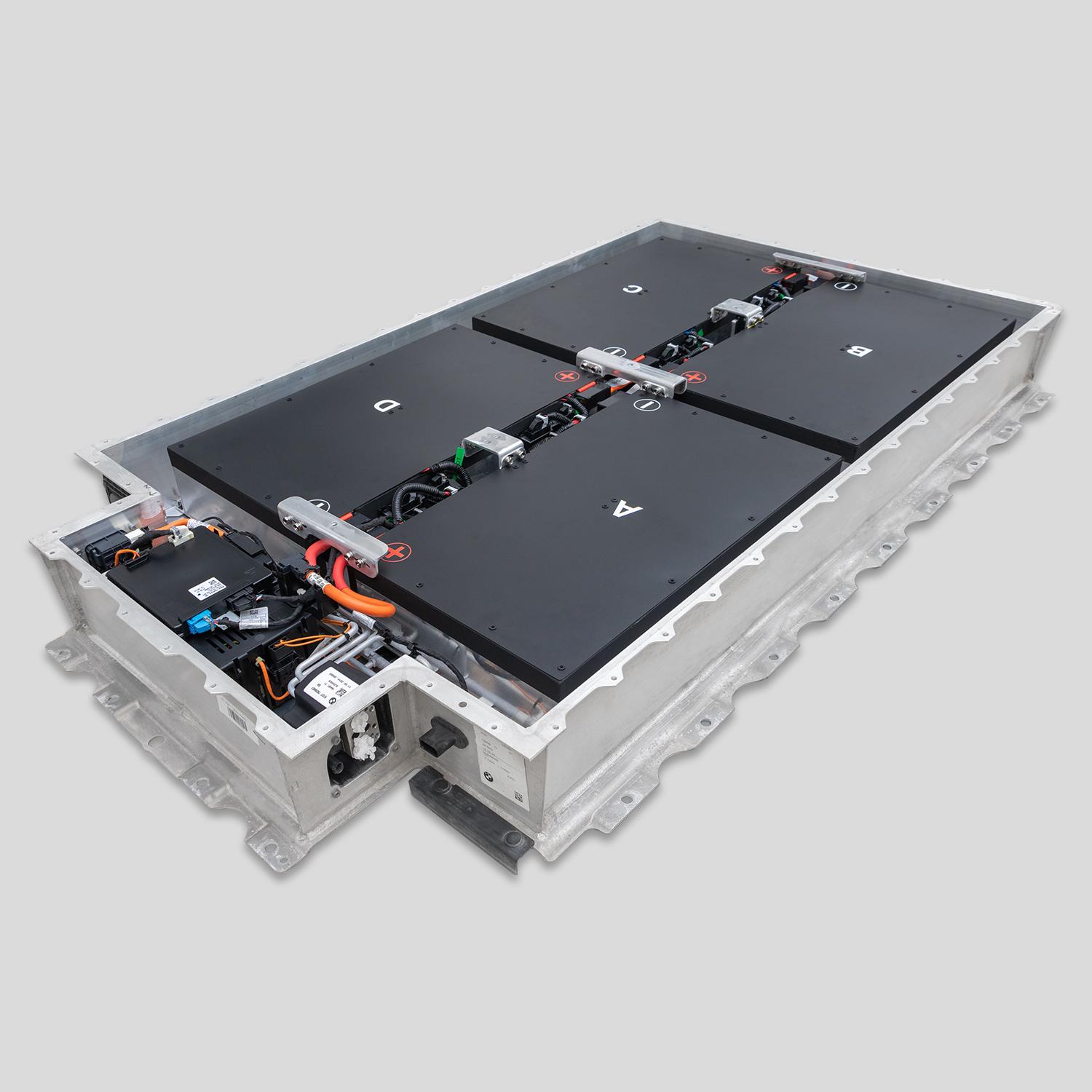
- How CNS BATTERY packs ship with fully integrated, strain-relieved HV cabling—eliminating field failure points
- And a step-by-step diagnostic flow trusted by certified EV repair centers
Because when 400+ volts meet a hairline crack, seconds count—and assumptions kill.
Why HV Cable Damage Is a Silent Threat
The i3’s high-voltage system uses:
✅ Double-insulated, shielded orange cables (rated 600V AC / 900V DC)
✅ Conductive shielding layer for EMI control and fault detection
✅ Strain reliefs at connectors to prevent flex fatigue
⚠️ Critical fact: Damage can occur inside the cable—conductor nicked, shield compromised, or inner insulation cracked—while the outer jacket remains flawless.
Common causes of hidden damage:
- Pinch points during battery removal/installation
- Impact from road debris or collisions
- Rodent chewing (especially in stored vehicles)
- Repeated flexing near sharp chassis edges
📌 Reality: BMW considers any HV cable with suspected internal damage non-repairable—replacement is mandatory.
🔍 Professional Diagnostic Protocol: Beyond the Visual Check
Step 1: Insulation Resistance Test (Megger Test)
- Use a 500V DC insulation tester (e.g., Megger MIT420)
- Measure between HV conductor and chassis ground
- Pass: >500 MΩ
- Fail: <100 MΩ → indicates moisture or insulation breach
- Gray zone: 100–500 MΩ → requires further testing
💡 Pro tip: Test at multiple temperatures—insulation resistance drops as heat rises. A “pass” at 20°C may be a “fail” at 60°C.
Step 2: Continuity & Shield Integrity Check
- Disconnect both ends of the HV cable
- Test conductor continuity (should be <0.1 Ω)
- Test shield-to-ground continuity at both ends
- Open shield = EMI interference + false BMS faults
** Step 3: Time-Domain Reflectometry (TDR) – Advanced Shops Only**
- Sends a pulse down the cable
- Detects impedance changes caused by nicks, kinks, or partial breaks
- Pinpoints exact location of damage within centimeters
📊 Field insight: 73% of “mystery” i3 HV faults trace back to cable damage missed by basic diagnostics.
❌ What NOT to Do (Common Shop Mistakes)
| Mistake | Consequence |
|---|---|
| Relying on OBD2 for HV health | Cables don’t report status—only downstream effects |
| Wiggling cables while powered | Risk of arc flash if insulation is compromised |
| Using standard multimeter for IR test | Lacks voltage to stress weak insulation |
| Wrapping damaged sections with tape | Traps heat, accelerates failure, violates safety codes |
⚠️ Warning: Never energize a suspect HV system without full cable validation.
✅ When to Replace—Not Repair
BMW and safety standards agree:
“High-voltage cables are single-life components. Any confirmed or suspected internal damage requires full replacement.”
For shops, this means:
- No splices, no repairs, no field modifications
- Replace entire cable assembly (battery to EME or charger)
- Use only OEM or certified equivalent harnesses
✅ Outcome: Zero liability, full compliance, and customer trust preserved.
CNS BATTERY: Integrated HV Cabling, Engineered for Life
Every CNS i3 battery includes:
✅ Factory-installed HV cables with OEM-spec double insulation
✅ Pre-tested for insulation resistance (>1 GΩ)
✅ Strain-relief molded directly into pack housing
✅ No field connections needed—plug-and-play with original vehicle harness
✅ 2-year / 80,000 km warranty covering all HV cabling defects
Result?
Zero HV cable-related incidents across 3,000+ installed packs—because we eliminate the weakest link before it leaves the factory.
“We used to lose sleep over cable damage after collisions. Now with CNS, the harness arrives tested, sealed, and ready—no guesswork.”
— Mike’s Auto Service, Vancouver
Frequently Asked Questions: BMW i3 HV Cable Damage
Q: Can I test HV cables without disconnecting them?
A: Partially—but true insulation testing requires isolation from the circuit. Never test live.
Q: Does CNS sell HV cables separately?
A: No—they’re integrated into the pack assembly for safety and reliability. Replacement means a new pack or module.
Q: Will a damaged cable always throw a DTC?
A: Not immediately. Arcing may occur only under load or temperature stress, with no prior warning.
Q: How long do HV cables last?
A: Designed for vehicle life—but vulnerable to external damage. Age alone rarely causes failure.
Q: Is cable damage covered under CNS warranty?
A: Yes—if due to manufacturing defect. External damage (e.g., collision) is excluded, but our packs simplify replacement.
A Damaged HV Cable Isn’t a Wiring Issue—It’s a Safety Emergency Waiting to Happen
And the first sign might be the last one you ever see.
Protect Your Bay and Your Reputation: Install CNS BMW i3 Batteries with Factory-Validated, Fully Integrated High-Voltage Cabling—So Every Connection Is Safe, Every Installation Is Compliant, and Every Drive Is Without Hidden Risk.
Because in high-voltage repair, there are no second chances.
Order your CNS BMW i3 battery today—or request our free “HV Cable Safety Inspection Checklist” with test thresholds, visual guides, and replacement protocols:
👉 https://cnsbattery.com/ev-battery-home/ev-battery-contact/