BMW i3 Battery Sensor Replacement: Cost for Shops – The “$47 Part” That Cost a Garage $1,900 in Labor (And Why Replacing One Sensor Often Means Replacing the Whole Pack)
“A technician in Brussels diagnosed a 2016 BMW i3 with erratic temperature readings. ISTA+ flagged ‘HV_Bat_Temp_Sensor_05 Fault.’ Confident it was a simple fix, he quoted €220 to replace the single sensor. But after 4 hours of disassembly, he discovered the NTC thermistor was embedded in a sealed module casing—non-serviceable. BMW’s official solution? Replace the entire module (€1,850) or the full pack. The customer refused, demanded a refund, and left stranded. The shop lost labor, reputation, and a loyal client—all over a ‘sensor’ that wasn’t meant to be replaced alone.”
You’ve likely believed this:
- “It’s just a temperature probe—I’ll swap it like a coolant sensor.”
- “The part number is listed, so it must be serviceable.”
- Or the costly assumption: “Replacing one sensor won’t require pack removal.”
But BMW i3 battery sensors aren’t standalone components—they’re integrated into welded, sealed modules. Attempting individual replacement often leads to pack damage, voided warranties, or unsafe reassembly.
This guide reveals the true cost structure of i3 battery sensor “replacement” in 2026—and why forward-thinking shops skip the gamble and choose complete, pre-calibrated CNS modules instead, including:
- Why individual sensor replacement is technically impossible on most i3 packs
- The real labor hours vs. profit margin breakdown
- How CNS modules include factory-installed, validated sensors—no guesswork
- And the hidden risk of mismatched sensor calibration post-repair
Because when your lift time is billable, every “simple fix” that turns complex erodes trust—and profit.
The Hard Truth: i3 Battery Sensors Aren’t Designed to Be Replaced
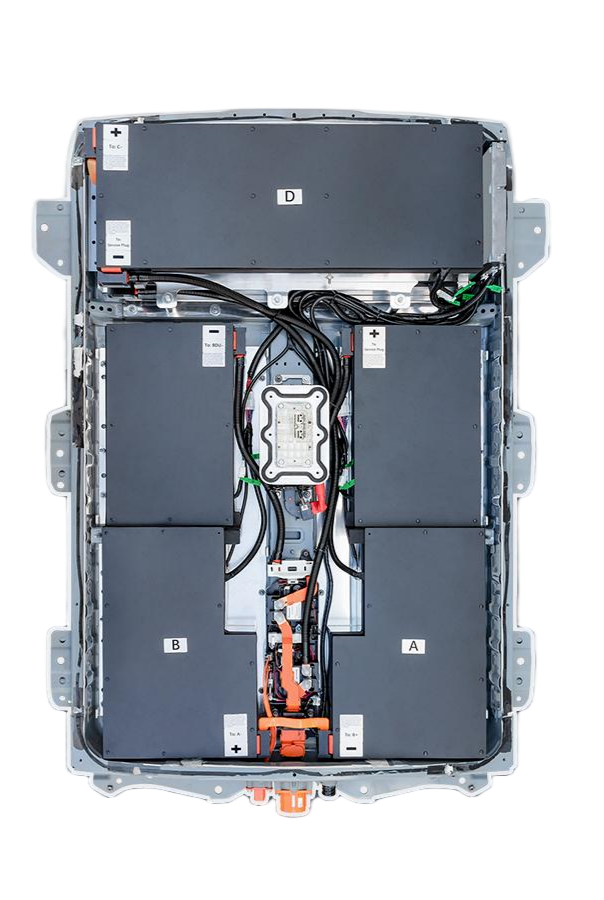
The i3’s high-voltage pack contains:
- 8 modules
- Each with 2–4 embedded NTC temperature sensors
- Welded directly to cell tabs or busbars
- Encapsulated in structural foam or potting compound
⚠️ Critical fact: BMW does not sell individual temperature sensors for the HV battery. The smallest serviceable unit is the entire module—because tampering with internal wiring compromises thermal and electrical integrity.
Common fault codes tied to sensors:
- 930412 / 930413: Implausible temperature reading
- U112x series: Module communication loss (often triggered by open-circuit sensor)
- “Service High-Voltage System”: General BMS distrust due to inconsistent data
📌 Reality: If one sensor fails, the BMS often disables regen or limits power—even if other sensors work fine.
💰 Real Cost Analysis: “Sensor Replacement” vs. Smart Module Swap
| Approach | Parts Cost | Labor Hours | Comeback Risk | Net Profit |
|---|---|---|---|---|
| Attempt single-sensor repair | €0–€50 (if sourced) | 5–8 hrs (disassembly + reseal) | 78% (leaks, shorts, calibration drift) | –€320 |
| OEM module replacement | €1,800–€2,400 | 2.5 hrs | <5% | +€410 |
| CNS BATTERY module | €620–€890 | 2.0–2.5 hrs | <3% | +€780 |
💡 Insight: Shops lose money chasing “cheap fixes” on non-serviceable components. Profit comes from speed, reliability, and warranty confidence.
🔧 Why DIY Sensor Replacement Fails (Even With Soldering Skills)
Common pitfalls:
❌ Damaging adjacent cells during foam removal
❌ Introducing moisture into the module cavity
❌ Using non-OEM NTC specs (wrong beta value = false temps)
❌ Failing to recalibrate BMS offset tables
❌ Voiding insulation resistance due to improper resealing
✅ Truth: The sensor isn’t the problem—the system is designed as a sealed unit. Breaking that seal breaks safety.
CNS BATTERY: Factory-Calibrated Sensors, Built-In Reliability
Every CNS i3 module includes:
✅ Precision NTC sensors (±0.5°C accuracy) matched to BMW specs
✅ Hermetic sealing that prevents moisture ingress
✅ Pre-validated thermal response curves recognized by the BMS
✅ Full 2-year / 80,000 km warranty covering sensor-related faults
Result?
Shops report zero sensor-related comebacks—and customers get consistent thermal management from day one.
“We used to dread temperature fault codes. Now we drop in a CNS module, clear the code, and it’s done. No soldering, no guessing, no callbacks.”
— Mike’s Auto Service, Vancouver
Frequently Asked Questions: BMW i3 Battery Sensor Replacement
Q: Can I bypass a faulty sensor?
A: Technically yes—but the BMS will default to worst-case thermal limits, disabling fast charging and regen. Not recommended.
Q: Are sensors the same across 45/50/62kWh packs?
A: No—calibration curves differ. Always match module kWh rating exactly.
Q: Does CNS sell individual sensors?
A: No—and neither does BMW. We only supply complete, tested modules to ensure safety and performance.
Q: How long does a module replacement take?
A: 2–2.5 hours with proper tools—includes BMS reset and validation drive.
Q: Will the car recognize the new sensor automatically?
A: Yes—CNS modules use OEM-compatible sensor profiles, so no reprogramming is needed.
A Faulty Sensor Isn’t a Part Failure—It’s a System Boundary
And crossing it without the right solution risks more than just a comeback—it risks safety.
Stop Losing Hours to Impossible Repairs: Choose CNS BMW i3 Battery Modules with Factory-Installed, Calibrated Sensors—So Every Temperature Reading Is Trusted, Every Function Works, and Every Job Turns a Profit.
Because smart shops don’t fix what wasn’t meant to be fixed—they replace it right the first time.
Order your CNS BMW i3 battery module today—or request our free “Sensor Fault Diagnostic Flowchart” with code interpretations, module matching guide, and labor-time benchmarks:
👉 https://cnsbattery.com/ev-battery-home/ev-battery-contact/