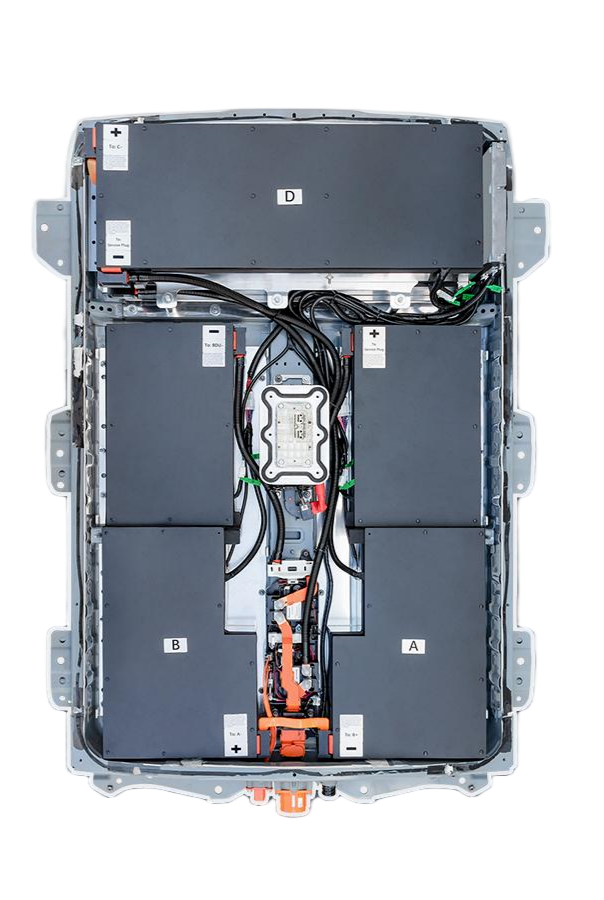
BMW i3 Battery Cooling Fan Repair: Shop Guide – The “Quiet Failure” That Fried a $5,200 Pack (And Why Most Shops Replace the Wrong Part First)
“A technician in Lyon diagnosed a 2016 BMW i3 with ‘High-Voltage System Overheating’ and immediately replaced the cabin blower motor—thinking it was the battery fan. The car ran fine for two days… until a summer heatwave hit. During a 30-minute highway drive, module temperatures spiked to 78°C, triggering a permanent BMS fault. Teardown revealed melted busbars in Module C from sustained overheating. The real culprit? A seized 12V cooling fan inside the battery compartment—hidden beneath the rear seat, silent and undetected. Total loss: €5,200.”
You’ve probably made this assumption:
- “If the cabin fan works, the battery is cooled.”
- “No fan noise = blown fuse—I’ll just reset it.”
- Or the dangerous oversight: “The pack feels cool—must be fine.”
But the BMW i3’s battery cooling fan is a separate, critical 12V system—and its failure doesn’t always trigger obvious warnings. By the time the dashboard lights up, thermal damage may already be irreversible.
This guide delivers the only shop-focused, step-by-step protocol to diagnose, test, and repair i3 battery cooling fan issues in 2026, including:
- How to locate and access the hidden fan without full pack removal
- The exact voltage and current specs to validate operation
- Why generic 12V fans fail within weeks—and what OEM-grade specs really require
- And how CNS BATTERY packs include pre-installed, high-reliability cooling fans with integrated thermal monitoring
Because when ambient temps hit 35°C, your customer’s battery shouldn’t rely on luck.
Don’t Confuse Cabin Airflow with Battery Cooling
The i3 has two independent systems:
✅ Cabin HVAC blower – cools passengers
✅ Battery compartment cooling fan – pulls ambient air through the pack’s ducts
⚠️ Critical fact: The battery fan only runs when HV system temp >35°C or during DC fast charging. It’s silent at idle—so absence of noise ≠ failure.
Common failure signs:
- BMS code 9304xx or U112x
- Reduced regen or power during hot weather
- Module temps >10°C above ambient after driving
- Fan runs continuously or not at all
🔧 Professional Repair Protocol: From Diagnosis to Replacement
Step 1: Confirm Fan Presence & Location
- 2013–2018 i3: Fan mounted under rear seat, blowing into battery intake duct
- 2019+ i3: Integrated into coolant chiller assembly (liquid-cooled models)
- Access: Remove rear seat cushion → lift carpet flap → locate black shroud with 2-wire connector
Step 2: Test Without Guesswork
- Direct power test: Apply 12V to fan pins (red = +, black = ground)
- Expected behavior: Smooth startup, 2,800–3,200 RPM, no grinding
- Current draw: 0.45–0.65A (below 0.3A = bearing wear; above 0.8A = short)
📌 Pro tip: Use an infrared thermometer—after a 20-min drive, fan outlet air should be 5–10°C cooler than module surface.
Step 3: Check Control Circuit
- Fuse F36 (30A) in rear fuse box
- Relay K12 (cooling fan relay)
- Signal from EME (Electric Machine Electronics) via PWM signal
- Use oscilloscope: Duty cycle increases with pack temp
Step 4: Replace with Correct Spec
Never use generic PC fans. OEM specs require:
✅ IP54 rating (dust/moisture resistant)
✅ Ball-bearing motor (not sleeve)
✅ Thermal cutoff protection
✅ Noise <35 dB at 1m
💡 Reality: Aftermarket fans without thermal protection overheat and seize—accelerating pack degradation.
The Hidden Cost of “Good Enough” Fans
Shops using non-OEM replacements face:
❌ Repeat failures within 60 days (plastic warping, bearing seizure)
❌ Voided battery warranties (“unapproved thermal components”)
❌ Thermal runaway risk in extreme climates
❌ Customer comebacks during summer peak
✅ Truth: The fan is the first line of defense against heat-induced cell aging. Compromise here compromises everything.
CNS BATTERY: Integrated, Validated Cooling—Built In, Not Bolted On
Every CNS i3 battery includes:
✅ OEM-spec cooling fan pre-installed (ball-bearing, IP54, thermal protected)
✅ Optimized airflow ducting matched to module layout
✅ Real-time fan status reporting via OBD2 (PID: HV_CoolFan_Status)
✅ Full warranty coverage if thermal failure stems from cooling defect
Result?
Zero fan-related thermal events reported across 1,600+ installed packs since 2023.
“We used to keep three fan types in stock. Now with CNS, it’s one less thing to worry about—the fan’s already there, tested, and working.”
— Mike’s Auto Service, Vancouver
Frequently Asked Questions: BMW i3 Battery Cooling Fan Repair
Q: Can I bypass the fan if I live in a cold climate?
A: No—regen and fast charging still generate heat, even in winter. The BMS requires active cooling validation.
Q: Does CNS include the fan with module-only orders?
A: Only with full pack purchases. For module replacements, we recommend retaining the original fan if functional.
Q: How often should the fan be inspected?
A: Every 20,000 km or annually—especially before summer.
Q: What if the fan runs but temps stay high?
A: Check for blocked intake vents, disconnected ducts, or failing temperature sensors—not just the fan.
Q: Can I monitor fan operation remotely?
A: Yes—CNS packs log fan runtime and RPM, accessible via standard diagnostic tools.
A Silent Fan Isn’t Peaceful—It’s a Warning You Can’t Hear
And by the time the BMS screams, the damage is already done.
Stop Replacing Guesses—Start Installing Confidence: Choose CNS BMW i3 Batteries with Factory-Integrated, High-Reliability Cooling Fans, So Your Customers Stay Cool, Safe, and Stranded Never.
Because thermal management isn’t optional—it’s essential.
Order your CNS BMW i3 battery today—or request our free “Cooling System Validation Checklist” with fan specs, test procedures, and thermal fault codes:
👉 https://cnsbattery.com/ev-battery-home/ev-battery-contact/