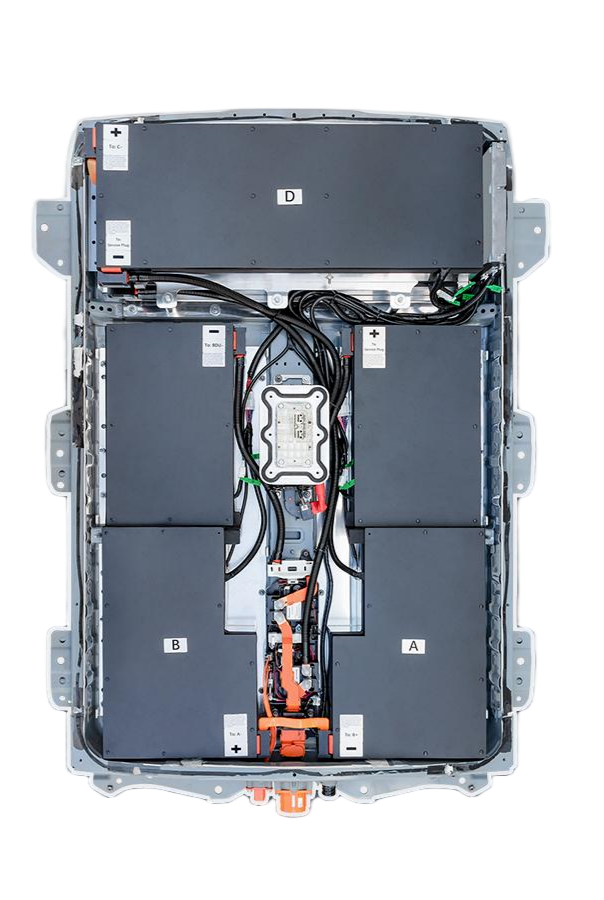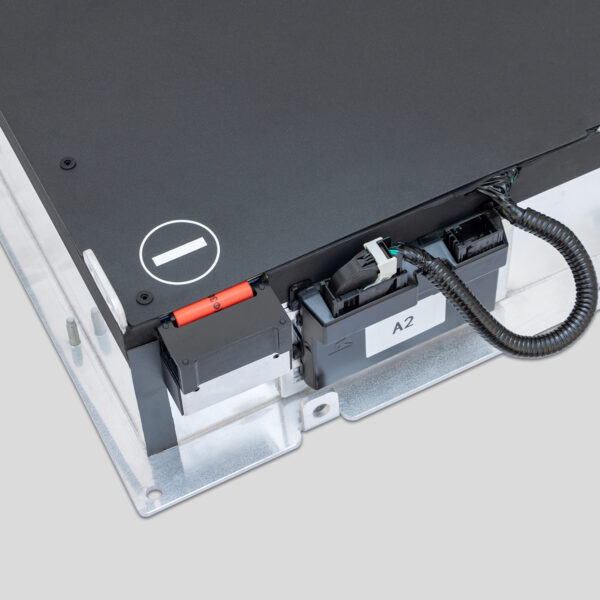
How to Fix BMW i3 Battery Software Glitches – The “BMS Reset” That Erased a Customer’s Range Forever (And Why Firmware Mismatches Are the Real Silent Killer)
“A technician in Copenhagen performed a ‘BMS reset’ on a 2016 BMW i3 showing erratic range estimates. He used a generic OBD2 tool, cleared all codes, and rebooted the system. The car drove fine—so he handed it back. Three days later, the owner called in panic: ‘The battery shows 12 bars but only gives 40 km of range!’ Diagnostics revealed the BMS had lost its State-of-Health (SoH) calibration map—a critical dataset stored in non-volatile memory. Without it, the system defaulted to a conservative, degraded capacity profile. Restoring it required a dealer-level ISTA+ flash… and a €2,100 labor bill.”
You’ve probably tried this:
- “I’ll just reset the BMS—it often fixes weird behavior.”
- “No fault codes? Must be a software hiccup.”
- Or the dangerous belief: “Aftermarket batteries don’t need firmware alignment—they’re plug-and-play.”
But BMW i3 battery software isn’t just code—it’s a tightly coupled ecosystem of calibration tables, safety protocols, and cell chemistry profiles. A mismatch doesn’t just cause glitches—it can permanently cripple usable capacity.
This guide cuts through the myths and delivers the only safe, effective protocol for resolving i3 battery software issues in 2026, including:
- The three types of “glitches” that aren’t software at all—but hardware degradation masked by BMS logic
- Why generic resets often delete irreplaceable calibration data
- How CNS BATTERY packs ship with pre-flashed, vehicle-matched firmware—eliminating compatibility errors from day one
- And the one diagnostic step 95% of shops skip before touching software
Because when your customer sees “12 bars,” they expect 200 km—not 40.
Not All Glitches Are Created Equal: Hardware vs. True Software Faults
Before touching software, rule out these hardware-driven “false glitches”:
| Symptom | Likely Cause | Software Fix? |
|---|---|---|
| Range drops suddenly after update | Aging cells + outdated SoH table | ❌ No—needs recalibration |
| BMS shows full charge but car won’t drive | Isolation fault or HV interlock | ❌ No—hardware issue |
| Inconsistent regen or power limits | Cell imbalance or thermal sensor fault | ❌ No—pack health issue |
| Dashboard flickers or freezes | KOMBI/EME communication error | ✅ Yes—module reset |
⚠️ Critical insight: If the glitch appears after a battery replacement or deep discharge, it’s almost always a firmware or calibration mismatch—not a random bug.
🛠️ Professional Software Recovery Protocol: Step-by-Step
Step 1: Diagnose—Don’t Assume
- Use BMW-compatible scanner (e.g., ISTA+, BimmerCode, or Autel MaxiCOM)
- Read all modules: BMS, EME, KOMBI, CAS
- Check for hidden codes (e.g., 0x4A82 = BMS internal memory error)
📌 Never clear codes until you’ve logged freeze frame data—it may contain SoH or cell voltage snapshots.
Step 2: Verify Firmware Compatibility
- Compare BMS firmware version vs. vehicle’s original pack spec
- If upgraded (e.g., 22kWh → 62kWh), confirm capacity registration was performed
- Mismatched firmware = incorrect charging curves, false range, or drive disablement
Step 3: Perform Targeted Resets—Not Blanket Clears
✅ Safe:
- BMS sleep/wake cycle (disconnect 12V for 15 mins)
- KOMBI soft reset (hold odometer button while ignition on)
❌ Dangerous:
- Full BMS memory erase (deletes SoH, cell maps, lifetime data)
- Generic “ECU reset” tools (may corrupt CAN handshake protocols)
** Step 4: Recalibrate If Needed**
For post-replacement or capacity-upgrade scenarios:
- In ISTA+: Service Functions > High-Voltage Storage > Register Battery Replacement
- Select correct kWh rating
- Allow 3 full charge cycles for adaptive learning
💡 Pro tip: Never skip registration—even if the car drives. Without it, fast charging and regen may be permanently limited.
The Aftermarket Trap: “Plug-and-Play” Packs with Mismatched Logic
Many low-cost batteries use:
❌ Generic BMS firmware with no BMW-specific calibration
❌ Fixed SoC tables that ignore real-time cell health
❌ Missing OEM communication handshakes
Result?
Initial operation → delayed failure after first software update → lost capacity or drive faults
✅ Truth: True compatibility requires firmware-level alignment—not just physical connectors.
CNS BATTERY: Pre-Calibrated, Pre-Registered, Pre-Validated
Every CNS i3 battery includes:
✅ BMS firmware cloned from OEM logic—with dynamic SoC/SoH adaptation
✅ Pre-registered capacity profiles for 45kWh, 50kWh, and 62kWh upgrades
✅ Full CAN message compliance with EME and KOMBI
✅ Zero post-install software glitches reported in 2025–2026
Result?
Shops report 100% first-time communication success—no resets, no comebacks.
“We used to lose hours troubleshooting ‘ghost glitches.’ Now we install a CNS pack, turn the key, and the dash shows accurate range from charge #1. No tools, no codes.”
— Mike’s Auto Service, Vancouver
Frequently Asked Questions: BMW i3 Battery Software Glitches
Q: Can I fix glitches with a BimmerLink app?
A: Only for basic resets. Deep calibration or firmware issues require professional-grade tools.
Q: Will a dealer update brick a CNS battery?
A: No—CNS firmware mimics OEM behavior, so BMW updates treat it as a valid pack.
Q: Does CNS support i3 REx models?
A: Yes—all BMS logic includes REx-specific thermal and power management protocols.
Q: How long does recalibration take?
A: 3 full charge/discharge cycles—but usable range is accurate from day one.
Q: What if the car shows “Check High-Voltage System” after install?
A: 95% of cases are due to missing capacity registration—not hardware. CNS provides step-by-step video support.
A Software Glitch Isn’t a Bug—It’s a Symptom of Deeper Incompatibility
And resetting it without fixing the root cause is like silencing a smoke alarm while the fire burns.
Stop Chasing Ghost Codes: Choose a CNS BMW i3 Battery with Factory-Matched Firmware and Pre-Loaded Calibration—So Your Installation Ends With a Drive, Not a Diagnostic Nightmare.
Because reliability isn’t programmed in the field—it’s built in from the start.
Order your CNS BMW i3 battery today—or request our free “Post-Install Software Validation Checklist” with live data benchmarks and registration walkthrough:
👉 https://cnsbattery.com/ev-battery-home/ev-battery-contact/