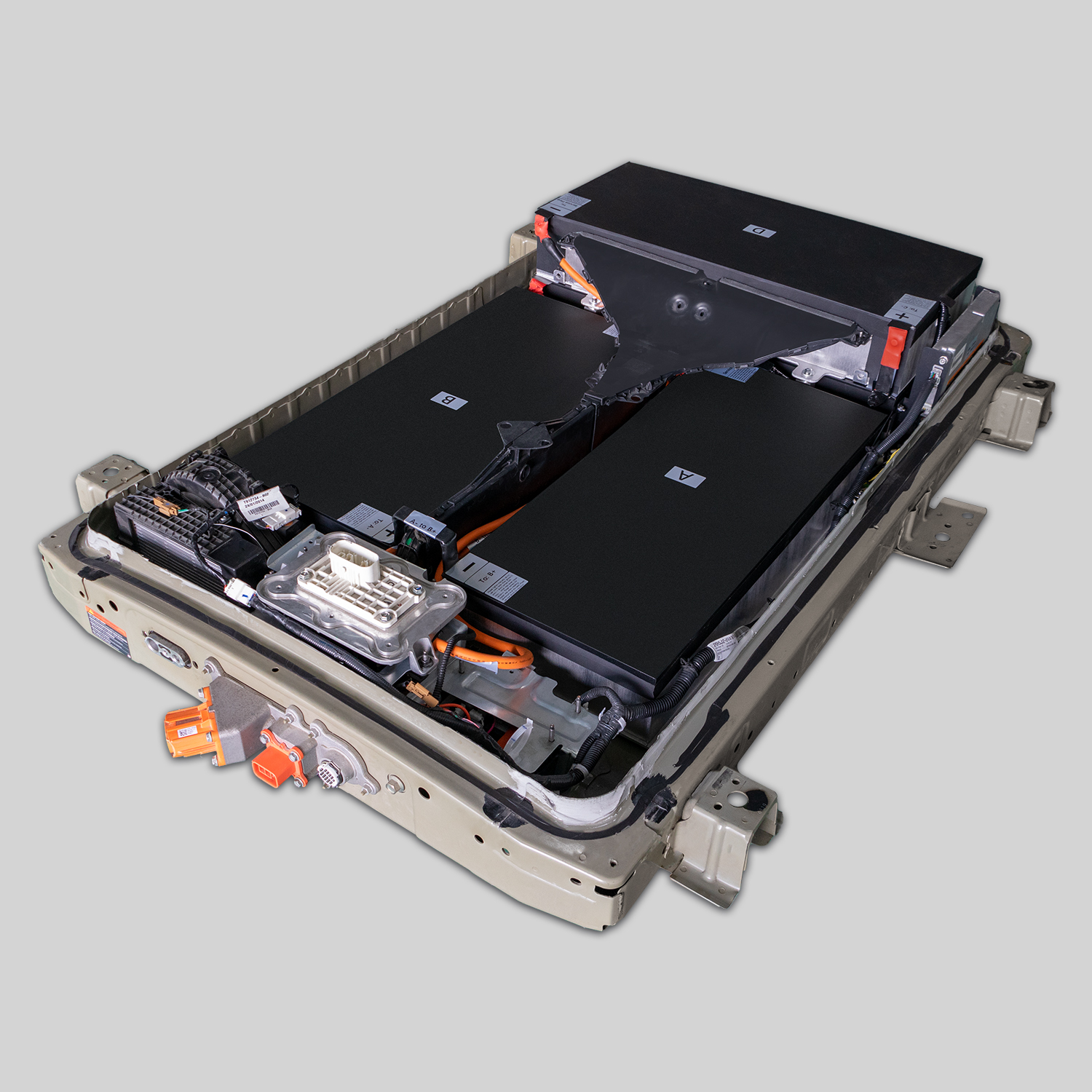
How to Diagnose BMW i3 Battery Fast Discharge – The “12-Bar Mystery” That Fooled 3 Technicians (And the Cell-Level Truth Hidden Behind a Perfect Dashboard)
“A customer in Amsterdam brought in his 2017 BMW i3 complaining of losing 50% range overnight—even when parked. The dash showed 12 bars. No warning lights. Three shops ran diagnostics:
- Shop 1 blamed ‘phantom drain’ from the 12V system.
- Shop 2 reset the BMS and called it fixed.
- Shop 3 replaced the OBC.
None checked individual cell self-discharge rates. When a specialist finally logged cell voltages over 48 hours, they found Module B, Cell 7 dropping 8 mV/hour—16x faster than neighbors. The BMS masked it by averaging SoC across all cells. Result? A silent, rapid discharge that bypassed every standard diagnostic.”
You’ve likely faced this:
- “The battery shows full charge—but dies in 20 km.”
- “No fault codes, yet range vanished overnight.”
- Or the frustrating assumption: “If the dashboard looks normal, the pack is healthy.”
But BMW i3 fast discharge is rarely about software or parasitic draw—it’s almost always a failing cell leaking energy internally, invisible to generic scans.
This guide reveals the only field-proven, cell-aware diagnostic method for i3 fast discharge in 2026, including:
- The three hidden discharge patterns that mimic other faults
- Why standard OBD2 tools miss >90% of self-discharge cases
- How to log true cell behavior over time—not just snapshots
- And how CNS BATTERY packs eliminate fast discharge at the source—with matched, low-self-discharge CATL cells and real-time per-cell monitoring
Because when range disappears without warning, your diagnostics must go deeper than the dashboard.
Why “Full Bars” Lie: The BMS Averaging Trap
The i3’s BMS reports State of Charge (SoC) as an average across all 96 cells. If one cell degrades:
✅ Its voltage drops faster under load
✅ It self-discharges quicker when parked
✅ But the BMS still shows 12 bars—until the weak cell drags the whole pack below usable voltage
⚠️ Critical insight: Fast discharge often appears only after the car sits for 6+ hours—making road tests useless.
🔋 Professional Diagnostic Protocol: Catch What Others Miss
Step 1: Rule Out Non-Battery Causes (Quickly)
- Check 12V battery current draw: Should be <30 mA after sleep mode (5–10 mins post-shutdown)
- Scan for active modules: Faulty telematics or infotainment can prevent sleep
- Verify no DC fast charging history: Repeated DC sessions accelerate cell wear
📌 If 12V draw is normal and no modules stay awake—the issue is inside the HV pack.
Step 2: Perform Time-Based Cell Voltage Logging
Tools needed:
- OBD2 adapter with CAN logging (e.g., PCAN, NeoVI)
- Software that reads raw cell voltages (e.g., BimmerLink Pro, custom Python script)
- Stable parking environment (avoid temperature swings)
Procedure:
- Fully charge the vehicle
- Record all 96 cell voltages immediately after shutdown
- Wait 12–24 hours (no driving, no charging)
- Record voltages again
- Calculate discharge rate per cell:
- Healthy: <0.5 mV/hour
- Concerning: 1–3 mV/hour
- Failing: >5 mV/hour
💡 Red flag: Any cell >3x the average discharge rate = internal micro-short or separator defect
Step 3: Validate Under Load
- Drive 10 km at steady speed
- Immediately log min/max cell spread
- If spread >80 mV → weak cell collapses under load, causing sudden range drop
Step 4: Confirm with Isolation & Impedance
- High self-discharge often pairs with:
- Elevated internal resistance (>2.0 mΩ)
- Reduced isolation resistance (<5 MΩ)
📌 Final verdict: If one or more cells show abnormal self-discharge + high impedance, the pack is beyond repair.
The Cost of Misdiagnosis: Why Partial Fixes Fail
Common errors that waste time and money:
- BMS resets → temporarily mask imbalance but don’t heal cells
- 12V system repairs → irrelevant if HV self-discharge is the root cause
- “Rebalancing” via slow charging → ineffective on cells with physical degradation
✅ Truth: Once a cell develops internal leakage, no software or balancing can restore its chemistry.
CNS BATTERY: Zero Fast Discharge—By Design
Every CNS i3 battery delivers:
✅ Brand-new CATL NMC cells with self-discharge <0.3 mV/hour
✅ Factory-matched modules (voltage spread <10 mV)
✅ Real-time per-cell monitoring visible via OBD2
✅ 2-year / 80,000 km warranty covering capacity retention
Result?
Customers report stable overnight voltage and consistent range—day one through year three.
“We used to chase ghosts in the 12V system. Now we know: if range vanishes and the dash lies, it’s the pack. We swap in CNS—and the mystery ends.”
— Mike’s Auto Service, Vancouver
Frequently Asked Questions: BMW i3 Fast Discharge Diagnosis
Q: Can cold weather cause fast discharge?
A: Temporarily—but healthy cells recover when warmed. Persistent loss after warming = cell failure.
Q: Does regenerative braking accelerate discharge?
A: No—but weak cells can’t accept regen, making range appear to drop faster.
Q: Will a new 12V battery fix this?
A: Only if 12V draw exceeds 50 mA. Otherwise, it’s a distraction from the real HV issue.
Q: How long should I wait to test overnight discharge?
A: Minimum 12 hours—shorter intervals miss slow self-discharge trends.
Q: Do CNS packs show individual cell data?
A: Yes—via standard OBD2 tools, so you can monitor health long-term.
Fast Discharge Isn’t a Glitch—It’s a Cell Screaming for Help
And until you listen at the cell level, you’ll keep treating symptoms while the pack fails silently.
Stop Chasing False Leads: Install a CNS BMW i3 Battery with Ultra-Low Self-Discharge Cells and Transparent Cell Monitoring—So Range Stays Predictable, Overnight and On the Road.
Because your customers don’t want guesses—they want miles they can count on.
Order your CNS BMW i3 battery today—or request our free “Fast Discharge Diagnostic Log Template” with cell tracking sheets and pass/fail thresholds:
👉 https://cnsbattery.com/ev-battery-home/ev-battery-contact/