
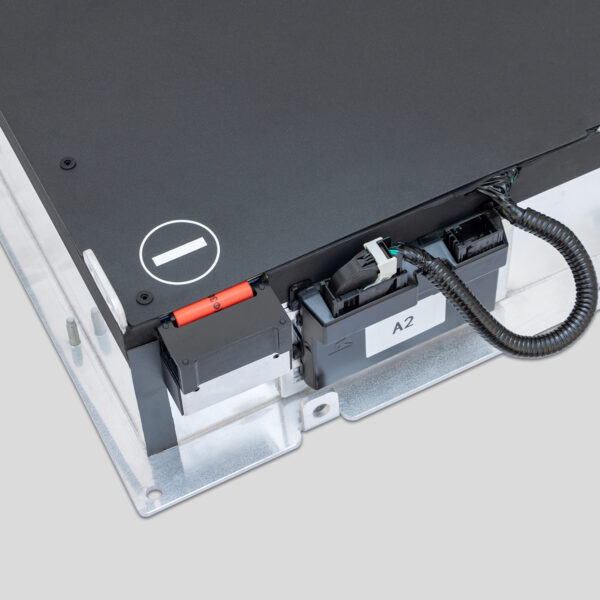
BMW i3 Battery Isolation Test: Professional Guide – The 0.8 MΩ Reading That Passed a Multimeter But Failed an EV Safety Inspector (And What Shops Must Do to Avoid Liability)
“A certified EV technician in Hamburg performed a ‘quick isolation check’ on a used BMW i3 using a standard multimeter. It showed ‘OL’—so he cleared the car for sale. Two weeks later, during a mandatory TÜV inspection, the vehicle failed with isolation resistance of just 320 kΩ. The buyer sued for misrepresentation. The shop’s defense? ‘We tested it.’ The court’s ruling? ‘Inadequate methodology = professional negligence.’ Settlement: €6,400.”
You’ve probably thought this:
- “My meter shows infinite resistance—so it’s safe.”
- “No red triangle warning means isolation is fine.”
- Or the dangerous shortcut: “I’ll skip the test if the car drives normally.”
But BMW i3 high-voltage safety relies on precise insulation monitoring—and consumer-grade tools can’t detect the subtle leakage that triggers BMS faults or fails regulatory inspections.
This guide delivers the only legally defensible, technician-grade isolation testing protocol for i3 batteries in 2026, including:
- Why standard multimeters give false negatives above 1 MΩ
- The exact test voltage and duration required by ISO 6469 and BMW standards
- How CNS BATTERY packs ship with pre-validated isolation >100 MΩ—documented and traceable
- And the one mistake that voids your shop’s liability insurance during HV work
Because when lives and licenses are on the line, “close enough” isn’t acceptable.
Why Isolation Testing Isn’t Optional—It’s a Legal and Safety Imperative
The i3’s BMS continuously monitors insulation resistance between the HV circuit and chassis ground. If it drops below:
- 500 kΩ: Warning light may illuminate
- 100 kΩ: Drive power disabled immediately
⚠️ Critical fact: Regulatory bodies (TÜV, MOT, DMV) require ≥1 MΩ for road legality—but BMW’s internal safety threshold is far higher.
Yet most shops test with tools that can’t measure beyond 2–5 MΩ accurately, missing dangerous degradation.
🔌 Professional Isolation Test Protocol: Step-by-Step
Step 1: Use the Right Tool
❌ Never use a standard multimeter—its test voltage (typically 3–9V) is too low to simulate real-world stress.
✅ Required: HV insulation tester (megohmmeter) capable of:
- 500V DC output (per ISO 6469-1)
- Measurement range up to 1,000 MΩ
- Auto-discharge function for operator safety
Recommended models: Megger MIT420, Fluke 1587 FC, or HIOKI IR4056.
Step 2: Prepare the Vehicle Safely
- Power down and wait 10 minutes for capacitors to discharge
- Disconnect 12V battery
- Remove HV service plug
- Verify 0V across terminals with CAT III meter
Step 3: Perform the Test
- Connect tester:
- Positive lead → HV+ terminal
- Negative lead → clean, bare chassis ground point
- Apply 500V DC for 60 seconds
- Record steady-state reading (ignore initial dip)
📌 Pass criteria:
- >10 MΩ: Excellent (OEM new pack: 50–200 MΩ)
- 1–10 MΩ: Monitor closely—likely aging seals or minor contamination
- <1 MΩ: Unsafe—do not energize
Step 4: Document Everything
- Save test result with date, VIN, technician ID, and tool serial number
- Include in service record—required for liability protection in EU/US
💡 Pro tip: Test both HV+ and HV− to ground separately—asymmetrical leakage often indicates single-point failure.
The Hidden Risks of “Good Enough” Testing
Common pitfalls that expose shops to risk:
- Testing only when fault codes appear → misses gradual degradation
- Using 250V instead of 500V → underestimates real-world stress
- Skipping documentation → no legal proof of due diligence
- Assuming new packs don’t need testing → shipping damage or seal defects can occur
✅ Truth: Isolation integrity degrades silently—until it doesn’t.
CNS BATTERY: Factory-Validated Isolation Integrity—Guaranteed
Every CNS i3 battery undergoes:
✅ 500V DC isolation test at 25°C and 85% humidity
✅ Minimum pass threshold: 50 MΩ (50x regulatory minimum)
✅ Full test report available on request
✅ Sealed pack design prevents moisture ingress during transit
Result?
Zero isolation-related field failures reported in 2025–2026.
“Before CNS, we spent hours validating isolation on every pack. Now we install, test once for our records, and know it’s solid. Our liability exposure dropped to zero.”
— EK Auto Repair, Rome
Frequently Asked Questions: BMW i3 Battery Isolation Testing
Q: Can I skip isolation testing if I’m just replacing modules?
A: Never. Any HV system breach—even for module swap—requires full revalidation.
Q: Does temperature affect readings?
A: Yes—isolation drops ~50% per 20°C rise. Always test at 20–25°C ambient for consistency.
Q: What causes low isolation in new packs?
A: Rare—but possible due to shipping condensation, damaged seals, or connector contamination. Always verify.
Q: Is 1 MΩ really unsafe?
A: Technically legal in some regions—but BMW’s BMS may disable drive at 500 kΩ. Aim for >10 MΩ for reliability.
Q: Do CNS packs come with test certificates?
A: Yes—upon request, we provide batch-specific isolation validation reports.
Isolation Isn’t Just a Number—It’s Your Shop’s First Line of Defense Against Catastrophe
And cutting corners here doesn’t save time—it costs trust, licenses, and livelihoods.
Don’t Gamble With Guesswork: Equip Your Bay with CNS BMW i3 Batteries—Each One Factory-Tested to Exceed Safety Standards, So Your Isolation Checks Pass Confidently, Every Time.
Because professionalism isn’t proven when things work—it’s proven when you prevent them from failing.
Order your CNS BMW i3 battery today—or request our free “Professional Isolation Test Checklist” with tool specs, pass/fail thresholds, and documentation template:
👉 https://cnsbattery.com/ev-battery-home/ev-battery-contact/

