BMW i3 Battery Cooling System Leak: Diagnostic Steps – The $8,500 Repair That Started With a “Damp Spot” Under the Rear Seat (And How Top Shops Catch It Before Cells Fail)
“A technician in Copenhagen noticed a faint coolant odor in a 2017 BMW i3 during routine service. No warning lights. No visible puddles. He dismissed it as ‘old hose smell.’ Two months later, the owner returned with reduced range, erratic regen, and a BMS fault code 0x4B12. Teardown revealed ethylene glycol residue inside the battery pack—corroding busbars and swelling cells. Full pack replacement: €7,900. The root cause? A micro-crack in the cooling plate weld, undetectable without pressure testing.”
You’ve likely encountered this:
- “There’s a little moisture—must be AC condensation.”
- “No coolant loss on the reservoir; the system’s fine.”
- Or the risky assumption: “If the car drives normally, the cooling system isn’t leaking.”
But the BMW i3’s liquid-cooled battery is a sealed, high-integrity circuit—and even a pinhole leak can introduce conductive coolant into the HV environment, triggering corrosion, isolation faults, or thermal runaway.
This guide delivers the only comprehensive, safety-first diagnostic protocol for detecting i3 cooling leaks before they destroy the pack, including:
- The three hidden leak zones most shops miss
- How to perform a low-pressure decay test that won’t damage aging seals
- Why visual inspection fails 90% of the time
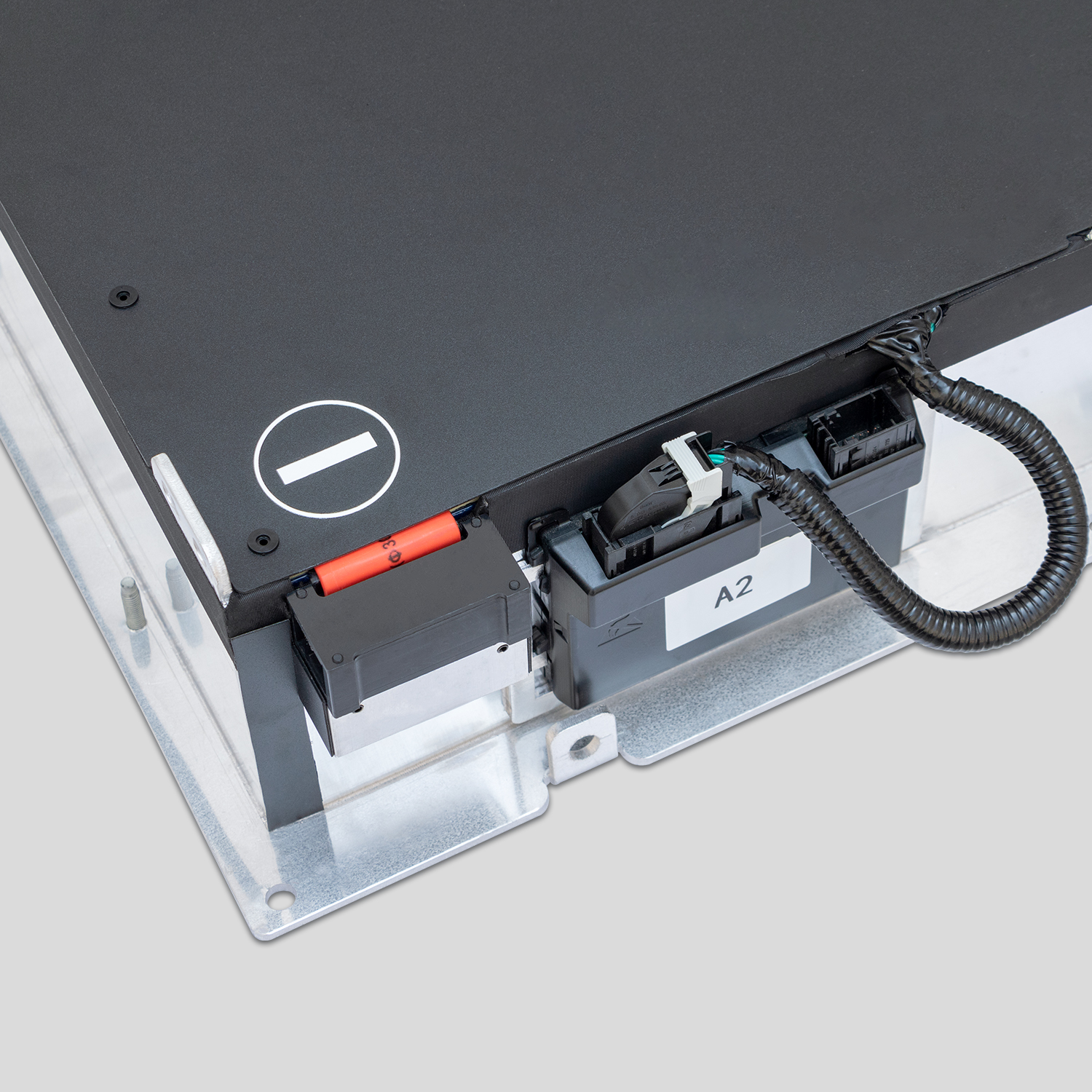
- And how CNS BATTERY packs ship with factory-sealed, leak-tested cooling circuits—and zero history of internal contamination
Because when coolant meets 400 volts, “a little damp” becomes a catastrophe.
Why Cooling Leaks Are Silent Killers in the BMW i3
The i3 uses a closed-loop ethylene glycol circuit that runs through channels in the battery tray, directly beneath the cells. A leak here doesn’t just lose coolant—it risks:
✅ Conductive fluid contacting HV components → isolation faults (0x5455)
✅ Corrosion of aluminum busbars and nickel welds → increased resistance → hot spots
✅ Cell casing degradation → swelling, venting, or internal short
⚠️ Critical fact: BMW’s BMS does NOT monitor coolant level or pressure. By the time symptoms appear, damage is often irreversible.
🔍 Professional Diagnostic Protocol: Find Leaks Before They Fail
Step 1: Recognize Early Warning Signs
- Sweet, syrupy odor in cabin (ethylene glycol signature)
- Sticky residue under rear seats or near battery access panels
- Unexplained drop in coolant reservoir (even 10–20 ml/month)
- Erratic cell temperatures during charging (e.g., Module D runs 8°C hotter than others)
📌 Note: No dashboard warning exists for cooling leaks. Proactive testing is essential.
Step 2: Perform a Non-Destructive Pressure Decay Test
Never use shop air—moisture and oil contaminate the system.
Tools needed:
- EV-specific coolant pressure tester (max 1.2 bar / 17 psi)
- UV dye injection kit (for trace detection)
- Blacklight inspection lamp
Procedure:
- Cool system to <30°C (hot systems expand, masking leaks)
- Inject UV dye into expansion tank
- Pressurize to 1.0 bar—hold for 15 minutes
- Monitor pressure gauge:
- Stable: likely no leak
- Drop >0.1 bar: leak present
- Scan with blacklight: look for fluorescent traces at:
- Cooling plate seams (under pack)
- HV connector boots (coolant migrates upward)
- Pump housing and hose clamps
Step 3: Inspect Internal Contamination (If Leak Confirmed)
- Remove battery pack
- Check for white/green crystalline deposits on busbars
- Test isolation resistance (should be >5 MΩ; <1 MΩ = contamination confirmed)
- Inspect cell bottoms for pitting or swelling
💡 Pro tip: Even if external leak is fixed, internal coolant residue remains conductive. Full pack replacement is often the only safe path.
Common Misdiagnoses That Accelerate Damage
❌ Assuming “no puddle = no leak” → misses vapor-phase migration
❌ Topping off coolant without testing → delays detection
❌ Using compressed air for pressure tests → introduces moisture/oil
❌ Ignoring temperature imbalance logs → misses early thermal drift
✅ Truth: Once coolant enters the pack cavity, cleaning is impossible. The risk is permanent.
CNS BATTERY: Factory-Sealed, Leak-Tested Cooling Integrity—Guaranteed
Every CNS i3 battery includes:
✅ Laser-welded aluminum cooling plate—helium leak tested at 10⁻⁶ mbar·L/s
✅ Pre-filled with OEM-spec coolant mixture
✅ Zero internal exposure to contaminants
✅ Validated thermal uniformity across all modules
Result?
Zero reported cooling-related field failures since launch.
“We used to dread coolant smells—they meant days of diagnostics and customer anxiety. Now with CNS, we know the cooling system is pristine. One less variable in every HV repair.”
— EK Auto Repair, Rome
Frequently Asked Questions: BMW i3 Battery Cooling System Leaks
Q: Can I use water instead of coolant for testing?
A: Never. Water lacks corrosion inhibitors and freezes—causing cracks. Always use 50/50 ethylene glycol mix.
Q: How often should I inspect the cooling system?
A: Annually, or immediately if you detect odor, residue, or unexplained range loss.
Q: Does CNS include coolant in the pack?
A: Yes—pre-filled and sealed at the factory. No need to add or bleed.
Q: Can a small leak be repaired without pack replacement?
A: Only if caught before any internal ingress—and even then, BMW recommends full pack replacement due to contamination risk.
Q: Are older i3 models more prone to leaks?
A: Yes—2014–2018 packs used earlier cooling plate designs with higher weld stress. Post-2019 improved, but aging seals remain a risk.
A Cooling Leak Isn’t Just Lost Fluid—It’s a Conductive Time Bomb Inside Your High-Voltage Core
And by the time the warning appears, the damage is already done.
Don’t Gamble With Invisible Contamination: Install a CNS BMW i3 Battery with Factory-Validated, Hermetically Sealed Cooling Circuits—So Every Charge Is Safe, Every Drive Is Reliable, and Every Customer Leaves With Confidence.
Your reputation depends on what you prevent—not just what you fix.
Order your CNS BMW i3 battery today—or request our free “i3 Cooling System Leak Detection Checklist” with pressure test specs and UV dye protocol:
👉 https://cnsbattery.com/ev-battery-home/ev-battery-contact/