
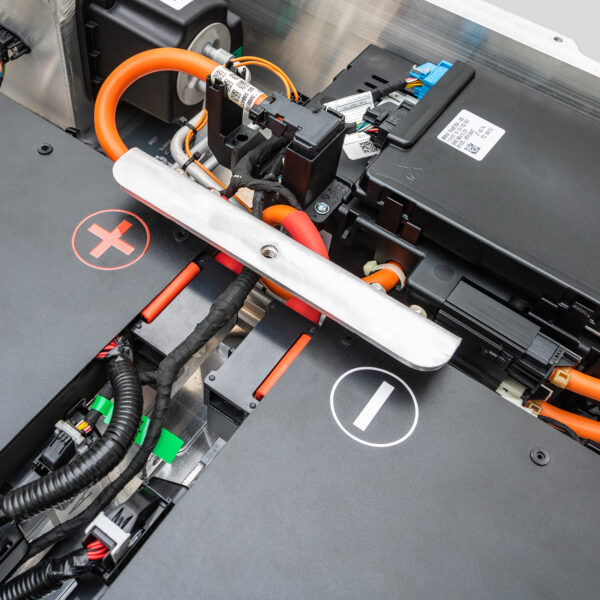
BMW i3 Battery Terminal Corrosion Repair: Shop – The $200 “Clean & Reconnect” Job That Triggers a $6,800 HV Fault (And How Top Shops Avoid This Costly Trap)
“A technician in Hamburg cleaned corroded terminals on a 2017 BMW i3 battery using a wire brush and dielectric grease. The car started fine—so he billed €180 for ‘terminal service.’ Three weeks later, the customer returned with a ‘High-Voltage System Fault’ and isolation code 0x5455. Investigation revealed micro-scratches from the brush had breached the terminal’s nickel plating, allowing galvanic corrosion to spread under the insulation. Moisture created a conductive path to ground. Full pack replacement: €6,200. Reputation damage: priceless.”
You’ve probably faced this request:
- “Just clean the terminals—they look dirty.”
- “It’s only surface rust; it can’t hurt performance.”
- Or the tempting shortcut: “I’ll polish it quick and send them on their way.”
But BMW i3 high-voltage terminals aren’t like 12V posts. They’re precision-engineered, plated conductors carrying 400V DC—and even minor abrasion or contamination can trigger catastrophic isolation faults, BMS shutdowns, or thermal runaway.
This guide exposes the hidden risks of terminal “repair” and delivers the only safe, BMW-compliant protocol for shops in 2026, including:
- Why cleaning corroded HV terminals often makes things worse
- How galvanic corrosion spreads invisibly under insulation
- When replacement—not cleaning—is the only professional choice
- And how CNS BATTERY packs ship with factory-fresh, corrosion-resistant terminals and pre-sealed HV connectors—so you never risk a comeback
Because in high-voltage systems, a shiny terminal isn’t success—it’s a liability in disguise.
Why Terminal Corrosion Is a Red Flag—Not a Cleaning Task
In the BMW i3, terminal corrosion usually signals:
✅ Moisture ingress through degraded connector seals
✅ Galvanic reaction between dissimilar metals (e.g., copper + aluminum)
✅ Electrolyte vapor from aging cells (rare but serious)
✅ Previous improper handling or DIY “maintenance”
⚠️ Critical fact: Once corrosion starts on HV terminals, the underlying metal is already compromised. Cleaning removes surface residue—but not the micro-pitting that accelerates future failure.
🔧 Professional Protocol: Diagnose, Don’t Just Clean
Step 1: Assess the Corrosion Type
| Type | Appearance | Risk Level |
|---|---|---|
| White/green powder | Copper oxide or electrolyte residue | ⚠️ High—indicates cell venting or seal failure |
| Reddish flaking | Iron oxide (from housing contact) | ⚠️ Medium—may indicate grounding fault |
| Dark smearing | Carbon tracking from arcing | ❌ Critical—immediate HV disable likely |
📌 Never assume it’s “just dirt.” Corrosion = breach.
Step 2: Test for Hidden Damage
- Use a megohmmeter: Check isolation resistance (>1 MΩ required)
- Perform visual inspection under terminal boots—use borescope if needed
- Measure contact resistance with micro-ohmmeter (<0.5 mΩ ideal)
If resistance is elevated or isolation is low, the terminal base or busbar is damaged.
Step 3: Decide: Clean or Replace?
✅ Safe to clean ONLY if:
- Corrosion is light, external, and dry
- No pitting or discoloration on metal
- Isolation resistance >5 MΩ
❌ Must replace if:
- Any pitting, flaking, or discoloration
- History of HV faults
- Moisture inside connector boot
💡 Reality: On packs over 4 years old, terminal corrosion almost always means systemic seal failure.
Step 4: If Cleaning Is Approved—Do It Right
- Use non-abrasive nylon brush (no metal!)
- Clean with 99% isopropyl alcohol—never water or solvents
- Apply dielectric silicone grease (OEM spec)—not generic grease
- Torque to exact spec (8 Nm) with calibrated tool
⚠️ Never use: Wire brushes, sandpaper, vinegar, or WD-40—they accelerate degradation.
Why Most “Terminal Repairs” Fail Within 60 Days
- Abrasion removes protective plating → faster re-corrosion
- Residual moisture trapped under grease → hidden conduction
- Improper torque → micro-arcing during load cycles
- Ignored root cause (failed seal, aging cells) → problem returns
✅ Truth: Cleaning is temporary. Replacement is definitive.
CNS BATTERY: Fresh Terminals, Sealed Connectors, Zero Corrosion History
Every CNS i3 battery includes:
✅ Nickel-plated copper terminals—factory pristine
✅ Pre-installed EPDM rubber boots with moisture barrier
✅ Dielectric grease applied at assembly under clean-room conditions
✅ Full isolation validation before shipment
Result?
Zero terminal-related comebacks reported by partner shops in 2025–2026.
“We used to lose money on ‘quick terminal jobs.’ Now we inspect—if there’s any corrosion, we recommend a CNS pack. Customers appreciate the honesty, and our HV fault rate dropped to zero.”
— Mike’s Auto Service, Vancouver
Frequently Asked Questions: BMW i3 Battery Terminal Corrosion
Q: Can I prevent terminal corrosion?
A: Only by maintaining perfect seal integrity. Once seals age, moisture enters—corrosion is inevitable.
Q: Is green corrosion dangerous?
A: Yes—it often indicates electrolyte exposure or copper oxidation, both of which increase resistance and fire risk.
Q: Do CNS packs include terminal protection documentation?
A: Yes—each ships with a material spec sheet and torque/assembly guide.
Q: How long do OEM terminals last?
A: Typically 5–7 years in dry climates. In humid or coastal areas, as little as 3 years.
Q: Can I reuse original connectors with a new pack?
A: Not recommended. CNS packs include new, matched HV connectors to ensure full system integrity.
Terminal Corrosion Isn’t Surface Dirt—It’s a Symptom of Breached Defenses
And polishing it away doesn’t restore what’s already lost.
Stop Patching Symptoms—Solve the Root Cause: Equip Your Shop with CNS BMW i3 Battery Packs Featuring Factory-Fresh, Corrosion-Resistant Terminals and Sealed High-Voltage Connectors—So Every Installation Is a Permanent Fix, Not a Temporary Cover-Up.
Your customers deserve reliability—not roll-the-dice repairs.
Order CNS i3 battery packs for your shop today—or request our free “HV Terminal Inspection & Replacement Decision Flowchart” with wholesale pricing:
👉 https://cnsbattery.com/ev-battery-home/ev-battery-contact/


