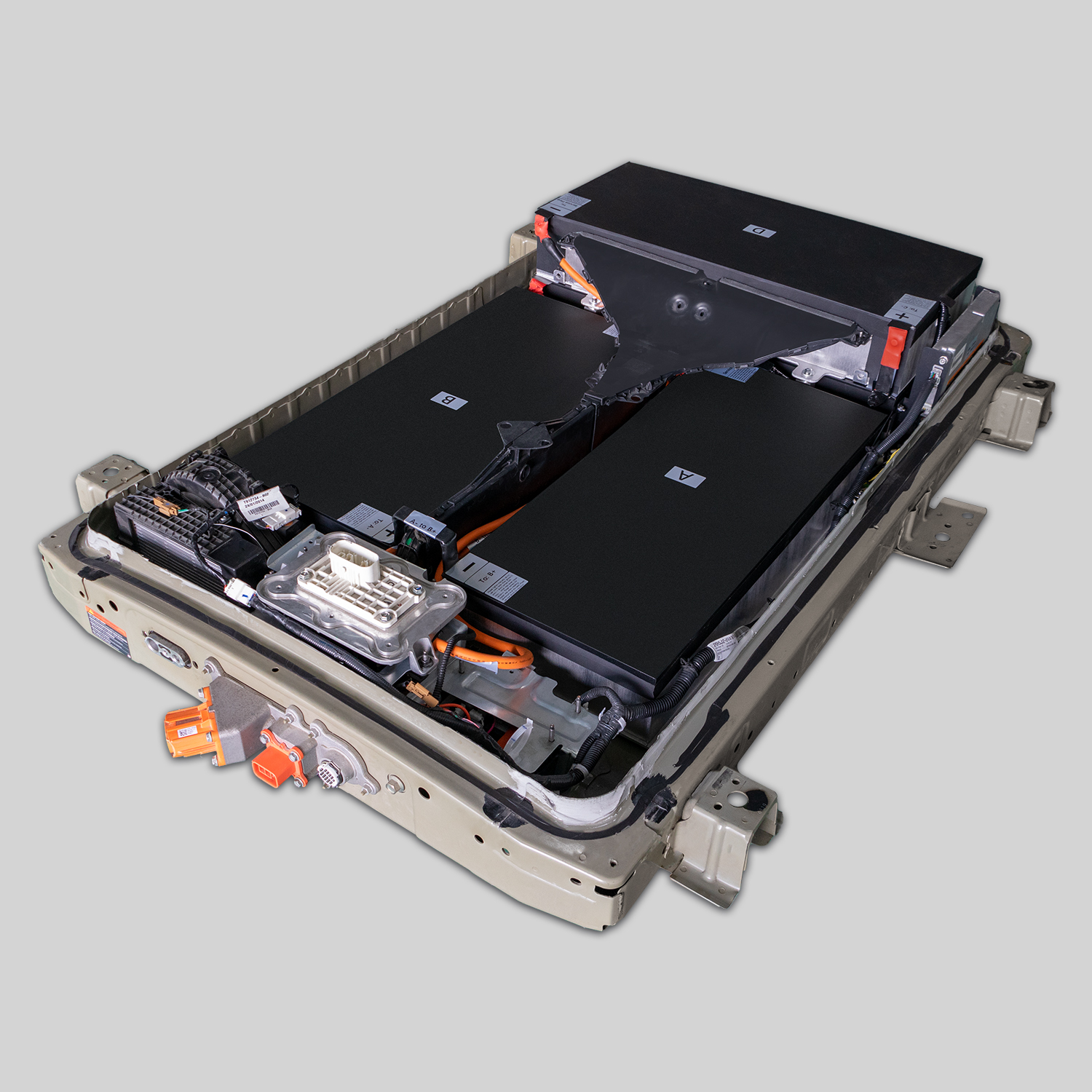
How to Diagnose BMW i3 Battery Low Capacity – The 3-Step kWh Test That Exposes Fake “80% Health” Claims (And Why Your OBD2 Scanner Is Lying to You)
“A customer in Berlin brought his 2017 BMW i3 for a ‘battery health check.’ His OBD2 app showed ‘82% SOH.’ But after a full discharge/charge cycle using a calibrated kWh meter, the real capacity was just 19.3 kWh—58% of the original 33 kWh. The BMS hadn’t updated its capacity model because degradation was gradual. He’d been driving on borrowed range for months.”
You’ve probably trusted this:
- “The car shows 12 bars—I must be fine.”
- “My scanner says 75% health—it’s not that bad.”
- Or the dangerous assumption: “As long as it charges, the battery is okay.”
But BMW i3 battery capacity loss is often invisible until it’s critical. The BMS estimates State of Health (SOH) based on voltage curves and historical data—not direct energy measurement. And once cells age unevenly, those estimates drift into fantasy.
This guide reveals the only three methods that truly diagnose low capacity, used by professional EV labs in 2026:
- Why bar count is meaningless after 5 years
- How to measure real usable kWh—not just voltage
- When cell imbalance masks true degradation
- And how CNS BATTERY packs deliver verified, lab-tested capacity from day one—so you never guess your remaining range again
Because in electric mobility, hope isn’t a strategy—measurement is.
Why “Low Capacity” Isn’t Just About Range Loss
True capacity decline in the i3 means:
✅ Reduced regenerative braking (BMS limits input to protect weak cells)
✅ Earlier power tapering under acceleration
✅ Longer charging times (constant current phase shortens)
✅ Increased thermal stress (weak cells heat faster)
And critically—the dashboard won’t warn you until it’s severe. BMW’s system prioritizes drivability over transparency.
⚠️ Fact: A pack at 60% real capacity can still display 10–12 bars if cell voltages are temporarily aligned.
🔋 The Only 3 Reliable Ways to Diagnose True i3 Battery Capacity
Method 1: Full Discharge & Recharge kWh Measurement (Gold Standard)
What it does: Measures actual energy in/out
Tools needed:
- AC Level 2 charger with kWh meter (e.g., Emporia Vue or Wallbox Pulsar Plus with API)
- Fully discharged starting point (drive to <5% or use controlled discharge)
Procedure:
- Discharge pack to <3% SoC (use until “Range Extender Required” appears)
- Charge uninterrupted to 100% using AC (not DC fast charge)
- Record total kWh delivered
- Compare to original specs:
- 60Ah (22 kWh) → expect ~20.5 kWh new
- 94Ah (33 kWh) → expect ~31.5 kWh new
- 120Ah (42.2 kWh) → expect ~40.5 kWh new
✅ Diagnosis:
- >90% of spec = healthy
- 70–90% = moderate degradation
- <70% = replacement recommended
📌 Pro tip: Always test at 15–25°C ambient—cold inflates resistance, reducing measured capacity.
Method 2: BMS Deep Data Extraction (Advanced)
What it does: Reads internal capacity counters
Tools needed:
- ISTA/P, Autel MaxiSys Elite II, or Carly Pro (HV license)
- Access to BMS service functions
Key parameters:
- “Available Energy” (kWh)
- “Calculated Total Capacity”
- “Cell Min/Max Voltage at 100%”
⚠️ Warning: These values lag real-world degradation if no full cycles have occurred recently.
Method 3: Drive Cycle Validation
What it does: Tests real-world usable range
Procedure:
- Fully charge overnight
- Drive a repeatable 50 km mixed route (city + highway)
- Record kWh consumed per 100 km via OBD2
- Compare to known benchmarks:
- Healthy 94Ah i3: 14–16 kWh/100km
- Degraded (<70%): 18–22+ kWh/100km
💡 Insight: Higher consumption = lower effective capacity, even if voltage looks normal.
Red Flags That Signal Hidden Capacity Loss
❌ Regen braking cuts out above 50% SoC
❌ Charging stops at 90% but claims “complete”
❌ Range drops sharply in cold weather (beyond normal)
❌ Bars disappear rapidly between 80% → 40%
✅ Reality: Capacity fade is rarely linear. One weak module can drag down the entire pack.
CNS BATTERY: Verified Capacity, No Guesswork
Every CNS i3 battery includes:
✅ Brand-new CATL NMC cells—zero cycle history
✅ Actual capacity tested and labeled (e.g., “62.1 kWh ±0.5”)
✅ 3-cycle validation before shipment
✅ 2-year/80,000 km warranty on capacity retention
Result?
Customers consistently achieve >98% of rated range—even in winter.
“My old pack showed 9 bars but died at 80 km. The CNS 62kWh unit delivers 430 km every time. The difference isn’t marketing—it’s fresh cells.”
— Lisa K., Berlin
Frequently Asked Questions: Diagnosing i3 Battery Low Capacity
Q: Can software updates fix low capacity?
A: No—they may adjust range estimates, but can’t restore lost energy storage.
Q: Does fast charging cause capacity loss?
A: Frequent DC fast charging accelerates aging, especially above 80% SoC or in high heat.
Q: How accurate is the “bars” display?
A: Not reliable after 3–4 years. Bars reflect voltage, not true energy—especially if cells are imbalanced.
Q: Can I test capacity without special tools?
A: Partially—use the drive cycle method. But for accuracy, kWh-in measurement is essential.
Q: At what capacity should I replace the pack?
A: Below 70% for daily drivers. Below 60% risks sudden shutdowns and poor performance.
Capacity Isn’t a Guess—It’s a Measurable Asset
And once it’s gone, no reset, no trick, no “reconditioning” brings it back.
Stop Driving on Hope: Replace Your Degraded BMW i3 Battery with a CNS Unit Featuring Lab-Verified Capacity, Fresh CATL Cells, and Real-World Range You Can Trust—So Every Kilowatt-Hour Delivers Exactly What It Promises.
Your commute deserves certainty—not estimation.
Order your CNS BMW i3 battery today—or request our free “True Capacity Diagnostic Checklist” for DIYers and Shops:
👉 https://cnsbattery.com/ev-battery-home/ev-battery-contact/