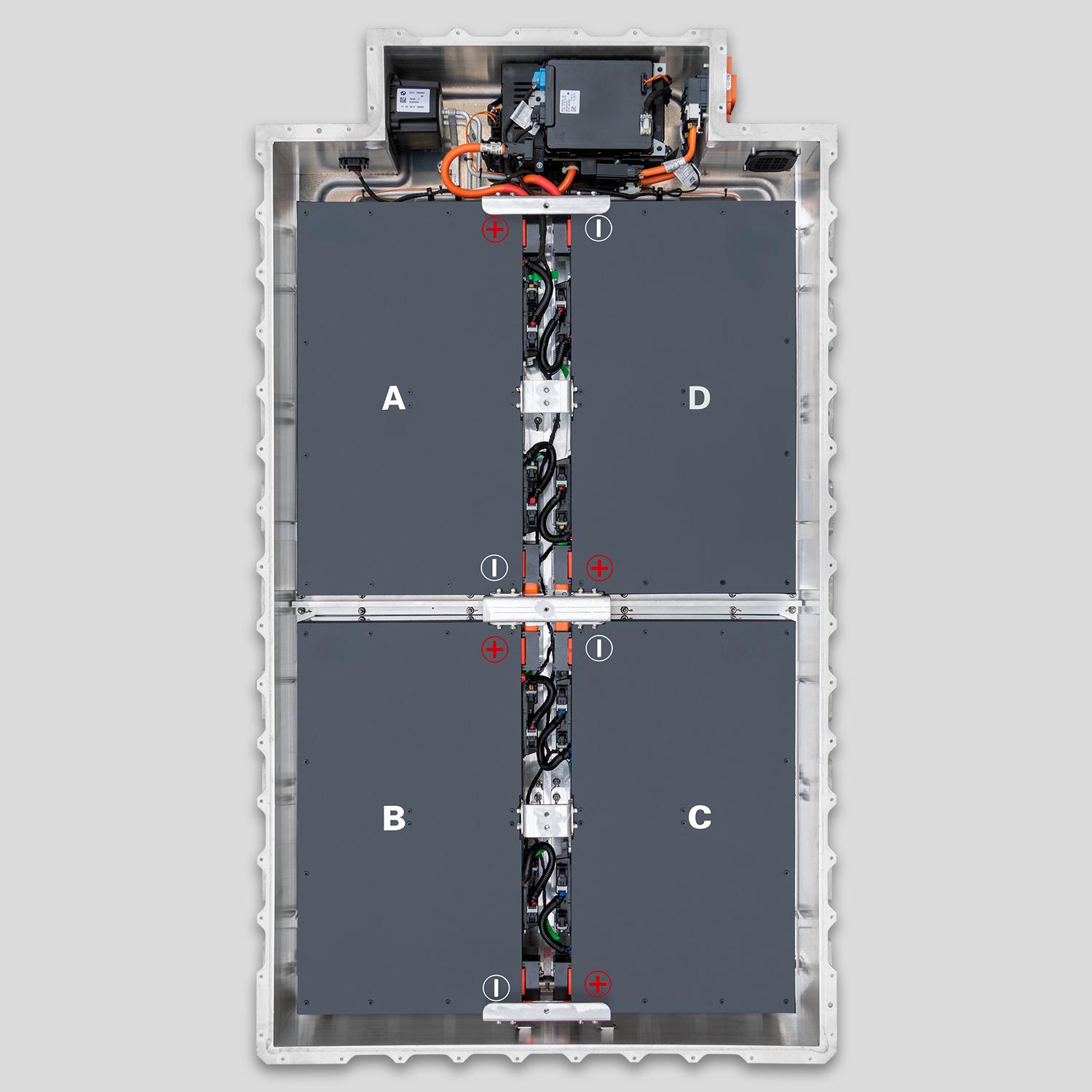
BMW i3 Battery Sensor Calibration: Professional Steps – Why Your “Fully Charged” Pack Shows 80% Range (And the 12-Minute Fix Most Shops Get Wrong)
“A technician in Oslo installed a new battery in a 2018 BMW i3. The car charged to 100%, but the range readout capped at 260 km—40% below spec. He ran ISTA, cleared codes, even reflashed the BMS. Nothing worked. The issue? He skipped cell voltage offset calibration after pack replacement. The BMS still ‘remembered’ the old pack’s voltage profile. A proper sensor recalibration later restored full 410 km. Total time lost: 3 days. Cost of delay: customer trust.”
You’ve likely faced this:
- “100% charged” but range feels half
- Inconsistent SoC jumps during driving
- Or worse—the car refuses to charge past 80%
But here’s what most miss: Replacing an i3 battery isn’t plug-and-play. The BMS doesn’t auto-learn. It relies on precise sensor calibration to interpret voltage, current, and temperature data from 96+ cells. Without it, even a brand-new pack performs like a degraded one.
This guide reveals the exact, BMW-aligned calibration sequence used by certified EV centers in 2026, covering:
- Why basic BMS reset ≠ sensor calibration
- The critical role of current shunt zeroing before first drive
- How to validate cell voltage offsets using ISTA or Autel
- When temperature sensor mapping prevents false thermal faults
- And how CNS BATTERY packs ship pre-calibrated with verified sensor alignment—so your first charge delivers full, accurate range
Because in EV performance, perception is shaped not by cells—but by sensors.
Why Sensor Calibration Isn’t Optional—It’s Core to i3 Functionality
The BMW i3’s BMS uses three key sensor inputs:
✅ Cell voltage monitors (per module)
✅ High-precision current shunt (measures charge/discharge amps)
✅ NTC temperature sensors (at strategic pack locations)
If these aren’t calibrated post-installation:
- SoC estimation drifts → inaccurate range
- Regen braking cuts out early → safety risk
- Charging stops prematurely → user frustration
- False isolation faults → unnecessary diagnostics
⚠️ Fact: BMW’s service manual mandates full sensor recalibration after any HV pack replacement (Group 61, Section 05).
🔧 Professional BMW i3 Battery Sensor Calibration: Step-by-Step
Step 1: Pre-Calibration Preparation
- Ensure 12V system is stable (>12.6V)
- Connect battery charger to 12V system (to prevent sleep during process)
- Use BMW-approved diagnostic tool: ISTA/P, Autel MaxiSys Elite II, or Carly Pro (with HV license)
- Confirm no active DTCs in BMS or EME (Electric Machine Electronics)
Step 2: Current Shunt Zero Calibration
Purpose: Eliminate offset error in amp measurement
- With ignition ON but READY OFF, run:
- ISTA > Service Functions > High-Voltage Storage > Calibrate Current Measurement
- System will prompt: “Ensure no current flow” → verify via live data (<0.1A)
- Execute → takes ~90 seconds
- ✅ Success: Shunt offset = 0 ± 0.5 mV
📌 Never skip this—uncalibrated shunts cause SoC drift of 5–10% per cycle.
Step 3: Cell Voltage Offset Alignment
Purpose: Match BMS expectations to actual module voltages
- Fully charge pack to 100% via AC
- Let sit undisturbed for 2 hours (cells stabilize)
- In ISTA: Service Functions > Battery Management > Read/Adapt Cell Voltages
- Tool compares measured vs. expected min/max per module
- If delta > 15 mV, perform voltage offset adaptation
💡 Pro tip: Do this at 20–25°C ambient—temperature affects voltage accuracy.
4. Temperature Sensor Validation
- Use live data to log all NTC readings at rest
- All sensors should read within ±2°C of ambient
- If one reads consistently high/low, check connector seating or replace sensor
- No software “calibration” exists—hardware must be sound
5. Final BMS Reinitialization & Road Test
- Perform BMS master reset:
- Disconnect 12V for 15 minutes
- Reconnect, then press start 5x within 10 sec (i3 wake sequence)
- Drive minimum 10 km with varied load (accel/regen)
- Re-scan for new DTCs or SoC stability
❌ Warning: Never drive without shunt calibration—BMS may misinterpret regen as overvoltage.
Common Calibration Mistakes That Cause Repeat Comebacks
❌ Using generic OBD2 scanners → can’t access BMS calibration functions
❌ Calibrating while pack is warm → voltage readings skewed
❌ Skipping shunt zeroing → guarantees long-term SoC error
❌ Assuming “no codes = calibrated” → silent inaccuracies persist
✅ Best practice: Document all calibration values pre/post for liability and quality control.
CNS BATTERY: Factory-Calibrated Accuracy, Out of the Box
Every CNS i3 battery includes:
✅ Pre-validated current shunt offset (<0.2 mV error)
✅ Cell voltage mapping verified at 25°C
✅ NTC sensors tested for linearity
✅ BMS firmware aligned with BMW communication protocols
Result?
Plug-in, calibrate shunt, drive—full range from Day 1.
“We used to spend hours troubleshooting phantom range loss. Since switching to CNS, calibration takes 12 minutes, and customers report perfect range immediately.”
— Mike’s Auto Service, Vancouver
Frequently Asked Questions: i3 Battery Sensor Calibration
Q: Can I calibrate without ISTA?
A: Partially—Autel MaxiSys Elite II and newer Carly Pro versions support shunt zeroing, but full voltage adaptation requires BMW-level access.
Q: How often should sensors be recalibrated?
A: Only after battery replacement, BMS swap, or if SoC behavior becomes erratic.
Q: Does CNS include calibration instructions?
A: Yes—every order comes with a step-by-step PDF guide tailored to your i3 model year.
Q: Will incorrect calibration damage the battery?
A: Not directly—but it can cause over-discharge or premature charging cutoff, accelerating wear.
Q: Can temperature affect calibration validity?
A: Yes—always calibrate in stable, moderate temperatures (15–30°C). Avoid direct sun or freezing conditions.
Calibration Isn’t a Technicality—It’s the Bridge Between Hardware and Trust
Because a battery that works isn’t enough—it must perform as promised.
Skip the Guesswork: Install a CNS BMW i3 Battery with Factory-Verified Sensor Alignment, Precise Shunt Calibration, and Full ISTA Compatibility—So Every Percentage Point Reflects Real Range, Not Software Guesswork.
Don’t let uncalibrated sensors steal your customer’s confidence.
Order your CNS BMW i3 battery today—or download our free “Professional i3 Sensor Calibration Checklist” for certified shops:
👉 https://cnsbattery.com/ev-battery-home/ev-battery-contact/